Political Issues In Public Education – A Guide For Beginners

Education & PoliticsIt’s election time again, and – in some places, at least – education-related disputes are once again all over social media and the local news. Given that it’s rare for such a traditional, local issue to break through our current national insanity, some of you might be wondering just what it is all these teachers keep whining about and why no one can presumably fix what seem to be pretty basic concerns.

None of these are intended as comprehensive or especially detailed, nor will they apply in every local variation of every argument. My hope, however, is that you’ll find them useful as a starting place for further research if you discover you care about those specifics, or as enough information to decipher those who ARE worked up and insist on talking about this stuff over and over and over and over…

Why are so many teachers opposed to testing? What’s wrong with accountability?

It can sometimes be difficult to narrow down exactly what it is states and taxpayers want public education to accomplish (not to mention the things we intrinsically value as educators). Prepare children for college, prepare them for the workforce, prepare them to be happy, personally fulfilled adults, teach them to be useful citizens of a voting republic, teach them character and personal responsibility, teach them to read, to think, to care, to problem-solve, to adapt, and give them grit, hope, respect for authority, and a deep personal sense of security and meaning in a fallen world.

Oh, and algebra – they need to know algebra.

Of these (and there are often more, depending on who’s in the state legislature that year), very few are easy to measure objectively, let alone assess via multiple choice questions. The most important ones certainly aren’t. How does an institution scientifically measure whether or not particular kids are more or less prepared for the profession of their choice in May than they were in August, or whether or not they better grasp the importance of informed voting, or even to what extent they’ve grown in terms of taking personal responsibility or refusing to crumble in the face of adversity?

Even the more traditionally academic stuff is hard to evaluate on a mass scale. Sit a kid in front of me and have them read a passage and discuss or explain it, and in ten minutes I’ll have a pretty good idea of their reading ability, processing strengths and weaknesses, etc. A multiple choice quiz over the passage, on the other hand, might tell me how well they manage short-term recall of mundane details, but isn’t very good at measuring whether they understand those details or can explain why they matter. It certainly gives no room for alternate approaches or explanations of anything important.

But it DOES give us what looks like an objective number of “right” and “wrong” answers. And it can be tallied by a machine. It measures the stuff it can easily measure – not the stuff we’d all largely agree is WAY more essential.

We can’t measure what’s important, so we prioritize what looks measurable.

In other words, your English teacher isn’t obsessed with the minutiae of grammar because that’s what makes great literature worth reading; he’s obsessed with grammar because that’s a random slice of reading and writing that we can kind of measure via multiple choice. His job performance isn’t measured by whether or not you become a better reader (whatever that might involve in your particular case) but on how consistently you and your classmates properly identify a form of speech chosen by a testing service from Wisconsin.

There are other issues – tests tend to measure kids’ socio-economic status far more consistently than they do anything actually happening (or not) at school. Some are racially biased in subtle but critical ways. Many of them just suck. But that’s all secondary to the larger issue – very little worth learning can be evaluated by Scantron.

Why don’t schools stick to the basics – the 3 R’s of Reading, Writing, and Arithmetic? What’s with the radical liberal agenda and all the touchy-feely stuff?

Most schools certainly want their kids to learn reading, writing, and arithmetic. Beyond that, we enter into the same dilemma reference above – no one can seem to agree on just what it is they want public education to DO. The same legislators who complain about Algebra scores devote endless legislation to requirements having nothing to do with academic progress. Local employers want kids to have specific job skills or foundational knowledge beyond the 3 R’s. And even parents generally hostile towards public education see the inherent value in kids being involved in sports, band, theater, etc. (The Home Schoolers are constantly suing to get their kid on the baseball team with a school-provided uniform.)

But beyond that, the most fundamental reason schools get involved in counseling, health care, clothes closets, basic nutrition, family services, restorative justice, pregnancy prevention, anger management, or whatever is because – spoiler alert – a pretty substantial number of kids show up to school not actually caring all that much about those Algebra scores. Or grammar. Or test scores. Or history.

Yes, we could just fail them all – but that’s not the motivator you might wish it were. For every kid hyper-focused on her GPA (“That quiz brought me down to a 104%!! Can I retake it!??!”) there are two who for whatever reasons couldn’t care less – or, if they do care in theory, aren’t able to translate that concern into daily choices.

We can call home, but there’s a pretty strong correlation between parents who are unavailable or otherwise not particularly helpful in motivating their kids and kids who are unmotivated. That’s not an excuse, or an attack, or grumpy-old-teacher-excuses – it’s just a fact of the gig.

So we try to figure out why. Usually it’s because they have other things on their minds. Stuff that can only be addressed via counseling. Or health care. Or restorative justice. Or –

You get the idea.

And yes, we also often genuinely care. Some of us are a bit touchy-feely. But even the most pragmatic and least dramatic among us would agree that if we’re going to get test scores up, or get them prepared for locally available jobs, or grow informed voters, or whatever, we often have to address whatever else is in the way before they’ll actually read that chapter about the New Deal.

What’s wrong with school choice? Vouchers? Charters? Doesn’t that money belong to the parents, who should be able to use it any way they think best?

This one can get messy rather quickly. I’m not sure I can adequately cover the many layers of interwoven issues while sticking to the goal of this particular ‘guide’. What I can do, however, is share the basic arguments you’re most likely to encounter. 

The first and perhaps largest problem with “school choice” is the term itself. It suggests that any concerned parent can enroll their child anywhere they like – but they can’t. Even if your state gives you a voucher for what they’d have spent on your kid in a public school, even if you’re surrounded by quality options, the final decision about your child is entirely in the hands of the chosen institution. They can take him, reject him, or take him until he has a bad week then boot him without cause.

If you’re fairly affluent, white, with a stable family background and strong academic and behavior record, you’ll probably be fine. Lots of schools want you on their rosters – and websites – and scoring summaries. For many families, this isn’t a bug so much as a feature – the primary benefit of “school choice” is that it allows kids from families “like us” to get away from kids “like them.” We can’t mandate loving your neighbor, but neither can we completely avoid their existence or influence, or somehow escape impacting them in return.

The second problem is the impact on public schools. As private institutions skim off their top choices, your local school now has less money and an increased percentage of high-needs students. Whatever economies of scale were making it possible to give the entire range of them a decent education before are reduced dramatically – it’s difficult to fire two-thirds of a bus driver or maintain a building at three-quarters what you did before. In short, the need increases while resources are diverted elsewhere.

Note that these are NOT individual resources – that’s wordplay. Public resources – tax dollars, paid by everyone for the benefit of the whole. The ‘social contract’ on which society, even red-white-and-blue society, is built. I don’t pay state and local taxes so that MY kid gets a decent education; I pay them so I can live in a society filled with people who have a decent education, obey laws agreed upon by a reasonably coherent populace, work as part of a semi-rational economy, and partake in a civilization which knows its own history, can read and write, and considers basic math and science when making major decisions.

That brings us to the third problem, which is that most of these other school “options” aren’t held to the same standards or expectations as public schools. That makes rhetoric about “competition” rather disingenuous.

In public schools, science must be treated as a real thing. History has established standards determining whether or not it’s legit. Teachers have to pass state certifications. Right-wing talking points to the contrary, we’re not all human refuse just making it up as we go because we don’t want to get real jobs.

Public schools have to at least attempt to educate students in a publically agreed-upon and legislatively mandated curriculum while observing endless protections, prohibitions, guidelines, and red tape. We have to take ALL of them, whatever their issues, whatever their needs, whatever their circumstances – including those left without a school when their charter closes mid-year or their private religious school kicks them out for getting pregnant or coming out as gay.

The final problem is that “choice” doesn’t actually improve education in any meaningful ways. Most private schools aren’t demonstrably better than public schools at anything measurable (see issues with that above) when comparing students from similar backgrounds and characteristics. Charter schools overall perform worse. Public schools don’t get “better” due to competition; the very idea suggests they aren’t really trying very hard to begin with and need something to “motivate” them to try to teach those kids up real good this time!

In short, the entire premise of school improvement via competition is a deception built on pruned statistics and rhetorical smoke and mirrors. Maybe it should work. Maybe in some circumstances it could work. But so far, taken as a whole, it doesn’t work.

Feel free to suggest other topics for the guide below, as well as linking to your favorite blog posts from around the web which dive into some of these issues in greater detail. And vote, dammit.
What Caused the American Civil War? – From “Have To” History

Stuff You Don’t Really Want To Know (But For Some Reason Have To) About the Many Causes of the Civil War

Three Big Things:

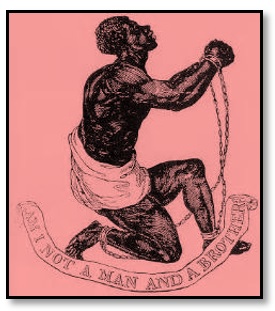
Am I Not A Man...?1. Slavery. While not the only factor, it was by far the largest. Without it, there would have been no war. Seceding southern states issued their own “declarations” explaining the causes which impelled them to the separation. The issue? Slavery, threats to slavery, insufficient protection of slavery, criticisms of slavery. Oh, and slavery.

2. The Election of 1860. Abraham Lincoln’s victory signaled to the South that the system – democracy, compromise, voting – no longer worked. Their voice, it seemed, was no longer even a factor in how the nation was run. Lincoln’s election was the final straw, since he was perceived as a threat to… what else? Slavery.

3. Overconfidence. Few on either side anticipated the possibility of an extended war, or the kinds of death and violence which were to come. Had those making decisions had any hint of what would unfold, one wonders if they’d have pursued other solutions a bit more vigorously. 

Slavery

Even before declaring independence in 1776, slavery had been a controversial topic in the American colonies, but it was not a strictly North/South issue. Slavery was legal in most of the original thirteen states, and abolitionists – while not always prominent – spoke out against it up and down the young nation. 

Over time, the North became increasingly industrialized while the South grew more and more reliant on large-scale cash crops. Small farmers were still the norm everywhere, but most large cities were in the North, and most plantations were in the South. Slavery ceased to make economic sense in the North, allowing ideological concerns to eventually prohibit it altogether. As the cotton gin made the institution wildly profitable and seemingly essential to the South, slavery was increasingly promoted as a positive good for all involved – including the slaves themselves.  

North and South had more in common than not, but basic geography meant they developed into two very different economies and cultures. By the 1820s and 1830s, during the first Age of Reform, abolitionists speaking out against slavery were quick to condemn not only the institution, but those perpetuating it. Not appreciative of being labeled backwards, horrible people – especially by self-righteous Yankees – the South struck back with criticisms of northern corruption and hypocrisy. It was no longer about the economy or even American ideals – it was personal.

Counting Down to Civil War

That One Manifest Destiny PaintingWestward Expansion:  Despite the increasing tensions between the North and South over a variety of things, political compromises held the nation together most of the time. The problem was that the U.S. continued expanding at an unbelievable rate, and each new territory acquired forced anew the question of slavery. 
The Missouri Compromise (1820):  Missouri, which had slavery, was ready for statehood. This would have thrown off the balance between slave and free states in the Senate (the North held a decisive advantage in the House). Maine was created and admitted at the same time, and an imaginary line drawn west – above it would be forever free, below it not so much. This delayed major conflict over slavery for almost a generation.

Annexation of Texas (1845):  When Texas joined the Union, it was a natural slave state, and below the line, but it was huge. There was talk of admitting it as multiple states – maybe as many of five. The resulting war with Mexico was largely supported by pro-slavery folks, with far less enthusiasm emanating from “free-soilers” in the North.

The Compromise of 1850:  Thanks to rich soil and the Gold Rush, California filled up quickly. When it was ready to enter the Union, the national scab was picked off yet again. Congress put together a package of five bills hoping to appease both sides. California would be free. Some Texas boundaries were settled. Washington, D.C., would eliminate the slave trade but keep slavery itself. Utah and New Mexico would be organized on the basis of “popular sovereignty” (we’ll come back to that). But the most important part of this compromise was the Fugitive Slave Act.

The Fugitive Slave Act (1850):  Technically, slaves escaping to the North were still legally slaves and subject to return (this was even in the U.S. Constitution). But it was rarely enforced, and if you made it North, you were essentially free. The FSA gave this expectation teeth, making it illegal to refuse assistance to authorities or others looking to recapture runaways. The effect was very different than intended – while most Northerners were against slavery, they were generally busy with their daily lives and most did little or nothing about it one way or the other. This law got them involved – mostly by actively assisting runaways or harassing and misleading slave catchers.  

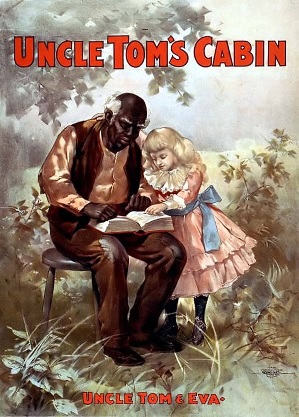
Uncle Tom's Cabin (Cover)Uncle Tom’s Cabin (1852):  When President Lincoln met author Harriet Beecher Stowe a decade later, the story goes, he exclaimed something to the effect of “So you’re the little lady who started this great big war!” Whether this actually happened or not, the idea is sound. Uncle Tom’s Cabin did more to galvanize the North against slavery and slave-owners than any other single factor. It took nameless, faceless masses of dark chattel and made them real to readers (think Anne Frank, or that kid in the striped pajamas.)
The Kansas-Nebraska Act (1854):  Legislation by Stephen Douglas (the one who’ll run against Lincoln in a few years) which allowed Kansas and Nebraska to decide the slavery issue via “popular sovereignty” – letting the people decide. This sounded very democratic, but in practice it only laid the groundwork for…

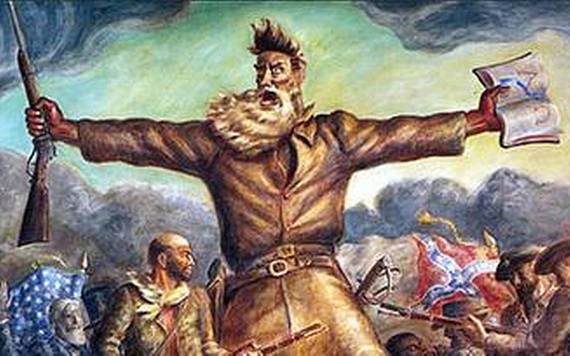
“Bleeding Kansas” (1856):  People from both sides poured in and took up residence in preparation for the vote. Violence ensued, towns were burned, and there was much name-calling. John Brown showed up with his followers and beheaded several pro-slavery settlers with swords while forcing their families to watch. Things were… tense.

“Bleeding Sumner” (1856):  Senator Charles Sumner gave a provocative speech about slavery, calling it a “harlot” to whom various southern politicians were bound. Preston Brooks of South Carolina took exception, and shortly thereafter surprised Sumner at his desk where he proceeded to beat his brains out (almost literally) with his cane. Sumner survived, but was forever impaired. The North was horrified, but Brooks became a hero to the South. 

Scott v. Sandford (1857):  Would a slave who’d lived in a free state or free territory become legally free as a result? The Supreme Court said NO. The majority opinion by Chief Justice Roger Taney added that the Missouri Compromise was unconstitutional, Congress had no power to prohibit slavery in territories, and Blacks couldn’t bring suit to begin with because they weren’t citizens – any of them. This is considered one of the worst and most unnecessarily over-reaching decisions in all of Supreme Court history.

The Lincoln-Douglas Debates (1858):  Lincoln and Douglas both wanted the same Senate seat in Illinois. They traveled the state holding outdoor debates, well-attended and quite colorful. Lincoln wasn’t new to politics, but this is when he became a household name saying things like “A house divided against itself cannot stand. I believe this government cannot endure, permanently, half slave and half free. I do not expect the Union to be dissolved; I do not expect the house to fall; but I do expect it will cease to be divided. It will become all one thing, or all the other.”

John Brown Was A Crazy SunvabychJohn Brown’s Raid on Harper’s Ferry (1859):  Brown was back, this time trying to start a full-blown slave revolt in Virginia. He was captured, put on trial, and sentenced to death. This is when he wrote, rather creepily, that he was “now quite certain that the crimes of this guilty land will never be purged away, but with Blood…”

The Election of Abraham Lincoln (1860):  Four major candidates including Stephen Douglas and Abraham Lincoln. Lincoln won the Electoral College without winning a single southern state. By the time Lincoln took office on March 4, 1861, seven southern states had seceded. (Four more left after the actual fighting started.)

You Wanna Sound REALLY Smart? {Extra Stuff}

The Battle of Ft. Sumter (April 12, 1861):  As the nation divided, people from or loyal to the North who happened to be in the South made their way home, as did Southerners who happened to be up North. Forts and other military sites located in the South were largely left in the hands of those determined to take up arms for the Confederacy, except for one – Ft. Sumter in Charleston Bay, South Carolina. Major Robert Anderson, despite being low on supplies and having zero chance of military success, held his post.

One of the first things greeting Lincoln upon taking office was a telegraph from Anderson requesting orders – would he be resupplied? If not, he’d be forced to surrender in a few days. Lincoln sought middle ground in his attempt to resupply Anderson. If he gave up the fort, he’d appear weak. If he didn’t, he’d be responsible for starting the war most thought inevitable at this point. He attempted to send in supplies but not additional military aid; P.T. Beauregard and crew opened fire early morning, April 12th.

The battle raged most of the day, mostly cannon fire exchanged to and from the fort. At the end, Anderson surrendered with honor. It was the first real fighting of the Civil War, and… no one died. There were zero serious casualties until a cannon exploded during an honor salute to the flag after the fort had surrendered and two soldiers were killed. This war was going to be weird.

Lincoln Good To GoFrom Lincoln’s First Inaugural Address:

Apprehension seems to exist among the people of the Southern States, that by the accession of a Republican Administration, their property, and their peace, and personal security, are to be endangered. There has never been any reasonable cause for such apprehension… I have no purpose, directly or indirectly, to interfere with the institution of slavery in the States where it exists. I believe I have no lawful right to do so, and I have no inclination to do so…

Before entering upon so grave a matter as the destruction of our national fabric, with all its benefits, its memories, and its hopes, would it not be wise to ascertain precisely why we do it? Will you hazard so desperate a step, while there is any possibility that any portion of the ills you fly from, have no real existence? … Will you risk the commission of so fearful a mistake? …

Physically speaking, we cannot separate. We cannot, remove our respective sections from each other, nor build an impassable wall between them. A husband and wife may be divorced, and go out of the presence, and beyond the reach of each other; but the different parts of our country cannot do this. They cannot but remain face to face; and intercourse, either amicable or hostile, must continue between them…

My countrymen, one and all, think calmly and well, upon this whole subject. Nothing valuable can be lost by taking time… Intelligence, patriotism, Christianity, and a firm reliance on Him, who has never yet forsaken this favored land, are still competent to adjust, in the best way, all our present difficulty.

In your hands, my dissatisfied fellow countrymen, and not in mine, is the momentous issue of civil war. The government will not assail you. You can have no conflict, without being yourselves the aggressors. You have no oath registered in Heaven to destroy the government, while I shall have the most solemn one to “preserve, protect and defend” it.

I am loath to close. We are not enemies, but friends. We must not be enemies. Though passion may have strained, it must not break our bonds of affection. The mystic chords of memory, stretching from every battle-field, and patriot grave, to every living heart and hearthstone, all over this broad land, will yet swell the chorus of the Union, when again touched, as surely they will be, by the better angels of our nature.

Edu-Confessional

Confessional MomentForgive me #edutwitter, for I have sinned. It’s been two weeks since my last post, but months since anything, you know… good

Where should I start? I teach history so I’m partial to chronologically, but—

Maybe it’s best if I just dive in with the worst of it, then move through the list from there. 

First, I assign a lot of videos in my AP World History class. My AP U.S. History class, too – but not as many as for World. “Required Viewing,” I call it, to go with each week’s “Required Reading.” Crash Course, Hip Hughes, Ted-Ed, Overly Sarcastic (not to be confused with OverSimplified, which in turn is quite different than Simple History). 

I think I even used It’s History! once or twice, when it really fit. 

It’s just… well, our textbook isn’t very good. It’s poorly organized and at times downright bewildering. My kids get frustrated with it – and not in the usual “but this is hard!” way. It has some good sections, but… well, it’s mediocre at best for most things. 

There are articles and supplemental readings I use, but when you can have animation and key points on the screen and entertaining personalities… Plus, we went one-to-one this year and there’s that unspoken pressure to use the damn devices, you know?

OMG – I meant, um… ‘gosh-darned’! Maybe we should add ‘bad language’ to the list. Sometimes in class. But not usually. But sometimes. 

Let’s see, what else?

Oh, yes. Forgive me, #edutwitter, for being so annoyed with my Early Civilizations class. They exhaust me, and… 

I don’t want to say it.

I shouldn’t feel this way, you understand, but…

*sigh*

I dread them every day. I don’t look forward to that hour at all. Ever. I’m relieved when they go. 

I don’t dislike them individually, you understand. But while my advanced classes aren’t all brilliant or intrinsically motivated or any of those other stereotypes, there are times when pouring hours of preparation and research and risk into a lesson WORKS with them. They’re not ALL great days, but great days happen. Most of the rest are at least GOOD days. They learn stuff, and do stuff, and show signs of life and everything. Most even have a pulse!

But not in Early Civ. I keep dragging that horse towards the river of rudimentary academics, but the hydrophobia is strong and honestly I’ve started just giving them graphic organizers or stuff I’ve lifted from other teachers. 

I do try. I put in the prep time. I’m definitely pouring more time and emotion into that one hour than they are collectively applying in return. And none of it’s fun, or fulfilling, or whatever. There are parts of this job that are never any fun – grading, meetings, discipline, etc. – but most days I look forward to going to work. Most classes have those moments that something clicks – that breakthrough – that discussion – that brilliant question. But not with this group. I’ve tried every trick I know, and it’s like trying to punch my way through a room of wet bread wearing toasters on my feet. 

They’re never discipline problems. Sometimes I almost wish they were ‘bad kids’, so I’d have an excuse. 

An excuse for what? Well… *sigh*. I mean, that’s just it. They’ve made it to high school. They’re not stupid or out to cause trouble or anything. So it must be, you know… me. I’m failing. Them. I’m failing them. 

I mean, yes – many of them have ‘F’s right now, but that’s not what I mean. I’m failing at what I’m supposedly ‘called’ to do. What I used to be pretty decent at, I thought. But I sure seem to suck now, and I’m not sure what to do differently. At the same time, I’m pretty sure the problem isn’t primarily me – but I’m the adult, and the one paid to figure it out. 

It makes me resent them. 

Anyway, those are the biggies. What else…? I need to check my notes. 

Oh! Here’s one – I’ve skipped lots of “required” paperwork from my district already this year. If it’s important, they’ll ask again, right? Even when I do it, I tend to, um… streamline a bit, for efficiency’s sake. Only once in twenty years has an administrator called my room to let me know they read through my professional goals for the year and noticed #3 was “Look, if anyone ever actually reads these, let me know and we can talk about personal and professional growth or whatever. Otherwise, this is merely an exercise in wasting my time while killing as many trees as possible.” 

They didn’t find it as amusing as I did. That happens a lot, actually. 

Forgive me, #edutwitter, for missing bus duty Friday, even though I’d been warned for missing a duty shift already this month. One of my kids came in right after school, and she was having a complete meltdown. Nothing that triggers “mandatory reporting” or anything, but she needed someone to talk her off the proverbial ledge, and I guess that was me. So, yeah – bus duty. I’ll be hearing about that on Monday, no doubt. 

Forgive me that sometimes when I’m grading I just scan the work to see if they took it seriously and count it as good enough. Twice I’ve thrown entire assignments away without recording them, figuring the goal is that they learn, not that I improve at data entry. It’s not like there are that many surprises – the hundred-and-four-percenters still do excellent work and the fifty-percenters still turn in stuff that looks like they ate it and threw it back up first. 

Forgive me, #edutwitter, for not reading that many teacher books. There have been some great ones, but most leave me feeling rather bleh. Honestly, there are about a dozen educators blogging for no money who are WAY more challenging and inspirational than whatever it was our district gave us at the start of THIS year for our ‘department books study’ or whatever. 

Forgive me that I find many of my students more interesting and even occasionally entertaining than actual grading or lesson planning. Lord knows I’m at school late enough in the afternoon, but so are many of them as they wait for band or theater or speech/debate. I could close and lock my door, but… I mean, relationships, right? 

I’m sure it started when I came to peace with spending time on things I found important and interesting even if that meant taking a few shortcuts through the mandated curriculum. It’s a slippery slope – gateway pedagogy on the road to serious classroom rebellion. 

Forgive me, #edutwitter, for not always knowing the best thing to say or do for my kids who aren’t there to be entertaining or even to get academic help, but who are hurt or angry or broken or terrified, anxious or numb or frantic. I listen – and I know that’s no small thing. But you can’t grant someone ‘perspective’ or ‘wisdom’ or ‘comfort’ or ‘hope’. They’re in pain and it’s not usually their fault and I can’t fix it. I’m not sure I always even help. I’m sorry. 

Oh – that reminds me. I forgot my door was ajar the other day and I had The Regrettes streaming rather loudly when sweet little Carmichael came in wanting help with an assignment. “Seashore” was motivating me through some tedious grading when I realized someone was standing in the doorway and it might have scarred her for life. I think it might be best if I stick with Coltrane or E.L.O. during school hours – even when I think the door is closed. In any case, I seek your absolution, cyber-peers. 

I used a district copy code the other day to run some class sets – I’m not sure if that counts, but figured I should mention it. I told a peer I couldn’t have lunch with them because I had students coming in to work when really I just needed the quiet for half-an-hour. I shared with a colleague about a close reading activity I’ve not actually used for a PD activity last week just to keep from drawing attention to myself for being unprepared. 

I think that’s about it, anonymous friends and virtual colleagues. I mean, there is one more little thing, but it seems to be ongoing, so I’m not sure if I’m making it better or worse by seeking absolution. 

Forgive me, universe, for never quite getting it as right as they deserve. I am ambitious with my lessons, to be sure, but sometimes they don’t quite do what I hope they’ll do. I feel like it’s always first hour my first few years – the potential is there, some good things are happening, but I keep looking forward to ironing out the problems, shoring up the weaknesses, and finally actually changing the damned world by dragging them into knowledge, skills, realistic self-images, a hunger for truth and justice, and of course… growth mindsets. 

I think overall I’m getting better, but not quickly enough. Not strongly enough. I don’t know enough or do enough or adjust enough or hold the line enough or… something enough. If only I had another twenty years, amiright?

I think that’s it for real this time, but thanks for hearing me out. I’m sure I’ll be back in a few weeks. Maybe a few days. Actually, what are you doing tomorrow?

RELATED POST: Defining Success (An #OklaEd Challenge)

RELATED POST: Absolution (Bring Me My Crosier!)

RELATED POST: Happy New Mirrors!

The “Mourning Wars” – from “Have To” History

Stuff You Don’t Really Want To Know (But For Some Reason Have To) About the “Mourning Wars”

Three Big Things:

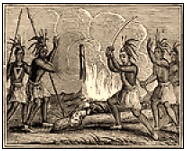
Mourning Wars1. Eastern Amerindians in colonial times practiced a very different sort of warfare than the large-scale, mass destruction favored by European powers.

2. One of the primary goals of this sort of warfare was to replace lost loved ones with captives taken from enemy tribes.

3. Captives not used as faux family members were generally executed, sometimes after long ritual torture. It was… harsh.   

Eastern Amerindian Warfare

The Amerindians whom northern American colonists were most likely to encounter weren’t necessarily more peaceful than Europeans, but the type of warfare in which they most often engaged and the goals of such hostilities were substantially different.

East of the Great Plains, all the way to the Eastern Seaboard, numerous tribes (the Iroquois are the best remembered, but there were dozens of others) were locked into perpetual retaliation, each act of aggression requiring response. Every death of a loved one or tribal member demanded retribution; each raid required a counter. These weren’t the sort of extended, large-scale undertakings common in European conflicts. Tribes struck quickly, inflicted what damage they could, often taking captives and leaving behind a few casualties, then retreated to their own settlements. 

There was little interest in taking over your enemy’s entire land, if such a thing were even possible. What would you do with it? Besides, while the thirst for requital was no doubt genuine, warfare served multiple other roles – a uniting cause for the communities involved, a sense of justice or closure for those mourning loved ones lost to previous conflicts, a road to honor and status for young warriors seeking to establish their manhood, and – depending on the tribe – a supply of victims for whatever ritual tortures and sacrifice were thought to please the gods or placate the beyond.

What’s perhaps most foreign to the western worldview, however, is what else they provided – substitutes for family members taken or killed by the tribe now under attack.

Like, literally.

The “Mourning Wars”

These “mourning wars” – often initiated at the behest of tribal matriarchs still grieving the loss of sons, brothers, or husbands – were particularly focused on taking captives from enemy tribes. Some of these captives would be tortured, many killed, but a significant number would be inserted into the roles left open by previous raids or other misfortune. This was, in fact, often the central motivator – not a certain number of enemy deaths, and certainly not captured or destroyed villages, but warm bodies of roughly the same age and potential of those lost. If they looked similar, well… bonus!

There was thus no shame in avoiding open confrontation whenever possible, as the resulting death toll was counterproductive to the purposes of the attack. Ambushes were far preferable, as were relatively low risk hit-n-runs. While more than willing to face suffering or death, warriors weren’t exactly seeking it out.

The glory of martial self-sacrifice is a culturally constructed phenomenon – it’s not inherent to all times and places. Our veneration for violent death may be laudable, but it’s not universal. To quote the fictional George S. Patton in his ‘Ode to Enormous Flags’… “No dumb bastard ever won a war by going out and dying for his country. He won it by making some other dumb bastard die for his country.”

All these years later and that bit still brings a tear.

This aversion to violent death wasn’t mere cowardice. It was largely spiritual – many tribal belief systems consigned victims of such hostility to wander the earth eternally seeking vengeance, or otherwise unable to find peace. It was intensely practical as well – these were relatively small tribal units in which every member played an essential role. Even should a warrior or two wish to seek status via bravado or reckless tactics, doing so would have been irresponsible and borderline disloyal to the community who would lose his presence and his support as a result.

Which brings us back to the captives – the ‘replacements’, if you will.

Being taken captive could be terrifying, even if you had some idea what to expect. Anyone perceived as potentially more trouble than they were worth – women or children of the wrong age or build, or warriors capable of fighting back even after captured – were more often than not scalped and killed on the spot. Most, though, were bound and led back to the village, where they would be forced to walk among the tribe while being hit, insulted, and otherwise abused. Sometimes they were cut or burned. It sounds nasty.

Captured warriors were likely to face extended torture and public humiliation – often in retribution for similar offenses by their own tribe. They were expected to endure such suffering stoically, which most apparently did, although it’s difficult to discern too many details from surviving records – most of which come down to us through the occasional white folk involved for one reason or another, their very presence no doubt altering the experience. These same accounts suggest it was common to eat the condemned afterwards, which makes a certain amount of symbolic sense, but which might also be the sort of thing added to further ‘other’-ize or demonize native populations.

Surviving women and children were assigned to families based on their general age, appearance, or skill set, as were young men who were found to be particularly handsome or potentially useful. They were given the name of the person they were intended to replace, along with any title or position that person had held, and over time generally ‘became’ that person – to the point of becoming a very real part of their new family, and eventually loyal to their adopted tribe.

This apparently provided a sort of comfort to mourning family members, along with whatever sense of justice or restitution they craved, and the community was reinforced in both numbers and spirit as a result. However foreign it may seem to western norms, it was practical and effective. No one wanted to be on the losing end of these bargains, but there’s no indication that anyone involved protested or found a problem with the system itself. Over time, it maintained balance and numbers among the various tribes – unlike, say, European style warfare, whose entire purpose was to destroy and eliminate the enemy, whatever the cost on both sides.

Upsetting Balance

It’s most likely with this guiding balance in mind that tribal leaders discouraged young men from taking matters into their own hands and initiating raids on their own. While strict hierarchical rule was not in the nature of most Amerindian cultures, community members generally deferred to the wisdom and wishes of those who’d proved themselves capable and wise. In return, leadership avoided anything approaching dictatorial control, steering the community instead by example and clearheaded thinking.

Through subtle combinations of gifts or other gestures of goodwill, peace could be established and maintained with some – if not all – neighboring tribes. For tribes who developed trade with one another, peace was not only desirable but likely. And if there were even distant kinship connections, well… besties! Conversely, groups with particularly fierce reputations were able to maintain a degree of peace and security via fear – they simply weren’t worth tangling with. Losses and suffering would outweigh gains and glory.

Despite the seemingly brutal and unforgiving nature of the “mourning wars,” there were rules – however informal. Then, as now, young men out to establish a reputation for themselves did not always defer to the wisdom of their elders. Among the eastern tribes of pre-colonial and colonial times, this was especially unfortunate since the overarching purpose of warfare was to stabilize and preserve one’s own people; unprovoked or reckless raids set off a chain of reprisals which of course did quite the opposite.

As with so many other elements of Native American culture, the arrival of white folks, their weaponry, their land hunger, and of course their arsenal of diseases, completely overturned whatever “stability” had been maintained by these “mourning wars.” Efforts to replace those lost to smallpox or other epidemics quickly destroyed weaker communities, while guns and other technology spread unevenly through the mix, making previous realities unsustainable.

You Wanna Sound REALLY Smart? {Extra Stuff}

If you need to sound thoughtful about the “mourning wars”, consider some comparisons to other systems of maintaining population or community balance which also strike modern western readers as a mite odd.

There are numerous examples of polygamous cultures – from the Latter Day Saints in the 19th century U.S. all the way back to the Old Testament Jews (think King David and such). Multiple wives was one way to promote rapid reproduction and maintain population, especially for marginalized or otherwise endangered groups. It’s a great example of morality being shaped by need and circumstance.

The age at which young women are considered marriable (and thus, appropriate sexual partners) has varied widely from culture to culture over the centuries. The shorter the lifespan and harder the living, the younger the appropriate age tends to be.

One of the most interesting customs related to reproduction was described by Marco Polo as he traveled across Asia. High in the mountains he encountered isolated communities in which he was welcomed into every home and encouraged to stay as long as he liked – in the daughter’s room, in the sister’s room, even in the master bedroom while the husband was suddenly called away on business. Polo feigns moral shock on behalf of his reading audience while exploiting the salaciousness for a page or two before explaining that because these communities were so isolated, they relied on random travelers to inject much-needed variety into their gene pools. Western morality could very well have crippled or destroyed them within a few generations.

The other direction you might consider if called upon to discuss the “mourning wars” is to focus on the contrast between Amerindian warfare and “white guy” warfare. The long traditions of independence – even during battle – among the majority of tribes worked poorly against strict hierarchical military structure of the west. Generations of limited warfare prioritizing glory or capture or territory ran into a military tradition of capture and destroy, with predictable results.

Lies We Tell Our Students

Lies Lies SignI don’t like to lie to my students. I try not to, but it’s not always easy. Sometimes it’s literally required by the folks signing my paycheck, creating what we in the teaching business call “a dilemma.”

My ex-wife and I never told our kids there was a Santa, a Tooth Fairy, or an Easter Bunny, even when they were very little. We tried to make holidays fun, of course, and we played all sorts of pretend games and did traditional things – we weren’t uptight. It just seemed wrong to demonstrate to them early on that we were willing to fabricate stories about invisible beings which they were expected to later outgrow, for no better reason than our own amusement.

Euthanized animals weren’t playing on someone’s farm, pre-teens didn’t always win at games they sucked at, and not everyone is special in their own way. We tried to balance this with some grace and humility – it wasn’t their job to puncture the illusions of their young peers – but we didn’t figure familial festivities required lies and delusion.

(I’m not criticizing those of you who choose to betray your child’s trust repeatedly, by the way – that was just our personal choice. We wanted the truth – whether it be uncomfortable, encouraging, unwelcome, or warm – to mean something. We were odd that way.)

I feel the same way with my kids today – the ones I’m paid to deal with. It doesn’t automatically make me a great teacher, but at the very least I’d prefer not to contribute more than absolutely necessary to the existing cynicism and distrust of “the system” and everything for which we claim to stand.

Here are a few of the most egregious lies we tell kids repeatedly, then wonder why they don’t take us at our word when it’s really important. I’m curious what you’d add to the list – so please, comment below.

Reach for the StarsLie #1: You can be anything you want to be if you really set your mind to it.

This may be true for a handful of them, but for most it’s balderdash. That doesn’t mean they’re all doomed – that’s a false dichotomy – but the power of personal choices and the glory of risk needn’t be yoked to self-delusion.

I’m an overweight public school teacher with a blog and a modicum of notoriety. I’d like to write a book eventually. That’s unlikely, but certainly possible with some commitment and a few sacrifices. I’ve considered going back to school for a master’s, which would be tricky in terms of logistics, but if it’s truly important to me, it’s conceivable. I could pick up the guitar again, do more with “Have To” History, or lose 30 pounds if I make good choices and refuse to give up – yay motivation and living one’s dreams.

But my NHL ambitions are simply not in the cards at this point. Disney movies aside, I’m not going to be picked up by the Stars or Blue Jackets this season. Or next. I’m not going to make a living writing. People do, but I can’t. And no matter how much I wish I’d used my twenties more ambitiously, I’m never going to be young and suave and hang with the cool kids ever, ever, ever. Even trying would be creepy and sad.

Lie Lie ManLie #2: Appearance doesn’t matter – it’s only what’s inside that counts.

Appearance doesn’t’ matter? Seriously? Are you new?

Of course appearance matters. Maybe it shouldn’t – I suspect that’s what we usually mean, if we mean anything at all – but it absolutely does. Worse, we all know this when we say it.

Why did you choose semi-professional attire today? Why do we have dress codes for our students, however silly or loosely interpreted they may be? Why do girls wash their hair from time to time and boys don’t want to have zits?

Do you honestly believe that girl in your 3rd hour, the one who’s just… large, and homely, and objectively not that easy to look at, will throughout her education get the same attention, respect, opportunities, or breaks as those in ‘average’ range or above? It’s a sliding scale, of course, and all sorts of subjective, but that doesn’t mean it doesn’t exist.

It is arguably petty – perhaps even offensive – to openly speak of such things, but claiming you can’t tell or don’t notice which young men are handsome or which young ladies are genuinely cute is like insisting you “don’t see color.” Nonsense.

It’s not just personal appearance. Good handwriting or proper formatting of a document makes student work look ‘smarter’ before we’ve actually read any of it. Projects that are turned in looking intentional and demonstrating a little aesthetic awareness grab our eye very differently from those haphazardly taped together or only recently freed from the bottom of someone’s backpack.

None of this excuses our conscious promotion of appearance over substance. God forbid we judge students based on potential professional attractiveness or grade their papers based primarily on their font and margins. But that’s a decision, based on ethics – it’s not how the world naturally works. They all know this. Denying it simply undercuts our credibility in other areas.

What we can respectfully suggest to them when the opportunity arises is that while appearance matters – sometimes greatly, and especially at first – it’s the underlying qualities and less obvious elements of people, of writing, of art, of work, that almost always matter most over time. Looking good, in other words, will only get you so far, whether we’re talking hair gel and pencil skirts or that fancy paper you used to print out your essay.

Lies Lies PaperLie #3: This {insert stupid required school thing, probably state-mandated, always done in the most annoying, time-consuming way possible} is very important for all these reasons we’re about to give.

There are times we have to do stupid stuff. The more pointless and unnecessarily contorted it is, the more likely it is to have been mandated by the state. Let’s just acknowledge that and move on, shall we?

We’re supposed to be preparing them for some sort of “real life” down the road, aren’t we? Sometimes life means jumping through hoops or enduring bureaucracy with patience and grace. Heck, sometimes it means sucking it up and doing stupid stuff to get what you want on the other side.

Can we not just own that and admit to our kids when some of the system is unnecessarily inane? Being cooperative shouldn’t require being dishonest. If there are reasons to do it anyway, let’s share the reasons.

For that matter, I prefer to admit it to my kids if an activity or lesson doesn’t pan out the way I’d hoped. Assuming I don’t recklessly waste their time on a daily basis, they don’t seem too shocked or turn on me violently when I share that, well… here was my goal for that and what I was hoping we’d end up understanding or being able to do, but I’m not sure it turned out that way. Maybe next time I’ll do it this other way, etc.

That’s not something I’d add to the teacher evaluation system or anything, just my personal style – like not lying to my children about magical invisible gluttons or pretending animals are immortal. I’m just quirky like that.

Of course, sometimes we don’t know why we’re doing the stuff we’re doing. Sometimes it’s not the state – it’s us. If I can’t easily and succinctly explain the purpose or value of something I’m asking a teenager to do, then perhaps we shouldn’t have to do it. That’s also about honesty – maybe with ourselves as much as them.

Alright – I’m sure I’m missing some biggies. What are the most egregious lies we tell our kids, in your opinion? And why do we tell them? I look forward to your comments below.

RELATED POST: Making Good Choices (A Post For My Students)

RELATED POST: The Rainfall Follows The Plow

RELATED POST: Dear Frustrated Student…