Forever Unfit To Be A Slave (A Little Knowledge Is A Dangerous Thing, Part Two)

{This Post is Recycled – Reworked from a Previous Version and Reposted In It’s Updated Glory}

FD Learning To Read

In Part One, I waxed eloquent about secession and the South’s stated reasons for attempting to leave. Among their many complaints – most of which involved perceived threats to slavery – was the North’s tolerance of those who snuck in and taught slaves stuff.

A little knowledge, it turns out, can be a dangerous thing.

Frederick Douglass, in his first autobiography (1845), describes his epiphany regarding education:

My new mistress proved to be all she appeared when I first met her at the door,—a woman of the kindest heart and finest feelings. She had never had a slave under her control previously to myself, and prior to her marriage she had been dependent upon her own industry for a living. She… had been in a good degree preserved from the blighting and dehumanizing effects of slavery…

One thing Douglass’s account shares with those of Solomon Northup, Harriet Jacobs, and others, is their insistence that not all slave-owners were naturally cruel and evil people. They avoid neatly dividing people into ‘good’ and ‘bad’ and instead focus on the system, and its effect on those involved – slave or free, black or white.

Rather than letting a few slaveholders off the moral hook, it puts the rest of us on it. When the problem is bad people, we’re safe because we’re not them. When the problem is something larger, something systemic, which we either ignore or tolerate, we’re no longer absolved.

Very soon after I went to live with Mr. and Mrs. Auld, she very kindly commenced to teach me the A, B, C. After I had learned this, she assisted me in learning to spell words of three or four letters… 

Mr. Auld found out what was going on, and at once forbade Mrs. Auld to instruct me further, telling her, among other things, that it was unlawful, as well as unsafe, to teach a slave to read. To use his own words, further, he said… “A nigger should know nothing but to obey his master—to do as he is told to do. Learning would spoil the best nigger in the world.”

Knowledge Is PowerMr. Auld was no fool. He knew that control – whether of populations or individuals – begins through the information to which they have access. Whoever controls knowledge controls everything else – especially when it comes to maintaining a system based on privilege and inheritance.

You know, like the one we pretend we don’t have today.

”Now,” said he, “if you teach that nigger (speaking of myself) how to read, there would be no keeping him. It would forever unfit him to be a slave. He would at once become unmanageable, and of no value to his master. As to himself, it could do him no good, but a great deal of harm. It would make him discontented and unhappy.”

Mr. Auld is at least honest. Rather than claim young Frederick CAN’T learn, the problem is very much that he CAN – and as things stand, that helps no one. Raised expectations are a curse both ways.

These words sank deep into my heart, stirred up sentiments within that lay slumbering, and called into existence an entirely new train of thought…

Isn’t that what the best learning does? Challenge everything, and force you to separate the assured from the assumed?

I now understood what had been to me a most perplexing difficulty—to wit, the white man’s power to enslave the black man… From that moment, I understood the pathway from slavery to freedom. It was just what I wanted, and I got it at a time when I the least expected it…

If your room under the stairs is all you’ve ever known, you may not be happy, but you can hardly fathom more. Once you’ve gone to a museum or zoo, your horizons are forever altered – there are things out there of which you didn’t know. And Hogwarts… still full of limits, but compared to the room under the stairs…?

HP Under StairsThere’s nothing wrong with learning to be content with what you have, but that’s a choice we can only make if we have some glimpse of the alternatives. Until then, you’re just… stuck.

Douglass started tasting something bigger than he’d known, and for the first time found himself able to give form to his sense of bondage.

I was now about twelve years old, and the thought of being a slave for life began to bear heavily upon my heart. Just about this time, I got hold of a book entitled “The Columbian Orator.” Every opportunity I got, I used to read this book. Among much of other interesting matter, I found in it a dialogue between a master and his slave.

The slave was represented as having run away from his master three times. The dialogue represented the conversation which took place between them, when the slave was retaken the third time. In this dialogue, the whole argument in behalf of slavery was brought forward by the master, all of which was disposed of by the slave. The slave was made to say some very smart as well as impressive things in reply to his master—things which had the desired though unexpected effect; for the conversation resulted in the voluntary emancipation of the slave on the part of the master…

Slavery is bad, and running away was illegal. Talking back to one’s master was dangerous and not to be advised – it was unlikely to lead to your emancipation. All this book lacked to be utterly perverse by the standards of the day were zombies and a gay shower scene. And yet, Douglass discovered benefit in reading this work of subversive fiction.

FDDouglass connected with a character who was in some ways like himself – not in wise words or holy determination, but in the ways his life sucked, like being a slave. This fictional character, however, was able to demonstrate at least one possible way to endure or even flourish in the ugly, imperfect situation in which he was mired. He resonated far more than an idealized hero-figure of some sort could have, belching platitudes while fighting off the darkness with patriotic pluck.

Douglass became who he was partly because of a banned book.

The reading of these documents enabled me to utter my thoughts, and to meet the arguments brought forward to sustain slavery; but while they relieved me of one difficulty, they brought on another even more painful than the one of which I was relieved. The more I read, the more I was led to abhor and detest my enslavers. I could regard them in no other light than a band of successful robbers, who had left their homes, and gone to Africa, and stolen us from our homes, and in a strange land reduced us to slavery. I loathed them as being the meanest as well as the most wicked of men. 

Here’s the number one reason governments and religions and parents and schools ban whatever they ban. It’s nearly impossible to maintain the illusion you’re doing someone a huge favor by keeping them locked under the staircase once they’ve visited Hogwarts – even by proxy. The power to question is the power to overcome.

As I read and contemplated the subject, behold! that very discontentment which Master Hugh had predicted would follow my learning to read had already come, to torment and sting my soul to unutterable anguish. As I writhed under it, I would at times feel that learning to read had been a curse rather than a blessing. It had given me a view of my wretched condition, without the remedy. It opened my eyes to the horrible pit, but to no ladder upon which to get out.

In moments of agony, I envied my fellow-slaves for their stupidity. I have often wished myself a beast. I preferred the condition of the meanest reptile to my own. Anything, no matter what, to get rid of thinking!

Finally, something our elected representatives could support.

Douglass went on to become one of the most powerful speakers and important writers of the 19th century. He also turned out to be a pretty good American, despite his dissent regarding any number of issues.

Turns out you can do that.

Martin Luther & His 95 ThesesLearning is dangerous, but not to the person doing the learning. It can hurt along the way, but you usually end up better off for it.

Learning is dangerous to men whose ideas lack sufficient merit or whose systems lack sufficient substance to maintain their influence over people once they have other options. 

Schoolhouse Rock intoned in the 1970’s that “It’s great to learn – ‘Cause Knowledge is Power!” A few thousand years before, Jesus of Nazareth had promised his followers that “you will know the truth, and the truth will set your free.” He was speaking most directly of Himself and salvation, but the principle echoes past the specifics. 

In a time of strict codes and limited freedom, He offended the churchiest of them with his associations, the liberties he took with the law designed to protect them from damnation, and by suggesting we might not need holy arbiters any longer to find our way.

At the risk of getting preachy, the curtain tore long before Martin Luther nailed his complaints to the door.

Perhaps the Scribes and Pharisees had underlying good intentions, being naturally rooted in the ways of Old Testament law. They grew up under a God who’d kill you for touching His ark, even if it was to prevent it falling to the ground. We’ll cut them some slack.

Scarlet Letter ShadowThe Inquisitions and Puritans and Assigners of Scarlet Letters in New Testament times have no such excuse. If their faith is what they claim, it’s a faith based on light and truth and – above all – informed choice. Jesus and Paul may not have had much in common, but there’s no record of either lying or hiding something they didn’t want the world to see. They had enough faith in their message that it could withstand freedom of choice. They didn’t want to capture anyone who didn’t wish to be won. 

You don’t make better citizens or better Christians by hiding or prohibiting things you don’t want them to know. You can’t strengthen faith by torturing those who sin. You certainly can’t narrow the gap between young people and American ideals by doing a better job bullsh*tting them.

It’s wrong to even try, of course, but it also just doesn’t work.

Let’s have a little faith in our spiritual ideals, and our foundational values as a nation. Let’s offer enough light and live enough of an example that we can risk letting those we love have a little freedom. If they come back…

Well, you know the rest.

Darth Dove

RELATED POST: Secession & Superiority (A Little Knowledge Is A Dangerous Thing, Part One)

RELATED POST: Liar, Liar, Twitterpants on Fire (A Little Knowledge Is A Dangerous Thing, Part Three)

RELATED POST: I’d Rather Be Aquaman

Secession & Superiority (A Little Knowledge Is A Dangerous Thing, Part One)

{This Post is Recycled – Reworked from a Previous Version and Reposted In It’s Updated Glory}

Secession Map

In the Election of 1860, despite almost unanimous opposition from southern states, Abraham Lincoln was elected. Between the announcement of his victory (it took a little longer to tally everything back then) and his inauguration in early March, seven southern states announced they were leaving the Union.

From Georgia’s Declaration of Secession:

The people of Georgia having dissolved their political connection with the Government of the United States of America, present to their confederates and the world the causes which have led to the separation. For the last ten years we have had numerous and serious causes of complaint against our non-slave-holding confederate States with reference to the subject of African slavery. They have endeavored to weaken our security, to disturb our domestic peace and tranquility, and persistently refused to comply with their express constitutional obligations to us in reference to that property…

A brief history of the rise, progress, and policy of anti-slavery and the political organization into whose hands the administration of the Federal Government has been committed will fully justify the pronounced verdict of the people of Georgia. The party of Lincoln, called the Republican party, under its present name and organization, is of recent origin. It is admitted to be an anti-slavery party… anti-slavery is its mission and its purpose…

Notice the way the format consciously echoes the Declaration of Independence – the basic proclamation followed by a list of complaints explaining why they are never ever ever getting back together. 

From Mississippi’s Declaration:

In the momentous step which our State has taken of dissolving its connection with the government of which we so long formed a part, it is but just that we should declare the prominent reasons which have induced our course. 

Our position is thoroughly identified with the institution of slavery – the greatest material interest of the world. Its labor supplies the product which constitutes by far the largest and most important portions of commerce of the earth. These products are peculiar to the climate verging on the tropical regions, and by an imperious law of nature, none but the black race can bear exposure to the tropical sun. These products have become necessities of the world, and a blow at slavery is a blow at commerce and civilization. That blow has been long aimed at the institution, and was at the point of reaching its consummation. There was no choice left us but submission to the mandates of abolition, or a dissolution of the Union, whose principles had been subverted to work out our ruin.

They all pretty much go like this. Based on these documents, produced by the Southern states for the explicit purpose of proclaiming to the world the causes of their secession, the main issues seemed to be (1) slavery, (2) slavery, and – in some cases – (3) slavery. 

Slavery Chains

South Carolina took the lead as they always did when steps towards racial equity needed to be crushed:

But an increasing hostility on the part of the non-slaveholding States to the Institution of slavery has led to a disregard of their obligations… {The northern} States… have enacted laws which either nullify the Acts of Congress, or render useless any attempt to execute them… Thus the constitutional compact has been deliberately broken…

Those {non-slaveholding} States have assumed the right of deciding upon the propriety of our domestic institutions*; and have denied the rights of property** established in fifteen of the States and recognized by the Constitution; they have denounced as sinful the institution of Slavery***; they have permitted the open establishment among them of societies,**** whose avowed object is to disturb the peace… They have encouraged and assisted thousands of our slaves to leave their homes; and those who remain, have been incited by emissaries, books and pictures to servile insurrection. 

*i.e. ‘slavery’
**i.e. ‘slaves’
***i.e. ‘Slavery’ – oh wait, it says it this time, doesn’t it? My bad.
****i.e., abolitionists 

South Carolina was upset that the North allowed so much discussion of things which threatened their way of life and went against their beliefs. They listed as one of their central reasons for trying to break the country their collective outrage that other states weren’t doing enough to stifle debate.

Their little white feelings were hurt and their dominant role in the world inconvenienced. Poor things. 

Seriously, it goes on for several pages like that.

Lincoln ThoughtfulWas Lincoln’s election really such a threat to their way of life? Maybe. Not according to Lincoln, it wasn’t, but the new Republican Party openly advocated for restrictions on slavery – particularly in terms of limiting its expansion. Perhaps that was a debate worth having, in the context of the times.

But the time for discussion and compromise, it seems, was over. The writing was on the wall, and the South feared that reason and decency would no longer produce the outcome they wished. So, they circumvented both and tried to change the rules. They chose theatrics over the much more difficult path of introspection.

…those who remain, have been incited by emissaries, books and pictures to servile insurrection.

Slavery was not simply about physical bondage, as central as that was. It required a type of brainwashing and systemic manipulation so that the slave remained perpetually hopeless, and largely helpless. They were kept ignorant of all but the most basic skills or concepts. Slave-owners – the same ones who would soon rebel based on their right not to be bossed around – were forbidden by law from teaching their slaves to read, or otherwise expanding their horizons beyond what was absolutely necessary. 

The shocking thing about slave revolts isn’t that they happened – it’s that there were so few of them. Most resistance was covert, cultural – playing dumb, breaking things, maintaining an identity bewildering to white slave-owners. 

The Underground Railroad was pretty amazing, but the total numbers carried to freedom were miniscule compared to the size of the institution. And yet…

…incited by emissaries, books and pictures…

Do you feel the past reaching out to you through that line? I get goosie-bumps. 

Reading Free“We don’t like the thinking prompted by your teachers, your books, your visuals. We don’t appreciate you complicating their worlds or ours by introducing problematic ideas. Ignorance is bliss, buddy – our version of reality is good enough, despite its apparent inability to withstand the slightest scrutiny.”

See? I coulda been a Southerner. Or an Oklahoma legislator!

The problem with education is that it gets people thinking. The problem with thinking is that they don’t always think what we want them to. And, in the South’s defense, sometimes a little knowledge IS a dangerous thing – we’ll look at that in Part Two.

The South understood the dangers of expanded thinking. As lovers of tradition – and of being in charge – they had little taste for new or threatening ideas. They codified narrow-mindedness as a virtue and framed the ignorance of those in bondage as a mercy. 

Turns out the human race is pretty good at legal, intellectual, and moral contortions when it’s time to rationalize something we really really want to be true. 

South Rising Again

After the War – which they lost – the South continued to fight against dangerous levels of education for others. They also began denying their own explicitly stated causes for trying to leave in the first place. When you feel strongly enough that your cause is just, reality is just one more adversity to nobly overcome for the greater good.

That’s Part Three.

There’s a common saying about people who don’t know their history being doomed to repeat it. That’s true enough, but it doesn’t acknowledge those who want to recapture the ignorance and sins of the past – who find antebellum ideals to be the very core of American greatness. Today, as then, that requires ignoring or subverting knowledge and debate.

Both are still dangerous.

RELATED POST: Forever Unfit To Be A Slave (A Little Knowledge Is A Dangerous Thing, Part Two)

RELATED POST: Liar, Liar, Twitterpants on Fire (A Little Knowledge Is A Dangerous Thing, Part Three)

A Wall of Separation – The Story So Far…

Church and State

Now that the elections are over and all that is good or true in the world has been destroyed, I’m trying to shift my focus back to educational stuff. You know, the things that at one time seemed important enough to shape the title of this blog?

A few months ago, I started by blogging about Supreme Court cases delineating the relationships between religion and public schooling. In order to use some of the case summaries in class, I started editing and reformatting them afterwards. Then I figured since the work was already being done, and this effort at providing classroom resources in PDF format was already underway… why not just post them as I go?

Here’s my in-progress summary of cases involving church/state issues in relation to public schooling – and a few which aren’t.  

Building A “Wall of Separation” (Faith & School) – Brief background to the First Amendment and the Bill of Rights and Jefferson’s Letter to the Danbury Baptists which introduced the phrase “a wall of separation between Church & State.”

Everson v. Board of Education (1947) – It’s OK for the state to reimburse parents for transportation costs of getting their children to school, whether public or private, sectarian or secular.

McCollum v. Board of Education of School District (1948) – The use of public school facilities by religious organizations to give religious instruction to school children violates the Establishment Clause of the First Amendment. This does not prohibit teaching about religion, or schools allowing religious groups to use their facilities outside of school ours (as long as they do so equitably). It does prohibit coercing students into religious instruction as part of the school day. 

Engel v. Vitale (1962) – The state can NOT require – or even promote – prayer in public schools as part of the school day. 

Abington v. Schempp (1963) – The state can NOT require or promote the reading of Bible verses or recitation of the Lord’s Prayer as stand-alone activities during the school day. (Studying the Bible or the Christian religion as part of history, literature, etc., still perfectly appropriate.)

Board of Education v. Allen (1968) – It’s OK for the state to provide textbooks free of charge to all secondary students (Grades 7 – 12), including those in private schools. An important part of the Court’s reasoning in this case was that the textbooks constituted aid directly to students, rather than institutions.  

Walz v. Tax Commission of the City of New York (1970) – Not specifically a ‘religion in schools’ case. It’s OK for states to offer property tax exemptions for groups serving the public good – even if they’re religious in nature.

Lemon v. Kurtzman (1971) – State aid to sectarian institutions such as private Catholic schools violates the Establishment Clause and is unconstitutional. This case also established “The Lemon Test” – “Three such tests may be gleaned from our cases. First, the statute must have a secular legislative purpose; second, its principal or primary effect must be one that neither advances nor inhibits religion… finally, the statute must not foster ‘an excessive government entanglement with religion’…”

Wisconsin v. Yoder (1972) – The state’s interest in an educated citizenry is outweighed by the right of the Amish to maintain their faith and their communities. Parents may pull their children out of public schooling for religious reasons once they turn 16 – especially given the Amish track record for becoming productive, well-behaved members of society. The Court had previously attempted to distinguish between regulating beliefs and regulating behavior – in this case, the two were the inseparable. They instead introduced the idea of “balanced interests’ – the state’s interest in an educated populace vs. the parents’ or individual’ interest in pursuing their faith as they see fit. 

Meek v. Pittenger (1975) – It’s unconstitutional for the state to provide materials and equipment for non-public schools, or to pay for support services for students at those schools. As in Allen, however, textbooks (for traditional subjects) were fine. 

Stone v. Graham (1980) – State cannot require schools to post the Ten Commandments in public school classrooms, even if paid for by private money. 

Mueller v. Allen (1983) – It’s OK for the state to let parents deduct expenses related to “tuition, textbooks, and transportation” for their children, regardless of whether their child attends public or private school, even if sectarian. Significantly, the Court determined that as long as the intent is secular, it’s OK for the effect to significantly favor parents sending their kids to religious schools. This case is considered one of the three foundational cases leading up to vouchers. 

Wallace v. Jaffree (1985) – While a “moment of silence” is fine, any nudging towards prayer, especially with teacher participation, is unconstitutional. This issue will come up again. 

Aguilar v. Felton (1985)–  A NYC program sending public school teachers into parochial schools to provide extra help for disadvantaged children was ruled an unconstitutional “entanglement” of church and state, thus violating the Establishment Clause. This ruling was overturned a decade later in Agostini v. Felton (1997).

Witters v. Washington Department of Services for the Blind (1986) – A state agency which provided assistance to blind students pursuing education or job training may continue to do so even if the education/profession being pursued is religious in nature. This case didn’t involve public education, but did nudge along an understanding of the law which certainly does. This case is considered one of the three foundational cases leading up to vouchers.

Hazelwood v. Kuhlmeier (1988) – Students produced two articles for the school newspaper which dealt with teenage pregnancy and in which students at the schools shared their firsthand experiences, including various conflicts involving their families. The school principal determined the subject matter to be inappropriate and efforts to protect the girls’ identities insufficient, and the stories were pulled. Students protested that their First Amendment rights were being violated. The Supreme Court eventually ruled 5-3 that the principal had the right to make this decision because the newspaper was a product of the school and created as part of a journalism class, for which students were receiving credit and a grade.  

Lee v. Weisman (1992) – It’s unconstitutional for schools to have clergymen offering prayers at graduation ceremonies, no matter how general or brief the prayers. Even if not technically ‘required’, or even on school property, participation is still coerced and thus a violation of the “establishment clause.” 

Zobrest v. Catalina Foothills School District (1993) – Students attending private sectarian schools are still entitled to support services from public schools – in this case, a sign-language interpreter for a deaf student. This case is considered one of the three foundational cases leading up to vouchers. 

Agostini v. Felton (1997) – Overturned Aguilar v. Felton (1985). It was no longer considered a violation of the Establishment Clause for a state-sponsored education initiative to send public school teachers into religious schools, so long as reasonable steps were taken to minimize “entanglement.” 

Zelman v. Simmons-Harris (2002) – Seminal Supreme Court Case in which education improvement efforts undertaken by the State of Ohio, and which included school vouchers as part of the while, were determined to be constitutional in terms of the Establishment Clause. I’ve written several posts about this one, starting with the background, the decision, and the majority opinion. I’ve also summarized more recent court decisions at various levels dealing with vouchers and other “school choice” variations. 

The Ten Commandments (Part One) – Background, the “Lemon Test,” some cases which made the news but not the Supreme Court Docket, and two that did – McCreary County v. ACLU of Kentucky (2005) and Van Orden v. Perry (2005).

The Ten Commandments (Part Two) – Recap of Part One, Pleasant Grove v. Summum (2009), Green v Haskell County Board of Commissioners (2009), and Felix v. Bloomfield (2014).

There will be more. I’m looking at “moment of silence” cases, some other “prayer in schools” situations, and of course that “vouchers” case I’ve been building up to for awhile.  If you’re into that sort of thing, check back soon. 

Reading in Social Studies

 Vast Endless Sea

I’m a big fan of reading in social studies. I realize there are reasons we don’t do more of it, but I don’t want ‘lack of ideas’ to be one of them.

At the end of this post is a link to some content-specific lists compiled from teacher suggestions at various workshops and in my own department. I’ve read most of them along the way, but some descriptions are paraphrased from other sources. I’ve tried to stick with titles either recommended by multiple teachers or at least recommended somewhat passionately by whoever did the recommending. I’ve also tried to leave out titles not currently in print, since that would render them rather difficult to use in class.

I’m also looking for your suggestions for other titles, or comments if you’ve used any of these in class yourself – what you liked, or didn’t, thoughts for other teachers considering them, or other titles you’d use instead – and why. Don’t do it for me – do it for… *sniff* the children.

Reading Sets You Free

Questions about why and how and when to fit in reading to an already overcrowded schedule deserve more time and wisdom than I’m able to give them here, but that hasn’t stopped me from anything else on this site, so…

First – I teach a non-tested subject in a district which has consistently prioritized literacy for over a decade. I have my kids read because I can. I never ever judge another teacher for doing what they think is best for their kids in their classroom, but I will try to make the case for you to consider rethinking the time you’re not dedicating to reading.  

OK, I might actually be judging you a little. But I assure you, I’ll do my best to hide it. 

Second – In my department, every class uses at least two novels or other ‘outside books’ (i.e., non-textbooks) per semester. Most of us use three or four. If you can’t do that, do one per semester. Different teachers in the department do it different ways – some read to their kids, others have them in small groups, etc. We struggle with the right balance between supporting the reading (previewing vocab, setting the scene, etc.), holding the kids accountable for reading (quizzes or small projects), and just leaving them alone to READ without always thinking of it as one more requirement to check off the list.

But we all read. Regularly. 

Connected KidThird – Reading supports content. ‘Going deep’ on a few key moments, issues, or individuals provides an ‘anchor’ in students historical understanding. It makes knowledge from before, during, and after that anchor ‘stickier’ – easier to understand, easier to remember. 

Fourth – Reading is good for them. It’s good for them long-term for a dozen reasons you know as well as I do. It’s good for them short-term because it helps them learn to focus and think in ways disrupted by modern conveniences and technology. I’m not anti-tech by any means, but our darlings need more practice than ever before committing to one linear task at a time. So do many of us.

Fifth – Reading has a chance of being enjoyable. I don’t want my kids to leave my class hating history for all the reasons many of my peers did years ago. History is so neato keen awesome swell strange, don’t you think? Novels increase the odds they’ll get a taste of that. Do you really think their test scores will be higher if they hate EVERYTHING they’re supposed to know, but in more detail?

Speaking of which…

Sixth – Reading increases test scores. I know, I know – we’re trying to pretend to be above such things. But how much of YOUR state test is reading comprehension? Even if it’s not, how many of your kids are missing stuff they shouldn’t miss because they can’t or won’t read the entire question, the provided excerpts, or whatever? 

Seventh – Reading is good for them. I know I said this one already, but it merits repeating. I realize every state has different pressures, and every district and building and classroom different challenges, but at some point we all signed up for this gig to help kids, right? I want to make it to retirement without getting in trouble as much as anyone, but if we’re not pushing for what’s best for our kids while we’re here, maybe we should bail now and go sell shoes or something where we’ll do less damage. 

There’s a discussion worth having about how to come up with books, etc. Feel free to email me if you’d like some ideas, but chances are you or those around you have a half-dozen things you could try if you decide it’s important to you. There are usually ways. That being said, I’m always happy to discuss – [email protected]

Oh – I almost forgot… THE CURRENT LIST!  

Snow Reading

RELATED POST: Training the Voices in Your Head

RELATED POST: John Wilkes Booth, Reader of Novels 

The People Have Spoken, #OklaEd

Well, that didn’t go well. 

Boxer Glue Factory

I’m not even going to talk about the national elections, other than to note we sent back to the U.S. Congress – by wide margins – the exact sorts of people I’m regularly criticized for assuming the majority of Oklahomans support. So… I’ll let you work that out. 

But the state elections. I just…

I really thought they’d go better. 

Not well. I didn’t expect them to go well. I was no longer hoping for a dozen seats flipped from “entrenched radical ed-hater” to “teacher running for the first time.” I’d resigned myself to the idea that there might not be much to celebrate. 

But I thought we’d get something

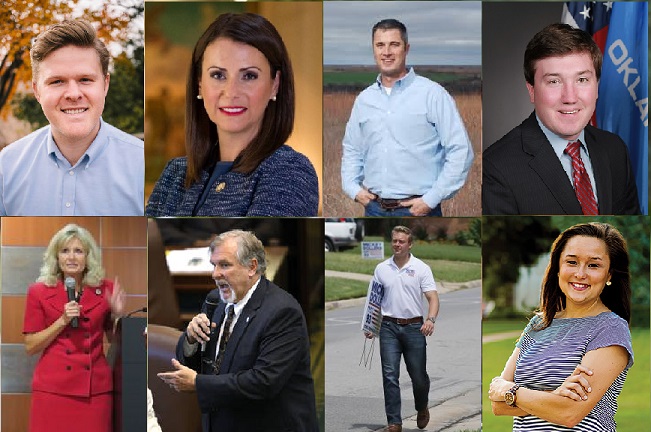
I don’t wish to disparage the accomplishments of the handful of winning edu-slators yesterday. Several incumbents historically supportive of public education kept their seats – David Perryman (D) of HD56, John Montgomery (R) in HD62, Jadine Nollan (R) for HD66, Katie Henke (R) in HD71, and Cyndi Munson (D) of Lake Hefner. 

8 Good OnesNew candidate Mickey Dollens (D) took HD93, no doubt through his genuine commitment to the district and his unmatched work ethic. (His opponent’s ability to personally alienate and horrify almost everyone in the district over the past decade probably didn’t hurt, either.) Forrest Bennett (D) won HD92 and Chris Kidd (R) SD31. So… that’s something. 
But dozens of others went down in flames. Not even close in most cases. Even candidates like John Waldron and Lloyd Snow were defeated, while far too many other voices passionate for positive change were simply crushed. 

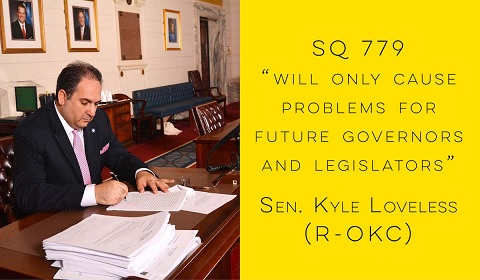
SQ779, after polling well for months, was soundly defeated as well. There were good reasons to vote against it, but added to the rest of the night, it rubbed enough rock salt into the wounds of public education to keep our highways clear for another decade, were it ever to snow again – which of course it won’t, but-don’t-say-climate-change-because-Inhofe-once-had-a-snowball. 

It sends a pretty strong message. One I think it’s time we embrace. This is a democracy, after all, and when the people issue this sort of mandate, it’s our civic and professional duty to respect it. 

So… I quit. 

Not the profession, necessarily. I mean, maybe – it depends on what else I can do at 50 years old. I’m reasonably intelligent and gregarious, though, and despite my shifting politics I’m still an angry old straight white guy – that gives me some leverage in Trump’s America, yes?

Loveless 779But it’s time for #OklaEd to get the message. You are not wanted here. The vast majority does not think you’re worth even what you make now, and they certainly don’t think most of your kids deserve any better. Strong percentages say “we could fix education if only these teachers weren’t in the way” or “those damned districts have been given too much without accountability.” And they believe it. To paraphrase their patron saint, “Public education is not the solution to the problem; public education is the problem.” 
I know what many of you will say: 

“We’ll just regroup and do even better for our kids!” 

“It’s not just a job; it’s a calling!”

“It’s a marathon, not a sprint!”

Like Boxer, you are sure if you only work harder, eventually Animal Farm will prosper. Your convictions about how things should work and what most people must believe become your Napoleon, and no matter how desperately reality tries to get your attention, you remain darned and determined to build that windmill – the better to tilt at, my dear. 

That’s noble, in a way, but like Boxer, you’re wrong. Not just “how sad for you” wrong, but “you’ve become part of the problem” wrong. You’re the wife buying her alcoholic husband beer then complaining about how he treats you. You’re the friend doing everyone else’s homework so they won’t get a bad grade, unwittingly condemning them in the long run by enabling their bad choices. 

Marvin K. Mooney

Denial is a powerful sedative – it allows us to tell ourselves all sorts of deluded stories. But it only perpetuates and strengthens the problems we’re trying to avoid. 

Oklahoma doesn’t want you here. They don’t like you, and they openly despise many of your kids. If you stay, and keep doing what you’re doing, you’re supporting that – willingly or not. I’m sorry, but it’s true. Don’t get careless in your martyrdom – there are kids in other states who need good teachers. There are other meaningful ways to make a living. 

It’s not just about a pay raise – I’d easily support a plan to fund public education and pay young teachers and provide for students that carried a provision denying veteran educators more than a little cost-of-living bump here or there. It’s about a decade of single-party rule with one theme: “You are the problem. If only we could get rid of greedy superintendents and lazy teachers and useless support positions, we could fix it all. But… you know those teachers’ unions and their entitlement mentality…” 

Dog RaisesWe’re largely to blame. We’ve proven year after year that we don’t vote in meaningful numbers, or if we do, we vote our fears instead of our ideals. We jump and bark and pee on their legs every time they dangle “Pay raise! Pay raise! We’ve really got a plan for a Pay Raise! Come get it, boy! That’s a good constituency!” 
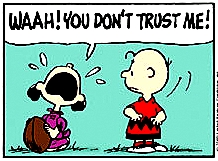
It’s embarrassing. 

The party in unmoderated power could have addressed this any damn time they wished over the past decade. And it’s already starting again. Sitting legislators who’ve just watched the state reject all things education by historic margins are setting up that football and asking us to take another run at it because this time they’re totally certain for REALSIES going to hook us up! 

Dance, you pathetic monkeys – dance!

Lucy Football

The 2017 Oklahoma State Legislature would be foolish to pass actual teacher raises. They’d be crazy not to ram through the voucher bills so long sought after by their out-of-state fiscal overlords, mandate consolidation across the board, and change all the state standards yet again just to prove they can. Elections have consequences. Legislators don’t do things to be nice; they do things because it gets them elected, and re-elected. 

Supporting public ed is a losing issue in Oklahoma. Like, WAY losing. “And-your-little-dog-too” losing. 

This past February, I wrote what many assumed was a hyperbolic call for all of #OklaEd to simply turn in their keys and go. I wasn’t being hyperbolic, and I’m feeling great internal pressure to stand by it today. If I had the power, I’d set Winter Break as the ideal time to get a real job – or a teaching gig elsewhere. Classroom teachers, para-professionals, administrators, bus drivers, lunch ladies, school secretaries – just sign the pink slip over to the victors and wish them well. 

Turn Off The Lights

I don’t have that power, so do what you will. If you stay, however, spare us the noble platitudes. I’m all for sacrificing yourself when it serves a purpose, but the only thing you’re accomplishing here and now is to perpetuate the conviction of those in power that they’re on the right course and should keep it up. Anything that doesn’t work, you’ll cover for them whatever the cost to yourself, your family, and your kids. 

And it’s wrong. 

I realize I’ll be accused of being a “sore loser” – of taking my blog and going home. There’s probably some truth in that, but not enough to put the house up for sale (nice 3-bedroom, Union schools, glorious breakfast nook, if you’re interested). I think I’m being quite reasonable – Obama won’t be strapping himself to the desk in the Oval Office, desperately clutching his favorite pen, yelling that he’s staying “for the children!” He’ll politely pack up a few personal items, and call a cab. 

I’ve been too vocal to back down at this point. It may take a few months, but I don’t see any way out of it without selling out everything for which I’ve fought – albeit unsuccessfully – over the past year. I’ll be reworking the website to focus more on general content and teacher issues, washing my hands of state politics once the moving van is loaded. 

I appreciate those of you who worked so hard and did so much over the past few years trying to change things in Oklahoma. I’m sorry we accomplished so little to assist you. I wish you better.

Walking Out