

First Class, or Coach?

Film Projector & ScreenTeachers who also coach – or coaches who also teach ‘real’ subjects – get a bad rap. When you see a teacher on TV or in movies who’s being played for laughs, it’s almost always a coach (and a history teacher at that). I’ve several times been at the front of the room leading brief introductions at the beginning of a workshop when some well-intentioned dear lady will give her name, and where she’s from, and lament that besides herself and maybe the new teacher next door, her department is all coaches, so…

Obviously we’re supposed to know the rest, and nod sympathetically. Except for the third of the room who coach various things.

So… awkward. Often the phrase “Some of the Best Teachers I Know are Coaches” makes an appearance. Next time I’ll have to ask it how “Some of my Best Friends are Black People” is doing these days – it’s been too long.

Is this fair? Is this one of those things with enough truth to sustain itself, although no one wants to come right out and say it? Is this yet another flaw in the public education system, begging to be addressed by a Gates Foundation grant or some sort of higher-standards legislation?

I haven’t done a formal study or anything (hey, some of us work for a living), but I’ve worked with and around a wide variety of coaches in a rather large district for 15 years now. I’ve been nominally “in charge” of a number of them as Lead Instructional Motivated Curriculum Alignment and Assessment Facilitator. (We haven’t used simple names for things since the late 90’s – no one actually knows what any given room or title actually indicates anymore, so we wander around confused much of the time.)

I’ve led professional development in various guises across multiple states over the past ten years, and inevitably a good chunk of the teachers I meet either are or know coaches. It always comes up. We talk. I learn. Often, pastry trays are involved.
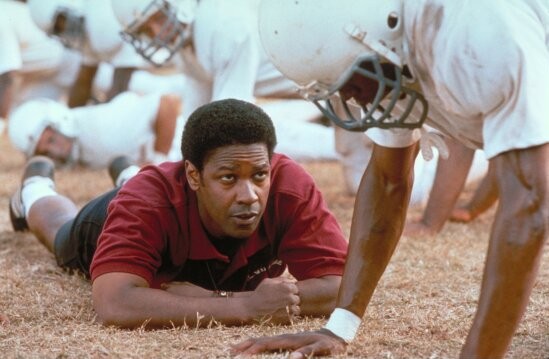
Remember the Titans CoachingI don’t coach myself, nor am I qualified to do so, but I have seen Remember the Titans about 19 times. I thus consider myself supremely qualified to make some confident statements about coaches who teach, and teachers who coach (and come to think of it, I’m pretty sure these are the same thing). I’ll number them to lend artificial authority to each statement.

(1) Coaches coach for the same reasons teachers teach. Most public school educators signed up because at some point they wanted to help kids. They wanted to make a positive difference in some way by getting involved.  We’re idealists at heart – or were, before the acronyms caught up with us and stomped the last bit of hope out of our calling. Teachers who are tired of being stereotyped as unable to get ‘real jobs’ or assumed to have gone into education because they simply weren’t qualified to do anything else should stop doing the same thing to the folks who teach next door to them in the morning and coach in the afternoon.

(2) Successful coaches are usually successful teachers. The time demands of coaching may limit the extent to which they labor over their grading or lesson plans after hours, but that’s true of many good classroom teachers with ‘real lives’ outside the classroom. Some may even lean a little heavily on more orthodox lessons and strategies. But few effective coaches are ‘dead weight’ in the classroom. The skill set and mindset of the two are simply too closely aligned. And the guy who is faking his way through 1st – 4th periods with worksheets and VHS documentaries is probably not accomplishing much on the field, court, or ice either.
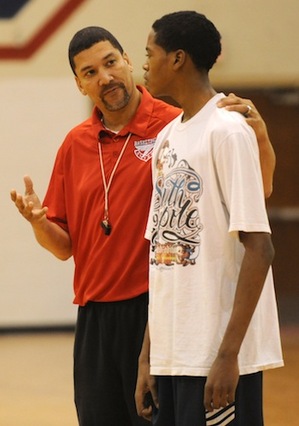
Coach & Student(3) Coaches are evaluated publicly and often by the performance of students who may or may not be demonstrating what they’ve actually been  taught. Annoyed by those good ol’ boys who are obviously given classes during the day simply to fill the slot and justify their position? Frustrated at how impossible it is to push a coach with mediocre classroom skills aside to make room for a ‘real’ teacher? If your tenure and paycheck (the one used to buy your kids clothes and food and such) relied largely on how things go Friday night, I suspect you’d be easily distracted from that flipped-model inquiry-based cross-curricular collaborative journey you were trying to scaffold. You might even make a few calls to your staff and revisit some plays or other logistics. This is not a ‘coach’ problem – this is a structuring problem.

(4) Coaches work long hours for pitiful stipends. You remember when you sat down that one afternoon and started trying to figure out how much you, as a highly qualified classroom teacher, actually make per hour? Coaches learn not to do that math – especially that ‘how many kids do I have multiplied by what babysitters charge’ version that’s popular from time to time. Many of them are keeping much longer hours for much less per than you or I would tolerate if it were our Lunch Duty stipend or Safety Training Coordinator compensation.

(5) Thank god for kids in athletics. They may or may not be my shining academic stars, but discipline problems they are not. An email or phone call to their coach solves almost any problem – academics, attendance, or attitude. I wish I could require ALL of my students to be involved in extra-curriculars.
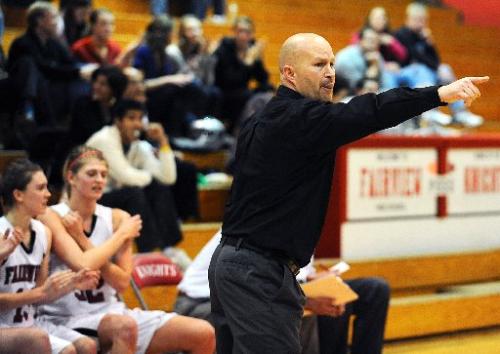
Coach Pointing(6) Coaches will mess with you by playing to your preconceptions. I see it all the time in workshops – the self-deprecating humor, the inside jokes. Maybe this is merely a ploy to lower expectations (especially on those required in-district days), but I suspect it’s usually just amusing to watch the rest of us be all smug without admitting it to ourselves.

(7) Coaches understand vertical teaming better than we do. They’re also far more likely to spend hours evaluating and analyzing their own performance and that of their kids with game film, statistics, or other unforgiving rubrics. The focus on individual responsibility within effective group work is a staple of most team sports – they don’t even work otherwise – and is applied to Those of the Shorts & Whistle just as consistently as to those in their care. And ‘grit’ – that most recent breakthrough suggesting that giving up every time something is difficult is NOT a great life plan? Yeah, old news on the court, field, or ice.

I’m not suggesting we ignore legitimate problems. I am suggesting that there are times that, instead of pushing our coaches to attend more PD, we should be asking them to lead some of it. We’d probably all be better off.
Pouty Coach

Related Post: “Extra” Curriculars

All I Need Is This Lamp…

If you want to completely derail any meeting of three or more educators – teachers, administrators, curriculum coordinators, outside consultants, or whatever – ask what our priorities should be.

You know, as educators – what are our priorities for the kids? It’s hard to make a good plan without a clear target, so what are we trying to accomplish – you know, ideally?

It’s a pretty easy question until you try to limit yourself to a reasonable number.

Love of learning, of course. Critical thinking, which we define as ‘analyzing information effectively.’ Analyzing information effectively, which we define as ‘critical thinking.’ Oh – and reading. Lifelong readers. And independent learners – is that the same as ‘love of learning’? Maybe it is. But that’s it – just those.

Oh! College & Career Ready – that’s on the website, so we need that one. And citizenship. Social skills. Character. Maybe some content – just basic stuff like the Constitution, the Declaration of Independence, the Amendments, the major Court Cases, the most important Elections and Legislation and not just Social Studies, but the Scientific Method and just basic science stuff, you know? I realize it’s Oklahoma, but SOME science wouldn’t be completely out of line…

And of course Shakespeare, the Bible, MLK, which reminds us – primary sources, understanding other cultures and points of view, charts and maps and statistics, and bias, and order of operations in math class, functional grammar and sentence structure, and – OH!  Responsibility. That’s more important than all the rest except for all the others that are more important than all the rest.

But we should stop there. Those are the two or three MOST important things.

And who won the Civil War.  Then we’re done.

We said ‘Reading,’ right? Oh – RIGHT! Writing – did we say writing? We MUST teach kids to write effectively. To different audiences. About different things. Things they’ve read about.

But just those. That’s not so –

Oh! Oh oh oh oh – can we add ‘media skills’? Is it too late for that? It is? Oh, but, um… it’s really… well, OK.

I can’t resolve this even in my own mind in 2014, but I can offer two rather compelling insights from nearly two centuries ago – and one’s not even directly about public education (but it so totally is).  Both are edited excerpts of longer documents, the originals of which are quite Google-able (or you can just email me at [email protected]) if you’re so inclined.

Document #1: Report of the Workingman’s Committee of Philadelphia On the State of Public Instruction in Pennsylvania (1830)

[This committee was appointed September, 1829, to ascertain the state of public instruction in Pennsylvania, and to propose appropriate improvements.]

The original element of despotism is a MONOPOLY OF TALENT, which consigns the multitude to comparative ignorance, and secures the balance of knowledge on the side of the rich and the rulers.

If then the healthy existence of a free government be, as the committee believe, rooted in the WILL of the American people, it follows as a necessary consequence, of a government based upon that will, that this monopoly should be broken up, and that the means of equal knowledge, (the only security for equal liberty) should be rendered, by legal provision, the common property of all classes.

In a republic, the people constitute the government, and… [they] frame the laws and create the institutions, that promote their happiness or produce their destruction. If they be wise and intelligent, no laws but what are just and equal will receive their [approval], or be sustained by their [votes]. If they be ignorant… they will be deceived by mistaken or designing rulers, into the support of laws that are unequal and unjust.

It appears, therefore, to the committee that there can be no real liberty without a wide diffusion of real intelligence; that the members of a republic, should all be alike instructed in the nature and character of their equal rights and duties, as human beings, and as citizens…

Document #2: Horace Mann Advocates for Public Libraries (1840)

[Mann was the most influential educational reformer of his day. His influence radiated out from Massachusetts, where he did much to improve the common schools by securing better buildings, higher salaries, and superior teaching methods through teachers’ institutes and normal schools.]

A library will produce one effect upon school children, and upon the neighborhood generally, before they have read one of the books, and even if they should never read one of them.

It is in this way: The most ignorant are the most conceited. Unless a man knows that there is something more to be known, his inference is, of course, that he knows everything. Such a man always usurps the throne of universal knowledge, and assumes the right of deciding all possible questions. We all know that a conceited dunce will decide questions extemporaneously which would puzzle a college of philosophers or a bench of judges. Ignorant and shallow-minded men do not see far enough to see the difficulty.

Now those children who are reared without any advantages of intelligent company, or of travel, or of books—which are both company and travel—naturally fall into the error of supposing that they live in the center of the world, that all society is like their society, or, if different from theirs, that it must be wrong. They come, at length, to regard any part of this vast system of the works of man, and of the wisdom of God, which conflicts with their homebred notions, as baneful, or contemptible, or non-existent…

Now, when this class of persons go out into the world and mingle with their fellow men, they are found to be alike useless on account of their ignorance, and odious for their presumption…

A library, even before it is read, will teach people that there is something more to be known.

What Are We FOR?

This was the post that prompted me to set up an actual blog, shortly before the #OKEdRally in OKC on March 31st, 2014. It was also the first thing to get a response I liked better than my actual post. Both are reproduced in full here: 

What exactly are we for?

I think this is worth considering anyway, but particularly so for Oklahoma educators planning on storming the Capitol in a few weeks. You never know, after all, who might ask.

History shows clearly how much easier it is to unite against things than to agree on the best alternatives. Anyone keeping up with events in Egypt, Syria, or dozens of other places in recent years knows this is still so. Even my students are quick to rally in opposition to my periodic efforts to play a little Coltrane or even Cannonball Adderley in class, but have yet to reach a convincing plurality regarding other musical options.

Browse Facebook or Twitter or the popular blogs, and the things we are against quickly become evident. Common Core is clearly the devil, as is standardized testing in general. Charter schools are the devil, usually hanging out with Vouchers – also the devil. Arne Duncan is the devil, along with Bill Gates, Jeb Bush, and occasionally even President Obama. Teach For America is the devil (this is one I particularly do not fathom, but that’s a discussion for another day), the new SAT is the devil, college admittance offices are the devil, and the two combined mean the College Board and that new fella in charge are the super extra devil.  Pearson actually IS the devil, but nevertheless still clutters the list, and Janet Barresi, while NOT the devil, acts as a sort of PR agent on his behalf, showing a loathing of public schools and public school teachers you’d not automatically expect from a State Superintendent – although it does somehow illuminate this childhood favorite:

But were all these swept away tomorrow, what would we wish in their stead? What are we FOR?

Yes, yes – I know we’re for ‘the children’ and ‘the future’ and world peace and curing the common cold. I know the intangibles, but what SPECIFICALLY do we support? Do we sincerely trust a sort of “local control laissez-faire” approach to our schools? To everyone else’s schools? Is there a system of accountability or assessment we could live with? Or even design? A strategy we’d be willing to implement? Even a philosophy or set of priorities on which we generally agree?

We’re marching against many things, I assume, but the only one I’m aware we’re marching FOR is money. This is completely valid and important. We cannot starve ourselves into pedagogical and academic success. But I worry about the messaging – an unpleasant consideration, but a critical reality nonetheless.

If we rally and chant and hold up our signs (let’s watch our speling pleaze!) solely to kill accountability and demand money, maybe throwing in some cheap personal attacks on state leadership, I fear we will have difficulty persuading the average Oklahoma voter we bring something worth supporting… something worth paying for when no one seems to have much, and something that offers a digestible but optimistic direction we’d like to take their kids, their state, and their pocketbooks. Worse, I fear we perpetuate a rather unpleasant stereotype of teachers and our priorities – an image which, however unfair, has perhaps largely contributed to the presence and power of all those horrible things we’re against.

So before loading up the busses, finishing the signs, or even forwarding that next link, consider pondering what it is we want TO happen at least as vigorously as what it is we’re trying so intently to prevent or overthrow. Just in case anyone asks.

UPDATE: The best response that came to this post when it was on the other site came from Lisa Witcher. Lisa is a long-time educator and involved parent whose bio I suppose you can Google – or simply ask her about – if you simply must know more. In the meantime, follow her on Twitter – @MzWitch11

Recently, I read a blog that asked what is our education rally on March 31st for… Here are some thoughts –

Let’s fund education in the same spirit, philosophy or economic logic that permits tax breaks to the very wealthy and to the businesses that would drill here anyway. Let’s be for spending a ridiculous amount of money on our children and on our children’s children. Let’s be for funding education so that no principal has to decide between paper or a teacher’s aide.

Government officials have asked how much is enough. Enough occurs when there are not 38 kids in my son’s history class, when every computer can be updated, when every leak can be fixed, and when every teacher can raise two kids on his/her salary without applying for free/reduced lunch.

While I will refrain every day from littering Facebook with what I am against, I can banter for days about what I am for. I am for an educational system that reaches for the top of the bar instead of relinquishing its ambitions to being 49th. I am for a state that treats its teachers more like royalty and whose elected officials act more like servant leaders than members of an archaic feudal system. I am for your kid, your neighbor’s kid, my kid and every kid – because they are worth it. What am I for? I am for learning; I am for letting students and teachers discover how learning happens. When they are able to discover that scientific, artful moment together, the students’ pathways are infinite, spectacular, and life-promising. What am I for? I am for putting children at the center of every decision instead of politics. Those decisions do require funding – but they require so much more than just money.

There are those that will reduce the plight of public education to sound bites – but until you have heard a child emote because he/she finally understands – all you have heard is noise. Those that are trying to destroy public education see it as a billion dollar industry capitalism has yet to tap – they do not see the faces of four year olds who only need an equitable chance to learn and change our world.

What is March 31st for? It is for [insert your favorite child’s name here]. My favorite children deserve the best Oklahoma has to offer. Heaven help us if we settle for just the sound bites.