
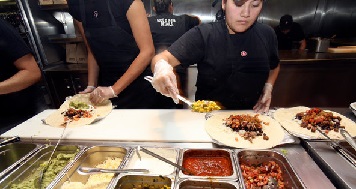
 We still hear from time to time that public schools could learn a few things from successful private businesses. If so, why not Chipotle Mexican Grill?
Chipotle is a rather brilliant concept. The food is fairly high-quality, and I’ve been 27th in line and still eating within ten minutes. The menu is somewhat limited, but with five or six choices at each of the four steps shaping your dining experience, it at least feels like great variety is in play.
The staff undergoes substantial training before they’re allowed to actually make or serve food. The ingredients are organically grown and the meat naturally raised. (I’m not entirely sure what this means, but I believe it involves little chicken playgrounds and fun cow activities for the young.)
There are higher quality restaurants with greater variety, of course. Usually these are local treasures, often unique and almost never part of the major chains. There are cheaper and faster places to eat, also – but they’re not usually as good.
 But what Steve Ells did is pretty amazing. He started small, tried different formats, swapped out a few ingredients, then reproduced the most successful combination on a large scale. All the benefits of sit-down dining and the economies of scale normally found in eating establishments represented by cartoon characters or creepy plastic-headed men. It’s a charter school movement dream come true!
For the analogy to work, of course, we’d need to make a few minor adjustments. First and foremost, diners heretofore will be required to eat at Chipotle almost exclusively. A special few may be allowed to go to Abuelo’s or Chuy’s, but there aren’t enough of those to go around – so maybe some sort of lottery would have to be involved.
Everyone else MUST eat there, and every day – whether they want to or not. The staff will have to deal with these unwilling customers and be fully accountable for their dining happiness and success. There are vegetables in those pans for a reason, young lady!
Also, Chipotle will need to make some modifications for customers who may need gluten-free choices, or who can’t carry their own trays, or who eat more at breakfast than lunch, or who don’t like Mexican food. Some will want extra chips or different beans, some all rice all the time. Several need their food pre-chewed – all without changing the price, speed, or quality of service. You can’t reasonably expect everyone to eat the same way, can you? You can only expect them to all eat at the same place under the same format served by the same staff with the same resources.
Duh.
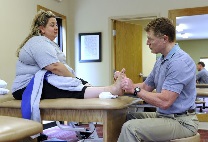 Employees at Chipotle will be held to higher standards than currently the norm. Customers will undergo regular physicals, including checks of their weight, blood pressure, cholesterol, stamina, heart-rate, and anything else we can think of – including whatever might be trending that year. Locations unable to demonstrate consistent weight-loss and fitness-gain will face staff reductions and reduced ingredients until they improve.
Individual workers whose customers fail to grow taller, stronger, and healthier (whether eating during their shifts or not) will be publicly exposed and placed on plans of improvement. All servers are expected to bus tables, sweep floors, study cookbooks, and otherwise contribute during their off hours. They’ll be paid slightly below minimum wage and regularly berated by Gordon Ramsay look-alikes, most of whom have been speaking at restaurant conferences and writing cookbooks far longer than they spent asking whether customers preferred black beans or guacamole.
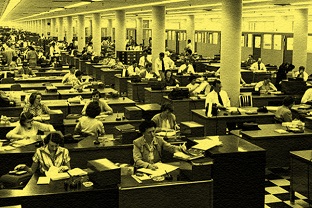 A percentage of resources currently poured into running the various Chipotle Mexican Grills around the country will be redirected to a bureaucracy responsible for overseeing these things. These sundry minions’ expertise will be based largely on them having eaten at a Chipotle at some point, or if not, having eaten somewhere else at some point in their lives.
Other than those minor tweaks, I see absolutely no reason the model can’t be replicated and mandated in every neighborhood of every state across this grand land, regardless of the wants, needs, or dietary requirements of this or that little region. All people, regardless of background, need picante. Period.
I’ve run this by a few people, and they refuse to share my dream. They argue I’ll ruin the restaurant altogether, or that my suggestions are completely unrealistic and can’t possibly be serious. To be honest, I’m shocked at the reaction. The manager at my local Chipotle heard only a fraction of it before laughing and walking off.
Clearly he’s terrified of a little accountability. Typical.
 I have a class Twitter account I use to remind students of various stuff, link to appropriate educational or amusing things, etc. They follow me there, I follow them back to facilitate the occasional question about grades or other non-public issues (you can only direct message if you follow one another).
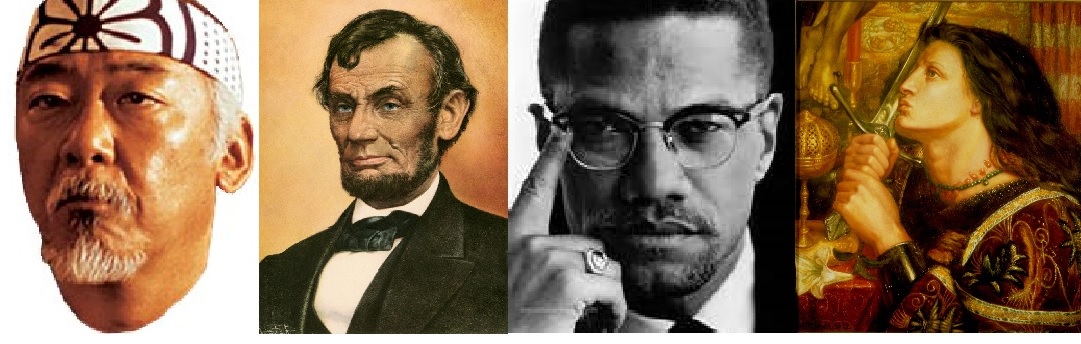
 It’s difficult to question things we don’t realize we assume. For example, few of us ponder why we easily trust our family doctor to diagnose pretty much ANY part of our body, internal or external, except our mouth. Our mouth, it seems, is so darned complicated and unique compared to, say, our aortic valve or epidermal sheath, that only SPECIAL DIFFERENT OTHER TYPES OF DOCTORS can even LOOK at this oral outlier.
 School is rife with these sorts of assumptions. We simply MUST shuffle students from boxed area to boxed area in slightly-under-an-hour increments. We have roughly the same number of kids in each class, one subject per teacher, and at some point papers of various kinds must be placed in baskets to “grade.” Eventually, all experiences must reduce to a number between 1 – 100 and one of five letters, none of which can be ‘E’ because that’s stupid and wouldn’t tell us anything – unlike, say, ‘C’.
  And if students behave, and keep the right letters on their weekly personal-reduction-to-a-point-value report, they may be allowed to play sports, or participate in drama, or band, or debate, or cheer, or dance, or some other ‘extra-curricular’.
  Most of these kids are never going to be professional athletes. But neither are they likely to become professional mathematicians, or chemists, or historians, or novelists. The skills and knowledge gained in each of those realms nevertheless serve a larger good. They help to form a fuller, better, hopefully somewhat happier person.
 I sat in yet another #STEM breakfast recently and heard extolled the glories of project-based learning with clear assessments whose rubrics were known in advance and a process built on collaboration – what the rest of us might call ‘band rehearsal’, ‘theater’, ‘competitive debate’, or ‘football practice’.
 I should begin by saying that this post is in no way intended to advocate for one candidate or the other in this race. Not that there’s anything wrong with a little political editorializing – but this mini-trove of wisdom is here for THE WINNER, whoever that may be. If you want to talk substantive issues in depth, search Twitter – that’s what they do there. Or I guess you could go to
  (2) Don’t pay too much attention to teachers. I love my profession and my peers, but there are some real weirdos in the mix, and they tend to be loudest. Besides, none of us can quite agree even what we think school is for – you can hardly expect us to have a coherent message how to best make it happen. Strong leadership means doing what’s best for the kids, long-term – not what’s popular with the entrenched majority. Sometimes teachers need to be willing to listen, and learn – maybe change some of the assumptions they’ve held for so long.
 (5) With great power comes great responsibility. The Epistle of James (that’s in the BIBLE, for you non-Okies who might be reading) says that teachers will be judged more harshly for the positions they hold. You are in that position a hundredfold. James goes on to suggest that anyone who can control their tweets has self-control in all things. Be aware that everything you say, post, or do, sends ripples across more time and space than you’d ever intend.
 (10) Question everything. Are this set of standards or that set over there really THE KEY to Oklahoma’s success? If we can just find the right curriculum to post, are our biggest problems basically solved? Are “Oklahoma Values” something we wish to define and defend, or just something that sounds anti-something else? Is everything local wholesome and wise… everything national evil and dark? Are those of us raging against ignorance really SO willing to base future-shaping decisions on whether or not listing Thomas Jefferson in Paragraph 19 Subsection C is THE primary cause of Americans joining ISIS?
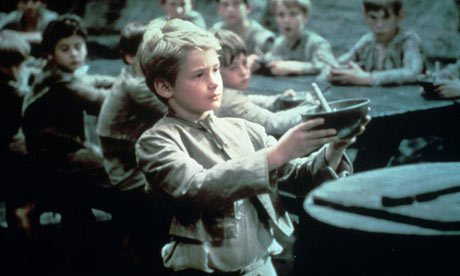 You’re representing thousands of teachers and kids and possibilities and shortcomings and breakthroughs and nonsense and hope. Chances are good no matter what you do, we’ll all have turned on you in a matter of months and will repeatedly mock and condemn you. Don’t expect us to feel too badly for you on that count – remember, teachers here. That’s our daily existence.