
 Sometimes we just make things too complicated.
How do we this? How do we that? How can we overhaul our public education system without changing anything about it? How do we reach diverse students from inequitable backgrounds and make them all the same person by 3rd grade? How do we recruit and retain higher quality teachers without increasing fiscal incentives, but while stomping out every last vestige of the things that used to make it a fulfilling career?
How do we patch up old wineskins to endure new wine without bursting?
Simple – we don’t.
But that’s OK, because the old wineskins have outlived their usefulness. And just between you and me, new wineskins needn’t be all that complex or much more expensive than the old – and they might just lead to much better varieties of wine.
My Five New Wineskins of Public Education – none of which are all that crazy or even particularly expensive compared to what we spend on, say, testing vendors.
 New Wineskin #1: A few key districts simply refuse to administer any state standardized tests. It would be better if there was PTSA buy-in, and the younger the age group, the better. It would be more effective if there were 3 or 4 districts of some size, at least one of which is generally very successful at such things and another of which is not. Unite, refuse, then see what happens – it’s on the state to make the next move.
Upside: Everything’s better with numbers, and a little diversity refutes any suggestion this is about who’s ‘winning’ or ‘losing’, or who has ‘high standards’ and who doesn’t. The state could, of course, refuse to issue diplomas to hundreds or thousands of children. They could defund entire districts, maybe even seek legal action. But that’s some pretty harsh PR, going up against educators and parents ‘standing up for the children’.
Downside: Requires a lot of people to agree to take a huge risk all at once, trust one another to hold the line, and possibly all lose our jobs. So, that would suck. Then again, we all talk a good game about standing up for what we believe. I’ve read your motivational posters and sig files, so… will you?
 New Wineskin #2: Districts start offering different types of diplomas. Students planning on going full legit university take full legit academic classes. They AP, they IB, they read and write and inquire and think – they can even Common Core if you wish. Those thinking they’d prefer something more practical or vocational will still be exposed to basic science and math and such, but we don’t need to drag them kicking and screaming through a complex thesis sentence or Algebra II before cosmetology school. Our cultish obsession with ‘core subjects’ can be replaced with something useful – not coldly utilitarian, but based on where students are going and what they want to do.
Upside: Dialing back our obsession with the full Enlightenment Era / factory model “core curriculum” would allow us to teach useful math through shop or repair classes, practical reading alongside a touch of ‘real’ literature, or otherwise manifest our idealism in more balanced fashion. We could offer curriculums students might not hate and find absolutely pointless all day every day. Students strong in traditional subjects could do more than endure hours of mediocre instruction as their teachers struggle to manage and cajole the kids who simply do NOT want or need to be there.
Downside: Tracking has a poor history, rife with unintended negative consequences. Schools would have to figure out logistics of such variety, and perhaps cooperate with neighboring districts. We’ll all be accused of giving up on kids and not caring about high standards because we’re no longer requiring our kids to do a bunch of stuff none of the people making the laws can do either.
 New Wineskin #3: Universities should stop requiring high school diplomas and businesses should stop requiring degrees. Let’s be honest – that stuff is mostly a convenience for the institutions rather than real requirements for what students or employees will be doing. We’re always hearing universities complain the freshmen all require remediation anyway, and it seems few companies hire based on WHICH degrees you have – they’re just happy you have… something. Institutions and industries can come up with more appropriate entrance expectations or preparatory training.
Upside: Doesn’t require legal changes or universal buy-in. A generation ago, many organizations had their own competency tests based on the actual job. Problem was, there were racial disparities in the results, leading to civil rights issues. So… new system – require college degrees! It was overkill in most cases, but also shifted the ‘qualifications’ burden to the universities (without actually resolving the disparities). It’s a new age in terms of how companies deal with diversity – let’s ditch this unnecessary complication.
Downside: Might threaten current socio-economic caste system.
 New Wineskin #4: Allow teachers to teach the subjects they want and students to choose what they want from those offerings. Like colleges do when trying to garner all that scholarship money by wooing new students with those colorful course descriptions, let high schools offer shorter, more interesting options from which to choose. Some should be close enough to ‘core subjects’ to expose students to the fundamental tenets of each, but generally the framework should be flexible enough that everyone involved doesn’t hate themselves for being there. You take 3 or 4 weeks, then you sign up for new selections. Some may build on one another; most could stand alone.
Traditional cores would still be offered for those so inclined, or for students unwilling or unable to flourish either academically or behaviorally in more interesting classes. Don’t get your panties in a wad about this creating a ‘caste system’ or ‘tracking’ – that’s pretty much what ‘on-level’ classes are now. We’d just be allowing anyone who wishes to escape that limitation and actually learn stuff without requiring the rigor of AP or IB to do so.
Sorry if it chafes to let ‘normal’ kids have an enriching classroom environment also.
Upside: Much higher interest and engagement, by both teachers and students. Core ideas and skills can still be taught, but as they arise naturally and in context. Stronger students can discover the ‘fulfilling’ aspect of more challenging classes when actual choices are involved, and weaker students who gravitate towards something less rigorous will still be exposed to ideas and skills they’d not be encountering otherwise.
The focus would be on learning, and on moving forward from where you are rather than dying in the ditch of ‘where we wish you were’.
Downside: Unless other factors are addressed to improve teacher motivation and retention, there’s potential for ‘blow-off’ classes for both the teacher and the students – you know, unlike currently. The freedom to have excellent classes also means the potential to increase inequity. One advantage to forcing every student in a given state to endure the same outdated, tedious, pointless curriculum is that no one school or any one teacher can be all THAT interesting or successful; there’s a certain ‘unity of mediocrity’. Removing the rusty anchor of ‘standardization’ allows some classrooms to be amazing, meaning others are less so by comparison.
 New Wineskin #5: Put me in charge. Unlimited legislative and judicial authority, and extensive resources. Perhaps a concubine or three.
Upside: T-shirts for everyone.
Downside: Oh, please.

 Strange, though, in a system overrun with white educators, that we don’t see more from a demographic otherwise quite active on social media. There are retweets, and comments, and a few blog posts, but nowhere near what the raw numbers would suggest.
 2) Reasonably educated white people – teachers – are terrified of saying something wrong. Not merely incorrect, you understand, although that’s problematic as well, but something inappropriate, or taken badly, or, the worst of all evils… racist.
 You know that reaction you get when someone who’s never been in combat tries to talk about war? When people without kids try to lecture on parenting? That sensation you get as a teacher reading “expert” advice from people who’ve never run YOUR classroom? Yeah, that’s who white people don’t want to become when trying to speak about anything even remotely related to race.
 Their daily experience tells them there are patterns of behavior among certain groups, and that stuff that drives them crazy tends to come from the same demographics. BUT, they don’t feel like they’re allowed to state the obvious – and that makes it worse. It build resentment because it must remain unspoken – the Voldemort of public education.
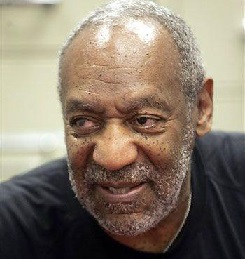 You have no idea how deflating it was to discover that Bill Cosby – a guy we were SURE was legitimately BLACK, but who wanted people to speak properly, pull up their pants, and take a little personal responsibility – is some kinda serial rapist. Dammit! How SELFISH of him to do this to us – er… I mean, to those women!
 Consider Alyssa – a wonderful young lady in AP classes from a two-parent Methodist family. She works hard, makes good grades, stays out of any real trouble, and wants to be a neuroscientist. Obviously she deserves some credit for her accomplishments. She’s demonstrated great capability, and made good decisions.
 Compare her to Dionne – another wonderful young lady, but one from very different circumstances. Her life might be happy enough, or it might be reality-show dysfunctional, but in any case does NOT unfold in the same universe as Alyssa’s. All of the rules are different and their experiences mutually exclusive.
 Anders is my Amerindian, although he might be Hispanic, or White, or Black, or whatever – there are racial issues wound up in these, but they’re not exclusive or always definitive. Many Amerindians had no interest in the Anglo-American value system or way of life, but they were forced to partake – and stakes were high if they failed. They lacked buy-in, but they also were denied good tools, seed, land, etc. It’s not much of a stretch to think a comparable state exists between many teenagers and whatever public school system holds them captive in 2015.
 You’re so thankful for Alyssa – students like her give you the energy to get through the day. But how often is Alyssa essentially rewarded for her upbringing and Dionne marginalized for not ‘working hard enough’? How angry does Anders make you even though he doesn’t really do anything to you other than not be taught? Zack’s an annoying little turd, but he’s passing and no one’s mad at you because of him so… whatever.

 The challenge of incorporating technology in the classroom has always been finding ways to utilize it effectively. It’s tempting to begin planning around what the technology can DO, building the lesson from that rather than the reverse.
  980: Hey kids! It used to be Jeopardy w/ pockets of index cards – but now it’s on the Overhead Projector!
 Hide your kids, hide your wife, they’re mimeographin’ everybody up in here.
 Facing such venom, the façade of technological revolution has had to settle for second place – runner-up status in the ranking of all things shameful.
 “Virtual Learning” is a flashy new euphemism for “book work and worksheets,” but online.
 It’s everything teachers have been badgered and mocked for, in pop culture and required PD, minus the human interaction. While teachers are gathered in one part of the building being told for the hundredth time that “students don’t care how much you know until they know how much you care” and that any lesson built around teacher-selected content or students working individually is outdated, ineffective, and grounds for dismissal, students are gathered in another part of the building (or on laptops at home in their sweats with Teen Mom blaring three feet away) working individually on teacher-selected content without a clue what their teacher even looks like, let alone “how much they care.”
 (In other news, irony is dead.)
 While we’re at it, maybe we could ease up a bit on the teachers doing similar things in class, just trying to get their kids through. Yes, they’ve photocopied a crossword puzzle for review. No, they won’t be winning any awards for creativity. But instead of condemning them, maybe we could notice the way they’re impacting their kids in other ways – taking those random one-on-one opportunities or dragging the whole group kicking and screaming into the light of basic knowledge.


 Behold the wisdom of
  Edu-Reform talks incessantly of individualizing learning and teachers being the most important factor in the classroom, but allows for no such nonsense in practice. Every “solution” or “tool” requires a purchase order and a follow-up email suggesting scaffolds and
 The power of manipulative rhetoric is in how it sounds and makes you feel rather than what it means – if it means anything. “Highly qualified”