A Chance In Oklahoma, Part II

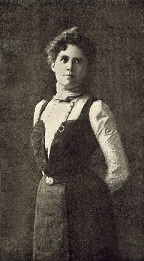
Helen Churchill CandeeI may have mentioned how giddy I was to come across a wonderful piece by Helen Churchill Condee in Harper’s Weekly, from way back on February 23, 1901. When you combine insight, knowledge, and pithy writing, you have my heart forever.

Even if you’re long-dead, I suppose.

Condee is actually Helen Churchill Candee, but from time to time the ‘a’ becomes an ‘o’ in her writing credits. (I kept the ‘wrong’ spelling with the document since that’s how it appeared in Harper’s originally.)

Helen was a New York girl who grew up in Connecticut, eventually marrying a successful but abusive man. After their separation, she began writing articles for several ladies’ magazines to support herself and her two children.

Women’s magazines in the late 19th century tended to focus on household tips, womanly etiquette, and taking care of your man, but over time she went a bit Hillary Rodham and wandered into women’s rights, raising children, and even local politics. 

Give them a pen and a paycheck, and it’s all over, boys. 
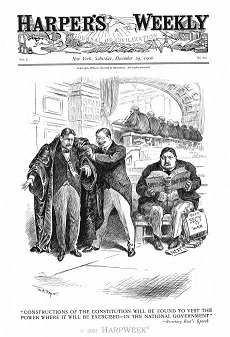
Harpers1901Candee moved to Guthrie, Oklahoma, for several years, writing regularly for periodicals back east. It was around this time she published her first two books – How Women May Earn A Living and An Oklahoma Romance. The first became a landmark in women’s literature (a subject for another time) and the second – her only work of fiction out of the many successful books she’d continue to write – helped publicize and glorify life in the recently opened territory. 

It may have been based on personal shenanigans as well, but it used to be a lady didn’t come out and confess such things, so…

Somewhere in the midst of this she wrote the piece with which I’m so enamored, along with numerous others I’m currently tracking down. 

She went on to become an expert on world travel and, um… tapestries… and served as a volunteer nurse in the Great War overseas. She passed just short of her 91st birthday in 1949. 

The event for which she’s most remembered is not one directly related to her writing, however glorious. She was on the Titanic when it sank on April 15, 1912. Her written recollections are some of the most memorable and quoted of various survivor accounts, and her unpublished memoirs seem to have inspired a few of the key scenes in that DiCaprio film some of you may recall. 
HCC Titanic

There was this younger man, see, and a love triangle, and this glorious epiphany standing on the bow…

None of which, in my humble opinion, compare to the glory of her account of opening the Unassigned Lands in O.T.  I mean, that flashy stuff is all fine and well, but anyone can break their ankle leaping onto a lifeboat. Few can capture so much humanity in so few words as a passage like this:

The lands about to be opened are some that have long been coveted by the white men. Greed of land grows on those who hold it.

Oooohhhh… do you feel the truth tickling your innards? I sure do. 

The Wichita Mountains have long been like the promised land to the people of the Southwest, and as a rider reaches a hill-top of the rolling prairie, he exclaims, with extended arms: “See! That’s the Wichita range!  Beautiful mountains, and they say they’re full of gold and silver, copper and zinc, with some outcroppings of coal and traces of oil.” 

‘Full of gold and silver’ might have been a bit optimistic, but copper and zinc was spot on. Can’t believe she didn’t work in something poetic about lead as well. Hello!

Ironically, it would be coal and oil – here almost afterthoughts – which would soon thereafter drive the mineral boom in Oklahoma.

But not yet. 

Pres HarrisonAt that moment, it was still all about land – farming, growing, raising, living land. And this was it. Everything else was pretty much taken. The bar was closing and the men outnumbered the women 3 to 1. Time to make your play. 

And so, to get these lands, a bill was formed, but it stuck in the process at Washington. Then one day, as a surf-boat rolls safely up the beach on a big comber, the bill went through as a “rider” on a greater bill, and the opening of the new lands was made a certainty. 

If there’s one thing that resonates with Oklahomans, it’s a good boating metaphor. Must be a Northeasterner thing.

And imagine a time period in which major acts of Congress were unable to get passed the traditional way, so they were stuck onto completely unrelated legislation no one could afford to vote against and passed without some even realizing what they were supporting!

Back in the day, I mean. Long, long ago.  

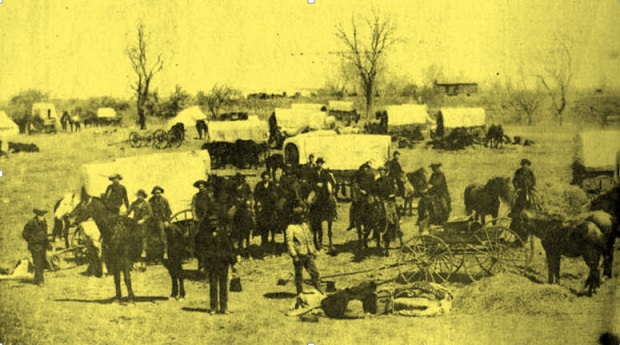
Surveyors have been all over their surface now, and it is marked off into a checker-board of squares miles, each one containing four farms of one hundred and sixty acres – or a quarter-section, after the manner of the West.
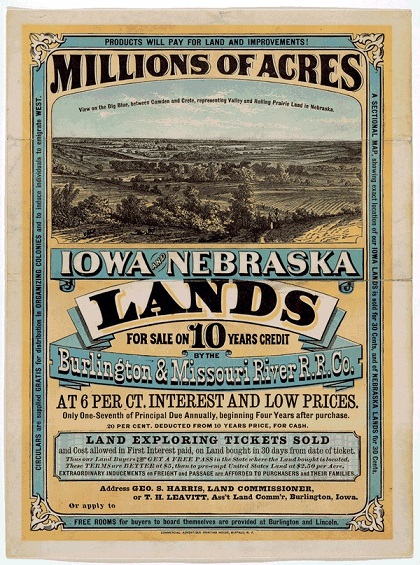
Homestead Act SignThe allotment size was consistent with the Homestead Act from way back in 1862, signed by Lincoln during the Civil War. This was considered a sufficient spread to allow a homestead and plenty of planting land. A free man working without modern equipment would be unlikely to cultivate more than this productively. 

It was this same Homestead Act which the ‘boomers’ had repeatedly referenced as evidence they deserved a shot at the ‘surplus’ lands in Indian Territory. 

The size of the Kiowa and Comanche tract is 2,968,893 acres. This, as the merchants say, is gross: the net number of farms which are offered to those who wish to make a hazard for new fortunes is about 10,000 of a quarter-section each. That means the redemption of ten thousand men, their fortune assured if they are made of the stuff that can labor and struggle for two or three initial years.

Redemption. That’s what it was all about for many. 

Three-quarters of a century before, Mexican Texas had been the land of new beginning – escaping your own past, whether it meant legal entanglements, failed relationships, or political embarrassment, and starting anew in a seemingly unlimited Eden. The glories of Manifest Destiny had carried others to California, Oregon, and gradually filled in even much of the Great Plains.

Now the frontier was ‘closed’, or at least not nearly as frontier-ish as it had been, and hungry homesteading eyes turned to Oklahoma.
Middle Ages TapestryHow many others in that generation and prior had taken their shots, staked their claims, virtually everywhere else in the West? Those waiting now were the also-rans, the coulda-beens, desperate for one last chance at stepping into the role of Yeoman Farmer in the most democratic manifestation of the ideal. Redemption? Maybe so. 

‘Their fortune assured’? The American Dream was immutable law still at this late date. Perhaps some of this faith was galvanized by desperation, but it guided both policy and personal choices well into the 20th century.

It won’t last – at least not in the same form. The Dust Bowl and Great Depression would contradict all holy truths about hard work and good choices leading to independence and relative prosperity. But not yet.

They still believed.

The remaining acres of the reservation, amounting to nearly half, are disposed of in a way which treats considerately both Indian and white settler. Each of the 2,900 Indians is to have an allotment of one hundred and sixty acres, and these Indians are to choose themselves before the gates of the country are opened for the rush. In addition, 480,000 acres are allowed for Indian pasture. Fort Sill has a front lawn and back yard of 60,000 acres out of the tract, and about three hundred and thirty thousand acres make up the amount of land set aside for the support of schools and colleges. This disposes of the Kiowa and Comanche country.

‘Disposes’ is right. The issue of land allotment among the tribes deserves a separate post. It is difficult for Anglo minds to fully process why this was effectively the final wave of cultural genocide. “Oh my god – they gave the Indians title to their own property! How horrible!”

Yeah, yeah, white boy. Your culture is awesome, Indians were stupid, you were doing them a favor, blah blah blah. More on that next time. 

Note, that ‘these Indians’ get to ‘choose themselves’ before everyone else – almost like it’s an unfair advantage of some sort. Hey – what can go wrong when you have a choice?

[[{“type”:”media”,”view_mode”:”media_small”,”fid”:”1573″,”attributes”:{“alt”:””,”class”:”media-image”,”typeof”:”foaf:Image”}}]]

“It’s the Stay Put Landalot Man.”

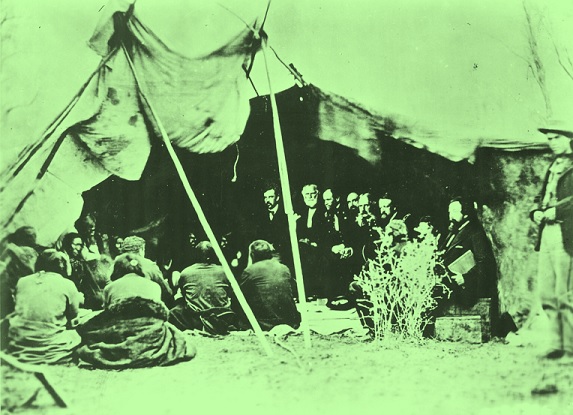
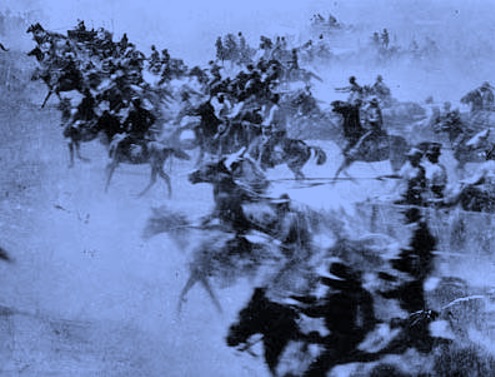
Everything is now in readiness, and awaits the proclamation of the President, which is to declare the gates open, and which will say in effect, “Run in, my children, and help yourselves, but remember that only one grab is allowed for each.”

*pause*

Cynical as I am, I’m not entirely immune from the gilded glory inherent in a good land run. Condee gives me chills with this one. 

Then reality comes back.

RELATED POST: A Chance In Oklahoma, Part I

RELATED POSTS: 40 Credits & A Mule, Parts I – VII

RELATED POSTS: Boomers & Sooners, Parts I – V
A Chance In Oklahoma, Part I

Waiting To Run

There are times I just get GIDDY over a good document. (Yes, my life is that lame.) Imagine my euphoria, then, when I came across this enticing missive from Helen Churchill Condee published in Harper’s Weekly, February 23, 1901…

Not all of us are successful in life; possibly this is because we have not had a fair chance. The government of these United States, while it is looked upon as a cold, unapproachable body, like a corporation, once conceived the beneficent plan of giving a chance for success to any of its sons who chose to take it. 

What a rich framing of the initial land runs in Oklahoma – “a beneficent plan of giving a chance for success to any of its sons who chose to take it.”

I could spend a week on that sentence. Beneficent? Really? I thought the Boomers and others raised such a fuss the powers-that-be finally caved.

Look at the nuance in ‘chance’ for success (kinda like the right to ‘pursue’ happiness) for any ‘sons’ (it was still a man’s world, in law and on paper at least) who ‘chose to take it’. The American Dream may have evolved since the days of Horatio Alger (think Little Orphan Annie as a dude, or Oliver Twist without the British accent), but the ‘live right, dare big, work hard’ ethic of such tales still drove expansion and those willing to migrate into opportunity. 

In pursuance of this plan a tract of land containing about three million acres was thrown open in the middle of the Indian Territory, and every one was at liberty to take possession of one hundred and sixty acres without price. This was the beginning of Oklahoma, a Territory with a romantic and marvelous history of prosperity crowded into the short time of eleven years… 

This is the chance Uncle Sam is to give his unsuccessful sons and certain of his daughters.

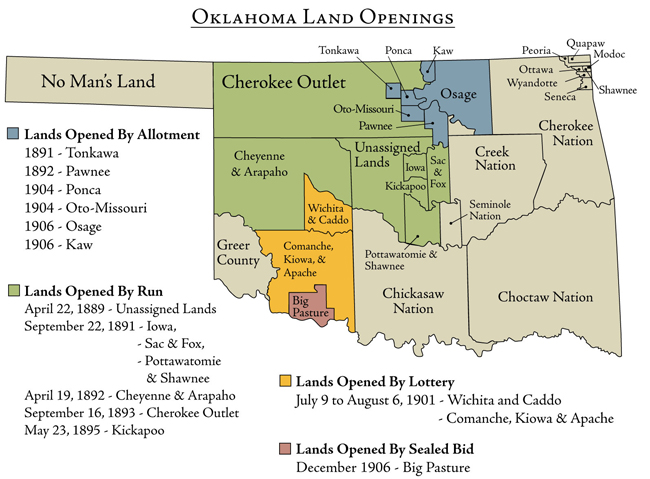
Oklahoma Land Openings

When was the last time you thought of Oklahoma as a land ‘with a romantic and marvelous history of prosperity’? And this was almost a decade before the oil boom! But Condee was right – our little state-to-be had become the last great hope for white homesteading anywhere on the continent. 

Which, you know, was exciting for white homesteaders, at least…

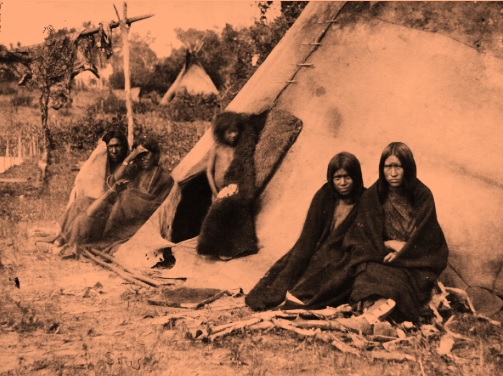
The new tract is the reservation of the Kiowa and Comanche Indians, with the possibility of the inclusion of the Wichita lands. It is not easy to decide on the justice of the question so far as the original owner, the Indian, is concerned. 

Those who live far from him look with disapproval on the gradual crowding into smaller and yet smaller space, of the taking away of his hunting-grounds and giving him the beef issue, of beggaring him by way of forcing civilization, of breaking even the treaties sworn to hold “as long as grass grows and water runs.” 

It’s easy to forget in retrospect that many of the same complexities we recognize in history were being wrestled with as current events. Condee pairs land allotment – the most recent process by which Amerindians had been stripped of their land – with the food allotments arranged by the same treaties. Which was more destructive, she seems to suggest – taking away the source of their own culture and self-provision, or maneuvering them into reliance on the outstretched whims of federal government?

As to ‘beggaring him by way of forcing civilization’ – I… I’m simply too aquiver to even analyze that one effectively.

Arapaho Youngsters 

The U.S. picked a largely unjust war with Mexico, to be sure, but at least at some point war was declared, whatever the pretext. The vast majority of Amerindians were ethnically cleansed through handshakes and smiles and warmest assurances. The 19th century saw the U.S. perfect the art of stabbing you in the back for your own good, then resenting the few shoddy bandages it felt compelled to throw your way.

Or am I reading too much into seven words?

Those who live near the reservations see the Indian through different eyes. They regard him as a lazy, opulent child of fortune, possessing fertile lands, which lie fallow, himself rich through the simplicity of his needs and his share of the interest on the $43,000,000 which the government holds invested for his tribes. 

There’s a whole separate post to be written about paper wealth and Amerindians. Most of the wilder tales involve oil money, but the dynamic here is similar – ‘lazy’ and ‘opulent’ sets a nice tension, and surely Condee recognized the cruel irony inherent in ‘child of fortune’. 

The idea of untapped resources – especially LAND – was anathema to the white way of thinking. For the last generation of homesteaders all too aware their opportunities were quickly vanishing, it only fueled their resentment to see it ‘going to waste’.

And how much do you love Condee’s subtle rhetoric – ‘rich through the simplicity of his needs’ flowing almost as an afterthought into ‘and the interest on the $$$…’?

It angers a man who tills every acre of his quarter-section with unfailing industry to place his family above want to see his Indian neighbor, with boundless lands, cultivating but a tiny patch of corn, yet living in a cabin, keeping cattle, and driving off contentedly to receive from the government agent the issue of groceries and beef which the white man can only get in return for hard-earned dollars. 

Treaty Negotiations

Condee would have made a great historian. (She actually did just about everything BUT that – she’s a story in and of herself.) Kudos to the white lady from the North who’s so able to put the reader into such a variety of other mindsets while maintaining her own narrative voice to hold it together. 

Without the perspective lent by distance, the envious fail to see that the Indian’s rations are only a crumb of the just return he should be entitled to for evacuating all the continent except a few little reservations; and the white man covets. He does it so ingeniously, too, that its results work like logical morality, and crimes are committed under the excuse of civilizing the Indian.

‘Its results work like logical morality’ – Oh. My. God. Can you excuse me? I need a moment alone.

How easily we vainly assumed that kind of insight can only come in retrospect, with the benefit of distance and the perspective it allows. But at least one pithy babe was unraveling the human condition contemporaneously. 

The lands about to be opened are some that have long been coveted by the white men. Greed of land grows on those who hold it. 

But perhaps more on those who don’t. 

I can’t help myself. We’ll have to continue this one – and talk a little more about Helen Churchill Condee. I’m still giddy – aren’t you?

OK Land Run

RELATED POST: A Chance In Oklahoma, Part II

RELATED POSTS: 40 Credits & A Mule, Parts I – VII

RELATED POSTS: Boomers & Sooners, Parts I – V
History Songs

Waaayyy back in 1996, the band Barenaked Ladies released their first moderately successful single in the U.S.:

[[{“type”:”media”,”view_mode”:”media_small”,”fid”:”1496″,”attributes”:{“alt”:””,”class”:”media-image”,”typeof”:”foaf:Image”}}]]


Broke into the old apartment – this is where we used to live 

Broken glass, broke and hungry, broken hearts and broken bones – this is where we used to live

Why did you paint the walls? Why did you clean the floor?

Why did you plaster over the hole I punched in the door? 

Why did they pave the lawn? Why did they change the locks?

Why did I have to break in? I only came here to talk – this is where we used to live

Broke into the old apartment – tore the phone out of the wall

Only memories, fading memories, blending into dull tableaux – I want them back…

History is a tricky thing. Personal or collective, it’s ridiculously difficult to reconstruct the past – even on those rare occasions when we have an abundance of materials with which to try. 

It’s a paradoxical truth in teaching history that the only two things you can say with any certainty are that (1) people everywhere, throughout time, are all basically the same – no matter what their circumstances, and (2) we can’t possibly fathom or understand people in other times, places, and circumstances – our worlds are simply too different. 

Plus, we never have ALL of the information and experiences needed. While we gain wonderful perspective from time and distance from whatever subject we choose to examine, we lose detail – seeing only through a glass darkly, or a rather pixelated type of historical Google Earth. 

Even when documentation abounds, it turns out we can hardly trust those who WERE there, consciously recording. Our human perception and memory are apparently pretty much crap whenever anything important needs recalling.

On the other hand, how many ugly break-ups does THAT explain?

And so far we’ve been assuming that all involved WANT to accurately preserve or recapture the past. That may not always be the case:

[[{“type”:”media”,”view_mode”:”media_small”,”fid”:”1497″,”attributes”:{“alt”:””,”class”:”media-image”,”typeof”:”foaf:Image”}}]]


As he feeds them to the fire, one by one, he’s dimly aware – he may have learned a thing or two, but tuition wasn’t cheap. And he’s only got these foggy notions of what he paid…

Author Milan Kundera of Czechoslovakia began his 1979 novel, The Book of Laughter and Forgetting, with a true story embedded into the narrative of Mirek, a fictional protagonist:

Chapter One: Lost Letters

In February 1948, the Communist leader Klement Gottwald stepped out on the balcony of a Baroque palace in Prague to harangue hundreds of thousands of citizens massed in Old Town Square. That was a great turning point in the history of Bohemia…

Czech Hat 1Gottwald was flanked by his comrades, with Clementis standing close to him. It was snowing and cold, and Gottwald was bareheaded. Bursting with solicitude, Clementis took off his fur hat and set it on Gottwald’s head.

The propaganda section made hundreds of thousands of copies of the photograph taken on the balcony where Gottwald, in a fur hat and surrounded by his comrades, spoke to the people. On that balcony the history of Communist Bohemia began. Every child knew that photograph, from seeing it on posters and in schoolbooks and museums.

Czech Hat 2Four years later, Clementis was charged with treason and hanged. The propaganda section immediately made him vanish from history and, of course, from all photographs. Ever since, Gottwald has been alone on the balcony. Where Clementis stood, there is only the bare palace wall. Nothing remains of Clementis but the fur hat on Gottwald’s head.

It is 1971, and Mirek says: The struggle of man against power is the struggle of memory against forgetting…

As it turns out, the fictional ‘Mirek’ is distracted from his otherwise tiny, irrelevant revolutionary efforts by his own quest to secure the return of some embarrassing letters from a former girlfriend – someone he now finds a bit ugly and offensive. 

You see the irony, of course. 

More recently, textbook behemoth McGraw-Hill took some heat when an annoyed mother circulated a snapshot of this insert from their Texas-approved history textbooks:

Textbook Snapshot

It sounds like they got a great deal on a vacation package from those people who keep spam-calling me from Orlando while I’m trying to eat dinner.

There are far more subtle ways to rewrite history than burning letters or euphemizing slavery, as this piece so effectively demonstrates. It’s not just Texas, of course – history is rewritten every time there are no normal-sized women on TV or in every chapter summary focused on Generals and Presidents over factory-workers and midwives. 

I own a dozen well-intentioned U.S. History texts from 1876 – 1961 which portray Christopher Columbus a dozen different ways and paint Indian Removal as everything from travesty to unfortunate necessity to “You’ve Just Won An All-Expense Paid Trip To Oklahoma!” 

Those same books, however, avoid any controversy at all regarding the women’s movements of the early 19th century. That’s because there’s no mention of Elizabeth Cady Stanton, Lucretia Mott, or even Susan B. Anthony in any of them. They simply didn’t make the cut. 

Kinda makes you wonder which is more troubling – being misrepresented, or being erased. *shudder*

It is, in fact, largely unavoidable that we’re going to make draconian compromises any time we try to write or talk about history, assuming we wish our discussion to take up less time and space than the original events. All the more reason, then, we should be hyper-aware of what’s NOT being told, and what’s NOT being asked. 

What’s happening just off-screen, as it were.

Even when we have the purest intentions, capturing the past – be it events long gone or the shifting shaping swirling of our own experiences – is an undertaking both elusive and unfair. Perhaps it’s a blessing to work from a scarcity of information; the impossibility of conveying the richness of the better-known may prove far more daunting.   

[[{“type”:”media”,”view_mode”:”media_small”,”fid”:”1498″,”attributes”:{“alt”:””,”class”:”media-image”,”typeof”:”foaf:Image”}}]]


It’s as if a fin, reaching from the swamp, grabbed me by my arm – tried to pull me in. But my arm was strong, and the fin was an inaccurately reconstructed fake…

For those of you less metaphorically inclined, the past is always “an inaccurately reconstructed fake.” Even when it does pull us in, it’s an interpretive approximation at best.  

It was right through those trees – I’m not insane! That’s where the fin tried to drag me in. Don’t look at me, look at where I’m pointing – close your eyes, see what I see!

That’s one of my favorite lines in all of known music. “Close your eyes, see what I see” – there’s the human experience in a nutshell. Please ‘get’ me – just a little! Fathom collectively with me, if only for an instant, said the shepherd boy to the lonely king. 

Please?  

If you can draw it in the air, or write it down, then you weren’t there. What’s gone is mute – someone changed the truth – they smoked the proof and there’s nothing left… 

But there is. There are our stories, and fragments, and framings, and efforts to capture – however imperfectly – some critical bits. Faded memories blending in to dull tableaux, yes – but also photos revealing Clem’s fur hat on someone else’s head. 

The past is maddeningly foggy, to be sure, but the lessons – and the flavors – too important to give up. So we grasp at the smoke and fill in the rest. Hoping.

RELATED POST: Useful Fictions, Part I – Historical Myths

RELATED POST: Useful Fictions, Part V – “Historical Fiction,” Proper

Joan of Awkward, Part Two – Hide It Under A Footnote? No! I’m Gonna Let It Shine…

Joan VoicesThe story of Joan of Arc forces historians to deal with overtly spiritual claims and potentially miraculous outcomes in ways historians do not generally wish to do. We’ll cover the role of religion in the most general ways, if absolutely necessary, but we DON’T LIKE TO TALK ABOUT IT IF WE DON’T HAVE TO. 
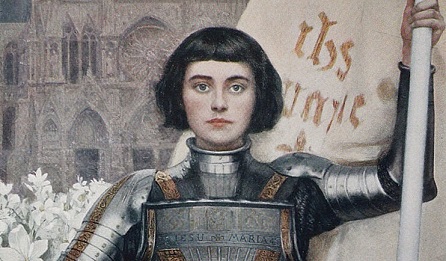
We don’t actually like to talk about it even when we DO have to. 

But Joan, by all historical accounts, followed up the predictions of her ‘voices’ with successful action. She – a peasant girl – wrangled an audience with the Dauphin Charles VII. She shared with him secret words of God which seem to have immediately turned him from manipulative skeptic to temporary believer and gave him the strength to actually lead his nation in a renewed war for independence. 

In a time of drastically divided sexual roles, she ended up leading battlefield troops to greater successes than they’d seen in a generation. And, when the same king she’d brought to power began to tire of her – perhaps fearing her popularity, or perhaps simply believing she’d exhausted her usefulness – betrayed her and allowed her to be captured and tried by the English, she held to her faith, and to her convictions regarding God’s calling for him and for France.

She refused to renounce her unusually clear and personal communication with God, and was violently executed for a combination of heresy and cross-dressing – a condemnation of her innermost spiritual status mixed with outrage over her hair length and attire, her literal facade.

Plus she’d helped France kick England’s oppressive %** around a bit. That charge was implied rather than officially recorded in court or church records. 

She was burned at the stake (in some accounts calling out to Jesus), eyes locked on the Crucifix she’d requested be held up before her eyes. Extant accounts suggest witnesses cried out for forgiveness, many repenting of their role in her martyrdom. Of course, people write lots of things after the fact – so who knows?

I will take a cynical leap and dismiss accounts that her heart was left undamaged in the ashes. We simply lack sufficient documentation for something so… unusual.

Joan SeriousImmutable internal organs or not, how can you tell Joan’s story without pondering her faith? Her voices? She was either crazy with a healthy side of lucky, a very effective liar, or God spoke to her and sent her on a miracle-laden mission to save France from the English. The idea God could like France is problematic enough – but successful wars based on divine visions? Is that something we wish to encourage?

Thus, the political intrigues and battlefield strategies are explored endlessly, while Joan’s voices are rushed past, as if we’d rather not draw too much attention to THE MOST INTERESTING THING IN THE ENTIRE ACCOUNT.

To be fair, it’s tricky territory even for those not teaching in public schools to presume to understand the spiritual realities of another – particularly someone six centuries gone. But we do our past a disservice when we circle so widely around the subject instead. 

ConquistadorsIf we’re going to acknowledge the hypocrisy and cruelty done in the name of God by early Spanish explorers confronting local Amerindians, let’s recognize the good intentions and legitimate faith of many others in similar situations. If we’re going to explain the cultural destruction done by Anglo-American missionaries to the tribes in their purview, let’s be a bit more vocal about the role of faith driving Samuel Worcester and his nameless ilk who served among the Natives with little reward in this life. 

Yes, people taking part in the Second Great Awakening did some weird things – the barking and the roaring and the writhing about. Perhaps we could better tie these experiences to the increased efforts to help the poor and reform society in practical ways which tended to follow the path of such festivities. I’ll take some speaking in tongues of angels if it leads to better social services – especially the non-governmental type.

And this same revival movement ‘democratized’ Protestantism in a powerful way, giving the average American far more agency in their salvation than the Calvinism of the previous generation could have even considered without doing some frothing and noise-making of their own – albeit of a less ecstatic nature. In other words, it made Christianity itself more reflective of American ideals regarding personal improvement and potential, and the power of personal choice. 

We don’t have to mandate any particular interpretation regarding the spiritual accuracy of this to note that it’s PRETTY DAMN INTERESTING HOW THAT COULD HAPPEN and that the shift has continued through this very day.

City on a HillAs we approach modern times, it makes for a rather lopsided view of Presidential paradigms when we discuss foreign policy through every lens but the one most-cited from the Big Podium. “For we must consider that we shall be as a City Upon a Hill…” said John Winthrop in 1630 – a sentiment echoed, reworked, expanded, and cited over and over and over and over by men deciding whether or not we put our best in harm’s way in hopes of spreading that light a little further, or at least holding back the darkness a little longer. 

In other words, sometimes we do stuff for oil. Sometimes we do stuff for business. Sometimes we do stuff out of an exaggerated sense of noblesse oblige. But in the mix is the conviction by many that our calling is divine – that there are times standing back is not an option, lest we lose the favor of God Himself. 

That’s a thing, and if we are to debate it intelligently, we must know it exists.

We don’t have to solve or resolve the ethereals in order to acknowledge them. We cover tons of other complicated stuff without feeling compelled to either exalt or belittle the veracity of those involved. I’ve heard a dozen different explanations of how and why salmon swim upstream in their endeavor to spawn in their birth waters or whatever, but none carry an awkward fear of discussing the eternal truth vs. the practical value of this struggle. There’s no implied Rod’n’Reel of Damocles hanging over the topic, waiting for a lawsuit or angry phone call. It’s just fish doing part of what fish do. 

Surely it’s OK to allow humans to be at least as complex as Friday’s dinner?

If we’re in the business of educating, however imperfectly, let’s try to educate them – about whatever parts seem relevant at the time, and without carrying around the distorted notion that somehow dancing around the unknowns makes history more legit or more clear. 

If anything, recognizing the complexity and depth of mankind’s many motivations and the varied realms in which we run has at least some small chance of bringing back a sense of relevance – maybe even stimulating some interest – which our past seems to have lost for far too many kids.

Salmon

RELATED POST: Joan of Awkward, Part One – Missing Voices 

Joan of Awkward, Part One – Missing Voices

Joan Banner

Several years ago, I went through a bit of a Joan of Arc fetish. I watched the Leelee Sobieski mini-series again, several documentaries, and read a half-dozen historical explorations of our “Maid of Lorraine.” Several novels stood out – Mark Twain’s semi-historical fiction of her, of course, and An Army of Angels by Pamela Marcantel, an amazing imagining of her short life with just the right balance of grounded history and literary license. 

In short, I got a little Joan crazy for a time. 

Unfortunately for my academic credibility and witty dinner banter, I’m not a big ‘retain the details’ guy unless I’m either consciously studying it or teaching it to others. I read history for pleasure, along with whatever else grabs my attention at the time, but I don’t have the kind of memory that retains most of it in sharp focus easily or often. 

Joan of LeeLeeThat’s not actually the stumbling block you might think teaching high school in the 21st century. Nothing locks the minutiae of your subject into permanent recall like explaining it repeatedly throughout the years, and almost anything that doesn’t stick is easily researched when necessary. We’re still trying to get them to bring a pencil and check the class website periodically; there’s little danger they’ll without warning probe such historical depths that I end up academically cowed. 

I can’t say that it does much for relationships, though, this hazy grasp of specifics – birthdays, middle names, her not liking raisins, forgetting her mom died last year… people get touchy about so many little details. Hey, we all have different gifts. 

But I digress.

The basic story of Joan goes something like this:

Joan was born in early 15th century France, near the end of the Hundred Years’ War. As she became a young woman, the nation was enduring another dispute over who would inherit the French throne. The outcome would determine not only who’d get the nice chair and fancy castle, but who would control France for the foreseeable future – the French via the Dauphin, Charles VII, or the English through a sizeable faction of ‘Burgundians’ (Frenchmen who cooperated with the English) and their up-and-coming monarch, Henry VI. 

Joan NobleCharles’s daddy, Charles VI (nice system, right?) was insane – even for royalty – and may not have been his daddy at all. The dear Queen was thought to be having an affair with the Duke of Orleans, aka the King’s brother, and he may have been Charles VII’s biological father. That would explain in part why the Queen was so cooperative with England when it came time to designate an official heir to the throne; she signed off on Henry VI holding that honor. 

Henry was a tiny little English king-to-be, you see. He was legit, with king-blood flowing through his wee little veins. This was a big deal to royal types back in the day – hence all the inbreeding and weird genetic issues which resulted. Perhaps the Queen wanted peace with England for more traditional reasons as well, but the common people of France were not impressed, and assigned her unflattering nicknames when speaking privately amongst themselves. 

See how fun it is to study history? Your family’s not as messed up as you think. “Dysfunctional” is merely a fancy term for “typical royalty, but without money or power.”

Joan dealt with none of this as a child, of course. She was a peasant, which sounds to modern ears like it must include both servitude and poverty. Neither seems to have been the case, however. Daddy Jacques d’Arc and crew were certainly near the bottom of the social hierarchy, and times were tough all over, but they don’t appear to have been in need by the standards of the day. 

Somewhere around age 13, Joan begin having visions and hearing voices from Saint Michael, Saint Margaret, and Saint Catherine – telling her from God that she must be a good girl and stay faithful, and that she had a destiny and purpose far beyond her upbringing. 

Divine communication. It’s a large part of what makes her so fascinating. 

MP GodIt’s also the kind of thing which makes historians crazy, you understand. It’s just so awkward to deal with the supernatural in an academic context, especially given the typical disconnect between those book-learnin’ types and people of faith. We’d rather not talk about it at all.
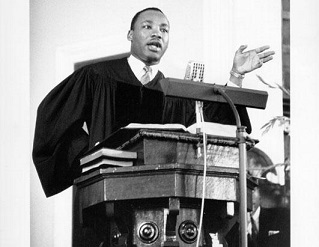
It’s downplayed even with major figures like the Reverend Martin Luther King, Jr. Notice how many history books drop the ‘Reverend’ whenever possible. Granted, after the first mention of someone in a history text, they’re usually referred to only by their last name, no matter WHO they are – but the designation is usually missing in that first mention as well. And in sidebars. Photo captions. Even that separate section in the back with the long excerpt of “I Have A Dream.”

Usually if someone’s a ‘Dr.’, a ‘Prof.’, or even a ‘Sir’ we work it in there at least once. But ‘Rev.’ we like to slip past.  

When his primary calling IS included, it’s used as framing for the story we actually wish to tell – a colorful bit of context to get past as quickly as possible. Its significance is more often than not presumed to be as preparation or practice for his “real” historical function, helping King build organizational skills and hone his powerful oratory – and what a lucky break THAT turned out to be because that kinda thing ended up SO useful later in service of the Civil Rights movement! 

Rev. MLKFaith becomes a happy fluke of background rather than a key component – as if King just happened to sit next to someone randomly on the bus who ended up playing some key role we never saw coming, or left his coat too close to the oven and accidentally invented penicillin. As if taking up the call of ministry – of spreading the Word of God to the downtrodden and fighting for justice – made a nice placeholder before changing careers and fighting for civil rights.

As if they weren’t both manifestations of the same inner fire.

It’s easier the further back we go. Dismissing the Puritans or the revival preachers of the Second Great Awakening happens almost naturally; they seem so radical by today’s mores. Any pantheistic cultures are tacitly patronized without question, as are those more driven by nature, visions, or quests than westerners find comfortable.

In more recent years it’s been quite in vogue to mock groups like the Latter Day Saints in ways which would be borderline hate crimes with any other demographic. (Can you imagine large, loud groups at Applebee’s cackling over song fragments from the hit Broadway musical, ‘The Book of Mohammed’ or ‘Sing-Along-With-Brother-Malcolm’?)

I get that issues of faith are problematic- especially if we’re teaching them in public school. But Joan, by all historical accounts, followed up the predictions of her ‘voices’ with successful action. That makes dealing with her especially tricky.

Just ask the English. 

RELATED POST: Joan of Awkward, Part Two – Hide It Under A Footnote? No! I’m Gonna Let It Shine