The Social Contract (aka “Haman’s Gallows”)

confused historyNo one knows history anymore.

I don’t mean those man-in-the-street interviews shaming commoners for not knowing who won the Civil War or which President gave the “I Have A Dream” speech. I’m talking a basic understanding of why we have society.

Western Civilization 101.

You may remember Thomas Hobbes, 17th century political philosopher. If not, you’ll probably at least recognize his oft-cited claim that life in a “state of nature” was “solitary, poor, nasty, brutish, and short.”

Before civilization, he argued, every man had “perfect freedom.” We could all say and do anything we liked, go anywhere we wished. Every individual was sovereign. Hallelujah.

In practice, however, this mostly meant a paranoid scattering of ooga-booga people: me with my dead squirrel and pointy stick, you with your onion and bangy rock. When we encountered one another, I’d shake my pointy stick, and you’d threaten with your bangy rock, and we’d go our separate ways.

lotfComplete freedom is chaos, and extremely limiting, when everyone has it. Nothing lasting can be accomplished because we’re all too… free – and selfish in our freedom.

So, Hobbes argued, men agreed to “lay down” some of their individual rights and give power to a single sovereign, who would make and enforce laws circumscribing a peaceful society. This “social contract” allowed individuals to partake of a wider range of “natural rights” – stuff like life, liberty, and property – and to specialize their interests, now that they could put down their pointy sticks.

Some became hunters, others craftsmen, etc., and they’d trade as needed. Economies of scale enable some members of society to invent instruments and create music, tell stories for entertainment or edification, or even establish an educational system.

Not everyone does the same thing, and not everyone benefits in the same way from every other person’s trade or function. Sometimes when we’re meeting our collective obligations, it feels like we’re doing it for others – but fundamentally we’re doing it for ourselves, so we can have onion with our squirrel while listening to some jazz.

Ultimately, it helps each of us when we find a place for all of us. On the whole, it’s good for each of us when we learn to value all of us.

John Locke’s version of the “social contract” was similar, but had some important distinctions you might recognize…

He agreed with Hobbes that the difficulties associated with the “state of nature” required a social contract to assure peace, but Locke argued that natural rights such as life, liberty, and property already existed in that state of nature, before society or government. They may not always be honored in practice, but they could never be taken away or even voluntarily given up – they are “inalienable” (sound familiar?)

Governments, operating by consent of the people, should be dedicated to enforcing and protecting these natural rights, he said. If a sovereign violated them, the social contract was broken, and the people had the right to revolt and establish a new government.

For those of you who slept through history class, Thomas Jefferson borrowed heavily from Locke when he wrote our Declaration of Independence.

In practice, our Framers’ initial realization of the social contract was limited. Pragmatic. But the words they chose weren’t pragmatic – they were idealistic. The Declaration they issued wasn’t practical, or economically biased, or racially segregated – it was striving for something bigger than any of them could have conceived would ever be possible.

If the Constitution is about setting up laws – like, say, the Old Testament – then the Declaration is about Platonic ideals and reaching above the logistics – like the Gospels and the Letters of Paul.
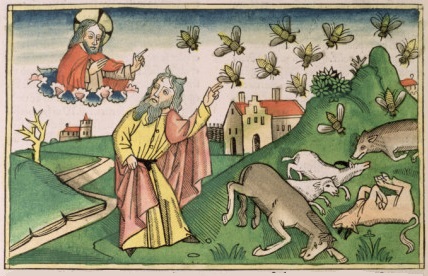
PlaguesFor those of you who didn’t go to Sunday School (tsk tsk!), the Old Testament is about taking care of US – the CHOSEN people, the GOOD people. It’s rather harsh for most everyone else – the OTHER, the UNCLEAN.

The New Testament is about treating everyone like they ARE the GOOD people; it’s about setting aside what’s immediately best for the CHOSEN in order to bring everyone into the US.

It’s delusionally idealistic in the bestest possible way. Its centerpiece involves God’s own perfect offspring dying at the hands of the unwashed – a “loss” by mortal standards. But in “higher reality,” it’s a win – a model for setting aside our own temporal gain for the good of others.

Do that, and it helps you in the long run as well – or so proclaims The Book. Weird, right?

The New Testament may be TRUE, but it’s far from PRACTICAL. The most devout aren’t interested in pragmatic compromises; they’re committed to IDEALS.

People of faith and Americans of conscience face a similar question: Do we want to accept what’s pragmatic, or do we want to BELIEVE?

SheepGoatDo we want to settle for compromises and logistics, tweaking via Amendment or reinterpretation from time to time, as we’ve done with our Constitution and (to a less-admitted extent) our scriptures; or do we want to strive for the ideals that are the ENTIRE REASON for either document to exist in the first place?

American history, for all its sin and hypocrisy, is a stuttering surge towards equality – a messy quest for “all men are created equal” and “unalienable rights.” Along the way we’ve repeatedly stopped to wrestle with our social contract.

I don’t like music. Do I still have to put down my rock and share my squirrel?

I don’t drive on that highway. Why does my gas cost more to maintain it?

What if I have private insurance? Why should I pay more to help that craftsman who doesn’t?

What if my economic success is based on someone else’s lack of freedom? Why should I suffer just so she can have ‘unalienable rights’?

What if my kids don’t go to public schools? Why should I contribute to the well-being of the whole if I’m not utilizing this one particular service?

Aren’t you punishing success to coddle the bottom feeders?

Sometimes, yeah. But most of the time we’re trying to maintain the social contract. The one where we each give up some freedoms and take on some responsibilities for the good of the whole.

It may feel like we’re doing it for them. We start to believe we’re sacrificing – with or without our consent – for the UNCLEAN. That the basic rights and freedoms of the US, the CHOSEN, are being TAKEN to serve the OTHER.
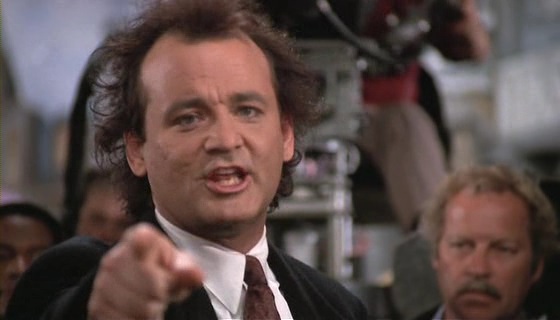
Scrooged SpeechExcept we’re not doing it for them – we never were. Ultimately, it helps each of us when we find a place for all of us. On the whole, it’s good for each of us when we learn to value all of us.

Katniss Everdeen warned President Snow that fire tends to catch: “If we burn, you burn with us!” She was absolutely correct – when the bell tolls, baby, it tolls for thee whether thou intendeth it or not.

But the converse is equally true – a healthy, productive, educated populace is of benefit to all.

We shouldn’t need to choose who gets access to books and who doesn’t, who deserves health care and who doesn’t, who can obtain employment and who can’t, or who receives equitable treatment under the law and who doesn’t. These things aren’t scarce natural resources; they’re conditions in a properly structured society with an effective social contract.

Katniss & Rue

When we forget this, we start believing we’ve somehow earned our status and comfort, completely outside the social contract and without reference to past sacrifices of others for the common good. We deny history and faith in an effort to re-establish the CHOSEN US.

When we start looking for ways to cut loose “dead weight,” those “holding us back” by “taking advantage,” we deny the social contract and the ideals of both our nation and the religious faith proclaimed by its majority.

In the short term, it gives US more choice, more power, more comfort. In the short term, it allows US to feel CLEANER.

But in the long game, it makes us savages – you with your pointy stick and me with my bangy rock, ready to defend my squirrel at the cost of your blood.

RELATED POST: May I Please See?

RELATED POST: Um… There Are These Kids We Call ‘Students’?

RELATED POST: MLK, Wobblies, and National Insecurity
MLK, Wobblies, and National Insecurity
MLK Quote

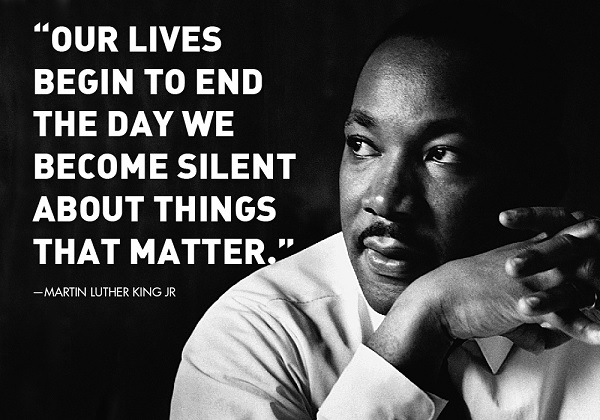
It’s MLK Day, and while there’s much to celebrate, the skeptic in me can’t help but focus on some things we conveniently ignore or write off as ‘no longer relevant’ in King’s legacy. There will be plenty written today, as there should be, about all he said, and did, and the positive impact he had. I’d like to suggest we not forget along the way some lessons to be learned from how the United States and the ruling classes therein responded.

MLK and the Civil Rights Movement in general were treated with hostility and violence, ugly words and ugly actions. Social and political leaders took the lead, demonized those involved, and used the tools of power to subvert those exercising their very inconvenient human rights. While white commoners gladly spouted racist ideology, respectable types were more likely to explain their concerns based on ‘national security’. 

FBI Phone TapsThe FBI tapped King’s phones, and threatened his life. MLK was labeled un-American, a tool of foreign powers intent on subverting our way of life. Government leaders – those specifically chosen as our collective voice – condemned him as a liar, and officially categorized him with other ‘hate groups’. It wasn’t just J. Edgar Hoover or a handful of overzealous individuals; this was policy, from Attorney General Robert F. Kennedy on down. Why? National security, of course. 
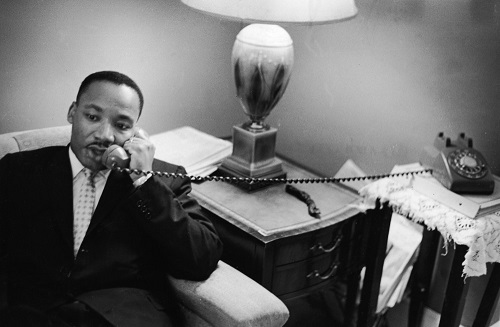
Even after it was beyond doubt King was no Communist (and so what if he was?), government policy was to keep pushing this idea in the media through leaks, innuendo, and good old-fashioned name-calling. But it was justified, because… national security. 

When MLK came out against the Vietnam War – a position fairly common in later years, but still somewhat “un-American” at the time – these accusations seemed substantiated. Who but a subversive tool of foreign powers and ideologies would oppose America’s light-shining and democracy-building overseas? Come on, people – national security!

Perhaps the Reverend’s greatest sin in the eyes of the establishment was shifting his focus from racial equity alone to a ‘war on poverty’ in general. It was a dangerous mindset – that perhaps being poor was not a character failing or the natural results of some people being smarter or working harder than others, but rather the results of a corrupt – or at least broken – system. The proverbial playing field was in no way level.

MLK on PhoneToday we celebrate King’s movement for its non-violence, but media at the time fixated on the sporadic exceptions. They painted even those outside the movement who destroyed property or threatened individuals as evidence of what MLK was really about. No matter how often King and others denounced bad behavior, the movement was constantly accused of supporting violence because they didn’t denounce it enough. Clearly they were a threat to… national security. 
The movement wasn’t perfect. There were internal disputes and inconsistencies, as there always are, and individuals and moments which didn’t fit the larger picture, to be seized upon by critics as proof of what they’ve wanted to believe all along.

But most of them didn’t want to hurt anybody, or even break anything. They just wanted to be treated like ‘real Americans’, real humans, and have access to a shot at the same American Dream as everyone else. That in and of itself, however, was a very real change in the established way of doing things. It was threatening to some and uncomfortable for most.

That’s just not how things had ever worked before, no matter what our ideals said. 

It’s important to note that those in power, with access to the bigger picture and far more information than the average citizen, knew that their accusations and fear-mongering were nonsense. While the average racist asshole in the street may at least be painted as a product of their times, those making policy, controlling the courts, and holding most of the guns, were lying in ways that got other people hurt and killed, and doing so for their own comfort and power. Any rationalizing they did about the means serving noble ends was just that – rationalizing. 

Did I say comfort and power? I’m sorry – I meant ‘national security’. 

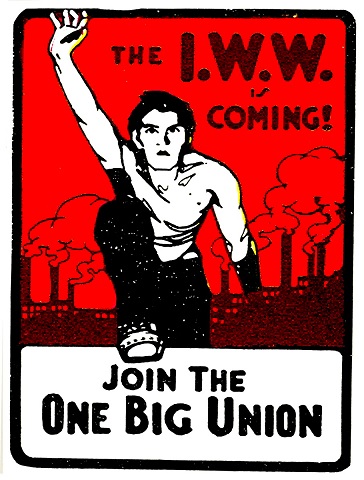
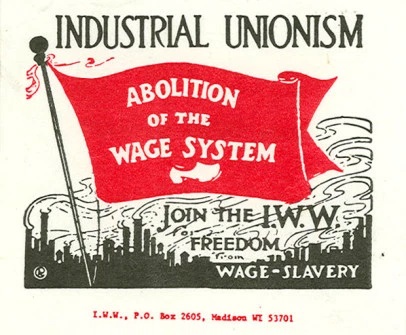
The I.W.W. is ComingFifty short years before King came into national consciousness, there was a labor organization called the International Workers of the World (I.W.W.) – nicknamed “Wobblies” for reasons long lost. They sought to organize unskilled workers in factories and fields, those marginalized due to limited education and no political power. Unlike other labor unions of the time, they weren’t about protecting certain skilled professions or choosing respectable members – they were the little people even among little people.
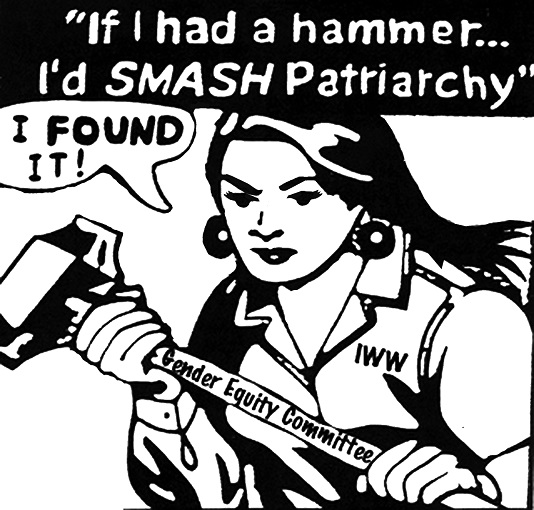
The response from both business and government was predictable – demonized in the media, the I.W.W. was constantly accused of being the tool of foreign powers, un-American and dangerous. Government infiltrators joined their ranks, and arrests were made on the most thinly manufactured charges. This was necessary, it was said, to protect national security. 

Their homes and businesses were searched without warrants, and entire blocks of prisoners were promised leniency if they’d testify that various I.W.W. members had confessed nefarious doings to them – even if they’d never met that person, let alone shared a cell. When there were trials, due process was rare – although in a few cases a particularly idealistic judge would hold the line and refuse to allow extensive shenanigans, no matter what his personal loathing for the organization. 

Of course, by the time the process had played itself out, the accused had been held in dark, damp cells with appalling sanitary conditions and inadequate nutrition for months – sometimes years. Because, you know… national security. 

When the Wobblies came out against World War I, government and business had the excuse they needed to up their game. Laws were passed to make the free speech, press, and assembly of the Wobblies state and federal crimes in the name of… national security. 

If I Had A Hammer...All violent acts done by labor or those of foreign descent became I.W.W. violence, no matter how condemned by the group itself, because… national security. And the I.W.W. was essentially a Socialist – maybe even Communist – organization at heart. They virulently attacked the Capitalism around them as more about entrenched power than competition and opportunity. The proverbial playing field, they argued, was in no way level.
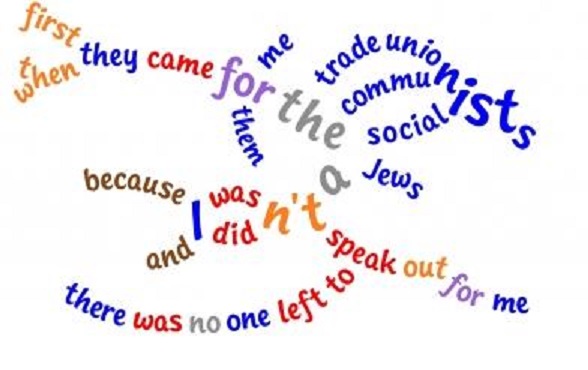
When the courts failed to produce the desired results, representatives of the union were whipped, tarred and feathered, their lives threatened and their property destroyed, presumably by “spontaneous” mobs but often with the explicit cooperation of law enforcement. Periodic lynchings of ‘radicals’ were considered very American things to do – tacitly supported by government, vocally supported by the popular press. 

The movement wasn’t perfect. There were internal disputes and inconsistencies, as there always are, and individuals and moments which didn’t fit the larger picture, to be seized upon by critics as proof of what they’ve wanted to believe all along.

But most of them didn’t want to hurt anybody, or even break anything. They just wanted to be treated like ‘real Americans’, real humans, and have access to a shot at the same American Dream as everyone else. That in and of itself, however, was a very real change in the established way of doing things. It was threatening to some and uncomfortable for most.

That’s just not how things had ever worked before, no matter what our ideals said. 

Industrial Unionism

It’s important to note that those in power, with access to the bigger picture and far more information than the average citizen, knew that their accusations and fear-mongering were nonsense. While the average nationalistic goon might have been the product of his times, those making policy, controlling the courts, and holding most of the guns, were lying in ways that got other people hurt and killed, and doing so for their own comfort and power. Any rationalizing they did about the means serving noble ends was just that – rationalizing. 

Did I say comfort and power? I’m sorry – I meant ‘national security’. 

Thankfully in the 50 years since MLK’s assassination, we’ve learned a few lessons, and human nature has fundamentally altered from what it was from the dawn of time until 1968. It’s unthinkable that we’d allow political and business interests to unite against marginalized groups to protect entrenched power, or to give the unwashed masses a target for their frustrations and hatred so as to distract them from their ongoing neglect and overt exploitation by those whose comfort requires their ignorance, and their apathy.

We’d never tolerate gross violations of our highest ideals and explicit laws in the name of protecting those exact same ideals and laws – the irony would simply be too much. 

No, thankfully today we’ve realized that if our ideals are, in fact, so very unique and wonderfully noble – if they have the power we insist they do – then the laws and social expectations based explicitly upon them are more than sufficient to deal with any discomfort, or even the occasional very real danger, which may result from holding to them. The best way to defend our national ideals… is to live by them.

They Came For...

The Blacks in Oklahoma, Part III

OK Freedmen

It pains me to say so, but we really need to wrap this one up.

I’ve been wandering through “The Blacks in Oklahoma,” from The New York Times, April 9, 1891. If you haven’t read Part I and Part II, well… I mean, you did notice this is called ‘Part III’, right?

The unnamed author has already set us up once, responding to rumors that black settlers were becoming a drain on their communities and – by implication – the hard working white citizens in the territory, by informing us that the opposite seemed to be the case everywhere HE went.

Having covered a touch of the past and some key features of the present, he’s about to conclude – logically enough – by considering the future. He starts by reminding us that white people are at best delusional, and at worst notorious fabricators – especially the politicians. 

The Hon. David Harvey, delegate to Congress from Oklahoma, said to THE TIMES correspondent that the blacks were decreasing in Oklahoma and that they could not find an abiding place there. The observation made during the trip just finished will not verify his statements. 

What a gentle way to phrase “liar, liar, pants on fire!”

In his own city – Oklahoma City – according to his statement, there were not over 100 negroes of all ages and kinds. A careful personal count revealed the existence of 157 families, averaging 4 to each family. He asserted that there were not more than four dozen negroes in Guthrie, while, in fact, there are at least 300 in the city. 

Last time this reporter laid on the statistics, he was setting us up for a mid-article twist. We should be ready for wherever he’s going this time as well. 

OK Black Homesteaders

Mr. Harvey was especially positive that the black-jack country could not contain over 1,000 negroes, when the returns of the last election show that Mr. Harvey received at least 1,700 negro votes. 

Again with the diplomatic approach. 

I think this could just as easily have said, “He knows darn well that he’s full of $#%* because whatever else he does or doesn’t care about, he KNOWS his own electoral results!”

He condemns all allusion to the black strength in that Territory, believing that the importation of blacks only adds to the distress possibly existing there, and yet the blacks are the only ones of a mixed population self-sustaining in a Territory where the majority of the inhabitants so far have been living off of each other, gradually wasting their capital, and will do so until agriculture begins to be productive of results. 

Thus revisiting the impact point made in the first half of the piece – despite claims to the contrary, the black settlers were the only ones NOT adding to “the distress.” Note how subtly the language employed here suggests a certain defensiveness – maybe even hostility – on the part of Mr. Harvey. 

The cities are owned principally by speculators. They would be creditable to an older country, showing the indomitable energy and faith of their founders, as well as exemplifying their hopes in the future of Oklahoma.

Is there an implied ‘but…’ here?

In the meantime, almost every train brings in negroes from the South, who remain. Agents from Georgia and Arkansas have in vain sought to induce some of these blacks to return as laborers. They will not go. They send glowing accounts back to their friends of the new land, and the stream of immigrants constantly increases. 

However difficult conditions in the new Territory, they apparently had nothing on the Old South. If you teach ‘push-pull’ factors in your classroom, here’s a prime example – plenty to drive a group of people OUT of one place; plenty to draw them IN to another. 

So far there has been but little trouble; what the future may bring nobody even pretends to guess. In fact, nobody will not think of it, except the blacks themselves. The latter fondly cherish the idea that they may possibly found here a State in which they will predominate and have the controlling power.

Oh the possibilities! Surely most resisted the temptation to give hope too much leeway. History would insist that under no circumstances would that EVER be allowed to happen (see Part II).

OK Homesteaders

Here comes the wrap-up. Stay with me now – this is a good one.

See, one of the things I love about humor and tone in a well-written piece is how much impact it gives the underlying message – the ‘serious’ parts – when they arrive. I have little use for droopy drama, but when the Guardians of the Galaxy resolve to sacrifice themselves to try to do one right thing, or Bill Murray realizes the “true” meaning of Christmas… snot’n’sobs. Every time. 

If I were an English teacher, we’d have a fancy word for this use of tone and structure, and examples involving obtuse essays by dead Englishmen. But HISTORY teacher = movies movies movies. 

The war of races in Oklahoma is sure to come, but it will not be fought with guns and knives. The weapons will be the plow and the hoe, which will be wielded by each race upon its own lands. It remains to be seen whether the hot sun of Oklahoma will favor the black cuticle of the cotton and tobacco grower or the white skin of the corn and wheat raiser. 

*pause*

That’s it. That’s the conclusion. 

I’ve read this numerous times, and I’m convinced the author fully expects the black settlers in Oklahoma to prevail – or to at least hold their own. Maybe he’s more concerned with dramatic effect than substance, but I don’t think it’s just that. I think he’s being idealistic. 

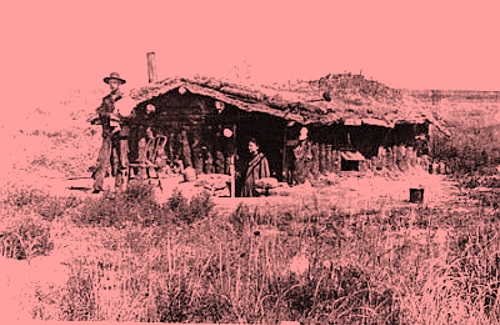
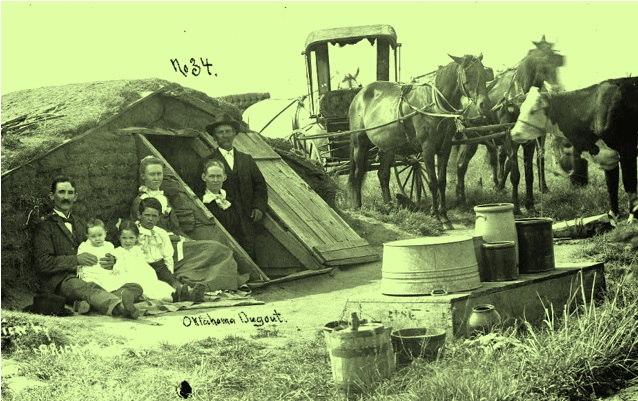
Oklahoma Dugout

Like most of us, his own experiences and assumptions about how the world works color his optimism. Inherent in that closing paragraph is the conviction that hard work, grit, and the human spirit determine winners and losers in the end. Helen Churchill Condee had the same assumptions when she wrote primarily of white homesteading. 

That’s the American Dream – or it was, for a few centuries. It’s a bedrock of conservative social and political thinking – you get out of life what you put into it. Work hard, stay in school, live the dream – everyone may not start with the same advantages, but the overall system works the same for everyone. 

The Black experience – in Oklahoma or anywhere else – didn’t usually hold that to be true. Much like the American Indians they were replacing, the terms of the deal kept changing based on what best served white predominance. They changed for individual farmers who found some success, and they changed for communities who prospered just a little too much.

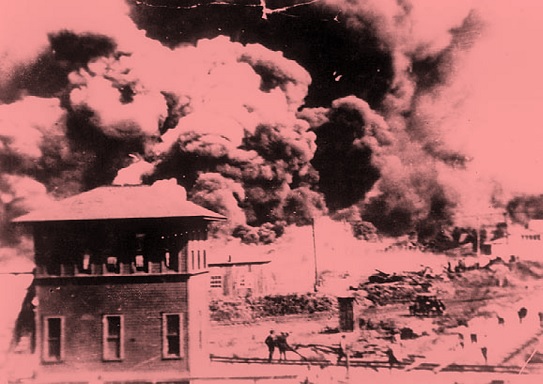
The most glaring example exploded a short thirty years later in Greenwood, as white citizens of Tulsa burned down Black Tulsa, killed hundreds of innocents, and took their stuff home as presents for their wives and kids. The war of races become violently overt, fought with guns and knives. 

Tulsa Race Riot

But even when the mobs aren’t in the street, is it possible that the underlying system has always been there? How much would be different if it weren’t shaping policies and attitudes today?

I don’t want to sound negative, but a doctor unwilling to discuss a possible diagnosis with his patient just because he doesn’t want to be a downer isn’t a very honest doctor. Maybe we don’t like to think about such things because we’re enjoying our little plot of land, knowing we’ve worked hard, taken a few chances, and caught a few breaks along the way. Maybe it’s easier to condemn those who threaten our paradigm than to question our comfort.

Or perhaps at some point human nature dramatically changed, the system began to work equitably, and everyone should just be glad all the descendents of those who first claimed those best lands from the less-worthy (by nature of their color or culture) just happen to be the most honest, hard-working folks today.

You know, so no one has to adjust their social, political, or economic standing too much. Because that would be SO un-American.

Just make sure you don’t think it too clearly or ever say to yourself out loud what your forebears carried as a matter of fundamental faith – that you are where you are because that’s exactly how things were set up to be. Because the universe has decreed it your “birthright.”  

Early OK Town

RELATED POST: The Blacks in Oklahoma, Part I

RELATED POST: The Blacks in Oklahoma, Part II

RELATED POSTS: A Chance in Oklahoma, Parts I – II

RELATED POSTS: Boomers & Sooners, Parts I – V

The Blacks in Oklahoma, Part II

Black Homesteaders

If you haven’t read Part I of this post, first of all let me say SHAME ON YOU! How can you let crucial learnifying SLIP like that? Second of all, I respectfully suggest you start there for, you know, context and stuff. 

I was waxing history-nerdish over a column titled “The Blacks in Oklahoma,” published in The New York Times on April 9, 1891. It’s historically significant, and rhetorically rich. The reporter is addressing rumors that black homesteaders had been flowing into the recently opened territory without resources or a plan, and had become a drain on the community and perhaps a danger to others. 

Imagine a time in which “others” were automatically treated with such suspicion and accusation. Oh, the good ol’ days… 

Many have gone to that territory with nothing except the rags they wore, but they have never become public charges. They have been cared for by persons of their own race until they were in such condition that they could help themselves and help others. 

It’s not unusual even today for immigrant groups (these weren’t technically ‘immigrants’ so much as ‘migrants,’ but the idea is the same) to settle in clusters where they can mutually support and assist one another. Some of this may be defensive, but it has an important proactive function as well.

Don’t scoff – you’d do it too if you were moving to a new world. 

At this time there are eight families crowded into an old (over one year is “old” in that country) storeroom, which aggregates forty-five people. There they sit day after day, waiting until they can be scattered and settled temporarily upon some of their race’s claims. They have their rages and their bundles of household goods and probably $50 would prove a bonanza to the entire outfit. They are fed by their more fortunate brothers, and some way they will be kept alive until Summer, when they will show that they are self-sustaining, for they will work and exist upon almost nothing.

I wonder if the assertive confidence expressed here reflects the mindset of his subjects, or the convictions of the author himself? That would make an interesting document analysis activity. 

OK Freedmen

I have some idea what it’s like to be poor, but I lack a real appreciation for the sort of soul-crippling poverty described here. Most of us couldn’t even imagine. And yet…

Humiliating as they confession must be and is, the appeals for aid coming from Oklahoma do not come from the negroes, but from the whites. They exemplify the workings of the co-operative plan, as on claims may be found two, four, and sometimes eight families, all working together and often living together, awaiting the time when more lands will be opened for settlement, when the surplus expect to find claims for themselves.

If there’s a sense of entitlement present, it makes sense it would come from those running to claim land promised to others for as long as the sun shines and the grass grows and so forth. There was little guilt about betraying our national oaths yet again, largely because of a deep conviction that white guys in some way DESERVED this in a way others could not. 

Is it such a leap to realize some of those same claimants would ask for help while they wait for the rest of WHAT THEY DESERVE to become available?

Twelve miles northeast of Guthrie, on the eastern border of Oklahoma, was found the little “city” of Langston, the inspiration of E.P. McCabe, the only colored State officer Kansas ever had, who is now Treasurer of Guthrie County. McCabe proposes to establish at Langston a distinctively negro city, and has for months, through colonization societies, been working in the Southern States to secure a population for this new black Mecca. 

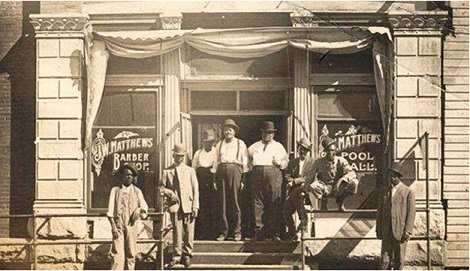
He has secured a number of families and has sold many lots. Some thirty dwelling houses and a small store comprise the nucleus of what the negroes hope to make a great city. There are nearly two hundred persons already there, and not a white face is to be found in the place. 

Black carpenters were at work on a dozen new houses in course of erection, while masons, bricklayers, and other mechanics were making preparations for their future work. They have a black doctor, a black preacher, and a black school teacher, the latter presiding in an unpretentious little building already dignified by being called “the academy.” Adjoining the town site eighty-three acres of land have been broken up, and will this year be used as a co-operative garden by the entire colony. 

McCabe is a big deal in Oklahoma history. He was the driving force behind much of the territory’s black settlement in the late 19th and early 20th centuries. His goal of an exclusively ‘black state’ was within reach for a time. It could have happened. 

Edwin McCabe

White people, of course, freaked out at the possibility. Imagine if it had failed – all those poor, angry black folks concentrated in one place? What might they do?

Worse, imagine if it had succeeded? How many centuries of American history would have to be re-examined if it turned out black folks were perfectly capable of running their own lives and communities after all? What would that say about…?

Oh yeah – not gonna let that happen. No State For You!

When asked what they were going to live on until something was raised, the general reply was that they “did not come here as paupers,” and that they had brought some money enough with them to live on for some time.

The principal object in establishing this town on the eastern border was to be near the lands of the Iowas, which are expected to be open to settlement before Fall. When these lands are opened Langston will be the supply depot for all of the black race, and there will be repeated the experiment, already a success, that was made in the black-jack country in the northwest part of the Territory, but under much more favorable circumstances, as the new town in situation in a much more productive country.

Black settlers tended to gather in areas with the least desirable farm land, and the least convenient access. While this seems to have occasionally been a result of pre-opening regulations, it was primarily a strategic move on the part of the black community.

It didn’t take much extrapolation to suspect that land recently seized from red men would be unlikely to stay in the hands of black men if desired by white men. So, pick areas white people wouldn’t want. Sure – it would be harder to grow essential crops, and to provide other sustenance… but what else was new?

Pool Hall Barbershop

Apparently some were now hoping to grab some land a bit further east, where conditions weren’t QUITE so onerous. 

Therein lies the inevitable tension for citizens of color, then OR now. Very real opportunity. Very real progress. Open doors and flashing arrows pointing the way towards very real dreams.

And yet… at any time, those rules can change. They change if you’re not successful enough in the game, and they change even more dramatically if you are. You won’t give up, and you don’t want to lose, you have to be careful how much you win.

I insist to my students that whatever else Oklahoma is, its history is rather unique among the fifty states. At the same time, our past repeatedly reflects larger truths about the nation as a whole. We study Oklahoma history not because we’re unique (even if we are), but because of the light it sheds on the bigger picture. 

We’re like a historical funhouse mirror collection. Why can’t THAT be on our license plates?

We’ll conclude in Part III – I promise

RELATED POST: The Blacks in Oklahoma, Part I

RELATED POST: The Blacks in Oklahoma, Part III

RELATED POSTS: A Chance In Oklahoma, Parts I & II

RELATED POSTS: Boomers & Sooners, Parts I – V

The Blacks in Oklahoma, Part I

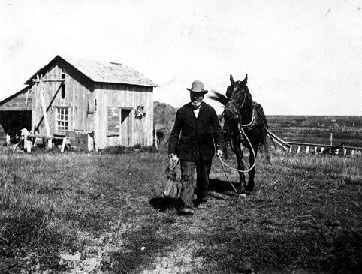
Black Homesteader

I’ve been on a bit of a primary-sources-related-to-Oklahoma spree lately. Haven’t we all, at one time or another?

Many of them are interesting, most are informative, and a few contain information which is simply incorrect, however passionately delivered. There are a handful, though, which are simply a joy to read – repeatedly!

Er… for me, at least. As I’ve said before, my life isn’t what you might call “rip-roaring.” 

THE BLACKS IN OKLAHOMA – FLOCKING TO THE TERRITORY IN LARGE NUMBERS 

The New York Times – April 9, 1891

It had been nearly two years since the first land run opened the ‘Unassigned Lands’ in what was becoming increasingly thought of as simply ‘Oklahoma’. A second opening was anticipated in a few months, and people up north were naturally curious how things were going down there in wild country. 

Unlike today, when accuracy and perspective are editorial priorities as a matter of professionalism and respect, it wasn’t unusual in the late 19th century for stories about crazy events or bizarre behavior to capture the public imagination far more than the tedium of most real life. Sometimes news outlets even exaggerated a bit to keep readers entertained.

Of particular interest were stories feeding national preconceptions about race or culture. Were homesteaders at this late stage really such dirty, uneducated folks? Were Indians truly savages, or more like simple children, noble in their pathos? 

And what about the Negro? (That was the polite terminology of the day.) Even approaching 1900, a substantial number of white Americans in the northeast rarely if ever interacted with citizens of color. Oh, there were the Irish and Germans, who were bad enough, maybe an Eastern European sporadically, but a black man?  

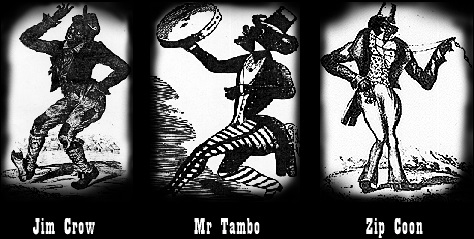
Minstrel Types

Minstrel shows were losing their popularity as Vaudeville became a thing, but the caricatures were well-instilled. On the other hand, there were those who insisted the Negro deserved the same rights and opportunities as white men – maybe not all of them, or to the same extent, but more than they seemed to be getting in the south, if what the papers wrote were true.

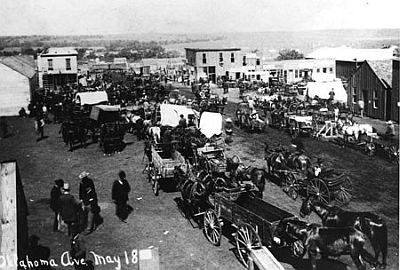
And then there was Oklahoma Territory. Formerly ‘Indian Territory’, it was gradually beginning to open its ‘surplus’ lands to white – and black – settlement. Social Darwinism at its purist – run in, hold your claim by any available means, and start from scratch along with everyone else to see what you can make out of these last few remnants of American opportunity.

That was the idealized version, at least. But it was about as close to starting on a ‘level playing field’ as most alive in that generation would ever see for Black Americans, however illusory the ‘level’ part of the equation may have been. 

Topeka, Kan., April 8.- Is Oklahoma really overrun with negroes, and has there been an influx of pauper negroes from the South? So many conflicting answers have been given in response to these two questions that it was impossible to arrive at the truth. 

In class, this is where we’d talk about ‘making good inferences’. What seems to be motivating this particular foray into the territory by this NY Times reporter? Why does he open with these questions? 

Good times, those inference discussions.  

The census taken there last Summer was of no use in aiding one to arrive at conclusions, for, while Guthrie enumerated, so it is said, the horses, dogs, and chickens as well as the “regular” population, Oklahoma and Kingfisher failed to count the men, women, and children, while Edmund, El Reno, and Lincoln are still in doubt as to what and who were counted, and Langston was not in existence.

Guthrie

My students have this weird idea that in 2015, all computers and institutions everywhere are neatly connected and speak the same ‘language’. I assume they get this idea from bad action movies and federal health care legislation. 

But why they apply this assumption backwards through history is beyond me. Most of written history is an absolute mess. We make educated guesses – some fairly supportable, others just… the best we’ve got. 

It’s somewhat reassuring to know that as recently as 1891, at least one contemporaneous observer realized they really had no idea what was going on with who, or where. 

In order to determine the truth, THE TIMES’s representative determined to visit the Territory and see what was to be seen, and to learn from interested persons as much of the truth as they could be prevailed upon to surrender. 

He’s setting us up with tone. I respect that. 

Those who have never attempted to draw the truth from an Oklahomaite can hardly realize the difficulties that are presented. The Territory was born in falsehood, was baptized in falsehood, and falsehood has been the principal article of diet ever since that fateful 23rd day of April, 1889, when the “sooners” became the leading citizens of a country opened to settlement too late in the year for the planting of crops, and to which the poverty-stricken were invited by speculators and impecunious lawyers who had been permitted to enter beforehand by a pig-headed Administration, which could see nothing good outside the ague-stricken Wabash bottoms of Indiana. 

I can’t tell you how often this bit cracks me up. 

After basking in the pithy slander of early Oklahomans, don’t overlook the wonderful jab at President Benjamin Harrison. “{A}gue-stricken Wabash bottoms” just drips with disdain.

Harrison, of course, had made his way up the political ladder from Indianapolis, where he’s now buried. They’re rather proud of him up there – understandable, I suppose, since they really don’t have much else to boast on. I mean, you’ve seen the Colts in action, and their legislators are doing all they can to make Oklahoma’s current public education system look passionately committed to excellence compared to theirs.

But at least they have Ben Harrison’s corpse. That’s something, right?

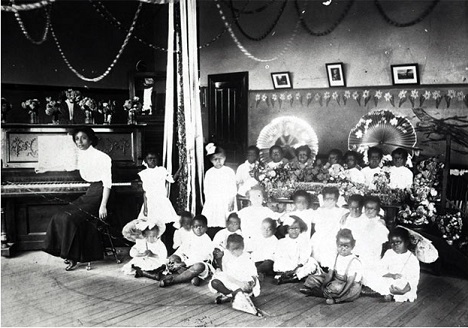
Guthrie Students

I don’t really mean that last bit about Indy. It was simply an example of the sort of inflammatory writing popular among some readers in the time period under discussion. I do it solely to help bring HISTORY to YOU. 

You’re welcome.    

Guthrie, being the headquarters of the Afro-American Colonization Company, has naturally been the objective point of the negroes who have been induced to migrate to Oklahoma. It is impossible to ascertain how many of the black race have arrived in that city, the estimates vary so largely. 

Those who are opposed to negro settlement declare positively that there are not fifty in the city. Those who favor the movement insist that there are more than two thousand in and about the capital. The latter is probably more nearly the correct figure, as an inspection of the city revealed many black faces, and an examination of many of the little houses in the suburbs showed a number of colored families comfortably situated. 

It’s hard to know when facts are being willfully fabricated to serve an agenda, or when the perceptions of those gathering them are simply so colored by preconceptions that they see what they expect and intend to see. 

Back then, I mean. Not today, when we have science. And numbers. And ALL THE FACTS. 

That these negroes are not all paupers is shown by their bank deposits, where they have sums ranging from $200 to $1,000. In one bank alone sums aggregating over $15,000 have been deposited by the negro settlers.

I’d pause at this point in class and ask my students to speculate where the author is going with this. You should as well. 

I’ll wait. 

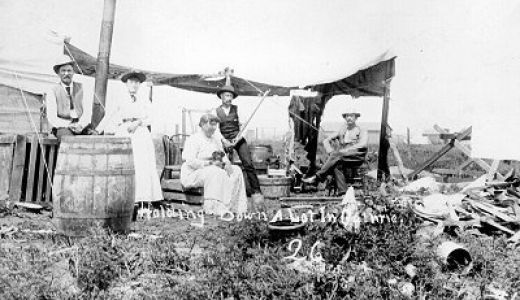
Holding Down A Lot

He may be simply refuting existing criticisms, point by point, in defense of Black settlers. Perhaps his point will be that they’re doing fine – just look at the evidence! 

But we’ve already had a taste of the author’s tone. The news may be valid, but it’s swaddled in snark and personality. We should be suspicious. Is he setting us up for… something? 

RELATED POST: The Blacks In Oklahoma, Part II

RELATED POST: The Blacks in Oklahoma, Part III

RELATED POSTS: A Chance In Oklahoma, Parts I & II

RELATED POSTS: Boomers & Sooners, Parts I – V