
“My client wasn’t even IN the bar the evening of the murder, and if he WAS there, he doesn’t even OWN a gun! If he DOES own a gun, he didn’t have it with him that evening, and if he DID have it with him, it wasn’t loaded – he’s not CRAZY! Even if it WERE loaded, he didn’t use it – why would he? He didn’t even KNOW the victim. If he DID know the victim, he liked him, and if he didn’t like him, he at least didn’t kill him. But if he DID kill him, it was self-defense. And if it wasn’t self-defense, he still had a very good reason. Otherwise, he’s crazy and can’t be held accountable. Come on, he was carrying around a loaded gun – who DOES that?!
I’ve told you that one way or the other he’s innocent – why do you doubt me? That’s so hurtful!”
 It is difficult for those of you with the slightest shred of decency to appreciate how the law and politics work. They do not operate according to anything most of us consider reasonable, moral, or even explicable. In the past they didn’t have to (and in some systems today they still don’t). Those affected had little expectation of being fully informed and no real control of the outcome.
In modern America, politics still doesn’t have to make sense, but for different reasons. Most of us are too busy to try to keep up and sort it all out, or too quick to follow anyone confirming what we wish confirmed or feigning outrage over whatever we find outrageous. Or maybe we’re just too stupid and easily distracted.
Not criticizing here – just keeping an open mind about possible explanations.
It’s amazing to me how easily we roll our eyes or exclamate our declamations over things done in the past – successfully, for centuries – and yet find it inconceivable the same things may be happening today, because… well, that’s CRAZY!
What, exactly, is it you think has changed about either mankind or the nature of power? Please – I’ll wait.
…
Hello?
The South attempted to secede and lost. The war destroyed lives and property on both sides, but the South had the worst of it by far. Reconstruction began, things got weird again.
 And then the South began writing the history of the war and the events which led to it. The war they’d lost. The one fought over a variety of issues, but in which slavery and its continuation were central and essential as defined by the South in the very documents they issued to justify their cause.
Only suddenly the war hadn’t been about slavery at all. In fact, the South was collectively rather wounded at the suggestion! Slavery?! You think – you think this was about SLAVERY?
No less an authority than Jefferson Davis began cranking out volumes on the REAL story of the Lost Cause of the Confederacy. Others picked up the theme, and before long their United Daughters (still active today) were tea and cookie-ing this theme across the land.
Historians still argue about the war (they’re allowed to do that still, outside of Oklahoma and Texas) – that’s fine, it’s what they’re supposed to do.
 What’s less tolerable is the fervent hurt and chagrin evidenced by the South’s defenders at the very suggestion that secession had ANYTHING to do with slavery. It’s not that they wish to lay out a reasoned argument, you understand – it’s that they’ve reshaped history and historiography solely through repetition and strong emotion.
“To suggest secession was about SUH-LAVERY, well it it it’s it’s just… *sniff* DISHONEST!”
The rest of the nation has cooperated, by the way – we don’t like acknowledging our role in making chattel of humans with souls any more than they do. Better to focus on tariffs and elections and economies and cultures – all persuasive alternatives, since all were involved.
The best deceptions are mostly true, after all – or true but for omissions. That’s how laws are made and history written – so be it.
Why does it matter if the South wishes to save a little face? What’s so wrong with simply focusing on the good parts in our collective history? I mean, the naysayers won their little war and got their way, didn’t they?
Can we at least keep the damn flag without everyone having a hurt-feelings-fit every time?
 My favorite hockey team captain after a tough loss and horrible officiating: “There were some tough calls, but the real problem is that we didn’t take care of business in our own end. We let too many pucks get past us and didn’t take advantage of our opportunities.”
I hated the poor play, and the poor officiating even more – but my decisive and lingering memory is how much I love the class of my team.
Also, he’s pretty.
More importantly, the team is able to go into practice the next day aware of the things they CAN control, and which led to problems. By acknowledging what they did wrong, instead of merely casting blame, they can improve – or at least that’s the goal.
You may remember the contrast between how Kanye and Beyonce handled this situation:
[[{“type”:”media”,”view_mode”:”media_small”,”fid”:”562″,”attributes”:{“alt”:””,”class”:”media-image”,”typeof”:”foaf:Image”}}]]
The lingering perception is that Kanye is a nut, Beyoncé is a class act, and that apparently Taylor Swift is a country artist (as she mentioned in the full version of her pre-interrupted speech). Reality may differ, but what we remember is what shapes events going forward.
It matters what happened and how it’s remembered because we can’t learn from mistakes we don’t think we made. Left uncriticized, Kanye is just a fighter for justice and Swift a bewildered blonde. Without her subsequent efforts to make things right, Beyoncé could just as easily seem a sore loser, despite winning bigger better things that same night.
If the war was about slavery, and slavery is evil, and the South lost, then the reasonable thing to do is to start trying to repair some of the damage done by slavery. If the war was about a race-based chattel system, then we have some serious introspection to do about ourselves as a people and the extent to which we’ve failed to live up to our own ideals.
 Of course, if the real issues were states’ rights-ish, that’s not as bad. Federalism is about balance, after all, and if perhaps the South got out of balance, that’s clearly rectified now. If anything, the central government is much stronger than originally intended as a result!
We can spend some time trying to Reconstruct the South and push for some reforms, but at some point we’re going to need to get back to being a country again. We’ve made our point – let’s let them rebuild and trust whatever gradual progress can be made in terms of race and society.
If the war was about slavery, then both Lincoln and John Brown were right – we’ve paid for our national sin with national bloodshed. Time for a new birth of freedom.
If the war was about different understandings of the Constitution, then might makes right and we won by decimating our enemies by any means necessary. Next time the meaning of our founding documents may swing back a bit the other direction.
If the war was about slavery, then Black America may well need time and support to recover from a sort of collective PTSD. There would be imbalances to correct and scars which may never be quite healed. If we’re willing to go to war with ourselves to keep an entire race of people in degradation and servitude, what must we confess and how might we repent to set a better future course?
If 620,000 men died over tariffs or electoral procedures, then our nation is charted by whichever political and popular mechanizations produce the desired result. If the war was about anything other than slavery, maybe Black people need to just get over it and be less, you know… ‘Black’ about everything.
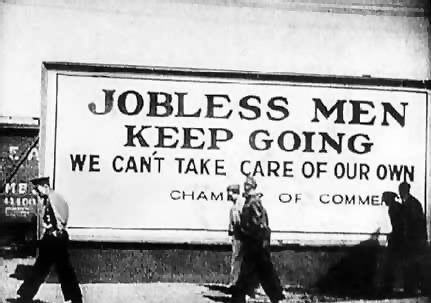 If our ideals are as flawless and their realizations as consistent throughout our history as current legislation insists, then inequity and suffering are primarily a result of personal or cultural failures. If America is ‘exceptional’ in the way they demand we acknowledge, whatever failures have occurred within it are individual and not national. Potential solutions or cures must, logically, come from the same.
We can’t repent of sins we can’t confess, or repair that we are unable to see as broken. This applies across any number of historical and national issues. If we build our actions and beliefs on a foundation of national amazing-ness, the ramifications are much, much larger than which textbooks we adapt or which tests we take to graduate. Conversely, if we believe the human heart – even the American heart – is desperately wicked, and deceitful above all things… who can know it? Well, that leads to humility and grace as we push forward, aware of what we are capable, for good or ill.
 I’ll close with a little Bible talkin’, since that seems to be such a motivator for those pushing a better whitewashing for our lil’uns. Whatever we may disagree on, I wholeheartedly concur that we’ve lost much in our upbringing if we feel the need to run from the wisdom found in small red print:
“And he spake this parable unto certain which trusted in themselves that they were righteous, and despised others:
Two men went up into the temple to pray; the one a Pharisee, and the other a publican. The Pharisee stood and prayed thus with himself, God, I thank thee, that I am not as other men are, extortioners, unjust, adulterers, or even as this publican. I fast twice in the week, I give tithes of all that I possess.
And the publican, standing afar off, would not lift up so much as his eyes unto heaven, but smote upon his breast, saying, God be merciful to me a sinner.
I tell you, this man went down to his house justified rather than the other: for every one that exalteth himself shall be abased; and he that humbleth himself shall be exalted.”
(Luke 18:9-14, KJV)
If there’s an argument to be had, let’s have it. But let’s base it on our best understanding of the truth and the wisest possible course consistent with our proclaimed ideals – not on what best covers our collective behinds and casts the remaining blame on those least able to carry the burden.

RELATED POST: A Little Knowledge, Part One – Secession and Superiority
RELATED POST: A Little Knowledge, Part Two – Forever Unfit

 Mr. Auld was no fool. He knew that control – whether of populations or individuals – begins through the information to which they have access. Whoever controls knowledge controls everything else – especially when it comes to maintaining a system based on privilege and inheritance.
 There’s nothing wrong with learning to be content with what you have, but that’s a choice we can only make if we have some glimpse of the alternatives. I may wish I were rich, but as I endure Kardashians and Trumps, there are trade-offs I’m not willing to take to get there.
 Douglass connected with a character who was in some ways like himself – not in wise words or holy determination, but in the ways his life sucked, like being a slave. This fictional character, however, was able to demonstrate at least one possible way to endure or even flourish in the ugly, imperfect situation in which he was mired. He resonated far more than an idealized hero-figure of some sort could have, belching platitudes while fighting off the darkness with patriotic pluck.
 Learning is dangerous, but not to the person doing the learning. It can hurt along the way, but you usually end up better off for it.
 The Inquisitions and Puritans and Assigners of Scarlet Letters in New Testament times have no such excuse. If their faith is what they claim, it’s a faith based on light and truth and – above all – informed choice. Jesus and Paul may not have had much in common, but there’s no record either ever lied or hid anything they didn’t want the world to see. They didn’t want to capture anyone who didn’t wish to be won.

 Based on these documents, produced by the Southern states for the explicit purpose of proclaiming to the world the causes of their secession, the main issues seemed to be (1) slavery, (2) slavery, and – in some cases – (3) slavery.
  Was Lincoln’s election really such a threat to their way of life? Maybe. Not according to Lincoln, it wasn’t, but the new Republican Party openly advocated for restrictions on slavery – particularly in terms of limiting its expansion. Perhaps that was a debate worth having, in the context of the times.
 “We don’t like the thinking prompted by your teachers, your books, your visuals. We don’t appreciate you complicating their world or ours by introducing problematic ideas. Ignorance is bliss, buddy – our version of reality is good enough, despite its apparent inability to withstand the slightest scrutiny.”

 The FSA had a result quite different than intended. When forced to partake one way or the other, most Northerners chose to assist runaways, directly or indirectly. Whether this was Christian charity or a collective middle finger to the South was irrelevant to the couple sleeping in their barn and accepting that leftover ham. The FSA ended up galvanizing into action the formerly uninvolved – but not in the way intended.
 Most teachers were already maxed out on what they could buy themselves, so some instituted modest but uniform ‘supply lists’ required of all students. Those unable to comply were dealt with on a case-by-case basis.
 The introduction of the horse to Plains Amerindians. Prohibition of alcohol in the 1920’s, or of drugs today. Pretty much anything involving the internet. There are exceptions, but it often seems the greater the good we’re trying to mandate, the more ‘unintended consequences’ prove quite the spoilers.
 Business owners had no desire to end up on the wrong end of socio-legal revolution. Their solution was simple – no more aptitude tests. Instead, applicants now needed a college degree – in some cases, pretty much ANY college degree. Let the universities deal with any disparities – and hey, look at our over-qualified workforce!
 When we try to mass-mandate solutions in ways that ignore or deny the underlying sources of the problems, there will be unintended consequences. In the 1970’s the primary issue was race, and its impact on access to education or employment. That hasn’t gone away, but we’ve expanded the problem by insisting that every new life must be immediately assimilated into our ‘college and career’ ideals. We intone ‘all children can learn’ as we practice ‘all your identity are belong to us’.
  It doesn’t have to be purposeful to be destructive (hence ‘unintended’), but I’m not always certain it’s not. Our conflation of ‘high standards’, ‘success’, and ‘compliance with my old white guy paradigm’ is simply too persistent to dismiss intent altogether. Real learning and its ‘measurement’ must vary with circumstances and goals. It must accommodate real students and teachers working through their messy, non-standardized worlds.

 Consider Alyssa – a wonderful young lady in AP classes from a two-parent Methodist family. She works hard, makes good grades, stays out of any real trouble, and wants to be a neuroscientist. Obviously she deserves some credit for her accomplishments. She’s demonstrated great capability, and made good decisions.
 Compare her to Dionne – another wonderful young lady, but one from very different circumstances. Her life might be happy enough, or it might be reality-show dysfunctional, but in any case does NOT unfold in the same universe as Alyssa’s. All of the rules are different and their experiences mutually exclusive.
 Anders is my Amerindian, although he might be Hispanic, or White, or Black, or whatever – there are racial issues wound up in these, but they’re not exclusive or always definitive. Many Amerindians had no interest in the Anglo-American value system or way of life, but they were forced to partake – and stakes were high if they failed. They lacked buy-in, but they also were denied good tools, seed, land, etc. It’s not much of a stretch to think a comparable state exists between many teenagers and whatever public school system holds them captive in 2015.
 You’re so thankful for Alyssa – students like her give you the energy to get through the day. But how often is Alyssa essentially rewarded for her upbringing and Dionne marginalized for not ‘working hard enough’? How angry does Anders make you even though he doesn’t really do anything to you other than not be taught? Zack’s an annoying little turd, but he’s passing and no one’s mad at you because of him so… whatever.
