
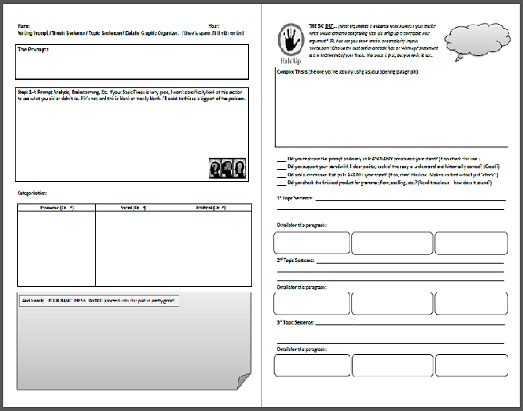
Although it is an imperfect beast and its overuse can be limiting, or even harmful, the “5-Paragraph Essay” should not be so unfairly maligned. It provides useful scaffolding for students learning to support logical arguments rather than ramble about their impressions and feelings, promotes clarity and focus for students as they attempt to formulate and support those arguments, and offers the security of structure and a type of ‘safety net’ for young writers not always certain how to best proceed.

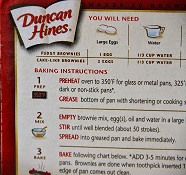
Like any set of ‘tools’ or ‘guides’ we provide young learners, the “5-Paragraph Essay” can provide essential structure for students learning how to make and support historical, scientific, or other academic arguments. Children are often given coloring books in order to facilitate artistic expression, or encouraged to play sports in which the field is outlined in chalk or painted lines and coaches from both teams move among the players guiding or correcting them until they’re able to do without such structures. Even as an adult, I’m far more likely to make brownies or muffins from a box with clear directions and limits than to take my chances with a bowl, some ingredients, and a dream. It does not limit a musician to begin by learning scales or how to form standard chords – it gives them a foundation on which to build while they become more skilled. Structure is not by itself good or evil; it’s only when we confuse ‘tools’ with ‘unbreakable rules’ that we limit students rather than guide them.
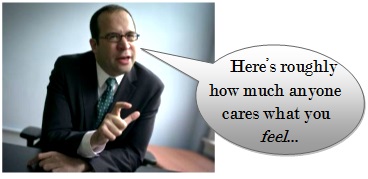
That same structure helps to provide clarity and focus as students learn to distinguish between expressing themselves and making a logical argument. David Coleman, the primary author of Common Core and current Czar of the College Board, took some heat a few years ago after saying “people don’t really give a $#!+ about what you feel… can you make an argument with evidence{?}”** As horrifying as this was to the warm and fuzzy among us, his point was valid enough regarding the importance of being able to say something useful, clearly and concisely, and back it up with facts and reason. It’s a lost skill in our culture, rarely even attempted by our social and political leaders. I know few pilots or surgeons who complain about having to run through checklists before taking off or cutting in; the process prevents careless errors and helps focus attention. While the graphic organizers and other supporting requirements I use to help students build a “5-Paragraph Essay” can’t guarantee clarity or logical thinking, they go a long way towards revealing fuzzy thinking or spotlighting disjointed bits of unconnected information. Unsupervised play and avant-garde musical choices have their place, but such open-endedness can prove crippling to the long-term success of those never ‘limited’ by rules or musical orthodoxy.
[[{“type”:”media”,”view_mode”:”media_small”,”fid”:”987″,”attributes”:{“alt”:””,”class”:”media-image”,”typeof”:”foaf:Image”}}]]
The role of structure in providing security and freedom was brought home to me clearly and eternally by ‘Melissa’, a high school sophomore in my first year teaching. After exhausting all three or four teaching techniques I knew, I assigned a chapter for students to read and then ‘do a project over’. When they asked what sort of project, I responded they could choose anything they thought would help demonstrate that they understood. They were in 10th grade, I reasoned – they knew what sort of projects they liked by this point. After several moments of confused murmuring and dazed expressions, Melissa raised her hand and politely but indignantly informed me that, “Mr. K! Sometimes fences set us free!” I’ve learned to appreciate the default settings of some of the video games I play, or the way the word processor on which I’m typing this automatically selects certain orientations, fonts, margins, and other settings unless I tell it to change them. I don’t feel limited, I feel supported. High school students are a scattered, confused, drifty and easily terrified bunch any time they’re asked to think or branch out, and structure can provide safety in that venture. As long as there’s always a clear distinction between ‘defaults’ (which can be altered when circumstances change) and ‘rules’ (which apply for all time in all circumstances), fences do indeed set them free. [[{“type”:”media”,”view_mode”:”media_small”,”fid”:”988″,”attributes”:{“alt”:””,”class”:”media-image”,”typeof”:”foaf:Image”}}]]
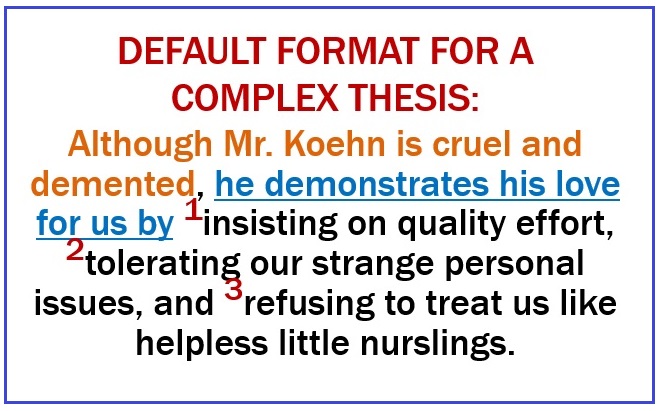
So while there are many good arguments against my complex thesis, whether the ‘Although’ makes you cringe or you’d rather I’d been more general or more specific, used fewer sentences or more, it’s a workable thesis which can be easily emulated in many – but never all – different situations. If you don’t like my structure, I’d encourage you to create another in its place rather than dismiss the idea altogether. The “5-Paragraph Essay” is certainly not the final goal of writing or reason, and it’s certainly not the ideal tool for personal expression, but neither should it be the whipping post of Academia, condemned to languish alongside Wikipedia and Direct Instruction as a shameful relic of some dark, inbred time we’d rather forget.
**A slightly fuller version of the Colman quote is below, in case this is new to you. Don’t tell anyone, but my first reaction when I read this was to laugh. I don’t know that I’d make this into all-encompassing edu-policy, but he made a hard point humorously. How can I argue with that?
Do you know the two most popular forms of writing in the American high school today? …It is either the exposition of a personal opinion or the presentation of a personal matter. The only problem, forgive me for saying this so bluntly, the only problem with these two forms of writing is as you grow up in this world you realize people don’t really give a $#!+ about what you feel or think. What they instead care about is can you make an argument with evidence, is there something verifiable behind what you’re saying or what you think or feel that you can demonstrate to me. It is a rare working environment that someone says, “Johnson, I need a market analysis by Friday but before that I need a compelling account of your childhood.”
RELATED POST: Why Assignment Sheets Might Be Killing Your Students’ Writing (from the edu-blog Three Teachers Talk)
RELATED POST: Unlearning the Five-Paragraph Essay (from the edu-blog Word Doctor)
 I’m a fairly narcissistic fellow. I don’t mean to be, it’s just that I’m vain and self-absorbed. At least I have the skills, style, and cojones to make it work for me. I make no apologies; every rose has it’s – oh, are you still here? I hadn’t noticed.
 I’m pretty entertaining, and I have a degree. That should buy me some leeway, yes?
 Which, by the way, is pretty much what many of you keep telling me about my teaching methods. You know – if I were doing it right, I wouldn’t have to work so hard to coerce and browbeat them… like you’re doing to us?
 When I’m in my classroom, my number one ethical and professional obligation has absolutely nothing to do with your studies, your strategies, and sure as hell not your tests – mandated or not. I’ll certainly consider the input of my department and my building leadership, but even those should take a back seat to what I think and feel and believe will be best for MY kids, today, right now.
 We’ve become SO comfortable doing things we know are bad for our kids because they’re ‘required’. Maybe we’re afraid, or maybe we simply hide behind what everyone else is doing. Is this such a rewarding career in terms of money, power, and glory, that we’ll sacrificing the very things that made it matter to begin with in order to keep it secure? Must be a helluva extra duty stipend.
  There’s a story in the Old Testament which –
  Not judging here, just saying this isn’t ‘Distant Stare’ Jesus with toddlers on his lap. This is an OLD Testament guy.
  Set aside your 21st century terror of perverts lurking around every corner and visualize a holy man laying himself down in the shape of a cross to redeem another. The Old Testament LOVES these echoes of the New, for those of you who ain’t currently redeemed and thus aware of such things. Steinbeck and Kingsolver got nuthin’ on Jeremiah when it comes to Biblical allusions – and his were preemptive!
  If you think about the things in your life, or your teaching, or your marriage, or your child-rearing, or whatever, which have brought you the FURTHEST towards real understanding, real breakthrough, real life… are they the glowy happy times, or the messy chaotic what-the-freaking $#%&* times?
  Then again, sneezing was also sometimes interpreted as a sign of blessing in the ancient world – the PAGAN world, that is. You probably remember that Telemachus fella’ from the Odyssey sneezing and making Penelope laugh. She recognized this as an omen that her enemies would all die at the hands of Odysseus – so, good times on that! But that’s MUCH less cool as a final not-even-a-twist AND tends to push the Old Testament closer to the camp of other ‘ancient’ literature or mythology. I’m not sure I want to do that here. Josh Brecheen would flip!


 Primer For White Folks was conceived, not as a book for the expert in race relations, but rather for the average American who is disturbed by the rising racial tension which he feels around him and by the paradox of white and Negro relationships in a democracy waging a war of liberation and equality…
 What I do have is 48 years as a well-intentioned straight white guy who’s gradually come to realize how clueless I’ve been about a number of things. A former conservative who still gets defensive at portrayals of my more faithful brethren as fascists and hate-mongers, I’m presumptuous enough to offer a brief list of tips for bewildered white folks who are liberal enough to wish cops would quit killing so many black citizens for a while, but who still aren’t clear on what the more outspoken representatives of that community want from THEM – the ones NOT killing ANYONE and just trying to get through their normal little white lives.
 But please understand it’s not primarily a criticism of YOU. It’s not a negation of your hard work, your good choices, your struggles, your recoveries, or your hurts. I know it FEELS that way, and sometimes it’s even SAID that way, but that’s NOT the underlying point.
 And if from time to time you notice a certain ‘maintained distance’ or disinterest towards whatever warm fuzzies you throw out from time to time, it’s probably not personal (I mean, it might be I guess – are you an *sshole?) Social norms are learned and modified based on experience, both in person and online. They may simply have better things to do than validate your efforts to salve your conscience.
 Add to this the complications of life, and such a complex world, and none of us have absolute perspective. I’m not suggesting there’s no ‘truth’ out there, or that all interpretations are equally valid, merely that it’s normal to lack perfect vision.