
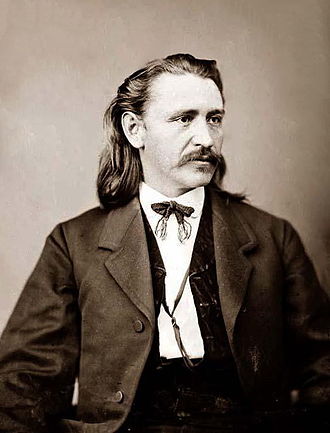
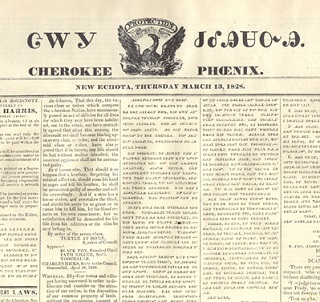
 Elias C. Boudinot was the son of Elias “I Don’t Have A Middle Name” Boudinot, who’d helped to establish and edit the first Amerindian newspaper, the Cherokee Phoenix. Remember Sequoyah and his syllabary? Boudinot was the guy who turned it into movable type so it could be printed easily.
The senior Boudinot believed acculturation (assimilation into white culture) was the best hope for the survival and success of his people. He was assassinated in 1839 for his role in Indian Removal, having signed the Treaty of New EchoStar – convinced that a move to Indian Territory was inevitable and the Cherokee should at least secure the best terms possible.
I don’t know what it must be like to have your father assassinated by members of your tribe over violations of sacred beliefs, but I can’t imagine it does much for your love of the people or their traditions and values. I’m just speculating.
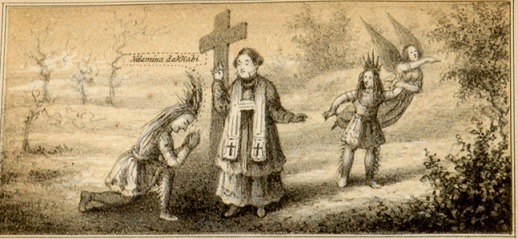 The rest of the younger Boudinot’s upbringing took place in Connecticut with his mother’s family – a well-off people of some status who supported Christian missionaries among the Cherokee. These weren’t the yelling and shaking godly fists types of missionaries, or the Spanish Priests variety who thought enslavement was good for the sinful savage. These were the kind of missionaries who tried to make themselves legitimately useful among those to whom they were missioning, but who also hoped to eventually change a few key traditions and values – like, say… killing those who sign away tribal lands.
What I’m suggesting is that ECB’s later betrayal of his ancestry might not have been completely without foundation. I don’t know this for a fact, but I’m writing it with great confidence so I’m pretty sure that makes it true – especially if others stumble across this and repeat it as canon. At the very least, I don’t think it’s an unreasonable interpretation.
 Elias C. Boudinot became in many ways the worst version of his father’s progressive vision – a political figure who worked in both Indian Territory (I.T.) and Washington, D.C., often more in support of railroads and national expansion than anything traditionally Cherokee. The excerpts below are from a letter he wrote which created quite a stir after its publication in 1879.
Boudinot’s argument regarding the availability of ‘unassigned lands’ in I.T. sparked a land-hungry kerfuffle and spawned ‘Boomers’ like Charles Carpenter and the unofficial ‘Father of Oklahoma’, David L. Payne.
These unappropriated lands… amount to several millions of acres and are as valuable as any in the Territory. The soil is well adapted for the production of corn, wheat and other cereals. It is unsurpassed for grazing, and is well watered and timbered.
The United States have an absolute and unembarrassed title to every acre of the 14,000,000 acres… The Indian title has been extinguished… the lands {were} ceded “in compliance with the desire of the United States to locate other Indians and freedmen thereon.”
 The Reconstruction Treaties made with the various ‘Civilized Tribes’ after the Civil War include ‘freedmen’ explicitly and persistently. This choice of words was presumably intended to reinforce the postbellum reality that former slaves of the various tribes were now free, and under these treaties were to receive full rights and privileges of tribal citizenship. In this case, this meant access to land under the same terms as any other member of their respective tribes.
By the express terms of these treaties, the lands bought by the United States were not intended for the exclusive use of ‘other Indians,’ as has been so often asserted. They were bought as much for the negroes of the country as for Indians…
Boudinot may be technically correct, but I’m not convinced he’s being completely honest. The implication that freedmen were ever intended to be granted acreage in I.T. outside the procedure for tribal land allotment is – to the best of my knowledge – ridiculous. Perhaps he’s playing on readers’ emotional reactions to the suggestion that the land ‘off limits’ to them would be so freely given to a bunch of ‘negroes.’
{The} public lands in the Territory… amount, as before stated, to about fourteen million acres.
Whatever may have been the desire or intention of the United States Government in 1866 to located Indians and negroes upon these lands, it is certain that no such desire or intention exists in 1879…
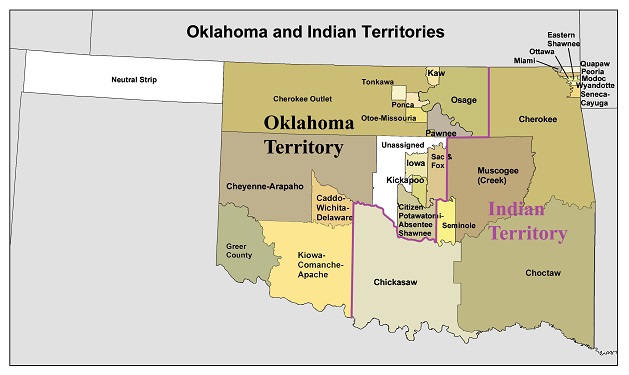 While the Massacre at Wounded Knee (which effectively ended Amerindian resistance on the Great Plains) was a decade away, Boudinot was correct that the vast majority of those who were to be ‘relocated’ had already been moved. This ‘extra land’ in Indian Territory was unlikely to be assigned anytime soon.
These laws practically leave several million acres of the richest lands on the continent free from Indian title or occupancy and an integral part of the public domain…
Well now he’s done it.
If these lands are public domain, they’re subject to the terms of the Homestead Act same as any other land in the west. They were pretty easy terms.
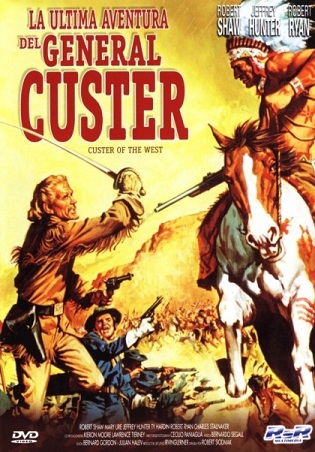 Enter Charles C. Carpenter, a former Civil War… er, ‘participant’ in various capacities, both official and not. Apparently a fan of the recently deceased George Armstrong Custer, Carpenter sported long golden curls and buckskins. A commanding officer wrote of him that “he adds great shrewdness to the reckless courage which he undoubtedly possesses.”
I can’t tell if that’s a backhanded compliment or genuine praise.
In any case, Carpenter built quite a resume for himself during and after the war – much of it rather difficult to actually document. To be fair, record-keeping was not a high priority in that century, and things like titles or official functions were far more subject to personal interpretation than is typical today. Think Rooster Cogburn in True Grit – officially a U.S. Marshall, also kinda working privately for Mattie Ross, sometimes subject to the rules and other times… not so much.
Add wooshy hair in slow-motion while swelling frontier music plays and you probably have a pretty good idea how Carpenter saw himself – or at least how he hoped others would see him. Like Custer or Cogburn, he seems to have simultaneously personified the best of the American West AND been a pompous faker-face who could irritate the crap out of anyone with a little civilization or education.
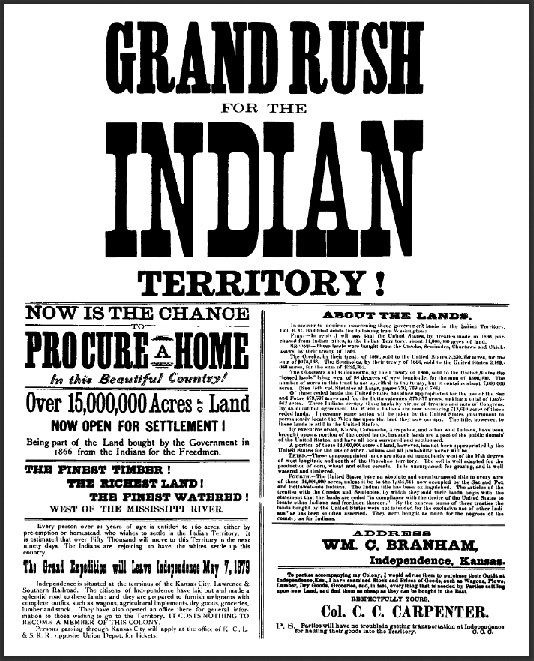 He was persuasive enough, though, to organize at least one big ‘boomer’ push into Indian Territory, where the limits of the government’s determination would be tested by a few brave souls willing to rough it and even risk trouble with the law to grab their little piece of the American Dream. Or at least, that was how they framed themselves.
The actual ‘boomers’, I mean. Carpenter didn’t go with them. He stayed in Kansas where it was safe.
Troops from nearby Fort Reno were sent to eject these ‘boomers’ and burn their humble settlement, and they were led back to Kansas in temporary defeat. Carpenter had promised they’d try as often as necessary to accomplish their goal, but he didn’t stay long enough to follow up on this first, rather anti-climactic effort. He’d received a visit from a government official familiar with enough of his background to promise him substantial difficulty should he persist in his little settlement scheme, and Charles didn’t care to test the validity of those threats.
He bailed.
His place will be taken, however, by another Civil War veteran, this one a man who’d actually served in the army proper, and who held an advantage much more durable than charm, legal arguments, or high hopes.
David Payne believed.

RELATED POST: Boomers & Sooners, Part One ~ Last Call Land-Lovers
RELATED POST: Boomers & Sooners, Part Three ~ Who’s Your Daddy? Why, It’s David L. Payne!
RELATED POST: Boomers & Sooners, Part Four ~ Dirty Stinkin’ Cheatin’ No Good Sons Of…
RELATED POST: Boomers & Sooners, Part Five ~ Cheater Cheater Red Dirt Eater
 If you’re from Oklahoma, or if you follow college football, or if you’ve ever been to OU, or if you have a pulse, you’ve probably more than once been subjected to the Hyper-Sousa-ish throb of the University of Oklahoma’s “Boomer Sooner.” If you’re truly dyed deep in just the right shade of maroon, you may even know the words:
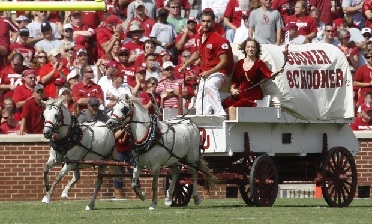 Those aren’t ALL of the words, of course – that would be silly. The second verse takes the theme to new depths: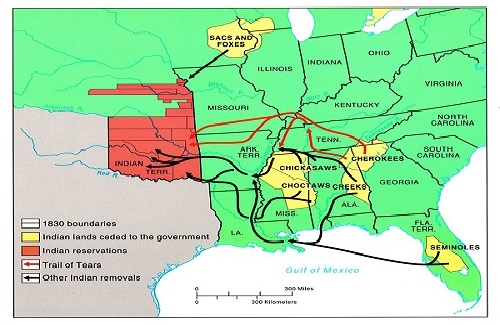
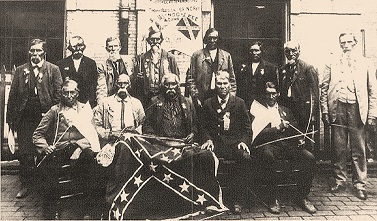 Only staying out of the conflict wasn’t as easy as they’d hoped. When pushed, many sympathized with the South, especially after Confederates promised them a better deal should they prevail. Some remained ‘loyal’ to the North, and a few went to great lengths to resist involvement altogether. Eventually, however, a majority of the 5CT were Confederates, including the colorful Stand Watie – the last Confederate General to officially surrender at the end of the war.
 That made room for the U.S. to begin packing in other tribes, this time mostly from the Great Plains. The Cheyenne, Arapaho, Wichita, Kickapoo, Pawnee, Apache, Comanche… and of course the Lakota Sioux. Remember Dances With Wolves? Yeah, this was THAT time period. Tatanka.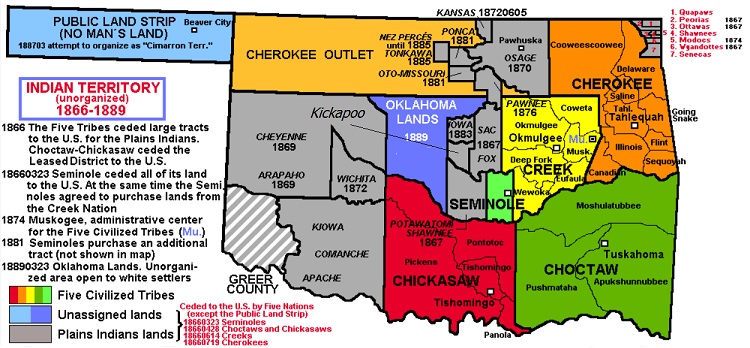
 Gentlemen, meet Oklahoma – or, part of her, anyway. That ‘unassigned’ section there in the middle. I like this one allot (see what I did there?) but you don’t wanna end up holding her panhandle, I assure you.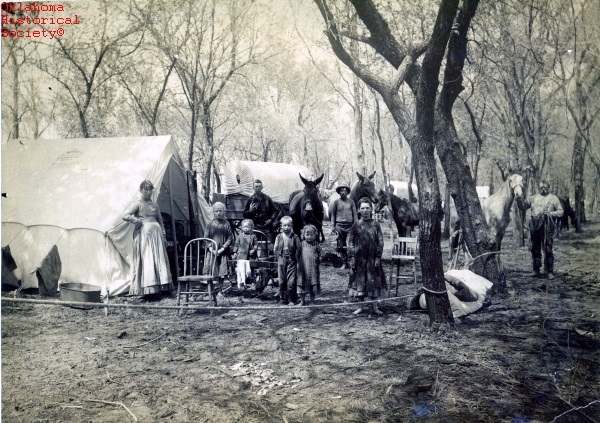
 Liberty is a tricky concept. On the surface it seems so simple – you are either free, or you are not. You have options and opportunity, or you do not.
 Only they can’t. Most can’t afford to live the way they wish to live or go all the places they wish to go. They may have to work just to eat. Social mores change around them as well, and while they may still technically behave any way they wish, they’ll begin to lose friends and employment, and their romantic options will be… unpromising. If they’re not particularly attractive or bright, the possibilities are even more limited. In a few years’ time, they’re back in mom and dad’s garage apartment, tolerating dinner conversation and being called ‘Brandon’ instead of ‘Sharktooth’ so they can eat something that doesn’t come in a box with a toy.
 The Wizard of Oz is full of examples. Dorothy and her cohorts encounter all sorts of opposition attempting to limit their ‘negative liberty.’ Angry trees, flying monkeys, and that green chick who sang ‘Defying Gravity’ all try to restrict or destroy them. When the primary source of this opposition – the Wicked Witch of the West – was removed, their negative liberty went way, way up!
 Freedman after the Civil War were suddenly given ‘negative liberty’. They could go wherever they wished, and do whatever they wanted. Most, though, ended up doing pretty much what they’d been doing before – working the soil for food and shelter. They lacked ‘positive liberty’. Why the fuss over
  Sometimes the answer is that they don’t actually have the negative liberty we assume. A central theme of the #BlackLivesMatter movement is that police departments across the country forcibly prevent them from pursuing happiness, and sometimes take their lives as well. The Joads discovered serpents in the Promised Land of California – armed authorities limiting their movements, their speech, and their lifespans. Those are limits on ‘negative liberty’. Those are chains.

 We hold these truths to be self-evident, that all men are created equal, that they are endowed by their Creator with certain unalienable Rights, that among these are Life, Liberty, and the Pursuit of Happiness…
 But it’s also a birth certificate in the sense that it describes and proclaims a new nation – a whole new KIND of nation, in fact. Lincoln will refer back to this Declaration in those terms fourscore and seven years later when he speaks of a nation ‘conceived in liberty’ and brought forth by fathers – in this case, ‘Founding’.
 Crane Britton in Anatomy of a Revolution argued that when taking over an existing government, there’s no need for a new flag – just change what the flag means. No reason for an entirely new government – so long as existing officials are willing to ‘adapt’. The more extant anthems, slogans, and other nationalistic symbols and phrases you can keep, the better – as long as you effectively reshape what they stand for. What they MEAN.
 Pretty tricky to reconcile slavery and subsequent treatment of immigrants and Amerindians with this one, isn’t it? It’s one thing to limit ‘men’ to, well… MEN; it’s another to presume this grand claim of the equality was obviously only intended for Anglo-Saxons of a certain income level. A more accurate rendering of the Founders’ general mindset might have read, “far more men are created essentially equal than most of you thought, although let’s not get carried away and think that’s necessarily everyone, or even a majority.”
 The ‘Creator’ part is also vague enough to mean whatever the reader wished it to mean. Many read ‘God’ without even consciously considering alternatives, while those less dogmatic could easily assume a less specific life force – be it Clockmaker, First Causer, or Nature itself.
 This one should be easy, right? And in some ways it is. It does get messy when we’re talking about anything involving a ‘right to die’ for the elderly or seriously damaged. Things get especially tricky when addressing reproduction – especially when it comes to ending existing pregnancies. Even the ‘do some heroin and have sex with your dog’ Libertarians are split over abortion, since this ‘right to life’ is so fundamental in the most original of American documents.
 I’m often amazed at the interactions I have with parents. By and large they let me off WAY too easy. Most tend to be focused on their child and what’s best for them in the long run, with each of us assuming the other to be relatively competent and doing the best they can with the time and resources at their disposal. Some of them have actually become Facebook or Twitter friends, so I see pictures of their dogs and family vacations. We’re not moving in together or anything, but it’s generally been warm and fuzzy and one of the reasons I love my job.
 1. Don’t talk to your child’s teachers. Why waste your time on the underlings when a little research allows you to directly contact the District Superintendent, Director of Curriculum, Assistant Director of Operations, and whatever an ‘Elementary and Secondary Compliance Manager’ is? Express your outrage and make sure they know WHO YOU ARE (i.e., someone far more important than whatever else is taking up their time and energy).
 5. On that note, let’s not forget who this is really about – your child. There’s always someone out there trying to drive you apart from your baby, spreading their maliciously smooth rhetoric about development, maturity, and taking on personal responsibility. Fine. One day, maybe. But NOT today, and not in High School, or College, or those first few Nobel-worthy careers, or planning your dream wedding, or in that first marriage, or –
  6. Exploit weakness. Every time a teacher bends a policy to accommodate you, or an administrator responds with more than five words to your eleven page email of demands and complaints, it’s a sign you’re winning. A weaker parent would appreciate the gesture and back down – they’d “compromise.” Don’t fall for it. You’ve got your inch; double down and grab that ell.
  Even better, word will get around to avoid any real standards or expectations regarding your child – it’s just not worth the costs, especially with 150 other kids who need our help, our best lesson planning, our most creative adjustments, and our well-rested, back-in-perspective attention. You’ll have won, and your child will be safe – at least until some foolish, idealistic educator slips and treats them just like everyone else again.