A Pre-AP Mindset

Just My OpinionI considered breaking this post into two parts – the first full of disclaimers regarding my lack of standing to officially throw around terms like “AP” or “Pre-AP”, and the second to say whatever it is I’m about to say.

I’ve opted to go a bit more basic, but you’ll have to take my word for it that nothing I say here reflects official anything. I’m a fan of the College Board (yeah, yeah – big picture, folks), but I certainly don’t speak for them, or anyone else for that matter.

I teach what we in these parts call “Pre-AP” History. My region’s use of the term this way is tolerated but not encouraged by the folks who own the copyright. For those of you unfamiliar with Pre-AP, the official definition can be found at http://apcentral.collegeboard.com/apc/public/preap/220773.html.

I’d like to talk unofficially, however, about Pre-AP mindset. About approach. Maybe even grit.

I don’t mean the students’; I mean the teachers’.

Unicorn Farting a RainbowSee, in my part of the country, you commonly find Pre-AP classes offered in core subjects as early as 6th or 7th grade. They fade when actual AP classes become an option, generally around 10th grade. These Pre-AP classes logistically replace ‘Honors’ or ‘Gifted & Talented’, but the goals and strategies are substantially different. Or, at least… they should be. 

This is where I may get a bit preachy.  

It’s the time of year when rosters are being created and teachers are finding out which of their classes will be huge this year and which merely large. It’s when teachers from the 7th grade offer to fill in teachers from the 8th grade on ‘certain’ kids, and teachers from the 8th offer to do so for the 9th. 

You see the pattern.

Gossipy TeachersI can’t think of anything more horrifying than going into a brand new year with new students and pre-labeling them based on choices they made with an entirely different teacher a full 8% of their lifetime ago.

Wait – actually, I can. It’s a similar conversation that goes on throughout the school year. My apologies to those I may offend, but it’s one that turns my stomach. Sometimes it just pisses me off. 

“This kid just shouldn’t be in Pre-AP.”

“Half these kids are only in here because their mommies want them to be around the ‘good kids’, not because they belong.”

“I’m sure she’s trying, but she’s just not Pre-AP material.”

My favorite are the tones of voice when someone’s complaining about their district’s “open enrollment” policies – 

“All they have to do to take Pre-AP is just sign up, or Mom or Dad puts them in! That’s IT – no matter whether they’re ready or not!”

Hello LabelI certainly understand how difficult it is to lead a class through an advanced curriculum and facilitate higher level thinking skills when some members of that class lack the knowledge, know-how, or mindset to follow along. Since time immemorial, teachers have been fighting the sand trap of ‘teaching to the middle’ – losing the low, boring the high, dragging half the middle bravely towards adequacy. 

It’s not really what we signed up for.

But think about what we’re saying when we utter these words. We’re labeling young people in our care – in our GRASP – as fundamentally flawed, as less-than. We’re condemning them for not arriving ready to successfully leave our class and move on. We’re judging 13-year old students for their background, their knowledge base, and their maturity. 

We’re going to go to Teacher Hell for that sort of thinking. I’m serious.

ZPDOMG, this new 9th grader isn’t a good student? He’s not READY for advanced coursework? He’s not any GOOD at playing school? He’s immature, or ignorant, or annoying?

THAT’S WHY WE MAKE THEM COME TO SCHOOL.

Of course they’re clueless. If they were mature and capable they could stay home and take this stuff online, save the district zillions of dollars. If they were ‘ready’ for advanced coursework we could simply promote them up a grade or two and let them get on it. 

But we drag their sorry behinds through the door as best we can in the hopes that YOU can cajole them. Inspire them. Trigger them. Reach them. Lift them up. And – check THIS out – some of them, for whatever reason, have landed in your PRE-AP SECTION(S)! That means they, or someone in their world, have given you the green light to stretch and inspire and challenge them well beyond whatever you manage in your ‘regular’ classes!

It means you have permission to treat them like they’re smart. Like they have potential. Like they have value.

Um... Students?

I realize that a lazy student may fail in Pre-AP, but… won’t they fail in a ‘regular’ class also? Do we HAVE a level of class in which you don’t particularly have to do anything? If so, we have a much bigger problem – we’ll still end up in Teacher Hell, but for very different reasons.

Rainbow UnicornPre-AP is a chance to find that spark, to focus on it and stir it up, in kids who may not understand what it means to play ‘smart.’ It’s an excuse to set aside some of the state standards over trout fishing and Reba McEntire to instead push our little darlings to think, and to ask questions, and to wrestle with point-of-view or how to write an effective argument. 

Pre-AP is not about screening out kids from AP a few years earlier than otherwise; it’s about recruiting those who might never see themselves as AP material to begin with. 

Yes, that’s more work. It’s frustrating and it’s not fair. Welcome to public education – have you been here long? 

There are arguments to be made for why AP itself must maintain a certain inflexibility. And we MUST wrestle with how to avoid yet again neglecting our top academic students as we spend all of our time and resources on those less willing or prepared. I realize that what I’m advocating is not so simple as a group hug and a rousing speech about equity. 

But I’ll risk a few more rainbows and unicorns to shout from this particular soapbox one more time. 

If you’re “tracking” kids based on their school performance before the age of 16, you’re doing it wrong. If you’re decreeing what they are and aren’t capable of based on their maturity and mindset as of 13, that’s just ignorant.

You might as well visit new parents in the district and critique the value of their homes, check their tax statements, and ask how likely they are to divorce in the next decade. You can tattoo the child’s forehead based on that.

Hell, skip that and let’s just assign coursework based on ZIP Code. It would certainly save some hand-wringing.

Blues BrothersOr, we can see every kid in front of us, in whatever level of class, as having possibility. If discipline becomes an issue, deal with discipline. If prior coursework is essential, work it out. And if they’re just hopelessly stupid, well… that may prove tricky. 

But let’s not get our panties in such an ongoing wad because too many hungry people keep showing up at the restaurant without their own silverware, or too many sinners keep taking up valuable pew space at church. Let’s consider being glad they’re there at all, and start figuring out how to justify their presence by what we can DO starting NOW rather than how to dispose of them based on our convenience or whatever’s gone on in their worlds before. 

RELATED POST: My 300 Epiphany

RELATED POST: Useful Fictions, Part II – The Stories We Tell Ourselves

Entrance Videos (Compilation)

**Those of you who subscribe by email may wish to view this one in your browser. Otherwise, well… it won’t make any sense**

I was quite flattered recently when so many readers stepped up and voted to help me choose my Official Blue Cereal Entrance Video.

Blue Cereal Education@bluecerealeduc – “Because I’m Awesome” (The Dollyrots)

[[{“type”:”media”,”view_mode”:”media_small”,”fid”:”1140″,”attributes”:{“alt”:””,”class”:”media-image”,”typeof”:”foaf:Image”}}]]


The challenge was then issued to fellow edu-bloggers to choose theirs, or risk having it chosen for them. The results are far from complete, but so far we have some amazing choices.

Jennifer Williams@JennWillTeach – “Imperial Death March (from Star Wars)” (John Williams) – This is so perfect.

[[{“type”:”media”,”view_mode”:”media_small”,”fid”:”1144″,”attributes”:{“alt”:””,”class”:”media-image”,”typeof”:”foaf:Image”}}]]


L.Z. Marie @LZMarieAuthor – “Austin Powers, International Man of Mystery Opening Theme” – All I can say is, ‘Yep’.

[[{“type”:”media”,”view_mode”:”media_small”,”fid”:”1210″,”attributes”:{“alt”:””,”class”:”media-image”,”typeof”:”foaf:Image”}}]]


Josh Flores@MrJoshFlores – “Sabotage” (The Beastie Boys) – This one amuses me to no end, and yet – SO appropriate.

[[{“type”:”media”,”view_mode”:”media_small”,”fid”:”1211″,”attributes”:{“alt”:””,”class”:”media-image”,”typeof”:”foaf:Image”}}]]


Drew Price@drewprice11 – “The Distance” (Cake) – and I do love me some Cake

[[{“type”:”media”,”view_mode”:”media_small”,”fid”:”1212″,”attributes”:{“alt”:””,”class”:”media-image”,”typeof”:”foaf:Image”}}]]


Tyler Horner @tylerhorner – “All Star” (Smash Mouth) – We’ve got a blind date with destiny… and it looks like she’s ordered the lobster.

[[{“type”:”media”,”view_mode”:”media_small”,”fid”:”1239″,”attributes”:{“alt”:””,”class”:”media-image”,”typeof”:”foaf:Image”}}]]


Kimberly Blodgett@KimberBlodgett – “Brave” (Sara Bareilles) – This song and especially this video make me ridiculously happy.

[[{“type”:”media”,”view_mode”:”media_small”,”fid”:”1240″,”attributes”:{“alt”:””,”class”:”media-image”,”typeof”:”foaf:Image”}}]]


Leave it to Ilana Horn – @tchmathculture – to color outside the lines! “Piano Stairs”

[[{“type”:”media”,”view_mode”:”media_small”,”fid”:”1213″,”attributes”:{“alt”:””,”class”:”media-image”,”typeof”:”foaf:Image”}}]]


Erin Barnes@elynnlll – “The Greatest Man That Ever Lived” (Weezer). Love this one 😉

[[{“type”:”media”,”view_mode”:”media_small”,”fid”:”1214″,”attributes”:{“alt”:””,”class”:”media-image”,”typeof”:”foaf:Image”}}]]


The World-Renowned EduShyster @edushyster – “Peter Gunn Mambo” (Jack Costanzo)

[[{“type”:”media”,”view_mode”:”media_small”,”fid”:”1215″,”attributes”:{“alt”:””,”class”:”media-image”,”typeof”:”foaf:Image”}}]]


Rob Miller @edgeblogger – “Liberty” (Jordan Page) – note the Ron Paul sweatshirt among the rotating clothing options! That sold me.

[[{“type”:”media”,”view_mode”:”media_small”,”fid”:”1216″,”attributes”:{“alt”:””,”class”:”media-image”,”typeof”:”foaf:Image”}}]]


Adrienne Fore – @mrsaj4 – has arguably cheated. She has designated both a ‘theme song’ for the year AND an ‘entrance video’. Because I admire those who color outside the lines, I’m letting her slide on this one – but don’t any of the rest of you get any ideas… it’s a one-time thing! First, her theme song for the year – “Giants” (Matt Nathanson). 

[[{“type”:”media”,”view_mode”:”media_small”,”fid”:”1224″,”attributes”:{“alt”:””,”class”:”media-image”,”typeof”:”foaf:Image”}}]]

As opposed to her entrance music – actually a better choice for that sort of thing. “Are You Gonna Go My Way” (Lenny Kravitz)

[[{“type”:”media”,”view_mode”:”media_small”,”fid”:”1248″,”attributes”:{“alt”:””,”class”:”media-image”,”typeof”:”foaf:Image”}}]]


Jennifer Lea@jennifer_lea_e – “She Blinded Me With Science” (Thomas Dolby) – Perfect!

[[{“type”:”media”,”view_mode”:”media_small”,”fid”:”1225″,”attributes”:{“alt”:””,”class”:”media-image”,”typeof”:”foaf:Image”}}]]


The Legendary Mrs. Waters @watersenglish – “Girl On Fire” (Alicia Keys) – Waters never ceases to surprise me. 

[[{“type”:”media”,”view_mode”:”media_small”,”fid”:”1234″,”attributes”:{“alt”:””,”class”:”media-image”,”typeof”:”foaf:Image”}}]]


The Vigilant Jed Lovejoy@jethroblank – with, I must confess, one of my favorites so far – “Movin’ Right Along” (Alkaline Trio)

[[{“type”:”media”,”view_mode”:”media_small”,”fid”:”1235″,”attributes”:{“alt”:””,”class”:”media-image”,”typeof”:”foaf:Image”}}]]


Barbie Jackson@BJacksonsClass – “Unfinished Song” (Celine Dion) – I honestly didn’t think it was possible for me to like a Celine Dion song, but for this… I mean, it totally works, yes?

[[{“type”:”media”,”view_mode”:”media_small”,”fid”:”1236″,”attributes”:{“alt”:””,”class”:”media-image”,”typeof”:”foaf:Image”}}]]


Courtney’s Voice@courtneys_voice – “Yoshimi Battles the Pink Robots, Pt. I” (Flaming Lips) – Because she knows that it’s demanding to defeat those evil machines.

[[{“type”:”media”,”view_mode”:”media_small”,”fid”:”1237″,”attributes”:{“alt”:””,”class”:”media-image”,”typeof”:”foaf:Image”}}]]


The unpredictable Scott Haselwood@TeachFromHere – created his own mash-up entrance video. Go ahead, it’s OK to be just a LITTLE jealous…

[[{“type”:”media”,”view_mode”:”media_small”,”fid”:”1241″,”attributes”:{“alt”:””,”class”:”media-image”,”typeof”:”foaf:Image”}}]]


One of my favorite things about Twitter is the pathway it paves to essential cohorts like Sherri Spelic@edifiedlistener – who is ever finding new places to go, then offering the rest of us a ride. “I’ll Take You There” (The Staple Singers)

[[{“type”:”media”,”view_mode”:”media_small”,”fid”:”1250″,”attributes”:{“alt”:””,”class”:”media-image”,”typeof”:”foaf:Image”}}]]


AP Legend David Burton – master of the bow tie and purveyor of class and style to the masses – @psalmofdavid – “Sharp Dressed Man” (ZZ Top)

[[{“type”:”media”,”view_mode”:”media_small”,”fid”:”1246″,”attributes”:{“alt”:””,”class”:”media-image”,”typeof”:”foaf:Image”}}]]


This one I assigned based on my infinite wisdom and insight for this kind of thing. Starr Sackstein – @mssackstein – “The Star Song” (Bowling For Soup)

[[{“type”:”media”,”view_mode”:”media_small”,”fid”:”1249″,”attributes”:{“alt”:””,”class”:”media-image”,”typeof”:”foaf:Image”}}]]


Doug Robertson@TheWeirdTeacher – “On My Way To The Cage” (Rollins Band) – Many of you won’t believe me, but I THOUGHT it might be something like this. 

[[{“type”:”media”,”view_mode”:”media_small”,”fid”:”1251″,”attributes”:{“alt”:””,”class”:”media-image”,”typeof”:”foaf:Image”}}]]


This one, on the other hand, I did NOT see coming. But I like it. The wellspring of #oklaed pith, Rick Cobb@okeducation – “All Good” (Zeroleen)

[[{“type”:”media”,”view_mode”:”media_small”,”fid”:”1252″,”attributes”:{“alt”:””,”class”:”media-image”,”typeof”:”foaf:Image”}}]]


Finally, don’t forget the BCE #11FF Steaming Hot Nectar Receptacle / Long-Sleeve Elitist T Entrance Video, starring the #11FF:

[[{“type”:”media”,”view_mode”:”media_small”,”fid”:”1223″,”attributes”:{“alt”:””,”class”:”media-image”,”typeof”:”foaf:Image”}}]]

Handlebars

Velocipede

Recognize this? It’s almost a bicycle. No pedals, though – just a wooden frame and wheels. The ‘velocipede’ had to be customized to the height of the rider, and could only be ridden without losing your ability to reproduce by sticking to well-maintained garden paths or other flat, soft-but-not-too-soft ground. The kind not found most places.

It was also pretty tricky to turn. You had to lean, firmly but subtly. Crashing not only hurt, but dramatically reduced whatever level of ‘suave’ you’d managed to retain while straddle-running on the damned things. 

The natural limitations on who could thus enjoy such a contraption led to the derogatory nickname “dandy-horse” – although if you spent your days frolicking on one of these, you probably didn’t care what the proletariat called you.

Sometime in the mid-19th century, pedals were added. There were no chains or gears; they were connected directly to the center of the front wheel. Variations added a third or even a fourth wheel for balance, but doing so increased the amount of work necessary to propel the beast any direction but straight downhill. 

The BoneshakerIn keeping with their love of all things dainty, the French introduced the metal frame, lighter and sturdier. Unfortunately, the large wooden wheels and lack of any sort of shock-absorbing mechanism led to another unflattering moniker: the “bone-shaker” – less foppish than ‘dandy-horse,’ but still unlikely to facilitate worldwide acceptance and marketability.

Then someone tried rubber tires. Once successful, they seemed so obvious it was hard to imagine why they’d not been used before. It had only taken a few centuries, but mankind was finally producing a bicycle that didn’t painfully rearrange your bowels every time you rode it. 

It was almost… comfortable.

This allowed riders to finally begin complaining about something new – the speed. Sure, pedals were exciting for a generation or so, but now that the frame and tires could handle – without causing permanent physical injury – velocities greater than grandma hustling to the loo, there stirred a need… for speed.

[[{“type”:”media”,”view_mode”:”media_small”,”fid”:”1202″,”attributes”:{“alt”:””,”class”:”media-image”,”typeof”:”foaf:Image”}}]]

Add some #STEM, and the solution once again seemed retrospectively self-evident:

[[{“type”:”media”,”view_mode”:”media_small”,”fid”:”1203″,”attributes”:{“alt”:””,”class”:”media-image”,”typeof”:”foaf:Image”}}]]

The ‘Ordinary’, later known as the ‘Penny-Farthing’ (due to the disparity in wheel-size, not the cost), altered the elitism of the ride. They were difficult to mount, required great athleticism to balance and propel with any authority, and even minor ruts or obstacles could stop the giant front wheel instantaneously – while the rider and the rest of the machine kept going forward over the now-motionless ginormous front wheel. 

Riders were expected to practice ‘taking a header’ in the same way other athletes practice falling correctly or reality stars practice shame and regret. Those less-interested in pain and bone-breaking could still find recourse in tricycles or quadracycles, but the cool factor was completely absent. It may have been in the negatives. 

In 1885, an Englishman by the name of John Kemp Starley transformed the centuries of absurdity and (literal) butt-hurt into a proper bicycle. He made the wheels the same size – keeping those nice rubber tubes – and based propulsion around a chain drive attaching the pedaled gears to the back wheel, leaving steering to the front wheel.

Starley Safety BicycleThe ‘Safety Bicycle’ allowed an even greater top speed than the ‘Ordinary’. More importantly, it suddenly made the bicycle easy to ride, fairly safe to steer, easier to control, lighter, and – as production increased to accommodate the wider customer base – less expensive than anything comparable prior. 

By the 1890’s, bicycles were a thing. It’s hard to imagine today, when most everyone seems to have one hanging in their garage or collecting dust in the barn. But the craze was real. It was a big – and sometimes strange – deal. We’re talking MySpace levels, or Sigue Sigue Sputnik, even. Social media when any of the half-dozen variations of The Bachelor are on – THAT level of madness. 

Because now EVERYONE could ride – yet it was still cool. The feeling of movement, and speed, was unlike anything most had ever experienced – and without the need to purchase a ticket or build a barn. The ‘Safety’ was so accessible even WOMEN could ride – and ride they did. 

It really kinda got outta control.

[[{“type”:”media”,”view_mode”:”media_small”,”fid”:”1205″,”attributes”:{“alt”:””,”class”:”media-image”,”typeof”:”foaf:Image”}}]]

Forsaking long, bulky skirts for practical attire – in some cases even PANTS – women discovered a sense of freedom beyond what they’d believed possible. In addition to fueling a push for better roads, feeding economic growth, promoting health and the outdoors, and simultaneously increasing a sense of community and mobility without apparent irony, the insane popularity of the bicycle also propelled the women’s movement in a way nothing intentional could have.

Suffrage was likely inevitable, but that chain drive and those symmetrical tires shaved the wait by a generation or two.

Kids' BicyclesThere are bicycles to suit pretty much any type of rider today – any gender, race, nationality, or income level – but by and large they’re all traceable back to that first ‘Safety’.  I suppose we should pay appropriate homage to its ancestors as well – but many are rather awkward to consider. 

How could it have taken THAT long to come up with… the bicycle? It doesn’t seem so complex… two wheels, a seat, and a pedal with a few gears? Oh – and that chain. The parts matter little if we lack the proper connections between them – if we can’t transfer our energy and effort into productive motion in our chosen direction. 

Education in the modern use of the term can be traced back to a wide variety of sources, depending on how you figure it. It’s safe to say, however, that most iterations – while presumably the best anyone could come up with at the time – seem rather awkward in retrospect. Most look rather painful, actually.

The incarnations with the most potential – and thus those whose popularity lasted the longest – served only those most able to afford the ideal conditions necessary to enjoy them: the right socio-economic status, a proper upbringing and mindset, and, well… being a smarmy white guy. 

The vehicle changed, but each revolution solved one problem by creating another… until J.K. Starley. 

In a way, he created an entirely new machine. At the same time, it was undeniably based on all that rolled by before.  

Horse CycleSuddenly something of great potential but limited use, realistic only for a few, became accessible. The experience reached for by a select minority in prior generations was suddenly not only possible, but intoxicating. It was fun. It was freeing. And it was so good for you – body, mind, and soul.
It’s an analogy, you see – bicycles and education. (I point that out because not all of you have had the same bicycle.)

No one had to be required to ride, and certainly no one was denied the opportunity – the seats adjusted easily and variations abounded for whatever your personal styles or needs. You still had to work to make it go; the more you pedal, the further you get. But with a few gears, anyone can get anywhere with a little effort and patience – even if it takes some a bit longer than others.

The modern bicycle changed something for almost everyone, and everything for some. It offered unlimited opportunity for anyone willing to pedal – and for a while, EVERYONE wanted to pedal.

Well?

This... Green Thing

RELATED POST – Women on Wheels: The Bicycle & The Women’s Movement of the 1890’s (from AnnieLondonderry.com)

RELATED POST – Bicycle History & Invention (from BicycleHistory.net)

Sam Patch (Part Two)

George Caleb Bingham

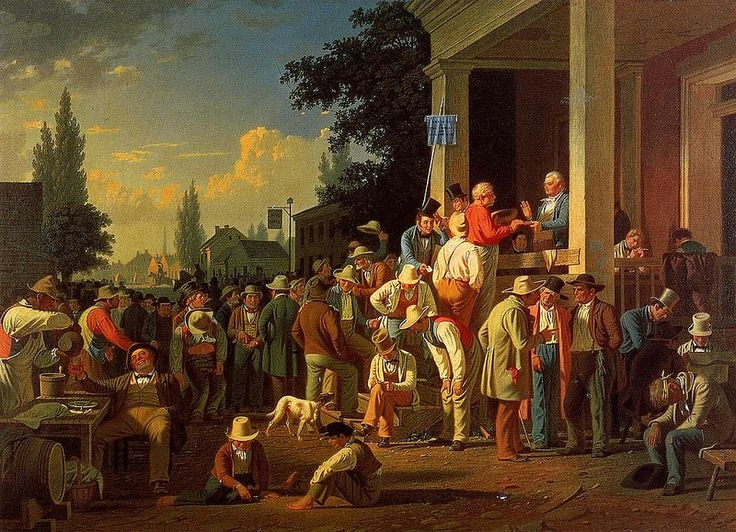
When Andrew Jackson was elected President in 1828, it was an unabashed victory for ‘the common man’.

After six presidencies of consciously ‘elite gentlemen’ – rich, white, educated males – Jackson was a game changer. Sure, he was a white guy – but he grew up all kinda poor, and lacked a formal education until early adulthood.

The expansion of voting rights and other civic validity which allowed such a thing, and which continued to expand during and after his presidency, is even named after him: “Jacksonian Democracy.” It’s a trend of which we’re generally proud two centuries later. Maybe the “all men” created equal in 1776 were a fairly limited bunch, but over time we’ve stretched that to cover quite a variety of colors and socio-economic statuses. Heck, we even let girls vote now – that’s getting serious.

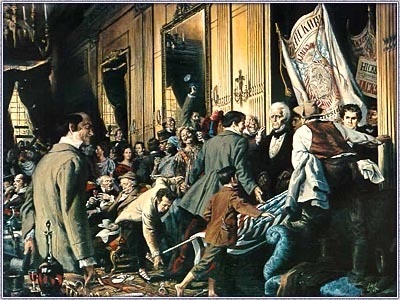
Jackson InauguralTo celebrate this ‘victory of the common man’, Jackson broke with the restrictive traditions of his predecessors and threw open his inaugural celebration at the White House to all comers. It wasn’t HIS victory, after all – it was THEIR victory. Why not let THEM celebrate it as fully as anyone?
In return, the ‘common man’ trashed the place. 

Celebrants stood on and broke furniture, wandered into the private, personal rooms and made souvenirs of the bathroom fixtures and any nice undergarments they discovered in the bedrooms. When the front entrances grew congested, they tromped through the muddy gardens and came in the windows, further destroying the rugs and furniture and generally wreaking havoc.

Jackson bailed almost immediately. The help finally had to lure out the unwashed masses with bowls of alcoholic beverages and trays of deserts, which were hurriedly filled and rushed to the peripheries of the grounds in an effort to Pied Piper the common man the hell out of the White House. 

Jackson’s entire Presidency was spotted with such tensions. In his determination to defend and assist the ‘common man’, he pushed through legislation that crippled the economy. In order to open up homesteads for the ‘little people’, he oversaw Indian Removal. His fervent defense of his not-quite-divorced-from-her-first-husband wife led to innumerable conflicts before he took office, and his transferred outrage in defense of similarly soiled Peggy Eaton a few years later crippled his cabinet throughout his time in power.  

That’s the difficulty in defending the ‘common man’. They’re dirty, and they do stupid things. One might argue that’s why they’re ‘common’. 

It’s not merely an income issue; economic equity is no easy task, but it’s at least tangible. Social capital is more difficult. In a pinch, I can give you money – but I can’t give you decorum. I can buy you a house – but I can’t stop you from leaving trash in the yard or easily explain how to use the space properly. 

The sociology of it all is rather tangled and unsatisfying.

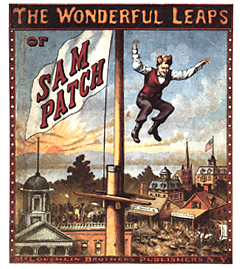
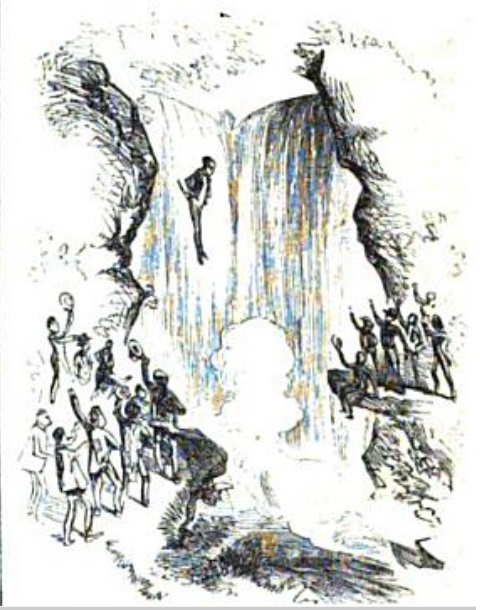
Sam Patch Last JumpSam Patch jumped off of cliffs near waterfalls, off of the topmost masts of ships, and from other daunting heights – often into the narrowest of survivable apertures, disciplining body and breathing precisely to allow him to emerge unharmed. 
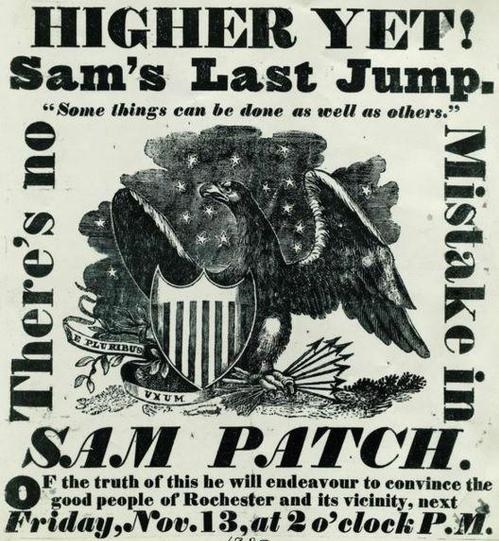
It was noble, in a way. Kinda cool, and so counter to the carefully crafted ‘nature experiences’ built by the well-to-do. Each leap was intensely primitive compared to precisely arranged visitations of the finest majestic sights available only to the elite. Even the rhetoric – “Some things can be done as well as others,” or “There’s no mistake in Sam Patch” – was marvelously stark compared to the noble blithering which filled the finest bourgeois journals. 

Patch was a bacon cheeseburger to the artisanal foraged essence of kimchi of his day. But he was a bacon cheeseburger with a tall draft beer. Or seven. And greasy. Dripping on the shirt. And falling apart halfway through. And leaving the wrapper in your yard.

It’s easy two centuries later to belittle Timothy Crane and his precious little recreation area with its froo-froo bridge. He charged for… nature! If he really cared about art, if he really valued beauty, he’d make it available to all – without cost or restriction!

Others did just that. Idealists in some parts of the north opened their parks and benches, their landscaped gardens and artistic efforts to all, just as Nature and Nature’s God had done before them. In return, the common man trashed the place, vandalizing, urinating, and harassing the better elements until they no longer frequented such places. 

What gives a man value? Is it his ability to earn a certain income? Behave a certain way? Contribute something useful? How far beyond the Golden Rule can or should society go in its expectations of all peoples, whatever their status or background? 

How do we draw a clear distinction between the sort of ‘behaving decently’ we might reasonably ask of all well-intentioned people, and the limiting mores of middle or upper class privilege, with its own rules and codes – many designed over the decades for the sole purpose of separating the cream from the whey?

When we speak of universal rights, and of the value of people, it shouldn’t be so difficult to untether those rights and that underlying value from expected levels of education or behavior. When we move past the fundamentals, though, and drift into questions of equity, opportunity, social standing, lifestyles, and a wider range of values, it’s much murkier. What do people deserve? And from whom?

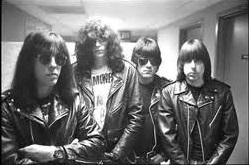
RamonesI may dig the Ramones, but I’d never invite them to dinner among proper company. I love the reckless abandon of some of my students, but I’m not sure I’d risk putting them in charge of anything potentially life-altering for myself or those around them. 
I admire Sam Patch and his giant wet middle finger to the system, but I recognize even while singing his praises that he wasn’t merely rejecting a loftier lifestyle – he was completely unqualified and incapable of living out one had it been handed to him. There’s too much correlation between his rejection of the system and his inability to function within it. Jackson gloried in the baseness of the common man – he seemed to equate it with a sort of primitive purity, which strikes me as… intentionally naive.

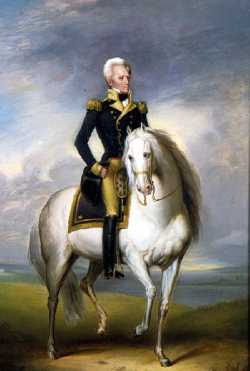
Or maybe Jackson’s exaggerated faith in the little guy was merely something with which he fed his own power struggle, and maintained his own outrage. Maybe it just got him from where he was to where he was determined to go. When Philadelphia gave him a beautiful white horse in 1833, Jackson named it ‘Sam Patch’.

I appreciate the sentiment, but should I pass, and you get a gerbil or something, please don’t honor me in this specific way.

I don’t have a satisfying conclusion or moral to the tale. Patch resonates with me, but I’m still not sure I’ve managed to explain to myself just why. I suspect it’s that, while I find his dysfunction offensive and his self-destruction unnecessary, it’s still much easier to cheer for him than for the manufactured pretense and gilded desperation of men like Crane. Maybe it’s as simple as that. 

AJ and SP

RELATED POST: Sam Patch (Part One)

RELATED POST: 40 Credits & A Mule, Part One – This Land

RELATED POST: 40 Credits & A Mule, Part Two – Chosen People 

Sam Patch (Part One)

Sam Patch Poster

“Some things can be done as well as others.”

It’s not much of a catch phrase two hundred years later, but at the time, this line of Sam Patch’s was golden. It probably helped that he’d say it right before jumping off a waterfall. That would add a little drama, I’d think.

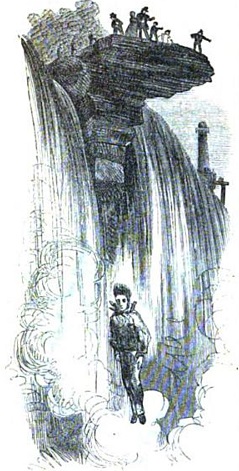
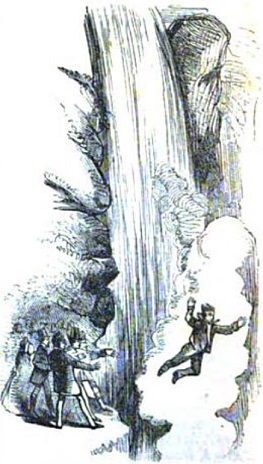
He’d stand near the crest – or, years later, on platforms or ladders built high above even that – and jump. Body position and breathing were critical from such heights. Knowing where you could and couldn’t safely enter the water at such speeds was pretty important, too. It also helped if you could swim.

Patch was fond of staying underwater after a leap for longer than seemed possible, creating tension and sparking nervous chatter among the crowd. On at least one less-public occasion he swam underwater to a sheltered cave area in order to hide out and panic his friends.

The problem with this is that if you’ve actually died this time, everyone thinks you’re just screwing with them. They figure you’re with Elvis somewhere, laughing at their gullibility.

Sam Patch grew up in early 19th century America, a transitional era during which Jefferson’s agricultural ideal was giving way to a more modern, urban, industrial society, albeit inconsistently, in scattered areas throughout the north. Patch grew up in a mill town, located along the Blackstone River near Providence, Rhode Island. Nature was harnessed and partially consumed, but still managed to assert itself beautifully and violently through displays like Pawtucket Falls. 

Sam Patch JumpHowever stunning the surroundings, these were necessarily utilitarian times. You didn’t come to Pawtucket if things in your life had gone according to plan; the remnants who found work in the mills were either without a male head of house, or stuck with one of little use. You came because you needed work, and Pawtucket was happy to oblige. 
These were days when owning land – even a little bit of land – was key to everything else: economic opportunity, social status, political participation. Almost as crucial were one’s extended family – social connections as well as surname. Neither were guarantees of anything, but both were essential to real opportunity in the realities of the times.

Patch had neither. He was, depending on your point of view, either a dirty, uneducated, ne’er-do-well, or the ideal candidate for a great American success story. Paging Horatio Alger… please meet your party at the waterfall… 

You know all those nostalgic looks back to less safety-fied and sanitized times, when kids could play outside and get dirty or hurt and the species survived just fine? Patch’s adolescence was the epitome of this. Boys would jump from the main bridge above the river into ‘the pot’, a drop of about 50 feet into an opening carved by centuries of erosion. When that ceased to be terrifying, they’d jump from a nearby building instead, making a leap of around 80 feet straight down with a rather narrow margin of error. 

A mistake of a few horizontal feet meant serious injury. If you were fortunate, you’d die suddenly and violently; if not, you’d experience untold broken bones and damn near drown before being hauled to shore and carried back to town to linger a day or two before an intensely painful death. With an audience.

So why do such a thing? Because they were boys, full of testosterone and competition and the rough sort of democracy available to the un-landed, the un-connected. Of course you could get hurt – that was the whole point. But if you had nerve, and skill, and didn’t… 

There’s something insanely equitable and meritocratic about such behavior. Too innocent to be Social Darwinism, it nevertheless recognizes that there’s no ‘winning’ without a very real chance of ‘losing’. Without risk, there can be no glory – individually or nationally. Sam Patch and his ilk were in their own rough ways an idyllic, Tom Sawyer-ish, rough-edged version of the American dream – or at least its opening chapters.

Which isn’t the same as being part of the American reality, by the way. But I’m getting ahead of myself.

Sam’s first public jump came in defiance of a man named Timothy Crane. Crane was probably not a bad man (in the dinner theater sense of the word), but he did reek of calculated sophistication, and that was bad enough. He’d purchased, ‘improved’, and privatized a public park-ish area near the mills, after which he began charging a small fee to enter. 

Sam Patch JumpBesides offsetting his costs, the fee was designed to screen out ne’er-do-wells. The park was designed for the ‘right’ kind of people, who were far more likely to both appreciate and take care of the area. Free admission, he feared, would allow the dregs and drunkards to spoil the space. Their inability to pay was indicative of far more than income level – it was a tag of behavior and education. 
You don’t really think those high dollar condos near the mall are that much nicer than the mid-range apartments ten minutes away, do you? Sure, you’re closer to the trendy restaurants – but mostly you’re paying too much for a condo in order to be surrounded by other people who can afford to pay too much for a condo.

It’s the same reason ‘golf’ somehow grew to be thought of as a real sport – the need to justify some basic elitism. Come on, you really thought it was THAT expensive to mow some grass and let people knock a tiny ball into a few holes in the ground? Please.

Crane’s crowing accomplishment was to be a rather ornate bridge which he had built and promised to have maneuvered across the chasm in front of Pawtucket Falls on September 30, 1827, for all to see. You have to keep in mind this is pre-Netflix, pre-Xbox, and even pre-television. Any potential entertainment was a big freaking deal, and this was no exception.

Schools and factories closed, and everyone came out to watch this engineering marvel finalize the glories of man-shaped nature, of improving and standardizing the bucolic. There are few things more American than making nature your bi-atch.  

The mechanics of the process took much of the afternoon. At one point there was a small slip and one of the rolling logs being used to help guide and ‘roll’ the bridge across fell into the waters far below. The engineers recovered, but in the short time it took for them to readjust their contraptions, Sam Patch appeared on a rock at the edge of the cliff by the waterfall. He told the few people near him that Mr. Crane had done a great thing, and that he – Patch – meant to do another.

And he jumped. 

Nothing in this prevented Crane from finishing his bridge, but for the crowd gathered that day the defiant message was clear. Patch, in channeling this brand of skill and moxy into such a primal act, was providing a sort of artistic and social contrast to the contrived high class aspirations of men like Crane. He was striking a blow for the common man. 

Patch built on this theme several times in subsequent years, and eventually became something of a celebrity. Unfortunately, once you’re a celebrity – even in the 19th century equivalent of having a reality show – you’re not the common man anymore. The glories of having come from a dysfunctional family with no resources are all very well – but you’ve still come from a dysfunctional family with no resources. In other words, add a little notoriety, the stresses of minor success, and the chances you’ll become a complete wreck are pretty high.

In a few short years, Patch had a reputation as a drunk – usually the fun kind, but sometimes just the drunk kind. He somehow found himself bestowed with a pet bear, who he began taking with him and apparently lived with as a pet of sorts. And yes – the bear jumped off the same cliffs, bridges, and falls as Patch.

Well, if by ‘jumped’ you mean ‘was pushed or thrown’. Yeah, I know – but they were different times. And the bear seemed to be fine, so… go figure.

How many of YOUR friends can throw a bear off a cliff repeatedly and it’s still their friend? 

Sam Patch Final JumpOn November 13, 1829, Sam made his last jump. Something went horribly wrong. It may have been the drinking or a related difficulty, but descriptions from those witnessing the event suggest he died in mid-air from something internal. His body positioning gave way and he fell limply for at least half of the 125 feet he spent in the air, striking the water with an impact which would have been fatal had he still been alive.

Less than a year before, Andrew Jackson had been elected President of the United States. I’m going to argue the two events are related.

RELATED POST: Sam Patch (Part Two)

RELATED POST: 40 Credits & A Mule, Part One – This Land

RELATED POST: 40 Credits & A Mule, Part Two – Chosen People