
Fall is falling, teachers keep teaching, life keeps doing whatever life does, and even though bloggers are bloggering, you may have missed something good this week.
No worries, my Eleven Faithful Followers (#11FF) – I’m here with essential highlights and thoughtful framings. I do this to serve you, the reader – and… it helps reduce the amount of new content I actually have to create myself to keep this blog active.
What, you think I got nothin’ better to do than sit around blogging all day? Some of us WORK for a living over here!
Part One: Painful Realities
“On Standardized Testing” by Olivia Fantini – if you don’t know @ButtonPoetry, you should fix that immediately. Oh such speakifying!
[[{“type”:”media”,”view_mode”:”media_small”,”fid”:”1354″,”attributes”:{“alt”:””,”class”:”media-image”,”typeof”:”foaf:Image”}}]]
School District Size; School District Spending – Rick Cobb’s OkEducationTruths is required reading in #oklaed. Here he breaks down the latest babble-slander from the idealogues against public education, analyzing them with such clarity even I mostly understand. My personal favorite moment: “I’m no economist. I’m just an administrator who wrote his dissertation over Oklahoma school district expenditures, with a focus on economies of scale and diseconomies of scale. If you were one of the 12 people who read it, you would’ve been dazzled with passages such as this: ……. Ok, none of it was really exciting. It’s a dissertation.” If you don’t follow @okeducation on the Twitters, you’re a big stinky doo-doo head who doesn’t care about the children.
Will The Real Ms. Smith Please Stand Up? – Mindy D of This Teacher Sings continues her reality-sharing regarding #oklaed teacher pay by sharing some of the reactions and feedback prompted by her previous post on the subject. It’s not whining if it truly hurts; we’re losing teachers who want to be in the classroom for all the best reasons, but end up in either other states or other professions over selfish things like protein, or not getting their kids’ entire wardrobes from Goodwill. Best quote: “‘Teachers aren’t in it for the money,’ they say. They’re right. We aren’t… But we didn’t take a vow of poverty.” Follow @MrsDSings on the Twitters. Play nice and she might even follow you back.
The EdReformers Stratagem – Rob Miller at A View From The Edge may be giving in to the dark side. One of the most positive, reasonable voices of #oklaed, it’s almost disorienting how bluntly he calls out pseudo-#edreform, mis-funding, and faux accountability from high places. Is the bizarre clusterfoolery of recent years merely laying the groundwork for a larger narrative of public school failure and teacher apathy in order to justify a new edu-order? Surely not… it’s inconceivable in this day and age that we’d allow our economic or political leaders to manufacture or distort crises in order to justify their self-interested maleficence! Follow @edgeblogger on the Twitters for more crazy conspiracy theories which oh-my-god-are-probably-true.
Part Two: It’s All About The *sniff* CHILDREN…
5 Ways To Make Homework Meaningful and Manageable – Angela Stockman on Brilliant or Insane does such a nice job of ‘slap you around’ attention-getting without becoming that annoying lady from out-of-state who led that horrible PD day in your district awhile back and you all made fun of at lunch. Here she challenges the value of some types of homework without making me roll my eyes. I’m still so totally edu-crushing on her. Follow Stockman (“May I Call You ‘Angie’?”) on the Twitters at @AngelaStockman and ask her if she likes me back – check ‘yes’ or ‘no’.
The Energy Cost and the Power of Empathy – P.L. Thomas, aka The Becoming Radical, can be mighty insightful for someone with so many degrees. He makes a very accessible case for introvert awareness – it’s not being ‘soft’ on kids to recognize when more volume, more people, more activity, isn’t the yee-haw for some of us it might be for the majority. As a long-time shunner-of-groups myself, I very much appreciate his message. Follow @plthomaEdD on the Twitters – but don’t take it personally if he slides away to recharge from time to time.
Students Should Be Able To Show What They Know (?) – “There is a huge difference between ‘How do I figure out if this student understands?’ and ‘How do I make this student prove to me he gets it?’ The first is a valuable approach; the second is the first step on the road toward wasting everybody’s time… The more we demand that students put on a show to prove to us that they Know Stuff, the more we will design artificial tasks that demand a set of skills and knowledge entirely different from the skills and knowledge we really want to measure.” Pith, thy name is Peter Greene of Curmudgucation. No wonder he can publish a blog anyone can read for free anytime, and still I gladly bought several hard copies of his book – Curmudgucation: What Fresh Hell. So should you. At the very least, follow @palan57 on the Twitters. You’ll be a better person for it.
Worth Revisiting…
We opened with @ButtonPoetry, and we’ll finish there as well. I never get tired of this one. I say with no irony and only minimal humor that if I could help my students become pelicans, I could die knowing we won. That they won. That it worked.
Justin Lamb – “The Pelicans” (*language warning*)
[[{“type”:”media”,”view_mode”:”media_small”,”fid”:”1355″,”attributes”:{“alt”:””,”class”:”media-image”,”typeof”:”foaf:Image”}}]]
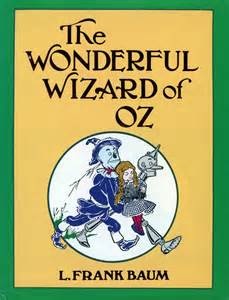 In 1900, L. Frank Baum published The Wonderful Wizard of Oz, a children’s book he wasn’t convinced would do particularly well – not compared to his fabulous Mother Goose and Father Goose collections a few years prior. Turns out it was a hit, and spawned multiple stage versions – usually musicals – and thirteen written sequels by Baum.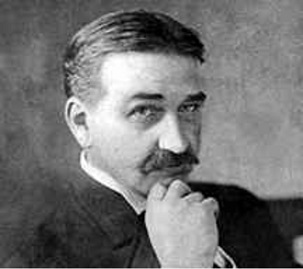
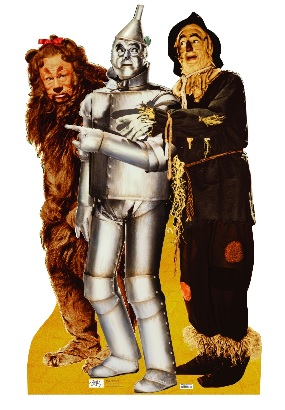 The Tin Man = Northeastern Factory Workers. Having slaved away under dehumanizing conditions for so long, they’d essentially lost their souls – their hearts – the parts which make us most human. Upton Sinclair would capture this less festively a few years later in The Jungle, a book he intended to be about the factory-driven destruction of the human spirit and instead ended up being about how gross sausage is. Meat-packing was reformed; factory labor continued to kill the human spirit for another few generations.
  The Yellow Brick Road = The Gold Standard. It’s an almost sacred path to the Emerald City, but one fraught with inconsistency and danger. There are pitfalls and surprises, and even substantial gaps prohibiting all but the most creative travelers for going forward. But, when you add…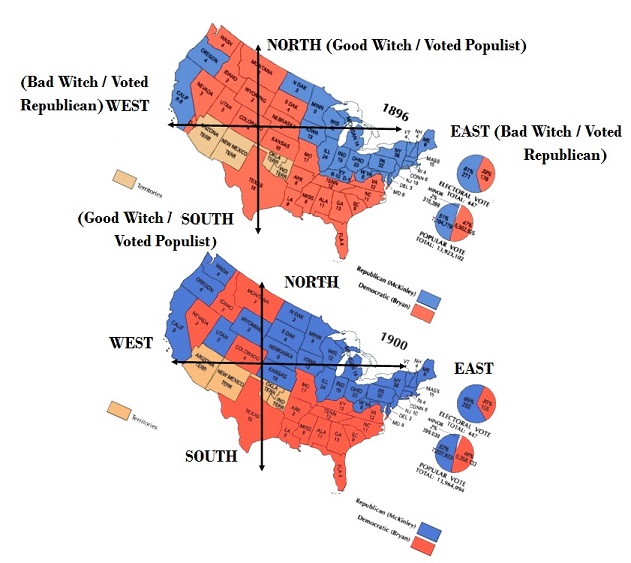
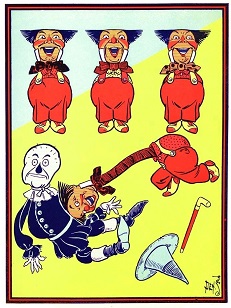 On the other hand, there are plenty of events which even the most creative mind can’t reasonably tie to history or populism. The Quadlings who lack arms but fire their heads at you on long necks are a fascinating obstacle, and the fragile ‘china people’ are far more poignant once you drop the weak ‘unreconstructed South’ connection. And how many varieties of ‘the little people’ (or field mice or Winkies or…) can one book have before it no longer makes sense to label them all with the same Jacksonian value?
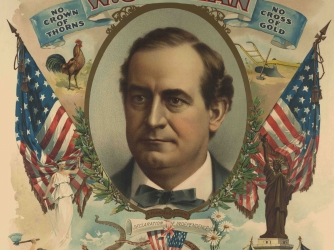 The Populist Party reached their zenith in the 1890’s. Although they won state and local elections here and there, before and after this decade, their only real shot at the Presidency came in the Elections of 1896 and 1900. Both times they ran William Jennings Bryan as their candidate, and both times the Democratic Party gave in and joined them in the nomination.
 I mean, Harry Potter was safe and secure at the Dursley’s under the stairs – literally and completely. No harm could come to him. As the series progressed, he grew increasingly autonomous and faced greater and greater danger. Finally, released even from the rules of Hogwarts or the direction of Dumbledore – completely and totally independent – he frickin’ DIES!
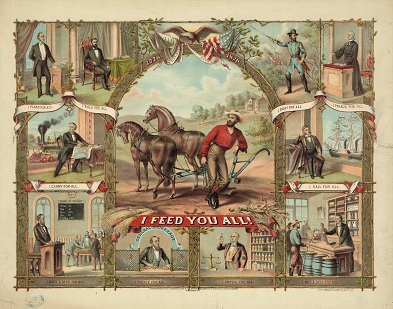 Not that most American farmers in the late 19th century were pondering such abstractions. Mostly they’d joined their voices – and their votes – to demand a few basic policy changes to compensate for what they perceived as gross imbalance in the economic order of things. They didn’t see themselves as wanting ‘help’ so much as fighting to remove cancers in the system.
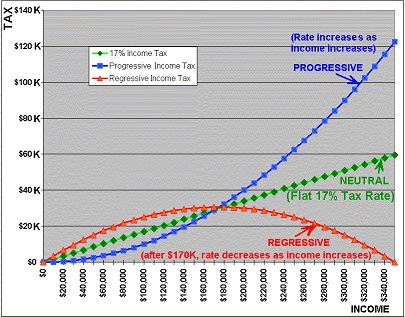 The Populists wanted a weighted system. If you made $10,000 this year, you pay little, or nothing. You made $50,000? Ten percent. $250,000? Twenty percent. $1,000,000? Fifty percent. Those making the most were still left with more than everyone else, and those making the least were freed from the burden of paying at all.
  If you’re a bi… cycle, you have two wheels.
 Silver is valuable and not at all common, but it’s far more plentiful than its friend gold. The change would be dramatic. More money in circulation lowers the value of each dollar – counterintuitively helping those with less money and especially those in debt.
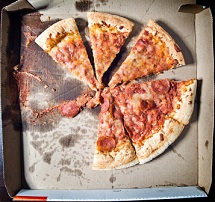 The food quickly draws attention and Max offers him a dollar for one of the slices. He accepts.
 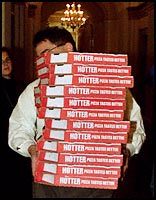 He sells most of the first box, but things quickly slow. Lowering the price to $1.00 helps a little, but it still looks like he’ll be stuck with 9 or 10 boxes of pizza with ten minutes to go. He panics and drops to 50 cents a slice… then a quarter… and manages to move enough that he’s only losing a little money for his troubles.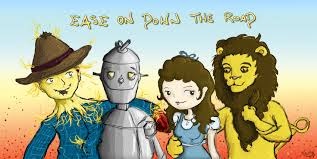
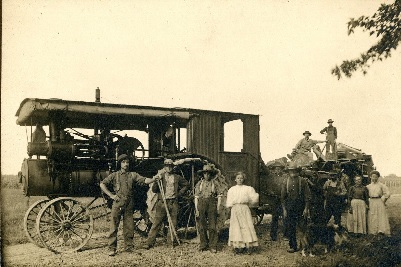
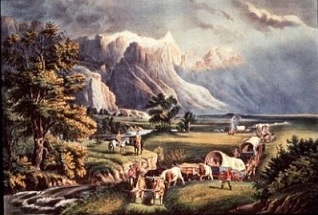 The 1890 Census would soon declare the frontier ‘closed’, to the chagrin of men like Frederick Jackson Turner who believed the westward struggle against nature and deprivation both defined and strengthened American character. Things were so desperate that white guys began looking lustfully at Oklahoma as their last best hope – the same ‘Indian Territory’ (I.T.) to whom the bulk of surviving Amerindians had been forcibly removed.
 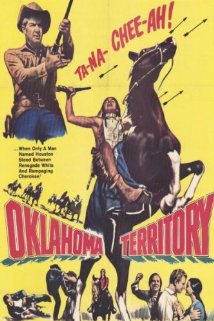 It wasn’t always a lack of production. Many farmers across the Plains were quite successful – at least in the traditional sense. They were growing and raising more good stuff than ever before! Wheat! Corn! Cotton! Moo-cows! Chickens! Tomatoes! Quiche!
 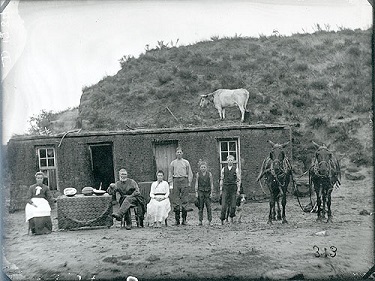 Farmers already worked 365 days a year, sun-up to sun-down. They worked on Sundays, birthdays, Christmas, and when they were sick. They labored in the earth and cared for any animals they held, enduring drought and deluge, heat waves and freezes, in hopes of coaxing forth from the earth sustenance for themselves and the world.
 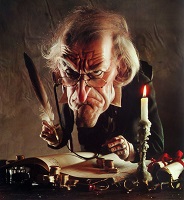 They didn’t actually grow anything, or produce anything your kids could eat, or wear, or even that you could smoke, drink, or otherwise enjoy.
 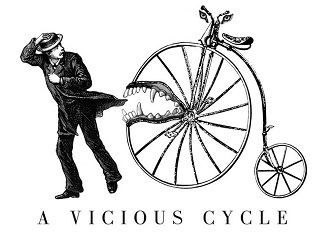 Which meant, of course, that prices went even LOWER. In some cases, less than was necessary to break even. Some couldn’t pay back their loans. So, they renegotiated, perhaps borrowed more, bought more, raised more…
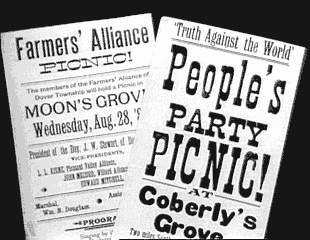 The Populist Party was born.