Hetalia: Axis Powers (Toast With A Big Boot!)

Hetalia: Axis Powers

So a few weeks ago a student who doesn’t otherwise say much came up to me excitedly after class. Something we’d mentioned in class prompted her to ask me if I’d ever watched something called “Hetalia.”

I had no idea what that was.

“It’s an anime cartoon in which all of the main characters are nation-states, mostly during World War II…”

Hetalia3OK, strangely I had at least heard of this before. Last year there was a lunch table committed to daily sharing of… whatever one calls ‘fan fiction’ in the anime world. Mostly it was this “Hetalia.”  I remember two girls quite dogmatic about Pakistan deserving a main character.

I didn’t argue. I barely even knew what they were talking about.

After a few moments of excited discussion, the student went to her next hour and I didn’t think much of it. The next day, however, she showed up with a DVD case of – you guessed it – the first two seasons. Inside were multiple post-it notes explaining where to find the parts she’d mentioned yesterday, but encouraging me to watch the entire thing for proper context.

I agreed, but I confess I was not overly excited about the task. Sure, it’s not asking much – I wouldn’t have to go anywhere, or do anything really, other than watch 30 minutes of cartoons. FOR THE CHILDREN.

Hetalia4

Nevertheless, I put it off for a couple of weeks until guilt got the better of me. I put in the first disc.

What. The. $%#&?

It wasn’t a question of whether I liked it or didn’t so much as my having no idea what the crap monkey flight pink was going on. It was fast, and loud, and grating, and musical, and soft, and allegorical, and funny, and satirical, and juvenile, and multi-layered, and – and then suddenly the first episode was over. 

I should watch a few more. FOR THE CHILDREN.

I’m hardly an authority on this show even after 20 episodes, but as far as manic animated chaos goes, it really is rather educational. That’s not the biggest thing I learned watching, however.

For the rest of this post to make sense, I encourage you to take five minutes and watch one episodeHetalia: Axis Powers, Episode 3. Seriously, what else you have going that’s SO important you don’t have five minutes? FOR THE CHILDREN?

[[{“type”:”media”,”view_mode”:”media_large”,”fid”:”1437″,”field_deltas”:{},”link_text”:null,”attributes”:{“height”:240,”width”:320,”class”:”media-image media-element file-media-large”,”data-delta”:”1″},”fields”:{}}]]


If I were to quiz you over this episode, how would you do?

On the one hand, none of it’s particularly difficult. On the other, unless this sort of animated frenzy is already your thing, you were probably a bit lost part of the time. Confused by some of the visual and sound effect choices. Annoyed here, bored a moment later – hopefully amused once or twice.

But until you’ve watch a half-dozen episodes, the whole thing’s rather bewildering. It’s not until I watched some of the early episodes again after making it through fifteen or twenty others that I caught half the stuff that seems so obvious to me now. 

Hetalia2Because although I like to think of myself as reasonably bright, this show is in a language I simply don’t speak – and in this case I don’t mean Japanese. It’s a media format that’s really not my thing, and to which I’ve only rarely been exposed. Consequently, someone more familiar with similar shows – or even the comics on which they’re based – might find me a bit… slow. Unappreciative. Perhaps whiney or defiant, depending on how many of my initial reactions I spoke aloud.

You see where I’m going with this now, don’t you?

I had the luxury of going in with a rather low-pressure purpose – to be able to tell a student honestly that I’d watched a few episodes. I was additionally fortunate in that the primary storyline involves content with which I’m at least generally familiar – a kind of ‘World War II for Dummies’. 

Had I gone in with limited time and less prior knowledge, knowing I’d be assessed on my understanding and appreciation of the content, artistic choices, and maybe even production realities of the series, I’d at the very least have enjoyed it less. Any confusion I experienced would likely translate into either frustration with the material or with the entity requiring it, or perhaps I’d turn that negative mojo inward as one more indication I’m simply too stupid to pick up on this stuff as it flies by. 

Hetalia1Watching this show is how my students feel when I ask them to read a great novel for both content and theme, to explore metaphor and the use of language and imagery, or to unravel the roles various characters play in a grander narrative. My experience was somewhat comporable to what happens to them the first time they’re expected to analyze a legitimate historical document, or figure out Causes, Triggers, and Results for major events. It’s not that these things are unreasonable or hard – it’s that they’re not their world.

I’m familiar with the basic structure and literary devices books like Lord of the Flies or The Grapes of Wrath. I have the background knowledge to appreciate the tone and subtleties of True Grit or follow the allegory of Animal Farm. Heck, on a good day I kinda get Shakespeare’s wordplay – from sheer years of exposure and repetition if nothing else.

Hetalia5

But they walk in cold, and often against their will. Even if they’ve read books before, they’re confronted with new varieties not following the rules of all that’s gone before. It’s easy to become annoyed, or lost, or simply apathetic as they have less and less idea what’s going on or what’s expected of them. They’ve never been asked to see people as countries or elements of human nature or wonder why pigs would be in charge and want so badly to claim they’ve built a successful windmill even if they haven’t. Take away context, prior knowledge, and intrinsic motivation, and how great is YOUR favorite poem, novel, or short story?

Exactly. 

I’m glad I watched some Hetalia. I don’t know if I love it, but I ‘get it’ enough to at least enjoy it. Totally worth it the first time I brought it up and was able to talk about it with minimal competence to the student whose enthusiasm first sucked me in. I was able to confess my confusion while still offering her enough feedback to clearly demonstrate I’d invested myself into something important to her, then gladly let her explain the parts on which I was still a bit unclear. 

What Hetalia are you assigning to your kids, perhaps with increased frustration they’re not naturally engaged masters of the form? And what Hetalia are you taking on in order to better glimpse their equally rich and valuable worlds?

What’s that? Just one more? OK – if you insist… 

[[{“type”:”media”,”view_mode”:”media_large”,”fid”:”1443″,”field_deltas”:{},”link_text”:null,”attributes”:{“height”:240,”width”:320,”class”:”media-image media-element file-media-large”,”data-delta”:”2″},”fields”:{}}]]


#BlackLivesMatter – Better Voices Than Mine

HuffPostHeader

I read something this morning which kicked me in the gut“What #BlackLivesMatter Means To Me (Spoiler Alert: I’m Not Black)” by Isa Adney on HuffingtonPost.com. It’s not short, but it’s well worth a complete read. 

A few highlights which particularly struck me:

I would guess that most of the people using #BlackLivesMatter probably have the courage and strength to fight for this because someone in their life told them that they mattered, and now they’re trying to get the rest of the world to see it too, not for themselves, but for the 7th graders.

But the kids who don’t have those influences in their lives – someone telling them why they matter and how to ignore the hate – are in danger of growing up to believe that “people like them” cannot {fill in the blank with their hopes and dreams here}… 

And that’s not okay with me.

And this:

I get confused and scared talking about my own identity, let alone someone else’s. I didn’t want to say the wrong thing. I didn’t want to make things worse. I didn’t want to say something unknowingly racist. I didn’t want to add any more painful rhetoric to the mix. That’s the last thing we need.

And certainly this:

People don’t fight injustice because it’s fun or because they’re bored or because they want to start conflict or enjoy defending themselves and blocking people on Twitter who they thought were their friends. This stuff is not fun. No one wants to fight this fight…

Experience has taught me that if someone is saying they feel like they don’t matter, it’s really important to listen to what they have to say. Because it takes a lot of courage to say that out loud, knowing the backlash that’s coming, knowing that some people will think you’re trying to get attention, that you’re making this up. Because somehow in saying you feel broken, some people think you’re blaming them for breaking you and then they think they need to defend themselves because, really, they weren’t trying to hurt you they were just trying to live their lives and do their best. But in most cases that defensiveness quickly turns cruel, making you feel like you matter even less, making you need to fight harder, speak louder, and the cycle begins again.

And I’m afraid of how many people have to die before that cycle breaks. The lack of compassion even now, after people were shot in a church, messes me up in my core, sends shivers up my entire body. Makes it hard to breathe.

I’ve tried before several times to express my thoughts and frustrations on this nightmare of an issue. Most were such rhetorical train wrecks they were never posted, and the few which were – while sincere in and of themselves – proved a bit awkward and incomplete compared to what I’d hoped.

Adney at least has the credibility of being a woman of mixed ethnicity – as in, she’s dealt with some of the headaches which accompany being biologically and culturally interesting. I’m an old straight white guy. A Republican until a few years ago. An evangelical back in the day. And I’m not even a proper progressive now – I’m just so $#%&ing sick and tired of watching people who look like my students getting killed under the most %$&*est pretexts, and why the $#%@ is this even a DEBATE?!

I’m telling you, it slices the conservative right out of you – quickly, and without anesthetic or proper sutures.  

After the smug and bewildering announcement by Robert McCulloch last November that it was all good that Michael Brown had been shot by police for insufficient deference and that the real victims – the REAL VICTIMS – were the grand jurors who had to TALK ABOUT THIS for a couple of days, well…

I kind of lost my mind. 

I had to leave social media and the blog for a few days just to regroup. 

I have a certain longing for social justice, but nothing as passionate or noble as many around me. Truth be told, I’m far more easily fired up by inconsistency and blatant bullsh*tting swallowed whole to salve consciences sick with cognitive dissonance and assuage collective guilt grounded in apathy. 

In other words, I wish my outrage were holy, but it’s often just… outrage. 

[[{“type”:”media”,”view_mode”:”media_small”,”fid”:”1434″,”attributes”:{“alt”:””,”class”:”media-image”,”typeof”:”foaf:Image”}}]]

I took to following numerous #educolor voices on social media, occasionally commenting or responding, but it didn’t go smoothly. Mostly I was simply irrelevant – a check to the ego, to be sure, but hardly shocking or offensive. I’m small potatoes, and contributed little more than ‘yeah, me too!’ most of the time. 

And I’ve made some friends – or at least developed positive rapports to whatever extent Twitter allows. I’m thankful for those who endure and interact with me – especially when I’m slow.

Then I was blocked by someone rather well-known, who I respected, and with whom I’d even had a few brief, positive exchanges. I never found out why, but suddenly every time I wasn’t welcome in a discussion or found myself misunderstood in a comment or unable to procure a reply to a question, it seemed more… collective? Alienating?

But who was I to fuss? Am I seriously going to get all offended or hurt because people who are confronting death and injustice and constant personal threats and character attacks via the anonymity of social media aren’t catering to my ego sufficiently? Really, Blue – #WhitePrivilege much?

So mostly I just shut up, retweeting or sharing the best or most important stories or comments as they came my way. The biggest difference has been in my classroom, where I’m utilizing the freedom of tenure to full effect by engaging students in conversations about current events and issues under the rather loose umbrella of American Government studies. 

Because these are my kids.

My Hispanic students are under no illusions regarding the stereotypes impacting them, nor are my Black students – although the young men tend to speak less freely of such things than the young ladies. My kids from miscellaneous ethnicities and faiths are surprisingly open about race, religion, and culture, and not at all bitter most times about the nonsense with which they must deal on a regular basis from friends as much as strangers. 

I have the most entertaining young lady of devout Islamic faith and far too much wisdom and insight for her years whose calling in life so far seems to be helping clueless peers transfer their good feelings towards her personally to the wider variety of people around them who are less comfortable being outliers. She does so with a constant smile, but I know it makes her tired. 

Stop killing my kids, you twisted $%#&s. I’ll pay for the candy bar or whatever, but stop tasering their genitalia while they’re handcuffed to a metal chair, you sick bastards. 

MY KIDS.

As I suggested earlier, though, my outrage is hardly pure. 

I’m bewildered and in a constant snit that we see so little discrepancy between our lofty American ideals and the treatment we’re allowing towards people of color by local law enforcement. 

I teach the Bill of Rights, and hate how often I must preface amendments with “in theory” just to maintain basic credibility. “In theory,” no person shall be deprived of life without due process of law. “In theory,” you have a right to be informed of the charges against you, and confront those accusing you. “In theory,” no cruel and unusual punishment is permitted. “In theory,” your right to be secure in your persons shall not be violated without a warrant based on probably cause.

“In theory,” all men are created equal, and are endowed by their Creator with certain unalienable rights. “In theory” these include Life and Liberty. 

I love our founding ideals, and these aren’t them. I’m bothered that more people aren’t bothered. It’s so damn wrong how many of us are OK with this, as long as it’s a bunch of ____________ who were probably asking for it because-you-know-how-those-people-are.

Each new killing sparks debate over whether or not the victims were ‘doing anything wrong,’ complicated by how often those playing for Team Protect’n’Serve lie lie lie until exposed, at which point they simply change the lies or choose some new justification which the rest of us gladly swallow because oh-my-god-wouldn’t-it-suck-if-we-really-had-to-get-our-souls-around-what-we’re-rationalizing? Somehow calling this out means hating cops and wanting them all killed – WTF?!

But it often doesn’t matter to me whether the deceased were stealing cigarettes or talking back or known to smoke a joint or two or whatever other things explain summary execution these days if your pigmentation prevents entrance to the ‘brown bag’ clubs.

Because that’s not the point.

We have some pretty lofty ideals about who we are and how government should work. Ideals worth killing the British over a few centuries ago. Ideals worth forcing the South to stay in the Union and give up their way of life. Ideals worth trotting out anytime we send our soldiers overseas to demand that others emulate or embrace us. Ideals cited anytime we wish to justify our economic or political maneuverings. 

The thing about ideals, though, is that they require application when it’s time to make decisions. 

If you’re only a vegetarian until that steak on the grill smells pretty tasty, you’re not really a vegetarian. If you’re only a devout Christian until it’s uncomfortable and you’d rather go along with the crowd, you’re not a particularly devout Christian. If you’re only a committed spouse until a really exciting opportunity to play around comes up and no one will ever know and besides we were drinking, that’s fine – but at that point you cease being a committed spouse.

Ideals are only ideals if they apply in real life. If they only work in the neatest, cleanest circumstances, they’re not really our ideals – they’re just stuff we feel better saying, but don’t actually believe. 

If our lingering claim to fame as a nation is that we’re still pretty bad-ass militarily, have decent purchasing power, and that we’ve embraced a half-dozen spin-off reality shows built around a sex-tape protagonist, let’s go with that. America – the Chris Jericho of countries! The Rolling Stones of nation-states! The Yahoo.com of democratic ideals! 

Country music fans everywhere will buy the bumper stickers: “America – we’re still around in some form or another!”

But stop trotting out our damned founding ideals if we have absolutely no intention of applying them consistently and universally – to all people, in all situations, whether we like them or not. Forget the Confederate flag controversy – stop waving the Stars and Stripes if it’s only to cover up our comfort with killing one another, as long as the victims are primarily the dark or dirty ones we never meant to get along with anyway.  

Isa Adney’s piece is a far better read than mine, by the way. It’s thoughtful, and transparent, and honest, and so very well-written. She’s an ideal spokesperson for the perspective she represents. 

I’m pretty good at several things, but speaking thoughtfully or concisely on this issue doesn’t seem to be one of them. I’m so genuinely thankful there are better voices out there than mine.

Blue Serials (October 11th, 2005)

Fall Leaves

I Love Fall.


Hockey has started again, the weather is occasionally tolerable, and I sorta kinda know my kids. 

Not everyone is as thrilled with shorter days and cooler weather. I will now adjust this bizarre attitude by inserting a rather awkward music video for a very nifty song.  

[[{“type”:”media”,”view_mode”:”media_small”,”fid”:”1374″,”attributes”:{“alt”:””,”class”:”media-image”,”typeof”:”foaf:Image”}}]]


Many of us are swept along in the spiraling essentials of the day – which is awesome. It’s what we do. Nevertheless, there are a few things this past week it’d be a shame to miss. I gather them here, for thee.

Game Strategy – Anthony Purcell on Random Teacher Thoughts shares a tale of his students gaming a classroom, um… game… in order to increase their odds of winning. He didn’t plan it, but he had to love it. Even when it’s not what we had in mind, it’s so cool when kids are thinky. Find Purcell and his very serious dog on the Twitters at @MrP_tchr.  #oklaed

The Great Data ChaseDad Gone Wild talks about his love of running, and then measuring the running, and then really seriously measuring every odd aspect of or element involved in running, until (a) it’s become quite difficult to run, and (b) it’s become even more difficult to love the actual running. I totally believe his face value sincerity, but fortunately for us, it turns out this is a nice little metaphor for education as well. Follow TC Weber – the wildly gone dad in question – on the Twitters at @norinrad10

When Discipline Yins, Compassion Must Yang – Dan Tricarico, certified #11FF and The Zen Teacher, reflects on calling down ‘Robert’ on the VERY FIRST DAY of school. Don’t you hate it when you’re pretty sure you’re doing the teachy stuff wrong? On the other hand, those moments you kinda don’t stink are pretty sweet. You simply MUST follow Dan on the Twitters at @TheZenTeacher

On a less-inspirational note, while #CommonCore standards may have been the Devil’s Petroleum Jelly, it’s apparently not as easy as OK Leggies figured to throw a couple people in a room and bust out the GREATEST PEDAGOGICARY STANDARDS OF HIGHNESS LEARNARIFFIC MATHPLOSION TRUTHSPLAINED OHMYGODOKLAROCKS in the known universe. Who knew, other than everyone? Nate Robson of Oklahoma Watch shares the rather brutal assessments of some amusing experts. Follow Nate on the serious side of the Twitters at @OKWnate.  #oklaed 

Finally, A Piece Definitely Worth A Revisit…

Symbolically Speaking – David Burton of Idealistically Realistic offers this thoughtful – but concise – history of flags and symbolic expression in response to recent debates over the Confederate flag. I love Burton’s stuff and only wish I had the power and influence to persuade him to write more often. Help me peer pressure him into doing things he doesn’t want to do; you can start by following him on the Twitters at @APTeacherBurton.  #oklaed

Go be amazing this week! I’m proud of most of you. You may not be doing everything right, or feeling it all of the time, or even certain exactly what we’re trying to accomplish in this odd little calling. But you’re here, and doing it, and dedicated enough to follow this blog on top of all that. 

I can’t help but love you for that. Drinking juice from mason jars.

[[{“type”:”media”,”view_mode”:”media_small”,”fid”:”1376″,”attributes”:{“alt”:””,”class”:”media-image”,”typeof”:”foaf:Image”}}]]


What’s Next, #EdReform?

Wile E. CoyoteAccountability. Standards. Highly Qualified. Our Children Deserve… {insert platitude here}.
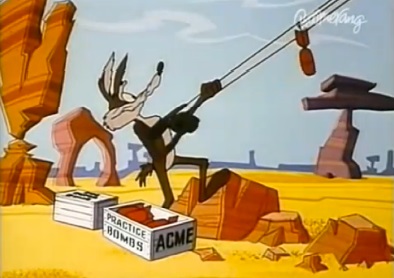
It really doesn’t sound so unreasonable, does it? Why is it that teachers – and let’s be honest, their LABOR UNIONS – are so afraid of a little accountability? They’re paid by our tax dollars, after all. Entrusted with our children. We try to be supportive, of course, but sometimes…

Well, sometimes it really does seem like they just don’t want to be held to any expectations or standards at all. I’m sorry they don’t make a lot of money, but is that any reason to let the lazy ones slide, or the stupid ones stay? I’m sure most of them are very hardworking and caring and educated people – but they’re not the ones who should be worried, right? So why so much whining every time the state or some other interested party tries to figure out who’s doing their job and who’s not?

That’s more or less the narrative inculcated by most “education reformers”. It’s usually laid on top of lofty rhetoric and trite faux-speration, but these are the basic questions planted in the minds of legislators, business leaders, parents, and – perhaps most importantly – the ethereal ‘public at large’. 

I’ll spare you the reasons so many of my peeps distrust the instruments generally used to measure teacher effectiveness. They’ve been well-covered elsewhere, by people much smarter than myself. But… I’m not sure their arguments resonate with many outside the world of public ed.  

Don’t misunderstand – I think their refutations are absolutely correct. Accurate and insightful. I’m just not sure they’re convincing to the folks who most need to be convinced. 

Knowledge LaunchSo I’d like to add a question of my own to the edu-pile. It’s a biggie, but one reformers somehow manage to avoid repeatedly. There are enough proverbial elephants in the #edreform room to keep one’s attention scrambled, but this one is larger than the rest. And neon orange. With eleven legs. And it’s making dolphin noises.
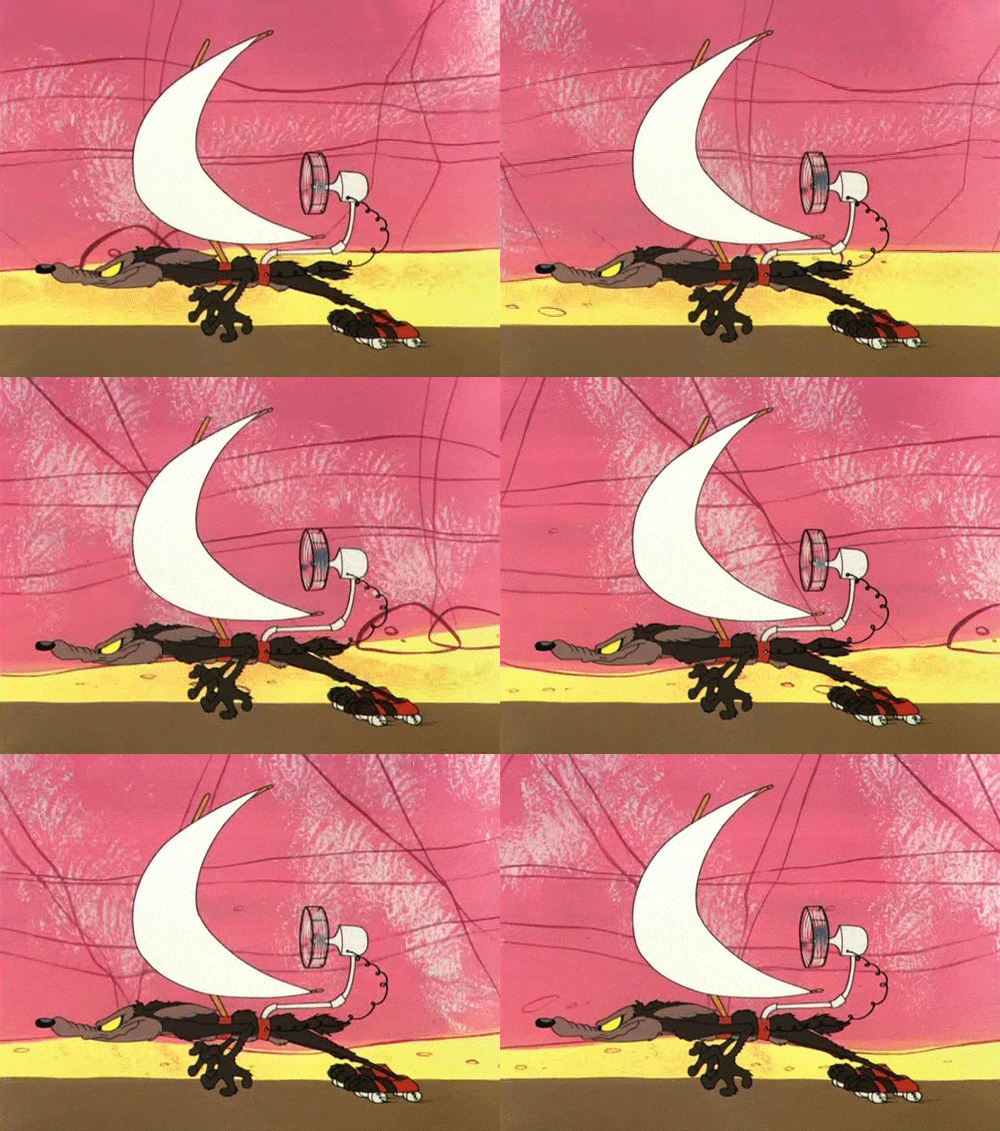
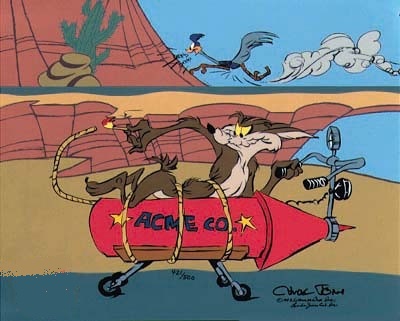

Let’s assume our state leggies get themselves all a-spinnin’ and finally implement VAM and TLE and OOPS and OMYGOD and whatever else is on the table. They may even throw some form of underfunded ‘merit pay’ into the mix so they can spin it as an actual ‘raise’ for the ‘good’ teachers. 

There’ll be formulas no one understands – including the people applying them to determine the success or failure of various teachers, buildings, and districts – and rhetoric aplenty declaring we once again have the higherest highness of high standards in education. Oklahoma will yet again reign as the undisputed leader in academic standards and overeducated pedagogues!  

Heck, we may even get some Gates money thrown our way – wouldn’t that be nifty?

Let’s even assume the various formulas and measurements and standards somehow DO begin to identify the ‘good’ teachers and the ‘bad’. Let’s grant the remote possibility that as the kinks are worked out, districts are able to apply these expectations in a meaningful way and the state is able to weed out the real bozos, the slackers, or even well-intentioned idiots. 

Maybe it’s 10% of the total teaching force of the state. Maybe 20%. Or maybe it turns out we’re not all such morons after all and it’s only 3% or 4%. Whatever the numbers, the weeds are pulled and the flowers showered with 2% stipends for teaching white middle class Methodist kids from two-parent –

Coyote Sails

My apologies – I was supposed to be speaking hypothetically. 

The flowers are showered with 2% stipends for strong improvement among all levels of students from all sorts of backgrounds. 

My question is… Now what? 

That’s the thing no one beating the #edreform drum seems to even consider. 

If there are crappy educators hiding all ‘round us, who need to be identified and repaired or removed, as part of an overall plan to improve public education, what do we do when we’ve removed the bad ones?

The answer is not so obvious.

If you said “replace them with good ones,” you lose. Even under the current system of supposedly no standards or accountability, we’re unable to fill something like a billion teaching positions in Oklahoma alone. Texas is begging for warm bodies with any degree at all. Maybe California is packed with highly qualified professionals desperate for a tenured position in South L.A.’s inner cities, but ‘round here, we’re short on teacher-types.

Coyote Rocket

Any teacher-types.

Any at all. 

It’s possible the major voices in #edreform simply haven’t planned that far ahead. Maybe they’re really smart at figuring out the initial stages but it hasn’t occurred to them it might actually work – and we’d have to know what to do next. Of course, if that’s true, they really have no business suggesting or being in charge of anything at all. If that’s true, they’re appallingly short-sighted. 

Or maybe they’ve never seriously addressed the question because they knew it wasn’t important. Maybe they’ve never worried about it because that’s not how things are intended to unfold. 

If you’re moving out of your current apartment, you at least consider where you hope to live next, yes? If you’re going out to eat with friends and don’t like their choice of restaurants, you pick somewhere better. Or cheaper. Or you order pizza. Or suggest making something at home.

Reformers haven’t done any of that. It’s like they believe it’s enough to simply settle on where we’re NOT living. Where we WON’T eat. As if starving outside on the sidewalk is a pretty impressive solution. Just look at our standards!

Or, perhaps they know no one will like their choices, so they keep them a ‘surprise’. 

They do offer a few scattered scenarios – most involving privatizing education in some way, or making it easier for well-off families to get their kids into elite institutions so that it doesn’t really matter how bad the public schools are. 

Snow Machine

Regular readers know I’m not particularly aghast at the right charters, vouchers, private schools, or homeschooling consortiums. I’m a very open-minded guy.

Even with all that, though, one can’t help but wonder at the dearth of interest in how in the world we’re to replace these ne’er-do-wells we’ve eradicated. What resources or innovations are on the table to help locate and lure in all the fabulous teachers hiding just outside the realm of reality?

Is there some unperceived benefit to purging enough of the workforce that instead of a thousand unfilled positions we’ll have two thousand? Help me understand.

I suppose the most certain way to eliminate weeds from your garden is to simply plow the entire thing under and douse it with generous quantities of defoliants. If your primary concern is with these supposed ‘weeds’, that should definitely solve your problem. It’s just that you don’t have a garden when you’re done. 

So is a better garden – or an improved public school system – even really a goal? Or were the intentions all along something not requiring that level of subtlety or care? Is it possible that ‘reformers’ know exactly what they’d like in that area that used to be the garden, but have their own reasons for keeping it a ‘surprise’?

I fear there’s a very good reason no one’s saying what’s next. 

Wile E. Coyote Falls

RELATED POST: Chipotle Mexican Grill & Charter School

RELATED POST: 5 Bad Assumptions Behind ‘Education Reform’

RELATED POST: Unintended Consequences

Teachers Are Weird

[[{“type”:”media”,”view_mode”:”media_small”,”fid”:”1357″,”attributes”:{“alt”:””,”class”:”media-image”,”typeof”:”foaf:Image”}}]]

It should probably come as no surprise that most teachers are a little weird.

WT1

We work for relatively little money in a sporadic and unpredictable flux of appreciation and condemnation, trying to teach Enlightenment values and curriculum to youngsters who rarely seek or appreciate the knowledge we impart – and we LIKE it.

It’s unusual to find a particularly gifted teacher who isn’t noticeably dysfunctional in some essentially related way. Many of the best supplement their sincere drive to reach broken children and save academic souls with a desperate inner need to prove to their own doubts and insecurities that they are, in fact, tolerably swell at this intellectual (and yet holy) calling. Recurring bouts with self-loathing make bountiful fuel for late-night lesson planning and weekend grading marathons, and there’s nothing like constant second-guessing of oneself to promote patience and flexibility with all sorts of teen falderal.  

Similar irrationalities lead many of us into an unspoken conviction that not only are we humble martyrs taking a bludgeoning for the future, but that in so doing we’re making a daily decision to refute the sorts of lofty, respected, and embarrassingly profitable gigs to which lesser beings have succumbed. As if at any moment, we could in a moment of weakness or rebellion cast off our dry-erase markers and group discussion rubrics and take up that executive position at Microsoft, accept that endowed chair at Cambridge, or go on that book tour for the novel we’ve so selflessly never gotten around to writing.

WT7

But no! Instead, today we will again set all of that aside to TEACH! 

What? Oh, er… And to monitor at the pep assembly! And collect those home language surveys the state requires of the SAME families every year as if they’ll get tricky one day and switch up their home language just to screw with us! 

We vent endlessly about the attitudes of our students, the blind bureaucracy of our superiors, and the suffocating pampering of parents determined to permanently cripple their young, then get giddy when struck by some odd new idea how we might better connect with that weird kid who we’re pretty sure keeps writing “c***sucker” on our mouse pad. 

We condemn pointless torture of children over minutiae when the state requires it, but take great pride in not letting them go pee for asking ‘can I’ instead of ‘may I’. In the first case we’re defending their right to grow up at their own pace and find their own way towards becoming their own unique person; in the second we’re holding the line because there are proper ways to say and do things and they just need to learn dammit. 

WT2

Our intentions are noble both times. 

We’re endlessly committed to the emotional and intellectual growth of young people we didn’t raise, can’t realistically control, and with whom we cannot ethically or legally mingle beyond the confines of school functions. We derive immense satisfaction and fulfillment from relationships in which strong, clear boundaries are the defining, terrifying feature, and in which any realization we ‘need it’ or even ‘like it’ casts immediate aspersions on our motivations, maturity, and emotional health. 

We resent criticism from the community, reject the faux-accountability efforts of lawmakers, and bristle at student complaints regarding our pedagogy or expectations, then fill Twitter and our edu-blogs with condemnations of anyone doing things differently than us, lamenting their lack of accountability, and figuring if they had merit at all, their students would seem much happier and self-motivated.

WT6

We clamor to be treated like professionals but deluge our administrators with dilemmas and complaints better suited for kindergarten playgrounds. We retweet clever graphics proving we all work 120-150 hours a week and if we were paid babysitter’s wages we’d be millionaires, then take eleven ‘mental health days’ a semester without leaving sub plans – all with far less guilt than when the new lesson we tried didn’t go as well first period as it did third period after we changed that one part and why-does-first-hour-always-get-shortchanged-I-suck-so-bad…

If we do our job well, most of our kids will cease to need us at all. If we’re especially successful in our efforts outside of class, our profession will rapidly cease looking like anything currently familiar. A real burst of progress could render us suddenly obsolete. But not really. Well, maybe. Oh god, could it, you think?

It’s bizarre if we think about it too closely, so we don’t. Teachers tend to drink a great deal, or binge-watch trashy TV shows. 

WT3Our coaches spend an additional 173 hours a week coaxing a hundred kids at a time to at least break a sweat in their quest to become the next Lebron James or the new Tom Brady.  

They drive team busses to towns with names like “Crack’s Flat” and upon returning watch hours of game film – GAME FILM – of bewildered 13-year olds running around butchering the holy name of football. They referee little league games throughout 108 degree weekends so their OWN kids can play – adding these proceeds to the eleven cents an hour windfall they enjoy for coaching. 

A select few educators decide that even the occasional moments of enlightenment or rapport shared with their students is simply too much fulfillment for one individual to deserve, and nail themselves to the absurdity-laden cross of a degree in public school administration. This allows them to deal almost exclusively with the worst-behaved, highest maintenance elements of the school population – after which they try to fit in STUDENT discipline issues as well. 

WT4They commit themselves to innumerable evening activities and a steady stream of only those parents unhappy enough to call THEM instead of whichever teacher is ruining their child for life THIS time. They sacrifice any remaining energy enduring interminable meetings with folks carrying longer titles but much shorter job descriptions, then hurry back to catch that one long-term sub and explain yet again why the lesson plans the pregnant teacher left really ARE a pretty good idea to follow – or at least try – please just this once – oh god don’t make me find yet another warm body… 
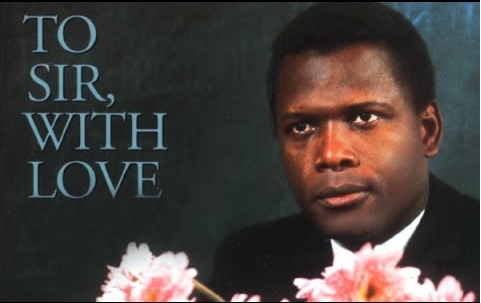
For this we rebrand them as ‘Instructional Leaders’ without the slightest intention of cruel irony. They let it slide because they know someone has to throw themselves into the barrage if their teachers and students are to have the slightest chance.

And they do. God bless them, the good ones do. 

So yeah, we get a little too anal about following the rules exactly during our Academic Team competitions, and the signs we make for our annual protests get a little snarky and rely too heavily on lame puns. We tend to get homely and fat and careless about proper hair care, and we chant and cheer for the most awkward things – often badly. 

WT5We’re cynical and bitter, but still ‘retweet’ and ‘share’ sappy motivational edu-memes much too freely. Waaayyyyy too many of us are still excited by the idea of test reviews via Jeopardy on the Smartboard or playing that Billy Joel song about not lighting Marilyn Monroe on fire. 

We’ll trade our biological young for free notepads, and we grab extras we don’t even need, telling ourselves they’re in some way ‘for the children’. 

We always want donuts. 

You’ll have no trouble finding far less needy, frustrating, bewildering adults in the professional realm, should you wish to look. But they won’t be lined up at your door, clamoring to teach.

Because teachers are weird. 

[[{“type”:”media”,”view_mode”:”media_small”,”fid”:”1359″,”attributes”:{“alt”:””,”class”:”media-image”,”typeof”:”foaf:Image”}}]]

[[{“type”:”media”,”view_mode”:”media_small”,”fid”:”1362″,”attributes”:{“alt”:””,”class”:”media-image”,”typeof”:”foaf:Image”}}]]

[[{“type”:”media”,”view_mode”:”media_small”,”fid”:”1365″,”attributes”:{“alt”:””,”class”:”media-image”,”typeof”:”foaf:Image”}}]]

RELATED POST: Teach Like You

RELATED POST: “Why Teach?” (Response to #OklaEd Blogger Challenge)

RELATED POST: 5 Bad Assumptions Behind ‘Education Reform’