

I Do Not Think That Word Means…
We should put children on trial.
What?
On trial. Kids should be required to go on trial to graduate.
You mean, like… if they’ve done something wrong or fallen sho-
No. All of them. Innocent or guilty. Graduation or death. Maybe incarceration.
*pause*
Why?
*impatientsigh*
We all go through trials in life. High school is to prepare us for these trials. So they should be put on trial.
Those two uses of the words are largely unrelated.
Clearly I believe in children and you don’t.
What You Think It Means…
We MUST test children with state-created tests. All children should have to reach a certain cut score – to be determined long after they’ve made the attempt – on standardized exams in randomly chosen subjects, regardless of their backgrounds, interests, abilities, or circumstances.
But that’s insane. Kids aren’t all the same. And our choice of ‘important’ subjects is wildly subjective. The standards change annually, and the tests aren’t even that g-
Life is full of tests.
Full of tests?
Yes.
Multiple choice, single-day, high stakes tests, during which you cannot have so much as a bottle of water and large periods of which involve mandatory staring at the wall because you’re not allowed to read or nap or look around and are being held captive solely at the whims of the testing companies and little Billy who takes forever on everything? Those sorts of tests? Life is full of those?
Yes.
*pause*
That’s not even close to true.
Pilots take tests to become pilots. Ha! SCORE! *doesvictorydance*
Pilots want to be pilots – they’re intrinsically driven to do well. They’re paying for it, they want it so bad.
They’re not being required to become pilots by some distant entity who’s decided piloting is more important than, say, plumbing.
Pilots take the most important part of the test in a plane. Flying. They learn by doing and test by showing they can do, along with whatever pen and paper stuff is required.
Plumbers, on the other hand, don’t have to take the pilot test; they have to do something involving plumbing and the format isn’t even the same. They don’t sit at a computer for six hours, their entire success or failure resting on a cut score which hasn’t even been set yet based on this week’s ever-changing standards which themselves have nothing to do with plumbing but everything to do with weak-minded leaders who want to sound tough on edu- er… tough on plumbing and get themselves re-elected by constituents barely able to unclog their own toilets, let alone fix actual pipes in this particular allegory.
*pause*
So you’re saying that plumbers don’t need to know what an airplane is? That plumbers will never need to fly anywhere?
That’s not even remotely what I’m saying.
*playsinspirationalsongaboutbelievingyoucanfly*
I Am Looking For A Six-Fingered Student…
All children can learn.
Yes.
I believe in the potential of all children.
Yes, so do I.
No you don’t. You said plumbers can never learn to fly.
No, I – actually, never mind. You go ahead.
Kids need a rich background in a variety of subjects to be well-rounded citizens and fulfilled individuals, and because we’re training them for jobs which don’t even exist yet!
Yes.
So every kid regardless of ability, interest, or circumstances, should be required to read-to-learn by 3rd grade and pass certain benchmark tests at 5th, 8th, and 10th grade or be held back.
No.
You need to make up your mind.
Those aren’t the same claims. The first celebrates the general potential of young people, and the second is a rather dogmatic and specific set of punative, limiting, unnecessary checkpoints.
So you don’t think kids need to know how to read?
I think they’d become better readers if they were offered a purpose other than being tested over books. I think they’d become better readers if we focused on helping them become better readers instead of on helping them become better test-takers over reading passages. Is that the same thing?
I think that math is good for everyone, and history is good for everyone, but I also believe with equal-if-not-greater conviction that team sports are good for everyone, and the arts are good for everyone, and learning how to present yourself professionally online and hold a decent conversation is good for everyone, and knowing how to fix your own toilet or make other minor repairs around the house is good for everyone, and first aid is good for everyone, and spending time outdoors alone in quiet contemplation is good for everyone and knowing that you’re beautiful and strong and more than you’ve been told by the corporate-driven world around you is good for everyone.
It’s not a question of whether or not this or that is ‘good for everyone’. It’s a question of whether or not we select a few specific things to draw hard, punitive lines over, at the expense of all the others. If we could teach them all everything at all levels all the time, that would be ideal. But if we want to teach them how to learn and grow as best we can with minimal time and resources, the Biology EOI is not a ditch in which I wish to die – not for all kids in all circumstances of all varieties. Especially when it means taking so many kids down with us.
And remediation by repeating grades has a horrible success rate – lower than Oklahoma marriages or tax policies. Most kids who are held back don’t get better at whatever’s giving them difficulty, they just learn that they’re ‘slow’, or ‘stupid’. We’re teaching the strong students to hate learning while they beat the system, and weak students to hate learning while it beats them. We’re going to teacher hell for that kind of thing. Kids who are held back or placed in unending remediation don’t magically bloom the ninth time through; usually they become discipline problems or simply drop out.
At which point our scores go up.
Well, yes – I suppose…
Meaning more kids are learning and that high standards help all children.
*stunnedsilence*
Our Schools Are Only MOSTLY Dead
We’re training them to compete in a global economy.
Are we?
Yes. There’s a globe, and an economy – they are therefore competing within that economy.
The number of Oklahoma graduates going up against kids from China, Germany, or Russia for a specific position is pretty small…
Our number one goal should be to produce Finnish children without doing anything Finland is doing to get there. If we can’t do that, we’ll make them Chinese, or Russian. Wait, no – how’s Estonia doing these days? Do we even TEACH Estonian in high school…?
RELATED POST: “Mirror, Mirror”
RELATED POST: 5 Bad Assumptions Behind Education ‘Reform’
RELATED POST: Leave My Teachers Alone
 The story of Joan of Arc forces historians to deal with overtly spiritual claims and potentially miraculous outcomes in ways historians do not generally wish to do. We’ll cover the role of religion in the most general ways, if absolutely necessary, but we DON’T LIKE TO TALK ABOUT IT IF WE DON’T HAVE TO.
  Immutable internal organs or not, how can you tell Joan’s story without pondering her faith? Her voices? She was either crazy with a healthy side of lucky, a very effective liar, or God spoke to her and sent her on a miracle-laden mission to save France from the English. The idea God could like France is problematic enough – but successful wars based on divine visions? Is that something we wish to encourage?
 If we’re going to acknowledge the hypocrisy and cruelty done in the name of God by early Spanish explorers confronting local Amerindians, let’s recognize the good intentions and legitimate faith of many others in similar situations. If we’re going to explain the cultural destruction done by Anglo-American missionaries to the tribes in their purview, let’s be a bit more vocal about the role of faith driving Samuel Worcester and his nameless ilk who served among the Natives with little reward in this life.
  As we approach modern times, it makes for a rather lopsided view of Presidential paradigms when we discuss foreign policy through every lens but the one most-cited from the Big Podium. “For we must consider that we shall be as a City Upon a Hill…” said John Winthrop in 1630 – a sentiment echoed, reworked, expanded, and cited over and over and over and over by men deciding whether or not we put our best in harm’s way in hopes of spreading that light a little further, or at least holding back the darkness a little longer.

 That’s not actually the stumbling block you might think teaching high school in the 21st century. Nothing locks the minutiae of your subject into permanent recall like explaining it repeatedly throughout the years, and almost anything that doesn’t stick is easily researched when necessary. We’re still trying to get them to bring a pencil and check the class website periodically; there’s little danger they’ll without warning probe such historical depths that I end up academically cowed.
  Charles’s daddy, Charles VI (nice system, right?) was insane – even for royalty – and may not have been his daddy at all. The dear Queen was thought to be having an affair with the Duke of Orleans, aka the King’s brother, and he may have been Charles VII’s biological father. That would explain in part why the Queen was so cooperative with England when it came time to designate an official heir to the throne; she signed off on Henry VI holding that honor.
  It’s also the kind of thing which makes historians crazy, you understand. It’s just so awkward to deal with the supernatural in an academic context, especially given the typical disconnect between those book-learnin’ types and people of faith. We’d rather not talk about it at all.
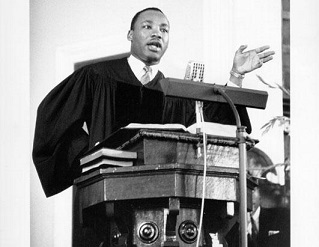 Faith becomes a happy fluke of background rather than a key component – as if King just happened to sit next to someone randomly on the bus who ended up playing some key role we never saw coming, or left his coat too close to the oven and accidentally invented penicillin. As if taking up the call of ministry – of spreading the Word of God to the downtrodden and fighting for justice – made a nice placeholder before changing careers and fighting for civil rights.
 I’m wrong quite regularly.
 Perhaps this is my failure to communicate clearly. I can be a bit scattered and make all the wrong assumptions and it’s just… yikes.
 Standards which those making the rules couldn’t pass even with preparation.
  If you question the validity or long-term value of this test, the North Koreans have pretty much already won – all thanks to YOU, the soft bigotry of low expectations outdated edu-relic hippie-who-destroys-the-future labor union drone.