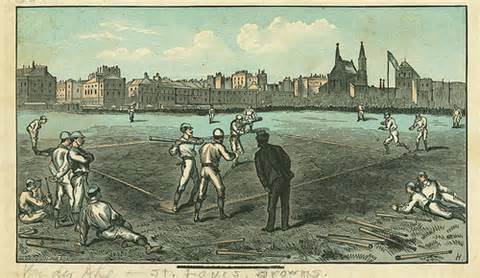
Baseball: A Ponderous and Elaborate Affair (Historical Guest Blog – Rev. J.T. Crane)

Baseball Game

Today’s commentary is from the Rev. J.T. Crane, a writer without his own blog, most likely due to the fact that he’s been dead for well over a century. Here he mocks, condemns, and predicts the demise of what we today would call ‘professional baseball’, although his criticisms would apply equally well to any of the decadent sports – football, basketball, curling, etc. (Not hockey, of course – as the true Sport of the Gods, it alone is pure of intention and deed.) 

I find this piece amusing in its own twisted little way, but in sharing it I have no intention of actually slandering baseball or any other sport. If you nevertheless feel slighted by the Reverend’s words, don’t take it personally – he was far harsher on the theater, novel-reading, and the ultimate time-waster and brain-killer, chess.

Chapter V: “BASE BALL” (From Popular Amusements by Rev. J.T. Crane, published 1869)

“And the people sat down to eat and drink, and rose up to play.” Exodus xxxii, 6. 

“…in the ancient and honorable way, carelessly, hilariously…”

Base ball may be made a very pleasant amusement, wholly unobjectionable either in regard to health or morals. Many of our readers well remember how it used to be played by the village school-boys. Two of the best players volunteered, or were elected by acclamation, to organize the two “sides.” The leaders tossed up a bat, with a mark on one side of it, to determine the first choice. The winner looked around the circle of boys and made his selection; then the other leader named a boy for his side, and so it went on, by alternate selections, till all were enrolled. The bat was again tossed up, to determine who should be “in” first, and then the play began. 

Baseball Player How they knocked the ball, and ran and threw the ball at each other, and fell down in their eagerness to avoid being hit, and laughed and shouted, and grew hot, and red, and finally weary! No crowd of excited spectators were there to applaud special acts of skill, and thus spoil the sport; no “scorer” noted down in his book the number of “runs” or of “fly-catches;” no representative of the public press was there, to prepare an extended and eloquent report, confounding simple readers with his vocabulary of new terms; no body inquired which side was victorious, and all were happy.

And in these later days, if a score of young men or older men would provide a basket of refreshments, and go out into the fields by themselves and play two or three hours, in the ancient and honorable way, carelessly, hilariously, not even noticing who makes the most “runs,” they would all feel the better the next day; and the wit and humor elicited on the occasion would echo in twenty home circles for weeks to come. 

“…base ball has become a ponderous and elaborate affair…”

But since it attained the dignity of being our “national game,” base ball has become a ponderous and elaborate affair. Rules as rigid as those which govern the proceedings of the Congress of the United States are fixed, by general councils of men learned in the art, and goodly volumes are published discussing the size, shape, and weight of balls and bats, and determining the proper distances between the bases. Associations are formed, who assume a name, devise a uniform, and have initiation fees and monthly dues. 

Baseball CardThe formation of the club, the selection of the members, is a very serious business, involving, as it does, the fortunes of the fame of the association in its future contests for championships and newspaper honors. Young men are in demand who are willing to devote their whole time and mental energies to the acquisition of dexterity in throwing a ball or catching it. Professional players are found, who are recruited from that idle, shiftless, and yet ambitious class of mortals who are ready to work with the energy of giants one day in the week at any useless task, provided they have the privilege of lounging about the other six days, boasting of their feats and basking in the admiration of all the little boys in the neighborhood. 

These professionals train as carefully as prize-fighters, and are, in fact, the same style of men drawn mild. In some cases they hire themselves to the club for a single exhibition game; in others, they engage for the season. Their pay is ridiculously high, considering the service rendered. We hear of a club that secured one player for a thousand dollars for the season. Another player was induced to change his residence from one city to another, and was set up by his employers in a store, with a stock costing fifteen hundred dollars, by way of securing his valuable aid on great occasions. 

When the club is organized, there must be daily practice for the benefit of the novices. This is done often to the neglect of every thing else, to the sore annoyance of parents and employers, and when a good degree of skill is supposed to be gained another club, fifty or five hundred miles away, is invited to meet in friendly contest. The newspapers announce that the Exotics have challenged the Cupids, name the time and the place, and express an ardent hope that the weather will be propitious. 

“…a supper, of which wine-bibbing generally forms a prominent feature…”

Playing BaseballThe eventful day arrives; “play is called,” and the contest proceeds with all spirit and vigor. They pitch, they bat, they run, they pant, they grow red in the face, they perspire, they strain their muscles and rend their garments in superhuman effort… There is no brain power to spare on pleasantries, no surplus breath to waste in laughter. Awkward episodes occur. A head is broken by an erring bat, or a finger by a ball, or two players, running with upturned faces and outstretched hands to catch the same descending ball, rush together with a fearful thump, and fall backward in collapse. Perhaps proceedings are still further diversified by the occurrence of a little fight. 

The game in due time ends, and one party or the other is declared victors by so many “runs,” and the winners and the losers adjourn to a hotel and refresh themselves with a supper, of which wine-bibbing generally forms a prominent feature. Speeches, too, are made by the talking members of each club, expressive of the most intense admiration of each other’s prowess, and breathing unutterable friendship. 

Baseball Card

The reporter, who has been presented with a complimentary ticket for this very purpose, takes notes of what is said and done, and the next morning the newspaper lays before an admiring world the important intelligence that “the pitching of the Cupids was superb, the batting of the Exotics was magnificent, the fielding of Jones and Smith elicited universal applause, the supper was all that an epicure could desire, and the wit and eloquence of Mr. Brown’s speech were equaled only by the beauty and pathos of Mr. Jenkins’ reply.” 

While an agitated world is laboring with this startling announcement, the principal performers stay at home and rest, or limp wearily out to the apothecary’s to make investments in pain-killers and strengthening plasters. And this, forsooth, is the great National Game. It has scarce a single feature of real recreation… 

“…in due time the novelty of the whole thing will be gone…”

The game itself is not in fault. In its simple forms, pursued in moderation, with right associations, as a recreation, and not as an ambitious show, it can be heartily recommended to young men who need some active outdoor amusement. It may thus be made a very pleasant and not unprofitable thing. In its preposterous form, inflated into a “great national game,” it is very laborious, very expensive in time and money, and not altogether safe for soul or body. It is then not an amusement, but a pretentious and useless display, whose highest reward is the shallow applause of the idle and the vain.

It may be hazardous to one’s reputation for sagacity to predict the downfall of any fashionable thing on the ground that it lacks the basis of good sense; still, I will say that the modern bubble has been blown so big, that it seems to me that it must collapse before long… In due time the novelty of the whole thing will be gone, and then comes the end…

Baseball Polka

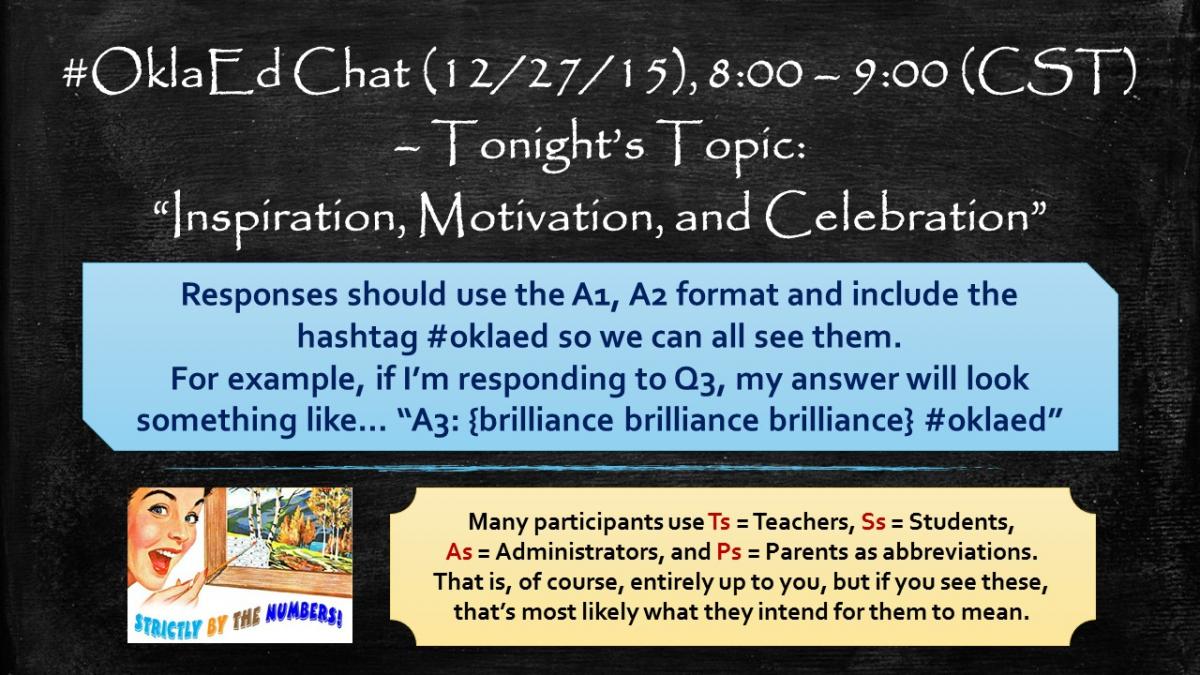
#OklaEd Chat Preview (12/27/15)

Oh the Giddy Joy!

Blue Cereal will be moderating the weekly #OklaEd chat this coming Sunday (12/27/15) from 8:00 – 9:00 CST.

If you’re a regular participant, please set aside that extended family you’re tired of by Sunday evening anyway and join us. And if you’re not, please consider joining us anyway!

We’re throwing this one open to anyone interested in a little edu-sharing or teacher-bonding mid-holiday break. Teachers, students, parents, administrators, or just desperately lonely people who spend way too much time online. You can participate from Guthrie, or El Paso, or Washington, D.C. Heck, you folks in Austria should set your alarms and drag your cookies to the laptop for this one – GOOD TIMES!

If you’ve not done a Twitter chat before, every tweet will have the hashtag #OklaEd. Most participants use an app like Tweetdeck or other ‘Twitter organizer’ so that any tweet with the chosen hashtag shows up in order in the designated column. You can potentially follow along with whatever you use to Twitter anyway as long as you keep refreshing the search for the #OklaEd hashtag – but it sounds like a lot of work that way. But hey, your call, babe.

In Keeping With the Season, This Week’s Topic is Inspiration & Motivation –

What Gets You Going and KEEPS You Going? Here are the anticipated prompts and some introductory thoughts…

OklaEd Opening

OklaEd Introductions

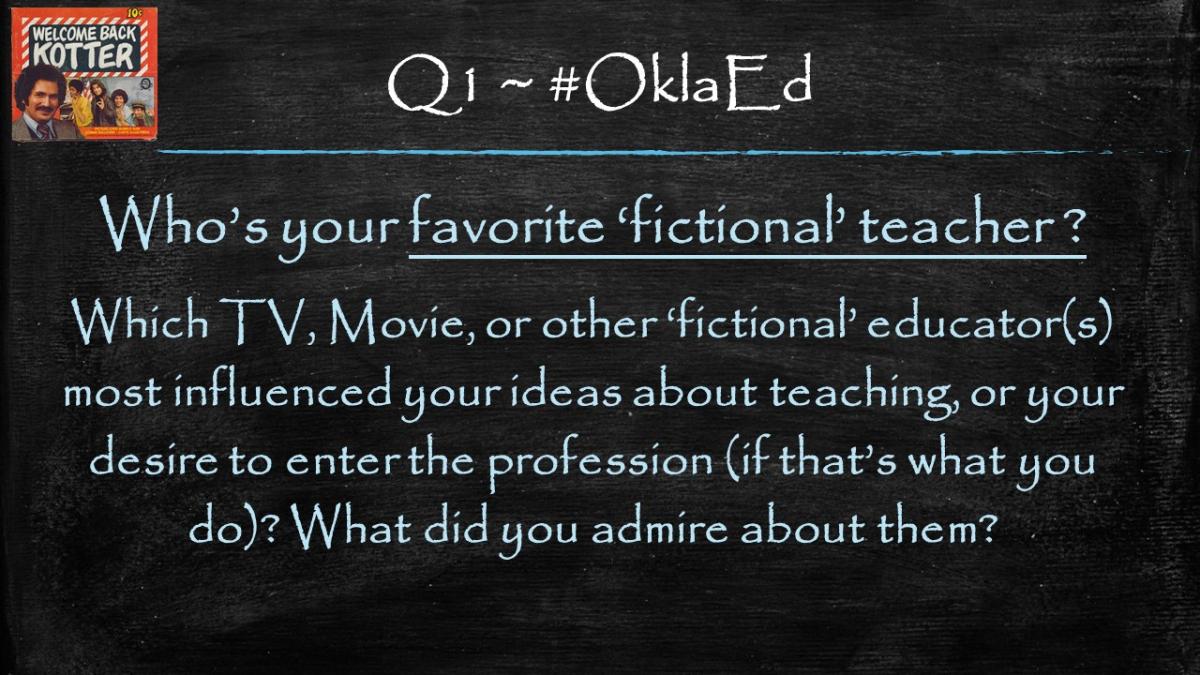
OklaEd Q1

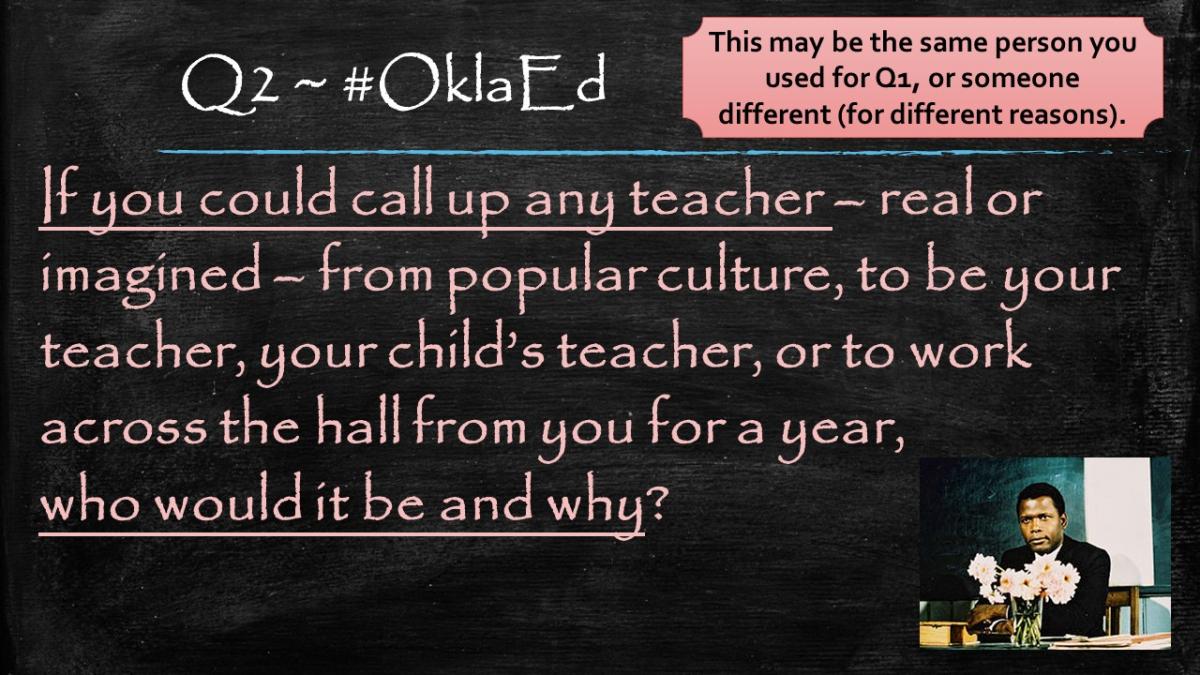
OklaEd Q2

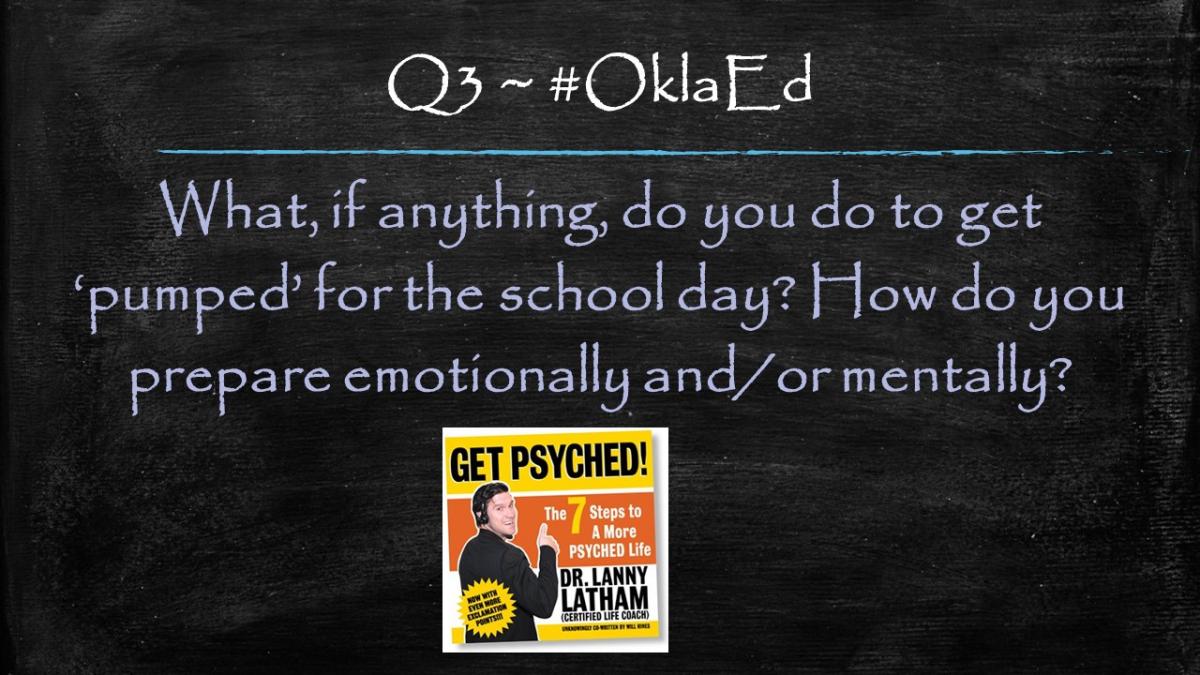
OklaEd Q3

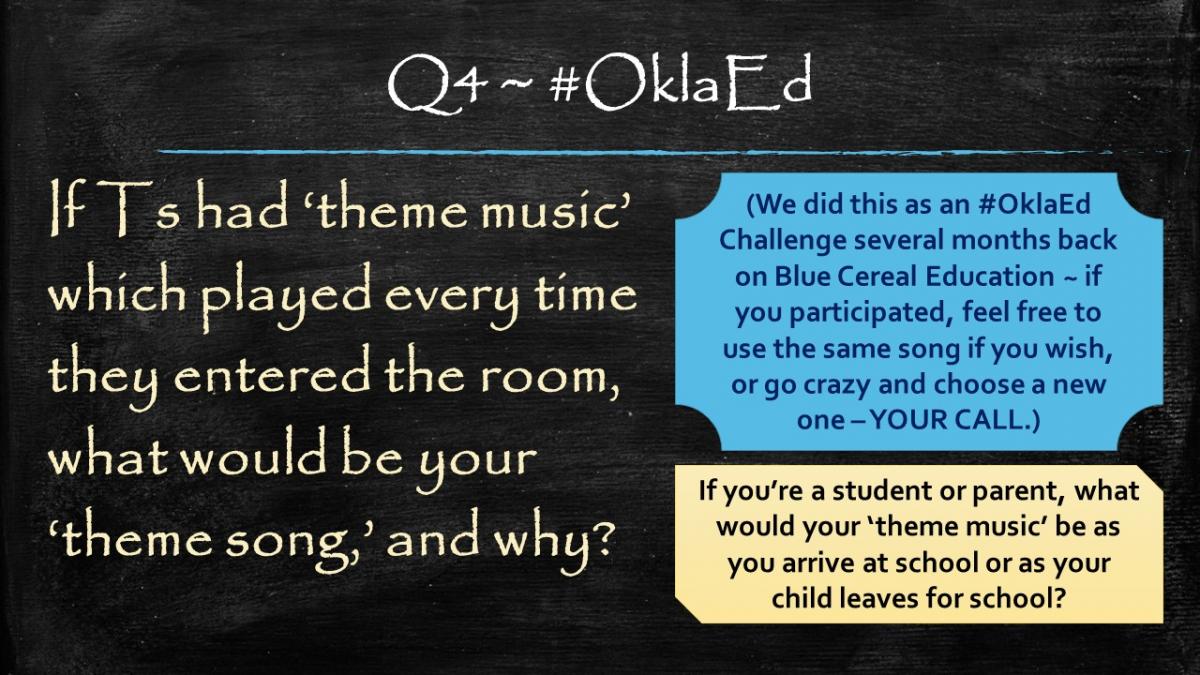
OklaEd Q4

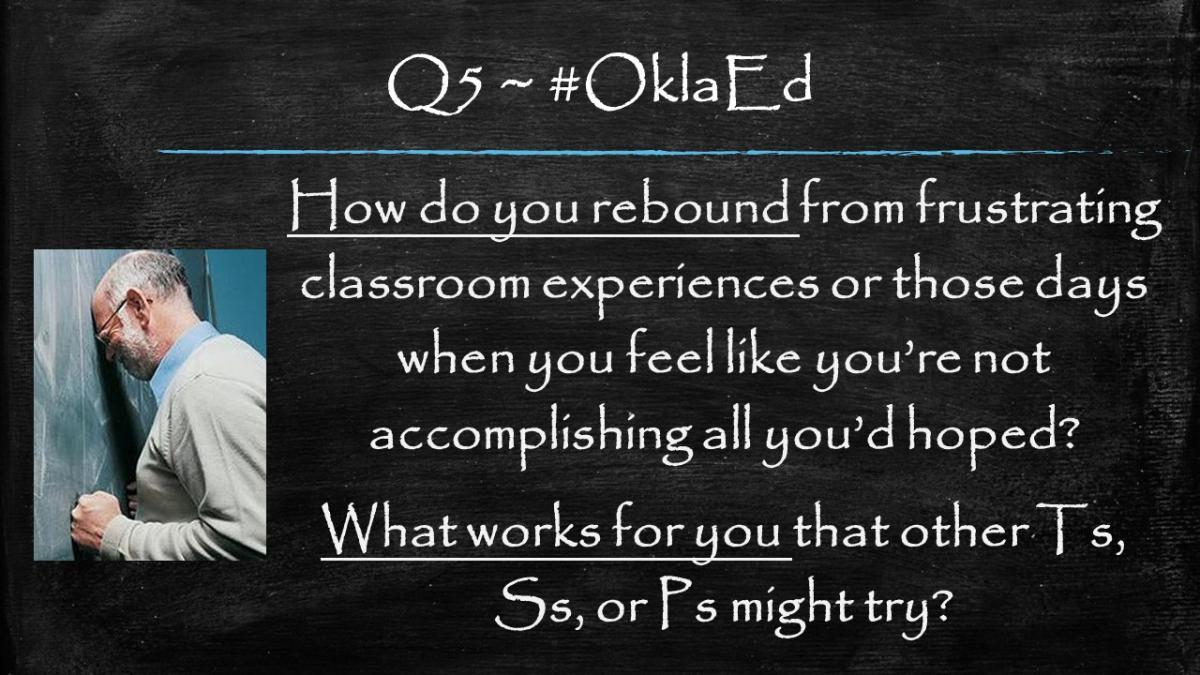
OklaEd Q5

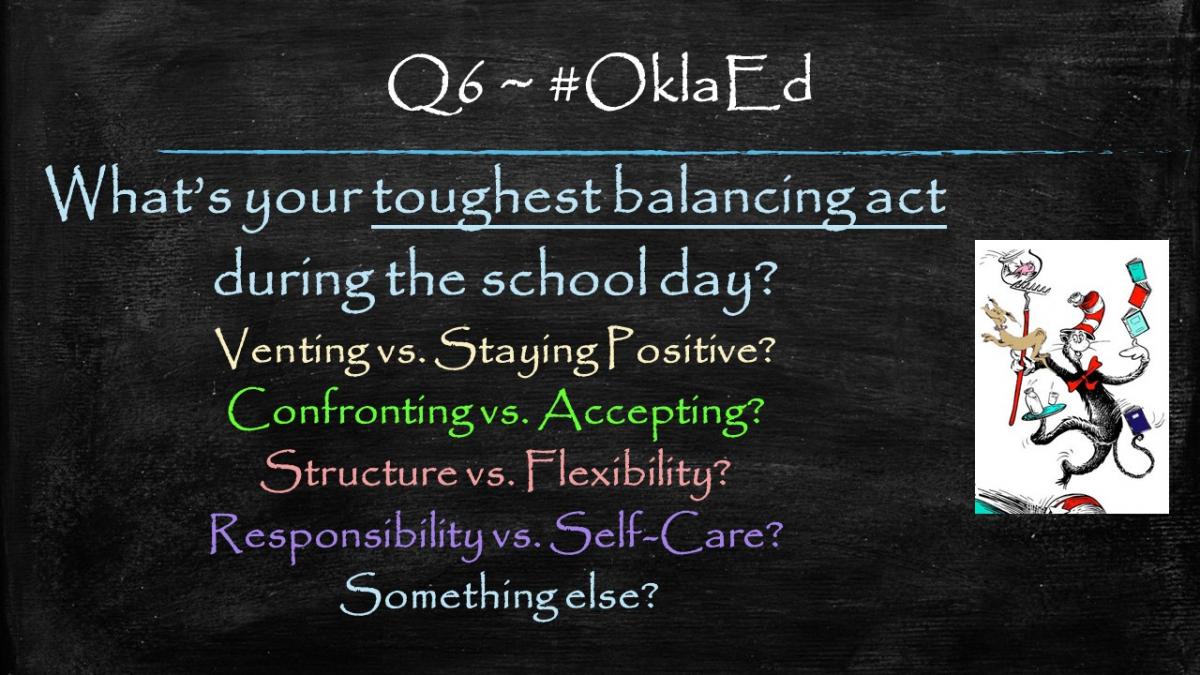
OklaEd Q6

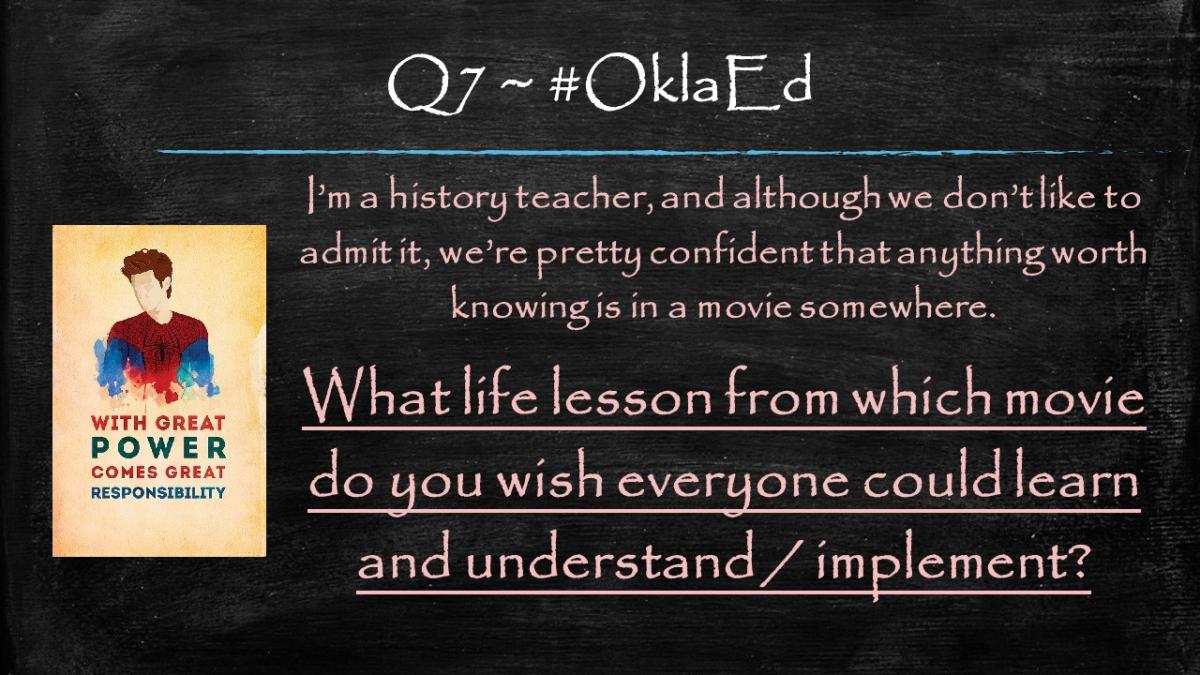
OklaEd Q7

OklaEd Q8

OklaEd Q9

Please join us. If this chat is successful, despite me leading it and despite the holiday timing, I promise the next time I moderate will be all deep, meaningful stuff.

“What’s the coolest thing you’ve ever done in class for which you could easily be fired if it were taken out of context?”

“What’s the juiciest rumor you’ve refused to pass along in your district because you’re above that sort of thing (but of course you can tell US b/c we’re tight like that)?” 

“What’s the hardest name you’ve had to try to pronounce this year?”

“What administrator would you really like to give your full and honest opinion to and what would you say (knowing they’re not cool enough to read this and we won’t tell)?”

“Does this look infected to you? I can’t tell if it’s a bite, or a rash… can you touch it?”

But not this time. This time, we’re going Inspiration & Motivation – because TIME OF YEAR.

[[{“type”:”media”,”view_mode”:”media_small”,”fid”:”1633″,”attributes”:{“alt”:””,”class”:”media-image”,”typeof”:”foaf:Image”}}]]

Blue Serials (12/20/15)

[[{“type”:”media”,”view_mode”:”media_small”,”fid”:”300″,”attributes”:{“alt”:””,”class”:”media-image”,”typeof”:”foaf:Image”}}]]

You Made It.

Well, through a semester, at least. That’s something, right?

I shouldn’t assume that most of us are exhausted, or at least relieved, rather than joyously celebrating another 18 weeks well-taught. But this is a weird gig, folks. The idea that we can cajole kids or teenagers, 30 or so at a time, into learning random stuff they rarely see much point in knowing, and do this more or less alone – every day – once the door is closed… who would expect THAT to work

Before we spend too much energy lamenting the times it doesn’t, or the kids who won’t, consider what a freakin’ miracle it is that you make it happen AT ALL! It’s really quite impressive.

Imagine flapping your arms wildly, hoping to fly about twenty feet off the ground. You only make it about eight feet, though, occasionally skimming the grass as you swoop wildly around the yard – less than half of what you’d hoped. BUT YOU FLAPPED YOUR ARMS AND FLEW OUT OF SHEER FORCE OF WILL AND A HEALTHY SIDE OF DELUSION! Anyone else would have to count that as a win. (Well, except state legislators who are positive you should be at least a quarter mile above the rooftops because they wrote ALL THE BILLS WITH THE SUCCESS WORDS.) 

That’s a little Christmas Miracle you have going all year ’round, my #11FF – even during those few weeks in April when you’re like, ‘screw this’, and those three ‘mental health days’ you took last month. But otherwise – FLAP! FLAP! FLAP! FLAP! FLAP!

Oh, And It’s Also Almost Christmas.

For those of you who are into that kind of thing. It’s cool if you’re not – but I’m personally a bit giddy. Consequently, I’m going to focus on the warm fuzzy touchy feely hopey stuff this week – or at least things primarily concerned with teaching, and students, and our various classrooms.

Still, these are tough times in education, especially here in Oklahoma. You should be following and supporting the legit folks fighting for your paychecks, your sense of purpose, and your students’ academic souls – especially OKEducationTruths, A View From the Edge, and Fourth Generation Teacher.

But this week, I’M all about unicorns and rainbows, baby – because IT’S CHRISTMAS!

[[{“type”:”media”,”view_mode”:”media_small”,”fid”:”1603″,”attributes”:{“alt”:””,”class”:”media-image”,”typeof”:”foaf:Image”}}]]

OK – maybe not ALL unicorns and rainbows. But NOT politics. Not yet. 

By Failing Our Students, Are We Failing Our Students? – Maha Bali at Reflecting Allowed wrestles with something very familiar to many of us as we finalize those first semester grades. Yeah, I see the numbers on the screen. Yes, I read their work. I know, I know… if only they’d tried, or listened, or made a little more effort… but… Could I have done something differently? Tried harder to reach THEM? Understood MORE of what they needed? Will this grade teach them an important lesson about responsibility, or…? If you know something of this feeling, you’ll want to bookmark this one. You may not find answers, but I felt better knowing others had the same struggles. And if you don’t know this feeling, read it anyway. Follow @bali_maha on the Twitters and you can wrestle through a variety of deep issues together. She’s amazing. 

How & Why We Should Let Our Students Fail – Since we’re on the topic, Jennifer Gonzalez at Cult of Pedagogy has a fascinating review of The Gift of Failure: How the Best Parents Learn to Let Go So Their Children Can Succeed (Jessica Lahey). I haven’t read the book, so I have no idea what it might be about, but… (That was what we in the blogging business call ‘knee-slapping humor’.) Like only the best reviewers can, Gonzalez gives us a solid stand-alone piece that merely doubles as a book review. On the other hand, I’ll be downloading this title with some of those gift cards I hope to receive soon. So should you. In the meantime, follow Jennifer on the Twitters at @cultofpedagogy for more learnin’ stuff, and while you’re at it check out @jesslahey as well – they’re both practically #11FF if they’d just join the %#$@ contest

What NOT To Say To Your Music Teacher – Mindy Dennison at This Teacher Sings speaks from personal experience, but I have to think this one resonates with any teacher who has ever taught a so-called “extra-curricular” subject. Turns out they’re not always fighting the tide of disrespect, testing-driven curriculum, and budget cuts just because they’re “lucky.” Maybe they’re fighting for our kids artistic and non-linear souls…? Follow Mindy on the Twitters at @MrsDSings and brush with greatness – she’s kind of a big deal now.  #oklaed 

Brave Spelling – Dana Murphy at Two Writing Teachers talks about spelling. And learning. And how ‘getting it wrong’ is the worst way to see things. Oh, and these weird little letter robots, too – who knew THAT was a thing? Follow Dana Murphy on the Twitters at @DanaMurphy68 and Two Writing Teachers at @2WritingTeachrs – they’re all hung up on the joys of learning and not very good at crushing hope out of little people. I love that about them.

A Voice – Rebecka Peterson on One Good Thing does that thing she does so well with the thinking and the wondering and the caring and the hope. Much like when I hear a capella live or watch Dr. Horrible’s Sing-Along Blog for the eleventeenth time, I don’t get it and I can’t do it, but I’m sure glad others can – and that they’re this good at it. Follow Peterson on the Twitters at @RebeckaMozdeh and sing along with her. Er… metaphorically, I assume.  #oklaed

[[{“type”:”media”,”view_mode”:”media_small”,”fid”:”1609″,”attributes”:{“alt”:””,”class”:”media-image”,”typeof”:”foaf:Image”}}]]

One Year Ago – And SO Worth Revisiting…

“To The Friend That Once Said, ‘You Need To Be Realistic.'” – This week’s flashback to #amazeballs post (I really need a more consistent name for these) is from Kris Giere at Involuntary Verbosity. It’s a poem, actually – which is what makes this a ‘first ever’, since I don’t really do poems all that often – or share them ever ever ever. But oh my glowing baby in a manger, is this one worth a read or seven hang-it-on-the-wall. It gave me the tinglies – and not the naughty kind, either. Go follow Kris on the Twitters at @KrisGiere, but don’t expect tinglies ALL the time. Mostly he’s just thoughtful and insightful and talks about education and stuff, and makes you feel smarter as a result of his questions and suggestions. 

Finally, Giddy Congratulations to #OklaEd Winners of #Eddies15:

OKEducationTruths – First Place, Best Administrator Blog; Second Place, Best Individual Blog

A View From The Edge – Second Place, Best Administrator Blog

This Teacher Sings – First Place, Best New Blog

Mrs. Waters English – Second Place, Best EdTech/Resource Blog; Second Place, Best Teacher Blog

It’s an honor to stalk and harrass each of you!

Alright Darlings – regroup and relax, give and receive, sing and watch and eat and play. We have so many miles to go, and so little objectively suggesting we’ll ever arrive. 

Isn’t it exciting to have a challenge? 

[[{“type”:”media”,”view_mode”:”media_small”,”fid”:”1608″,”attributes”:{“alt”:””,”class”:”media-image”,”typeof”:”foaf:Image”}}]]

The Blacks in Oklahoma, Part III

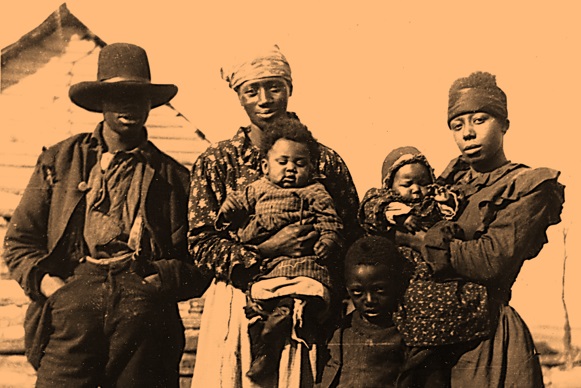
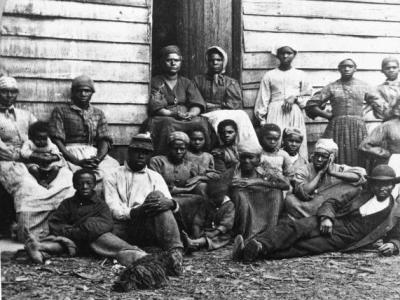
OK Freedmen

It pains me to say so, but we really need to wrap this one up.

I’ve been wandering through “The Blacks in Oklahoma,” from The New York Times, April 9, 1891. If you haven’t read Part I and Part II, well… I mean, you did notice this is called ‘Part III’, right?

The unnamed author has already set us up once, responding to rumors that black settlers were becoming a drain on their communities and – by implication – the hard working white citizens in the territory, by informing us that the opposite seemed to be the case everywhere HE went.

Having covered a touch of the past and some key features of the present, he’s about to conclude – logically enough – by considering the future. He starts by reminding us that white people are at best delusional, and at worst notorious fabricators – especially the politicians. 

The Hon. David Harvey, delegate to Congress from Oklahoma, said to THE TIMES correspondent that the blacks were decreasing in Oklahoma and that they could not find an abiding place there. The observation made during the trip just finished will not verify his statements. 

What a gentle way to phrase “liar, liar, pants on fire!”

In his own city – Oklahoma City – according to his statement, there were not over 100 negroes of all ages and kinds. A careful personal count revealed the existence of 157 families, averaging 4 to each family. He asserted that there were not more than four dozen negroes in Guthrie, while, in fact, there are at least 300 in the city. 

Last time this reporter laid on the statistics, he was setting us up for a mid-article twist. We should be ready for wherever he’s going this time as well. 

OK Black Homesteaders

Mr. Harvey was especially positive that the black-jack country could not contain over 1,000 negroes, when the returns of the last election show that Mr. Harvey received at least 1,700 negro votes. 

Again with the diplomatic approach. 

I think this could just as easily have said, “He knows darn well that he’s full of $#%* because whatever else he does or doesn’t care about, he KNOWS his own electoral results!”

He condemns all allusion to the black strength in that Territory, believing that the importation of blacks only adds to the distress possibly existing there, and yet the blacks are the only ones of a mixed population self-sustaining in a Territory where the majority of the inhabitants so far have been living off of each other, gradually wasting their capital, and will do so until agriculture begins to be productive of results. 

Thus revisiting the impact point made in the first half of the piece – despite claims to the contrary, the black settlers were the only ones NOT adding to “the distress.” Note how subtly the language employed here suggests a certain defensiveness – maybe even hostility – on the part of Mr. Harvey. 

The cities are owned principally by speculators. They would be creditable to an older country, showing the indomitable energy and faith of their founders, as well as exemplifying their hopes in the future of Oklahoma.

Is there an implied ‘but…’ here?

In the meantime, almost every train brings in negroes from the South, who remain. Agents from Georgia and Arkansas have in vain sought to induce some of these blacks to return as laborers. They will not go. They send glowing accounts back to their friends of the new land, and the stream of immigrants constantly increases. 

However difficult conditions in the new Territory, they apparently had nothing on the Old South. If you teach ‘push-pull’ factors in your classroom, here’s a prime example – plenty to drive a group of people OUT of one place; plenty to draw them IN to another. 

So far there has been but little trouble; what the future may bring nobody even pretends to guess. In fact, nobody will not think of it, except the blacks themselves. The latter fondly cherish the idea that they may possibly found here a State in which they will predominate and have the controlling power.

Oh the possibilities! Surely most resisted the temptation to give hope too much leeway. History would insist that under no circumstances would that EVER be allowed to happen (see Part II).

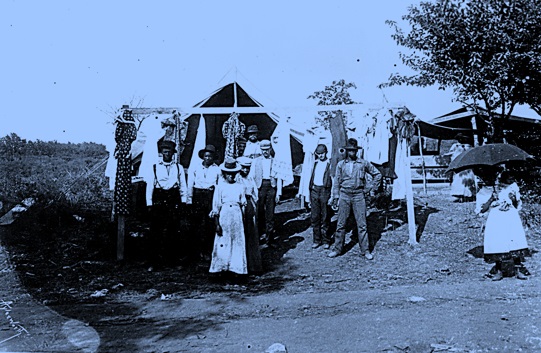
OK Homesteaders

Here comes the wrap-up. Stay with me now – this is a good one.

See, one of the things I love about humor and tone in a well-written piece is how much impact it gives the underlying message – the ‘serious’ parts – when they arrive. I have little use for droopy drama, but when the Guardians of the Galaxy resolve to sacrifice themselves to try to do one right thing, or Bill Murray realizes the “true” meaning of Christmas… snot’n’sobs. Every time. 

If I were an English teacher, we’d have a fancy word for this use of tone and structure, and examples involving obtuse essays by dead Englishmen. But HISTORY teacher = movies movies movies. 

The war of races in Oklahoma is sure to come, but it will not be fought with guns and knives. The weapons will be the plow and the hoe, which will be wielded by each race upon its own lands. It remains to be seen whether the hot sun of Oklahoma will favor the black cuticle of the cotton and tobacco grower or the white skin of the corn and wheat raiser. 

*pause*

That’s it. That’s the conclusion. 

I’ve read this numerous times, and I’m convinced the author fully expects the black settlers in Oklahoma to prevail – or to at least hold their own. Maybe he’s more concerned with dramatic effect than substance, but I don’t think it’s just that. I think he’s being idealistic. 

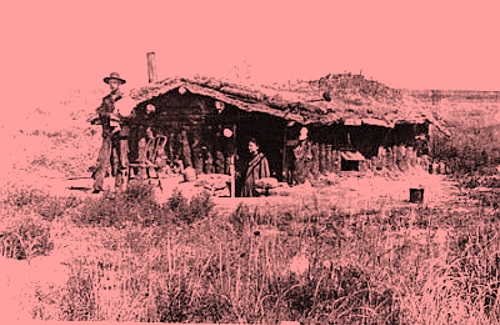
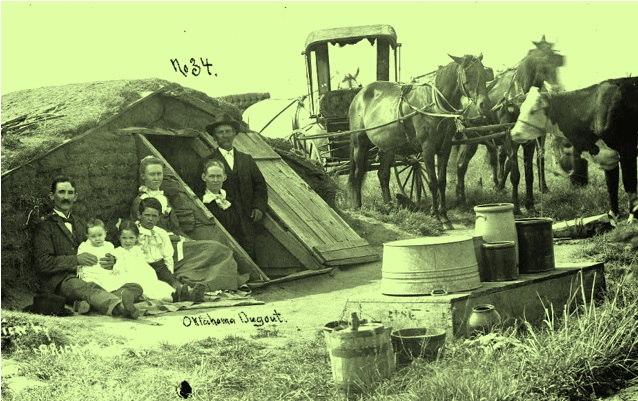
Oklahoma Dugout

Like most of us, his own experiences and assumptions about how the world works color his optimism. Inherent in that closing paragraph is the conviction that hard work, grit, and the human spirit determine winners and losers in the end. Helen Churchill Condee had the same assumptions when she wrote primarily of white homesteading. 

That’s the American Dream – or it was, for a few centuries. It’s a bedrock of conservative social and political thinking – you get out of life what you put into it. Work hard, stay in school, live the dream – everyone may not start with the same advantages, but the overall system works the same for everyone. 

The Black experience – in Oklahoma or anywhere else – didn’t usually hold that to be true. Much like the American Indians they were replacing, the terms of the deal kept changing based on what best served white predominance. They changed for individual farmers who found some success, and they changed for communities who prospered just a little too much.

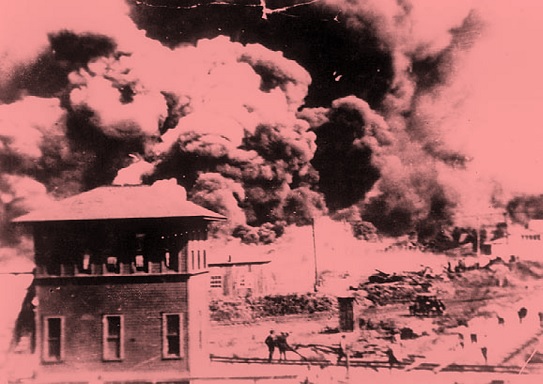
The most glaring example exploded a short thirty years later in Greenwood, as white citizens of Tulsa burned down Black Tulsa, killed hundreds of innocents, and took their stuff home as presents for their wives and kids. The war of races become violently overt, fought with guns and knives. 

Tulsa Race Riot

But even when the mobs aren’t in the street, is it possible that the underlying system has always been there? How much would be different if it weren’t shaping policies and attitudes today?

I don’t want to sound negative, but a doctor unwilling to discuss a possible diagnosis with his patient just because he doesn’t want to be a downer isn’t a very honest doctor. Maybe we don’t like to think about such things because we’re enjoying our little plot of land, knowing we’ve worked hard, taken a few chances, and caught a few breaks along the way. Maybe it’s easier to condemn those who threaten our paradigm than to question our comfort.

Or perhaps at some point human nature dramatically changed, the system began to work equitably, and everyone should just be glad all the descendents of those who first claimed those best lands from the less-worthy (by nature of their color or culture) just happen to be the most honest, hard-working folks today.

You know, so no one has to adjust their social, political, or economic standing too much. Because that would be SO un-American.

Just make sure you don’t think it too clearly or ever say to yourself out loud what your forebears carried as a matter of fundamental faith – that you are where you are because that’s exactly how things were set up to be. Because the universe has decreed it your “birthright.”  

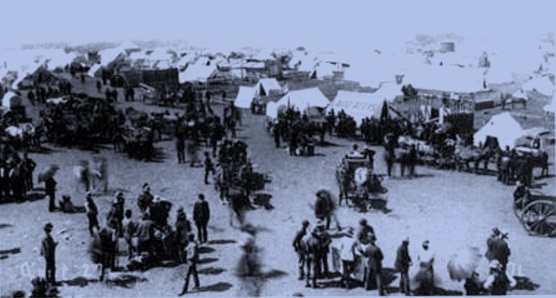
Early OK Town

RELATED POST: The Blacks in Oklahoma, Part I

RELATED POST: The Blacks in Oklahoma, Part II

RELATED POSTS: A Chance in Oklahoma, Parts I – II

RELATED POSTS: Boomers & Sooners, Parts I – V

The Blacks in Oklahoma, Part II

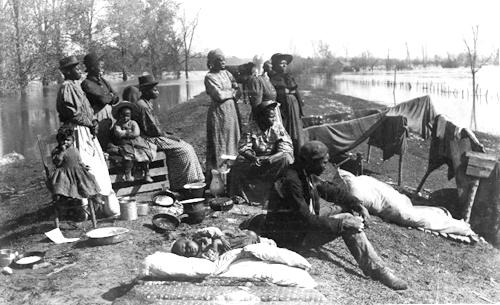
Black Homesteaders

If you haven’t read Part I of this post, first of all let me say SHAME ON YOU! How can you let crucial learnifying SLIP like that? Second of all, I respectfully suggest you start there for, you know, context and stuff. 

I was waxing history-nerdish over a column titled “The Blacks in Oklahoma,” published in The New York Times on April 9, 1891. It’s historically significant, and rhetorically rich. The reporter is addressing rumors that black homesteaders had been flowing into the recently opened territory without resources or a plan, and had become a drain on the community and perhaps a danger to others. 

Imagine a time in which “others” were automatically treated with such suspicion and accusation. Oh, the good ol’ days… 

Many have gone to that territory with nothing except the rags they wore, but they have never become public charges. They have been cared for by persons of their own race until they were in such condition that they could help themselves and help others. 

It’s not unusual even today for immigrant groups (these weren’t technically ‘immigrants’ so much as ‘migrants,’ but the idea is the same) to settle in clusters where they can mutually support and assist one another. Some of this may be defensive, but it has an important proactive function as well.

Don’t scoff – you’d do it too if you were moving to a new world. 

At this time there are eight families crowded into an old (over one year is “old” in that country) storeroom, which aggregates forty-five people. There they sit day after day, waiting until they can be scattered and settled temporarily upon some of their race’s claims. They have their rages and their bundles of household goods and probably $50 would prove a bonanza to the entire outfit. They are fed by their more fortunate brothers, and some way they will be kept alive until Summer, when they will show that they are self-sustaining, for they will work and exist upon almost nothing.

I wonder if the assertive confidence expressed here reflects the mindset of his subjects, or the convictions of the author himself? That would make an interesting document analysis activity. 

OK Freedmen

I have some idea what it’s like to be poor, but I lack a real appreciation for the sort of soul-crippling poverty described here. Most of us couldn’t even imagine. And yet…

Humiliating as they confession must be and is, the appeals for aid coming from Oklahoma do not come from the negroes, but from the whites. They exemplify the workings of the co-operative plan, as on claims may be found two, four, and sometimes eight families, all working together and often living together, awaiting the time when more lands will be opened for settlement, when the surplus expect to find claims for themselves.

If there’s a sense of entitlement present, it makes sense it would come from those running to claim land promised to others for as long as the sun shines and the grass grows and so forth. There was little guilt about betraying our national oaths yet again, largely because of a deep conviction that white guys in some way DESERVED this in a way others could not. 

Is it such a leap to realize some of those same claimants would ask for help while they wait for the rest of WHAT THEY DESERVE to become available?

Twelve miles northeast of Guthrie, on the eastern border of Oklahoma, was found the little “city” of Langston, the inspiration of E.P. McCabe, the only colored State officer Kansas ever had, who is now Treasurer of Guthrie County. McCabe proposes to establish at Langston a distinctively negro city, and has for months, through colonization societies, been working in the Southern States to secure a population for this new black Mecca. 

He has secured a number of families and has sold many lots. Some thirty dwelling houses and a small store comprise the nucleus of what the negroes hope to make a great city. There are nearly two hundred persons already there, and not a white face is to be found in the place. 

Black carpenters were at work on a dozen new houses in course of erection, while masons, bricklayers, and other mechanics were making preparations for their future work. They have a black doctor, a black preacher, and a black school teacher, the latter presiding in an unpretentious little building already dignified by being called “the academy.” Adjoining the town site eighty-three acres of land have been broken up, and will this year be used as a co-operative garden by the entire colony. 

McCabe is a big deal in Oklahoma history. He was the driving force behind much of the territory’s black settlement in the late 19th and early 20th centuries. His goal of an exclusively ‘black state’ was within reach for a time. It could have happened. 

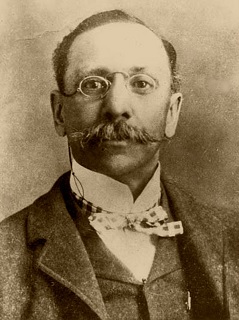
Edwin McCabe

White people, of course, freaked out at the possibility. Imagine if it had failed – all those poor, angry black folks concentrated in one place? What might they do?

Worse, imagine if it had succeeded? How many centuries of American history would have to be re-examined if it turned out black folks were perfectly capable of running their own lives and communities after all? What would that say about…?

Oh yeah – not gonna let that happen. No State For You!

When asked what they were going to live on until something was raised, the general reply was that they “did not come here as paupers,” and that they had brought some money enough with them to live on for some time.

The principal object in establishing this town on the eastern border was to be near the lands of the Iowas, which are expected to be open to settlement before Fall. When these lands are opened Langston will be the supply depot for all of the black race, and there will be repeated the experiment, already a success, that was made in the black-jack country in the northwest part of the Territory, but under much more favorable circumstances, as the new town in situation in a much more productive country.

Black settlers tended to gather in areas with the least desirable farm land, and the least convenient access. While this seems to have occasionally been a result of pre-opening regulations, it was primarily a strategic move on the part of the black community.

It didn’t take much extrapolation to suspect that land recently seized from red men would be unlikely to stay in the hands of black men if desired by white men. So, pick areas white people wouldn’t want. Sure – it would be harder to grow essential crops, and to provide other sustenance… but what else was new?

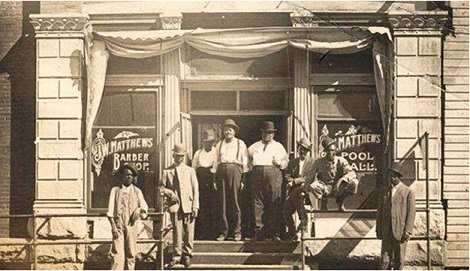
Pool Hall Barbershop

Apparently some were now hoping to grab some land a bit further east, where conditions weren’t QUITE so onerous. 

Therein lies the inevitable tension for citizens of color, then OR now. Very real opportunity. Very real progress. Open doors and flashing arrows pointing the way towards very real dreams.

And yet… at any time, those rules can change. They change if you’re not successful enough in the game, and they change even more dramatically if you are. You won’t give up, and you don’t want to lose, you have to be careful how much you win.

I insist to my students that whatever else Oklahoma is, its history is rather unique among the fifty states. At the same time, our past repeatedly reflects larger truths about the nation as a whole. We study Oklahoma history not because we’re unique (even if we are), but because of the light it sheds on the bigger picture. 

We’re like a historical funhouse mirror collection. Why can’t THAT be on our license plates?

We’ll conclude in Part III – I promise

RELATED POST: The Blacks in Oklahoma, Part I

RELATED POST: The Blacks in Oklahoma, Part III

RELATED POSTS: A Chance In Oklahoma, Parts I & II

RELATED POSTS: Boomers & Sooners, Parts I – V