Dear Workshop Leader,
Don’t take this personally. I’ve been where you are right now, plenty of times, and I know it’s not an easy task.
Any time you’re trying to drag a roomful of teachers through required district PD, or breakout sessions at a conference somewhere, or state training on the latest curriculum hoops, it’s a tough gig. Teachers make the worst students.
But if you’ll allow me to be so bold, a few words of advice from someone who’s also been where they are right now… far too many times?
You don’t have to be the funniest, smartest, or most energetic person in the world to run a successful teacher training. In fact, there are some fairly straightforward things anyone can do to dramatically increase the odds of a decent workshop.
Here, I’ll use big letters so it’s extra serious and true:
Twelve Grand Truths of Leading a Workshop
1. Have a plan. Flexibility is great, but meandering through the day without clear direction or explicit goals is both insulting and frustrating for your audience. Just because you have tons of time to fill doesn’t mean you should blatantly waste it.
If there’s a good reason to change direction, that’s great – but make it a clear change, not an utter lack.
2. Learn the technology ahead of time. I realize you were promised a certain set-up and it didn’t happen, or you asked for internet and it’s not available. But you’ve known for at least a day or two that you were going to be leading today, so do us both a favor and figure out how stuff works ahead of time.
Come early and use the provided computer. Test the projector. Practice opening apps and closing windows, and try pulling something from your flash drive. There’s no shame in struggling, but need we watch?
Of course you never RELY on technology to cooperate. Just like in class, have a plan for when the computers rebel. But you know this… right?
3. Don’t read your presentation or the handouts to us. You think I’m kidding, but despite being something of a cliché for the past decade, people still do this to us ALL the TIME.
If there are excerpts which simply must be covered verbatim, fine – but reading Powerpoint slides? Perish the thought. Same thing with written instructions, prompts, etc. If we can read them, let us read them. If you wish to tell us what to do, then tell us – conversationally, in your own words.
If I’m to be read to, I’d at least like a bottle and my blankie.
4. Someone already finds you credible or we wouldn’t be here. If there’s a need to explain who you are and why we should listen to you, do it up front, and briefly. Better yet, put a short bio in your handouts.
Constant references to former students, cool people you’ve met, or fancy events you’ve attended, are fun lunch chatter – but when you work them into every conversation, you sound insecure.
We get it – you’re awesome. Your methods are impeccable and your scores are tops. You’ve read all the best books and been to all the best places.
Yay for you; let’s move on.
5. A little diplomacy goes a long way. If someone wants your opinion about homework, textbooks, or classroom management, then give it. Keep in mind, though, that plenty of other sincere, experienced, just-as-smart-as-you educators have different opinions.
Speaking in absolutes doesn’t strengthen your credibility – often the impact is quite the opposite. Plus, there’s no benefit in alienating or annoying your participants, making the rest of the day less effective and leading to negative evaluations.
Examples of diplomatic responses:
“You know, I’m personally a big fan of ___________________”
“I’ve never had much luck with ____________; my problem with it is _________________”
“With my kids {insert age and demographic clarifiers}, I usually __________; have you considered trying ___________?”
While I get that you don’t want to seem wishy-washy, you’ll generally sound thoughtful and wise when you recognize that not everyone’s style is like yours and not every roomful of students are the same.
6. Participants often appreciate the books you think we should read, websites we should visit, or videos we should watch – so compile them ahead of time, or during lunch, or at the end. They should be addressed in a clump.
Recurring stoppages to address the book/website/video that just popped into your head derail whatever flow you’ve established, and disrespect participants’ time. Then, of course, everyone has to ask how to spell the author’s name or if you’ll repeat the URL, and suddenly they all have these other books/sites/resources everyone should know about and dear-god-kill-me-now.
7. If you’re going to assign us to read or do something, give us time and space to do it. Don’t ask questions if you’re just going to immediately answer them yourself, and don’t pretend subjects are open-ended if you have a ‘correct’ response in mind.
I know you’re not doing it on purpose – some of us feel very insecure relinquishing the reins, even for a few minutes. If it helps, set a stopwatch for yourself and MAKE yourself allow some time. Walk around and listen, but don’t jump in unless asked.
It’s one thing if participants are clearly finished or totally off-topic, but don’t step on participant work time or insert yourself into every conversation just because you’re bored or uncomfortable.
8. Unless this is a purely informational workshop (i.e, you’re explaining the new budget or covering important changes in the AP Exam), don’t talk so much. Watch the clock – if you’re in front of the room pontificating for more than about 10 minutes, we’re bored. You can be as offended as you like that we’re on our phones, but you’re the one rambling on and on.
If we’re here to learn strategies, let’s do the strategies. If there are parts worth discussing, stop and let us discuss. Heck, leave the room for a few minutes and get a drink – it keeps things moving for you as much as it does us.
If there are entire blocks of time scheduled with nothing for us to stop and talk about, or to do by ourselves or in small groups, you’re doing it wrong. Period.
9. Assume your audience are capable professionals, but don’t assume they all have the same body of content knowledge. We all teach different grades and subjects, and come from different backgrounds – but we’re all teachers, so have a little respect.
It’s tricky to know what to assume ‘everyone knows’ and what to explain. That’s where reading the room and being tuned in to your participants comes in. That’s a teacher skill, and you’re a teacher – right?
10. Never go to the scheduled ending time. If the email said 4:00, start wrapping up at 3:30. If you MUST go to 4:00, make sure the email says 4:30. And never never EVER no matter WHAT keep them past the required time.
Ever.
No.
Don’t!
11. There is no Eleventh Grand Truth. We’re cutting it so we can wrap up a bit early…
12. Sometimes you’ll do everything right and your participants simply won’t cooperate or care. If you can solve this or adjust, then certainly do, but if not…
Don’t take it personally; teachers make the worst students.



 #5 – Those who can, do; those who can’t, teach. I didn’t want to use this one because I thought it was too archaic. After reader feedback, however, it’s clearly not – they find it flung about like primate poo whenever education is discussed.
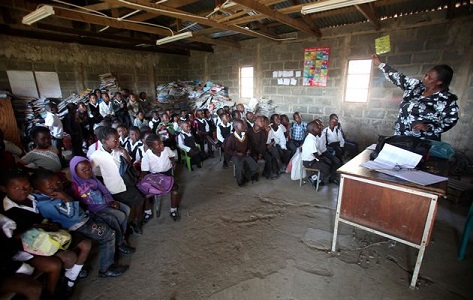 #4 – Teachers aren’t in it for the money (so abuse them at will and why pay them at all?) It’s true most of us didn’t sign up in order to tap into unlimited wealth and fame – but this is a false dichotomy. It presumes there are only two types of careers in the world – narcissistic, money-hungry, and exploitative, or caring, selfless, and would rather not get paid at all.
 #3 – The Number One Factor in a child’s education is the quality of his or her teacher.
  #2 – Such and such kids will learn anyway / succeed anyway / be fine no matter how big their classes or who teaches them.
 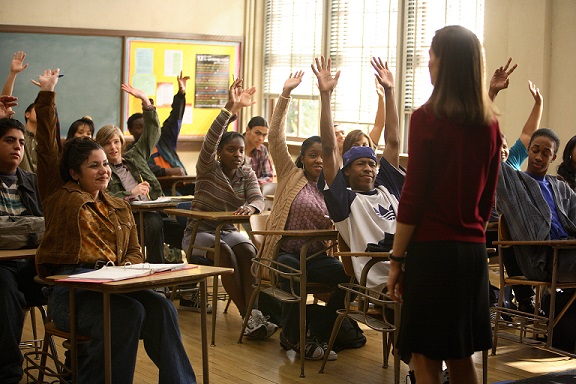 #1 – If you’ll just do X, your students will Y – flip the class, eliminate grades, ask about their feelings, model enthusiasm, make it about the kids, make connections to real life, etc.
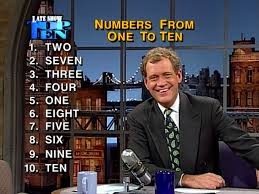 I don’t do many numbered lists, but I notice they’re going out of vogue and figured that was the perfect time to do one more. It’s like wearing cargo shorts, or getting excited about Kings of Leon.
  #10 – The students will make you crazy. There are certainly times that my students leave me frustrated, bewildered, or even frothing towards neurosis. They can be a difficult lot, no matter how many inspirational memes you retweet each week.
  #9 – The teacher students like the best is the best teacher. This is not without elements of truth. It’s difficult to reach kids who DON’T like you, and teachers who are comfortable with and care about their students tend to give more, and get more from them.
  #8 – Teachers are afraid of accountability / Teachers’ unions are there to make sure their members aren’t held to any real standards. We, as a profession, are largely culpable for this perception. There are few things more horrifying to watch than a teachers’ strike on the news – horrible slogans, bad hair, and chants beginning with “2, 4, 6, 8…”
  #7 – Teachers have it easy / Teachers work longer and suffer more nobly than any other profession in the history of mankind. We may overreact to tired old cracks about ‘having summers off’ and whatnot, but far sillier are our efforts to establish that we do, in fact, martyr ourselves in ways that leave slackers like Gandhi and Mother Theresa bathed in shame and inadequacy.
  #6 – Such and such kids won’t learn no matter what you do.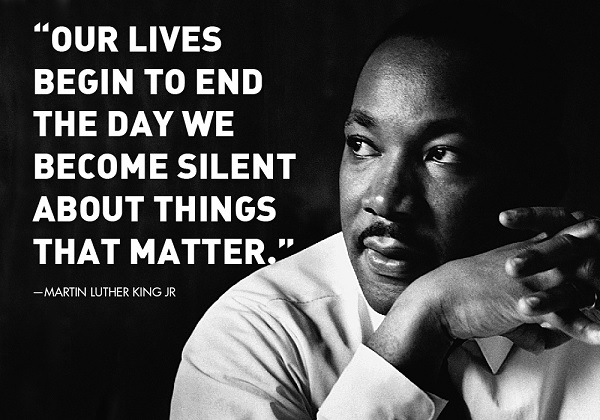
 The FBI tapped King’s phones, and threatened his life. MLK was labeled un-American, a tool of foreign powers intent on subverting our way of life. Government leaders – those specifically chosen as our collective voice – condemned him as a liar, and officially categorized him with other ‘hate groups’. It wasn’t just J. Edgar Hoover or a handful of overzealous individuals; this was policy, from Attorney General Robert F. Kennedy on down. Why? National security, of course.
 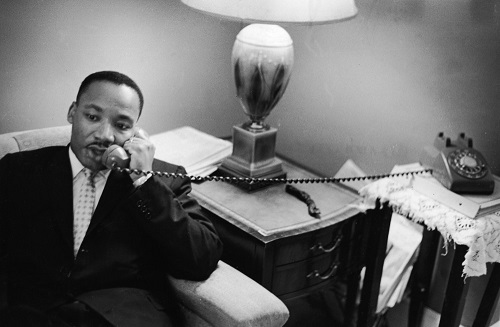 Today we celebrate King’s movement for its non-violence, but media at the time fixated on the sporadic exceptions. They painted even those outside the movement who destroyed property or threatened individuals as evidence of what MLK was really about. No matter how often King and others denounced bad behavior, the movement was constantly accused of supporting violence because they didn’t denounce it enough. Clearly they were a threat to… national security.
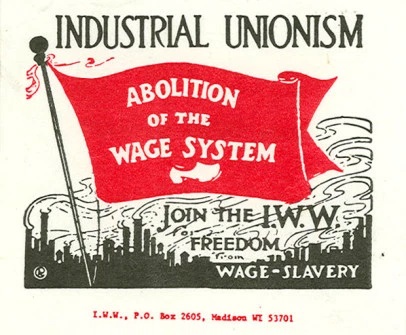
 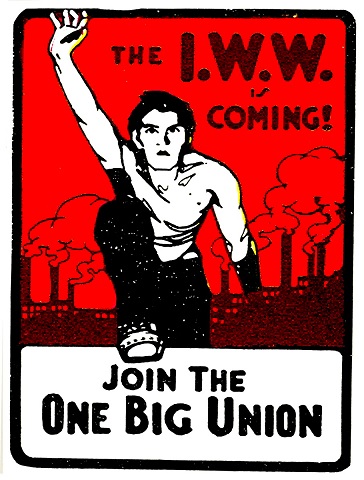 Fifty short years before King came into national consciousness, there was a labor organization called the International Workers of the World (I.W.W.) – nicknamed “Wobblies” for reasons long lost. They sought to organize unskilled workers in factories and fields, those marginalized due to limited education and no political power. Unlike other labor unions of the time, they weren’t about protecting certain skilled professions or choosing respectable members – they were the little people even among little people.
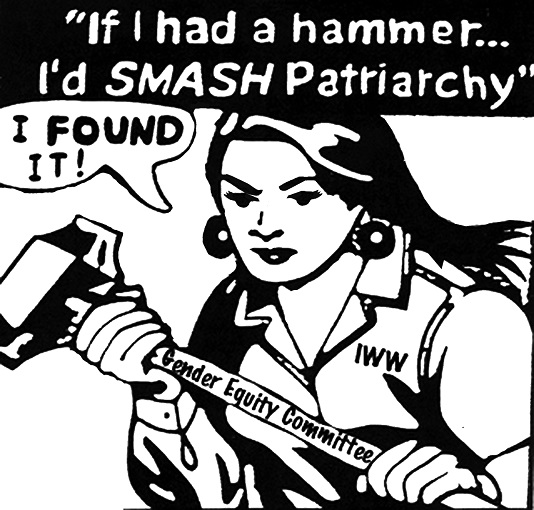 All violent acts done by labor or those of foreign descent became I.W.W. violence, no matter how condemned by the group itself, because… national security. And the I.W.W. was essentially a Socialist – maybe even Communist – organization at heart. They virulently attacked the Capitalism around them as more about entrenched power than competition and opportunity. The proverbial playing field, they argued, was in no way level.