Just Teach The Curriculum (Leave That Other Stuff At Home)

TouchyFeely1There’s a cliché in education about teaching the child, not merely the subject. The more annoying version is that students don’t care how much you know until they know how much you care. I’m not in love with either platitude, but like most things with unfortunate sticking power, they’re not entirely wrong.

Why don’t teachers and schools just focus on teaching kids the curriculum, and leave the social and personal stuff at home, where it belongs? Why do districts spend so much money on non-classroom positions, then complain they need more teachers? 

They may be phrased as questions, but they’re used as accusations. Those teachers have an agenda! They’re hemp-addled hippies, promoting New Age hokum and gender fluidity instead of teaching fractals as well as they do in Singapore.

There seems to be a deep suspicion that the only reason any of us work in the conditions we do for the pittance we earn is that we’re trying to overthrow ‘real’ America and imprison its children in an neo-Woodstock free-love tie-dye-ridden utopian wasteland. 

#ThanksObama.

So I’m going to try something a bit outside my genre – a reasonable, balanced explanation of something. (I know, I know – but we have to stretch ourselves in order to grow, right? Sometimes it works, sometimes it doesn’t – like hick-hop, or dating a vegan.)

Liberal Teachers

I’d like to make a case for why in many situations effective teaching has to mingle with social work, progressive politics, or otherwise color outside the lines. 

We’ll even set aside for a moment the question of exactly what we should be teaching and why we should be teaching it to begin with. Is it about getting into college? A meaningful career? Good citizenship? Personal enrichment? Economic gain? Compliant law-abiding members of society? Better-informed voters? Less annoying co-workers? 

Edu-Juggling

Should we be making sure they know how to not get pregnant? How to balance a checkbook? How to drive? How to work in groups? Take personal responsibility? Speak effectively in public? Read for pleasure? Read for knowledge? Write intellectually, creatively, or poetically? 

It doesn’t really matter how long you make the list, someone will point out something you’ve left off that’s absolutely essential – and they’ll probably be right.  

But let’s take the grandiose stuff off the table for a moment, and assume our primary goal is something tangible and pragmatic – content knowledge as measured by some sort of test. Surely whatever else we’re trying to accomplish, a little book learnin’ is in the mix?

So here’s Ms. Endocrine in Biology 101, teaching her little heart out. She’s a decent teacher, uses various strategies effectively, and knows her subject matter well. Her mid-town school has a wide variety of students and issues, but they rarely make the news for anything beyond the occasional sporting event or spelling bee. Some of her co-workers complain that each year’s students are less motivated and more distracted than the year before, but they’re probably just old and grumpy. 

Classroom of TeensHer 1st Period class is Biology 101 and has 34 students (this is obviously pre-budget cuts). Just under half are pretty much getting it and will hopefully do fine on the Big Test. Their actual enthusiasm for truly understanding science varies widely, but whatever. 

Let’s focus on the rest.

Some of them do fine most days, but are easily distracted and sometimes tune out at critical times. Whether or not they pass their E.O.I.s will largely depend on the kind of week they’ve had, or what time of day they take them, or what they had for breakfast that morning. 

Maybe it’s not the school’s job to feed them, or talk them through whatever drama is currently impacting their worlds. It’s not like they’re a disruption. But if we care whether or not they learn the state-mandated material, or whether they’ll pass the test, we might want to try anyway. If their academic progress is our responsibility, then their other issues are at least partly our problem

A couple of her girls miss part or all of her class at least twice a week for unconvincing reasons. Ms. Endocrine does her best to help them catch up each time, but they won’t come in during lunch or after school. She’s pretty sure there are real issues behind some of the absences, but other times they’re just cutting class and hiding out in the girls’ bathroom, so… that’s annoying.   

Smoking KidsMs. Endocrine could put more time and energy into figuring out what’s behind all of this, but she has 147 other students, many of whom DO show up and need regular attention. If it’s left on her, she’ll have to either ignore the absences or issue standardized consequences – detention. Suspension. ‘F’. 

None of which improve the odds of any of them passing that E.O.I.  None of which help the chances they’ll learn the important stuff mandated by the state. If their academic progress is our responsibility, then their other issues are at least partly our problem

Sometimes one her boys will demonstrate an aversion to authority, especially from women. Like many young people, they’re struggling to define themselves as part of and in opposition to what they see in the world around them. Maybe they’re getting mixed messages based on their race, or their faith, or their cultural background. Maybe they’re just teenage boys being pains in the buttocks. 

There are so many factors… among students, at least. Teachers are still predominantly moderate white Protestants from boring middle class backgrounds who learn best through orthodox means. 

But… Biology is Biology, right? Just… just do the work! Follow the rules!

Clones Clones ClonesExcept the research says dozens of other factors impact how or even if kids learn. The science says it matters how we adjust to actual, real students in front of us, whether we wish it were necessary or not. Ms. Endocrine COULD just teach the material. If they refuse to learn for whatever reason, she could give logical consequences – detention. Suspension. ‘F’. 

None of which improve the odds any of these kids will pass that E.O.I.  None of which help the chances they’ll learn important Biology stuff as mandated by the state. If their academic progress is our responsibility, then their other issues are at least partly our problem

One girl who did great first semester has been slipping. She confides to Ms. Endocrine that her parents want to send her to a special counselor to teach her not to be gay. Last week a young man told her he’d been dealing with harassment from other students (and at least one other teacher) over which bathroom he should use. It’s not enough to overtly qualify as ‘bullying,’ but…

Ms. Endocrine has little frame of reference for this sort of thing, and no idea if she even buys into some of these… ‘sexual identity’ issues. But it’s clear her kids are struggling with them, and that means they’re not really focused on redox reactions or photosynthesis.  

She didn’t sign up to talk anyone through sexual identity or anything else related to charting the path of one’s nethers, but simply nodding and handing them a tissues won’t move them forward either. If their academic progress is her responsibility, then their other issues are at least partly her problem.

Teaching ExperienceOne girl’s mom is sick – really sick. Two kids have undiagnosed ADD or OCD or some sort of acronym making things difficult all ‘round. Judy needs glasses, but keeps not getting them. A few are probably under the influence of something illegal, far too many are scarred by some form of sexual abuse in their recent past, and it’s pretty obvious to everyone that Gary has SERIOUS anger issues he doesn’t know how to control. 

Ms. Endocrine can’t fix their worlds for them, nor is that her job. She can barely keep track of who’s dealing with what. She can only pass along the consequences – detention. Suspension. ‘F’. 

None of which improve the results of that E.O.I.  None of which helps any of them learn anything mandated by the state or critical to becoming a well-rounded person. If their academic progress is our responsibility, then their other issues are at least partly our problem

Some of us work in very socio-economically difficult situations – kids arrive hungry, exhausted, angry, broken, sick, abused, or otherwise not ready to fully immerse themselves in the wonders of the future subjunctive or the Green Corn Rebellion. Other circumstances are far less dramatic, and our biggest challenge is that many decent kids from relatively normal families simply do not care about school or prokaryotes or what their GPA might look like in three years if they don’t “get serious.”

Troubled TeenSo we hire extra counselors, partnering with outside organizations when we can and eating the cost ourselves when we can’t. We create separate classrooms or activities and find specialized staff to mitigate the outside realities we can’t directly control. 

We try to find people and create programs to remove the most disruptive from the general population without sending them home to be someone else’s problem or no one’s problem, knowing there will be long-term consequences for all of us if they continue on their current path. 

We create positions which probably seem like we’re trying to parent kids who are no biological relation to us, and maybe to some extent we are – however inadequately. Yes, someone else SHOULD be doing that. Far too often, they DON’T. 

Forget whose problem it SHOULD be – if their academic progress is our responsibility, then their other issues are at least partly our problem.

It’s not about the feely touchy cares. Well, I mean – it IS, for many of the adults involved, but it doesn’t change much when it’s not.

What Is Jail, Mommy?It’s about trying to teach kids Biology, and English, and Math – things we can’t do without some regard for who we’re trying to teach and what they’ve brought with them that might get in the way. If it were as simple as just delivering content, we could pack them in the gym and show a video lecture each day. Even better, just send a DVD home with them – see you when it’s time to assess.

We teach the kids we have, not the fictional kids you think we have or think you went to school with back in the day. And if their academic progress is our responsibility, then their other issues are at least partly our problem.

That means staff to counsel. That means staff to advocate. That means staff and resources to try different learning environments or alternate disciplinary procedures within the existing system, somehow. That means feeding kids we shouldn’t have to feed, and approving of kids you wouldn’t approve of.

If for no other reason than hoping they’ll eventually pass Biology.

Kat

RELATED POST: Um… There Are These Kids We Call ‘Students’? 

RELATED POST: Why Kids Learn (a.k.a ‘The Seven Reasons Every Teacher Must Know WHY Kids Learn!’) 

RELATED POST: What Misfits Wish Their Teachers Knew (Guest Blogger – Courtney’s Voice)
Blue Serials (4/17/16)

It’s Testing Season. Shut Up And Be The Same.

[[{“type”:”media”,”view_mode”:”media_small”,”fid”:”1982″,”attributes”:{“alt”:””,”class”:”media-image”,”typeof”:”foaf:Image”}}]]

OK, yeah – I don’t get the video either, but the sound quality is so much better than the remaining options and besides, THAT’S NOT THE POINT. 

Stuff You Shouldn’t Miss From This Past Week

You Are Not A Test – Rick Cobb, OKEducationTruths, with possibly this year’s best dose of perspective regarding state testing and real live children. What can I say about Cobb that hasn’t been said before – at least, that’s safe for publication? He’s such an institution in #OklaEd that I’m not sure we consciously stop and appreciate what he brings to the table anymore, we’re so used to it just… happening. Speaking of which…

Reason to Believe – Rick Cobb, OKEducationTruths – “Sometimes, in the face of despair and overwhelmingly contrary evidence, I still expect something good to happen.” Amen, brother.

Show @okeducation some love this week on the Twitters, or bring him candy and flowers or something. Perhaps a good, stiff drink. #oklaed 

Now Listen Here – Laura McGee, on Cimarron Middle School, does a particularly nice job of rainbow-toasted unicorns here, while never completely cutting the kite string or hitting ‘play’ on the schmaltzy music. There’s no such thing as ‘too many’ reminders this time of year just what it is we’re supposedly trying to accomplish, and so little of it has anything to do with these silly tests. I could read this one daily for the next few weeks and never get tired of it. 

On the other hand, I have no idea what to call this site. It doesn’t look like an official middle school page, but neither is it your typical blog. Leave it to Edmond folks to ignore orthodoxy in these things. I’m 77% certain, however, that at least some of the blame/credit goes to @CordellEhrich, so follow him on the Twittering and see what other rules he’s breaking. #OklaEd. 

Today I’m A Dad – Scott Haselwood, Teaching From Here, is traditionally one of our go-to positive-way-forward guys. But not this week. This week he’s a dad troubled by what 3rd Grade Malicious Child Standardization Procedure is doing to his pride and joy. 

“WHY ARE WE DOING THIS TO OUR CHILDREN?  WHAT IS THE POINT?  TO DRIVE THE LOVE OF LEARNING RIGHT OUT OF THERE SOULS?” Well… yeah, Scott. You think Educated, Inspired voters are going to keep re-electing the folks making these rules? People with souls don’t do such things. 

Haselwood is right to be troubled, but make sure you notice the picture of his daughter at the end of the post – particularly her expression and all it implies. If you’ve met Scott, or even a photo of him online, you’ll see it immediately. She’s definitely going to be just fine. 

In the meantime, follow @TeachFromHere on the Tweetbooks. I promise, he’s normally quite solution-oriented and leaves the frustration and bitterness to others. Like, for example… me.  #oklaed 

An Open Letter to Private School Parents: Stop Trashing Public Schools – Ali Collins, SF Public School Mom, happens to feel quite strongly about her local public school. She’s not anti-private, anti-charter, or anti-anyone else, but she WOULD appreciate it if you’d stop validating your educational choices by misleading others about hers.

Public Ed advocates from ANYWHERE will appreciate this one. I love her voice and passion, applied to clarity and good sense. I didn’t know they even ALLOWED rational people in San Francisco. 

Follow @AliMCollins on the Twittering and find out what other things she feels strongly about. There are several, I assure you.

Do Look At Me That Way – Rob Miller, A View From The Edge. Teachers remind each other a LOT not to let the gig become about the gradebook or the forms. That’s OK, though, because some of us require regular reminding. 

Notice the kids in your class, and your hallway, and otherwise crossing your path. If the spirits tell you something’s up, start that conversation and take that risk. Sometimes you’ll just end up feeling awkward or foolish (unless that’s just me), but there’s a flip side – sometimes they need you, whether they realize it or not. Sometimes they need to be heard, or asked, or otherwise engaged. Sometimes.

Consult the wisdom of @edgeblogger in the Hall of Tweets and see what else the spirits have to say. #oklaed

Finally – and I really didn’t want to include this one, because it kinda stings – there’s this…

Burning Down The House – T.C. Weber, Dad Gone Wild, has been reflecting a bit lately on education and politics, outrage and empathy. He’s been questioning his own approach to confronting bad policy and attacking real people who aren’t always real to him when he does. Sound at all… familiar, Blue?

While there are a few specifics related to Nashville edu-slation and shenanigans, this one is worth a read for any of us who are trying to speak truth to power, or satirize the evils brought down on our kids in hopes of robbing them of some of their power to destroy. It might hurt a bit to read, however, because many of these doubts and regrets about approach and effectiveness are… well…

Let’s just say I’ve heard that some people wrestle with these closer to home as well.

Wrestle with @norinrad10 on the Tweetness and find out what else Oklahoma and Tennessee have in common, for better or worse. Plus, he writes real good too. 

I’ll leave you with one of my new favorite, um… video things. Adam Ruins Everything?

[[{“type”:”media”,”view_mode”:”media_original”,”fid”:”1983″,”attributes”:{“alt”:””,”class”:”media-image”,”typeof”:”foaf:Image”}}]]

Be amazing, my darlings. Don’t let the system crush you just yet. Those same kids you want to flush… well, one of them will need you this week. Be ready.

Teenagers Are Weird

Desks Tipped OverTeenagers are weird.

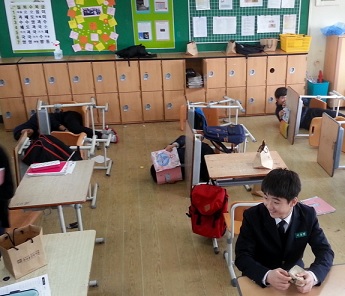
A few short weeks ago, on April 1st, I returned from lunch to discover that a couple of my girls had turned every student desk in the room onto its side or back. They were already in rather random formation for silent reading day, but this made it look like there’d been some sort of explosion.

Students entering the room were flummoxed. “What – why – WHY did you DO this?!” they demanded of me – even those who’d clearly just walked back from lunch with me and knew – at least in theory- that I hadn’t been in the room since they’d left it with me a half-hour prior.

I wasn’t upset. As April Fool’s gags go, it wasn’t a particularly funny one, but neither was it destructive. They were just desks, on their sides and backs. I stayed at the door as expected in my building and shortly before the bell was approached by a student from another hour with a pressing question. I walked in to begin class about a minute after the bell.

About a third of my kids had righted their desks and were murmur-mingling as they waited. Ideally they’d have started silent reading without my having to announce it – it’s every Friday, it’s not news – but it’s not unusual for me to have to get them started. 

Huh?!What threw me, though, was seeing the remaining two-thirds of my kids standing near their toppled desks, looking bewildered – a tad annoyed, maybe a bit hurt as well. Clearly, however, at a complete loss as to what to do. 
They’ve been with me for eight months working on mindset and grit and going around the leaf, but when confronted with a desk on its side, they had absolutely NO idea how they might possibly proceed. It would simply never occur to most of them to move past their horror over this unexpected wrinkle and begin considering options.

Like, for instance, righting their desk. Then sitting in it. 

I’d have also accepted sitting elsewhere – on the floor, or in one of the many empty extra chairs in the room. At that point even seeking outside assistance would have been an encouraging step in the right direction. 

But no. They were at an impasse. Had I not explained – with some irritation – how to proceed, they’d likely still be standing there today.

Teenagers are weird. 

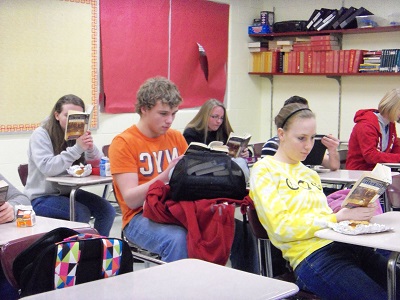
Earlier that day, I was less certain of how to react with a very different group. It was silent reading day, and for once everyone had come prepared with a book of choice. I was modeling sustained silent reading as well (a departmental priority despite grading and planning and emails and forms all vying for our attention). 

Silent ReadingNo headphones were loud enough to produce bug-beats (the pinched, high-pitch drum noises you get from ear buds when the music is too loud), and most students seemed to be engaged. It was strangely quiet.

*sniff*

Just one sniffle. No biggie. Probably not even noticeable to anyone but me. I’m weird like that.

*sniff*

Another, elsewhere in the room.

*sniff* … *sniff* … … … *sniffsniff* *SNIFF* … *snifflesniff* … … … … … *sniff*

Annoyed SnapeI refused to look up and react, because – and this is what’s so ridiculous – I had no idea whether they were messing with me or not. 

It’s entirely possible. They’re freshmen. They’d need no plan, no malice, to simply do a surround-sound sniffle throughout the hour – keeping themselves entertained and their teacher distracted and crazy for an entire class period.

But maybe not. Kids are convincingly clueless when it comes to snorts and taps and innocuous noises. They eat Cheetos at deafening volumes without realization, and I may genuinely be the only one who notices, they’re so accustomed. You’ve been at the movies with them – you know the power of their complete lack of awareness.

Thus my dilemma – was I going to disrupt silent reading to accuse a dozen kids of… malicious sniffling?

How do you make THAT phone call? Is there a Board policy to go on the D-hall slip for that?

But if they were playing me, and I let it keep going, it would just get worse. I appreciate a little jibe here and there, but you can’t let freshmen get TOO much of a foothold, or they start to lose respect for the –

This circular thinking went on for what seemed like hours. In reality, it was probably more like 10 minutes or so. All the while, my eyes were on my book, my ears on maximum alert, waiting for that next…

*sniff*

I move several tissue boxes to empty desktops around the room – silent and non-confrontational, but hopefully not TOO subtle. I notice several taking advantage. Thank god.

Teenagers are weird. 

I think my favorite freshman talisman, though, is The Paper Wave. It works like this:

Paper Wave OneA student – sometimes with an ally or two, sometimes not – is off-topic and talking or otherwise creating sounds they should not be creating. (There are plenty of opportunities to be active and engaged and rowdy and such in my class, but at other times that the opposite is necessary.) In the most egregious examples, animated conversations are being propagated right up to the point I manage to get their attention by calling their name(s) or throwing small objects at them.

“But- but- but-” (I always know it’s coming) “I WASN’T EVEN TALKING!” 

The indignation is real. The outrage is subdued but genuine. Even when I’ve had to try several times just to get their attention because they’re so engaged in their off-topic conversation, my little darlings are both hurt and offended that I’d even suggest they were doing exactly what they were doing until I interrupted. 

And they’re not even in trouble – I’m just redirecting.

When their protests gain them little beyond soft mockery, they pull out what in THEIR worlds is THE ultimate trump card – the unshakeable proof of their righteousness. After a few frantic seconds digging around to find whatever it is they were supposed to be working on, they do it. 

They do the paper wave.

Paper Wave Two“See?! SEEEEEE?!?!?!!” it says – “I have a piece of paper in my hands and I am WAVING it! WAVING IT VIGOROUSLY! Clearly this would not be possible had I been engaging in the sorts of shenanigans you so cruelly and unfairly suggest! Ha! WAVE it I do! WAVE! WAVE!”
They need not say the words themselves, of course – it’s all in the wildly flapping paper and their set little faces.

It would be annoying if it weren’t so adorable. They’re not being defiant so much as delusional; at the moment they spin around and begin grabbing at half-finished scribbles, they BELIEVE every word they’re saying, spoken or no. 

Because teenagers are weird. 

I suppose they come by it honestly. My grades are divided into three equal categories – Show Up/Turn It In, Content Knowledge, and Skills. Full explanations are on the class website and in the syllabus, in case the titles aren’t clear enough. From a parent email just last week:

“What can ____ do to improve his grade in the ‘Show Up/Turn It In’ category?”

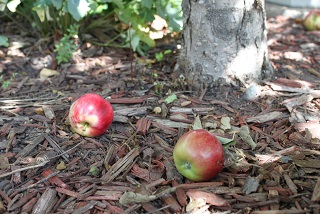
Apple. Falling. Tree.

Teenagers are weird. 

Apple. Falling. Tree.

RELATED POST: Can We Talk? (Weird Kids Edition)

RELATED POST: Teachers Are Weird

RELATED POST: Karmapologies

RELATED POST: What Misfits Wish Their Teachers Knew (Guest Blogger – Courtney’s Voice)

Blue Serials (4/10/16)

Ode to Standardized Testing:

[[{“type”:”media”,”view_mode”:”media_small”,”fid”:”1963″,”attributes”:{“alt”:””,”class”:”media-image”,”typeof”:”foaf:Image”}}]]

You can see it in students’ hollow little eyes, and read it in the angsty tone of recent edu-bloggery. The shaming season is upon us.

It’s time to label kids and their teachers based on unreliable tests given under the most bizarre and unnatural conditions. We call this unholy ritual “high standards.” It’s like the Hunger Games, but without provided supplies or anyone actually winning.

Nevertheless, there are wonderful things going on in the world of online edu-ligtenment and pedagogi-bonding – some inspiring, others sobering, and some just lotsa truth smacking you upside your weary head. 

Stuff You Shouldn’t Miss From The Past Week in Edu-Bloggery:

Dear Educator – Meghan Loyd, For The Love… “However today I was reminded that I change the world.”

Loyd has a new and improved blogsite, and has finally added that ‘About Me’ section Scott Haselwood wanted (he’s very particular about these things). The defining theme at For The Love has always been unrelenting passion for kids, for teaching, for ‘the calling’ – but something about this brief post, this week, put together this way… It kinda got to me. That’s good, right? 

Get to @meghanloyd on Twitter and find out more ‘About Her’ and her upgraded edu-licious bloggery. Watch out for the unicorns – they’re usually hanging out near the rainbows. #oklaed 

Intro to Genius Hour – Jennifer Williams, JennWillTeach, has been steering her online writing towards practical classroom strategies and reflection – as opposed to those of us who mostly lob antagonistic grenades from the sidelines. 

This week she began her foray into Genius Hour – intentionally setting aside one day a week, or about 20% of classroom time, to encourage students to explore and learn in any direction they choose. Williams goes in as neither a starry-eyed idealist following every new edu-trend nor a jaded cynic resistant to all change. She’s a realist, albeit a sassy one (it’s much of what I love about her), determined to explore anything of potential service to her kids and their growth as learners and people and stuff. I hope she keeps us in the loop for the rest of this part of the journey.

Keep @jennwillteach in your loop on Twitter and find out for yourself how things unfold. #oklaed 

In an Effort to Keep Our Kids Safe, We May be Silencing Their Voices – Jamila Carter, in this piece shared by EduShyster, offers one of the more balanced critiques of highly regimented, ‘no excuses’ type learning environments.

I’m generally hesitant to 100% condemn approaches which might work for some kids in some situations. I cringe anytime I read well-intentioned discursiveness claiming hugs and warmies as the universal keys to all academic advancement for all kids everywhere.

Carter has clearly wrestled with the complexities, however, and come through unconvinced that compliance = self-discipline or scores = progress. Her conviction is tempered by thoughtfulness, but it’s still pretty persuasive conviction. 

Follow @jubimom on Twitter and find out what else she’s thoughtfully passionate about, and @edushyster for a wide variety of investigative revelations about all sorts of edu-shenanigans.

Mentor, vb. trans. – Sherri Spelic, edified listener – Spelic has been getting all KINDS of deep and reflective lately. I’ve even considered staging an intervention.

The problem is, I really like some of the results – like this post, for instance. It’s a simple reflection on folks on the Twitters who’ve meant a great deal to her on her journey – not merely as entertainment, but as… you know… reflective thinky carey stuff types. Like, NOT what I do at all – but still totally legit and important. 

I almost issued this as an edu-blogger challenge, but as I said – not so much for the feelings over here. YOU can have feelings, however, perhaps even sharing them with @edifiedlistener on Twitter should you wish.

Happy Testing Season, Kids! – Rob Miller, A View From The Edge, MIGHT be using some of that infamous sarcasm of his again – despite Jay’s warnings about such dark methodology. Either way, this is a fun little vent on standardized testing and a good way to wrap up this week’s, um… weekly wrap-up.

I’ve GOT to work on my phrasing. 

Follow @edgeblogger on Twitter for more pith and vinegar about a wide variety of edu-topics. #oklaed 

**Filing For OK State Elections is almost here: April 13th – 15th, 2016!**

A record number of educators are running, and why not? It’s half the calendar for twice the pay and obvlously almost zero expectations – if there’s not already a promising edu-candidate in your district, you should run yourself!

Keep up with #OKElections16 here, or by joining Oklahoma Parents and Educators for Public Education on Facebook (and following @angmlittle on Twitter).

Oklahoma Education Journal has been keeping up with many of the candidates and current legislative silliness as well. You can follow them on Twitter as @OkEdJournal.

FortySixNews.com is new to me and I don’t actually know much about who they are or what they’re about yet, but they have an entire page devoted to state elections in general, which I’ve already found useful several times. They also seem to have a knack for breaking news whenever an interesting new candidate enters an Oklahoma race. Worth bookmarking this site. They’re also on Twitter at @FortySixNews.

Finally, giving credit where credit is due, The McCarville Report has come through repeatedly when I’m researching OK candidates for state office this cycle. Their mojo says they lean pretty far right (they even link to our good friends at Middle Ground News), but their stuff on edu-candidates has been spot on so far. If you’re trying to keep up, you should probably bookmark them as well. Like all the cool kids, @McCarvilleRept is on Twitter as well.

Breathe deep, my darlings – we’ve many miles to go. But if you wanted a job that was possible, you should have become an accountant or started selling shoes. This here’s one of them ‘idealist’ gigs.

[[{“type”:”media”,”view_mode”:”media_small”,”fid”:”1964″,”attributes”:{“alt”:””,”class”:”media-image”,”typeof”:”foaf:Image”}}]] 

Blue Cereal Book Review – Bound: Blogging on Gender, Race, and Culture (Tressie McMillan Cottom)

Bound Cover

Disclaimers

I don’t really do book reviews. There are plenty out there already, and I’m not very good at it. But that’s not the biggest problem with my attempting this one.

The real issue – at least potentially – is that I’m an old straight white guy about to share my thoughts on a collection of essays, the subjects of which often involve the annoying tendency of old straight white guys to think they deserve final critique of everything. 

So the irony is a problem.

To make matters worse, just before my final edit of this particular review, I managed to annoy the book’s author on Twitter while trying to be, um… adorable. Funny. Like we’re all buds and stuff. 

The kind of buds where I follow her on Twitter and she has no idea who I am and no reason to care.

Annoyed Tressie

But I’m an old straight white guy with conservative roots who’s been trying to get my head around an entire universe of realities of which I couldn’t even conceive, let alone accept, a decade ago – realities involving gender, race, and culture, oddly enough. I read, and I listen, but I’ll never be as educated as some of the people trying to explain it all to me, nor will I ever have their experiences as people NOT part of the asserted ‘norm’. 

It’s simply not possible.  

Tressie McMillan Cottom needs absolutely nothing from me.  I, on the other hand, need her. And that’s where this gets even more complicated – before I even get to the review…

See, Cottom writes at a level that stretches me, but doesn’t lose me. She writes with conviction I can’t quite fathom, but which doesn’t alienate me. She uses language I can almost keep up with – sometimes I have to reread a few passages, but I get most of it eventually – without bewildering me. And she writes in a voice that continues to draw me in – without… offending? Scaring? Wounding me – at least in too unfair a way?

Yeah, that’s where it’s kinda maybe weird, because I’m not sure I’m her target audience. I AM confident she’s not lying awake at night wondering if she’s chosen her examples or modified her rhetoric just right for maximum appeal to, well… folks like me. 

But the fact that someone of my background, my modest intellect, my mixed emotions anytime terms like ‘cultural appropriation’ or ‘intersectionality’ are bandied about, can learn and gain so much from this collection of essays is exactly WHY I feel compelled to push it on my old straight white cohorts – especially those who’ve found my rants and babbling so bewildering over the past year or two when it comes to issues of equity or socio-political power structures. 

Cottom says it better. And she’s smarter. Knowledgeable. Legit, even – degrees and everything. She writes as an academic secure enough in her expertise not to take herself too seriously while never leaving you in doubt as to just how serious she is

And that’s how half of a book review ends up being disclaimers questioning my right to even comment. And yet… 

Happy TressieThe Essays

Many of the essays included in Bound can be found on Cottom’s website, but were chosen for this collection at the request of regular readers. Some of them assume a familiarity with recent events you may not actually share, but it’s easy enough to pick up the general scenarios from Cottom’s commentary.

As I struggled to express earlier, Cottom’s written “voice” has a way of holding you agape while inserting hard truths straight into your paradigm. Take this bit from “The Logic of Stupid Poor People”:

We hates us some poor people. First, they insist on being poor when it is so easy to not be poor. They do things like buy expensive designer belts and $2500 luxury handbags… If you are poor, why do you spend money on useless status symbols like handbags and belts and clothes and shoes and televisions and cars? 

I love effective use of tone. I try it often, and succeed at it occasionally. But not like this. The undercurrents are immediate and irresistible. 

One thing I’ve learned is that one person’s illogical belief is another person’s survival skill. And nothing is more logical than trying to survive…

I remember my mother taking a next-door neighbor down to the social service agency. The elderly woman had been denied benefits to care for the granddaughter she was raising. The woman had been denied in the genteel bureaucratic way – lots of waiting, forms, and deadlines she could not quite navigate. 

I watched my mother put on her best Diana Ross “Mahogany” outfit: a camel colored cape with matching slacks and knee-high boots… I must have said something about why we had to do this. Vivian fixed me with a stare as she was slipping on her pearl earrings and told me that people who can do, must do. 

It took half a day but something about my mother’s performance of a respectable black person – her Queen’s English, her Mahogany outfit, her straight bob and pearl earrings – got done what the elderly lady next door had not been able to get done in over a year. I learned, watching my mother, that there was a price we had to pay to signal to gatekeepers that we were worthy of engaging…

Ferrell KilledSometimes her world-weariness bleeds through, even as she’s analyzing events in primarily academic terms. “When You Forget to Whistle Vivaldi” addresses the death of Jonathan Ferrell, a young black man who was in a car wreck and stumbled to a nearby home for help. Frightened (white) homeowners called the police, who in typical fashion rolled up and shot the black guy without waiting to see what was going on. 

Of course, the oft-quoted idiom that respectability politics will not save you is true. Just as wearing long johns is not a preventative measure against rape for women, affecting middle class white behaviors is not a protective measure but a talisman. In exerting any measure of control over signaling that we are not dangerous or violent or criminal we are mostly assuaging the cognitive stress that constant management of social situations causes.

That stress has real consequences…. When the object of a stereotype is aware of the negative perception of her, that awareness constrains all manner of ability and performance. From testing scores of women who know the others in the room believe women cannot do math to missing a sport play when one is reminded that Asians don’t have hops. The effects of stereotype threat are real… 

It’s like running too many programs in the background of your computer as you try to play a YouTube video. Just as the extra processing, invisible to the naked eye, impacts the video experience, the cognitive version compromises the functioning of our most sophisticated machines: human bodies…

{For} all we social scientists like to talk about structural privilege it might be this social-psychological privilege that is the most valuable. Imagine the productivity of your laptop when all background programs are closed. Now imagine your life when those background processes are rarely, if ever, activated because of the social position your genetic characteristics afford you.

That’s a whole lotta reality in so few sentences and such academically pragmatic language. I didn’t even get defensive reading it, and that’s kinda my thing when tackling uncomfortable subjects. 

Cottom’s not pointing fingers. She’s observing and analyzing, calling things as she sees them for both academic’s sake and the inherent value of honest evaluation. That I’d have to love, even if I disagreed on a few details here and there . I’m not sure I do, but it seems like I should in order to maintain a little credibility – like we’d argue collegiately over drinks or something.

In the end, Cottom may be writing in the language of degreed analysis, but her… spirit is simply nudging us to ask better questions and make better decisions. As a public educator, nothing could make me happier than for such a mindset to take wide root. 

College MoneyFrom “MOOCs, Profit, and Prestige Cartels”:

If we accept my story of profit and higher education market we get to different kinds of questions that lead to different kinds of policies. Rather than disrupting higher education because it does not serve the needs of the market we can ask the market why it does not serve the interests of human beings. 

Why, as corporations increasingly use their moral authority and political will to limit their tax exposure and their contribution to social institutions like k-12 schools, why is public education being refashioned to provide them the “human capital” they require to continue their abdication of the greater social good?

Why, indeed.

Whatever Cottom’s intent, whether or not I’m accurately discerning her thinking, I’m thankful for her willingness to put it out there for the rest of us to do with as we will. Writing is inherently risky, and writing on topics so subject to inflammatory rhetoric and intentional misunderstanding is wonderfully bold.

But to do it so well – that… that’s a gift to the rest of us. Especially those of us who arguably have the least right to enjoy the fruits of such labors. 

Thank you. 

RELATED LINK: tressiemc.com / “Some Of Us Are Brave” {Tressie Cottom’s Website}

RELATED LINK: “To learn, we have to be social”: Talking Twitter and Teaching with Tressie McMillan Cottom {discover.wordpress.com}

RELATED LINK: Tressie McMillan Cottom  on theatlantic.com {links to her writing for The Atlantic}

RELATED LINK: Tressie McMillan Cottom on dissentmagazine.org {links to her writing for Dissent}