Level Questions (More Interesting Than They Sound!)

Level One, Level Two, and Level Three Questions

It is sometimes helpful to talk about ‘Levels’ of Questions. This concept is not new, and different workshops or different subject areas define the levels a little differently. That doesn’t matter – what matters is clarifying them in a way you can live with in order to give your students a tool for asking better and more diverse questions. These aren’t things I’d quiz my kids on per se – at least not in the sense of having them put stuff in categories and count them right or wrong. They’re tools, not scientific classifications. 
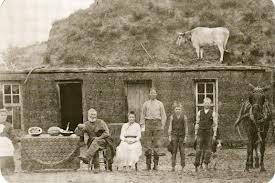
Homesteaders and a Cow on the Roof

Level 1 Questions 

Deal with factual information you can find printed in the story / document / whatever. They usually have ONE correct answer. In other words, Level One Questions Are Answered With Facts.

Level 1 Questions often…

  • clarify vocabulary or basic facts
  • check for Understanding 
  • ask for more information

It is often difficult to ask or answer Level 2 Questions without plenty of Level 1 information!  

Examples:  Who led Confederate forces at the Battle of Gettysburg? When did Abraham Lincoln die? How many people died of disease or other non-combat causes during the Civil War? Where is Antietam?
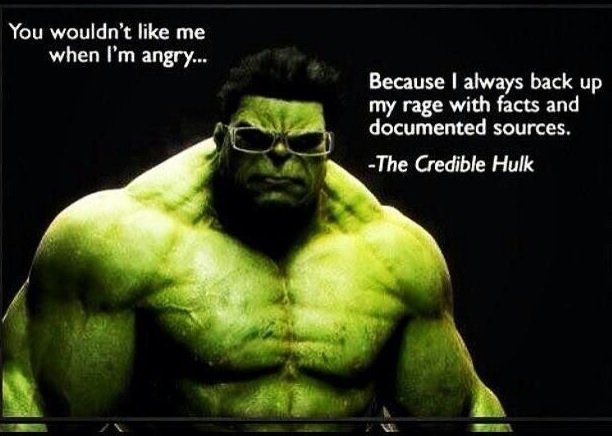
The Credible Hulk

Level 2 Questions

Deal with factual information but can have more than one defensible answer. Although there can be more than one ‘good’ answer, responses must be defended or opposed with material FROM the story or related materials. In other words. Level Two Questions Are Answered Using Facts.

Level 2 Questions might… 

  • require “Processing” of Information—analyze, synthesize, evaluate, articulate
  • require making inferences from the text
  • seek understanding from someone who knows more or has larger perspective
  • challenge the author (why did you include this but not that, or why was this phrased a certain way?)

Level 2 Questions are often the Meat & Potatoes of Social Studies, and require Level 1 information as support. They seek informed opinions. They are often the stuff we most wish our students could ask, ponder, or answer intelligently.

Come to think of it, they’re the stuff we wish other adults could ask, ponder, or answer intelligently as well.

Examples:  Why did the North win the Civil War? Was Lincoln justified in suspending some rights during the war? To what extent was slavery the true cause of the war? How did the North’s war aims change over the course of the war and why?  
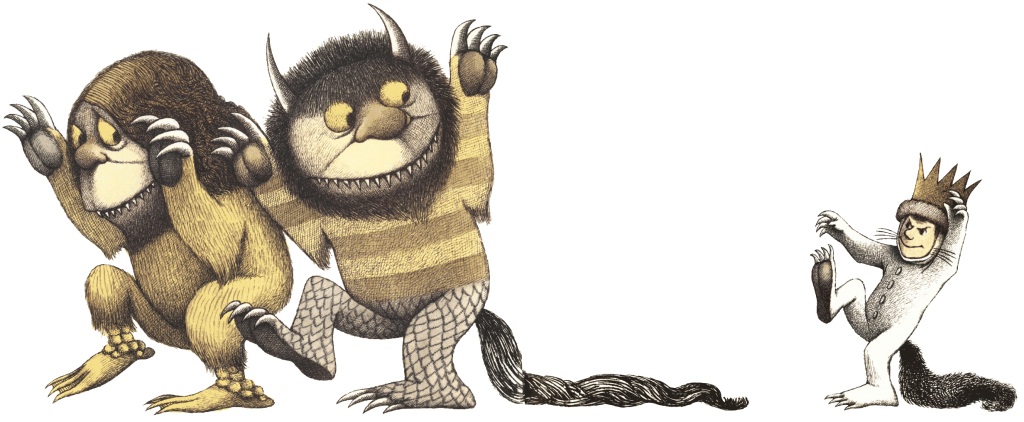
Where the Wild Things Are

Level 3 Questions

Deal with ideas beyond the text but which might be prompted by the story / document / whatever.  The assigned material is a ‘launching pad’ for these sorts of questions, but responding to them requires going well beyond the original material. In other words, Level Three Questions Have Answers Which Go Beyond The Facts.

Level 3 Questions are useful as…

  • “Big Picture” Questions, to make connections 
  • interest-builders, discussion-starters, and thought-provokers
  • ways to get your teacher off topic so you don’t have as much work to do

English Teachers love Level 3 Questions, but in the Social Studies we use them more carefully. Sometimes they’re more appropriate for discussions with your parents, pastors, or best friends. Other times they’re the most important questions there are.

Examples:  Is war ever justified? Did Robert E. Lee go to Heaven? What important enough to be worth killing someone over? Is it true Lincoln’s ghost is still haunting the White House? How would the U.S. be different today if the South had won the Civil War?

Sometimes what ‘Level’ a question best fits depends on how much you know – or how much information to which you have access.

Don’t get too hung up on correct categories so much as expanding the sorts of questions students ask. It’s also important they recognize the difference between arguments over the facts, arguments over how to best interpret the facts, and arguments which can’t be resolves using only facts. I mean, how different would our political worlds be if grown-ups could make this distinction once in awhile?

After Level Questions become comfortable, I find it helpful to vary their angles a bit.

“We have an expert visiting us tomorrow to talk about this subject. If we want to make our teacher look good – and we do – we’ll want to be able to ask thoughtful questions of her. So, pretend this subject is brand spankin’ new to you (like you do every time we review something we’ve covered for two weeks) – what other information would you request if you really, really cared? What parts would you want to know more about, if this were genuinely interesting to you? What could you ask that sounds like a question, but is really just you showing off how much you already know and understand? Finally, what could you ask the expert which would prompt involuntary ‘ooooh’s and ‘aaaahhh’s from the rest of us, it’s so thoughtful and relevant?”

Sometimes what ‘Level’ a question best fits depends on how much information you have available or to which you have access. Don’t get too hung up on correct categories so much as stretching the sorts of questions students ask.

I’d never grade my kids specifically on putting questions into the ‘right’ categories. What I do hope to help them think about, however, is the importance of understanding WHAT sort of question is being asked – whether we’re trying to dig around in history or address modern-day dilemmas. So often we think we’re arguing when we’re not even confronting the same sorts of questions. 

For example – global warming. To discuss global warming and what, if anything, to do about it, we first need to determine what facts are available. We may argue about the facts, but at least we’ll be wrestling through the same issue. That’s Level One information, and it matters in this discussion.

We also need to figure out the best way to interpret those facts, once agreed upon. What do they mean, why are they what they are, etc.? Again, we may not agree, but at least we’ll be on the same subject. That’s a Level Two conversation.

Finally, what should we do about the facts and our conclusions? Is the issue important? What’s likely to happen if we purseu Course A vs. Course B vs. Course C vs. just ignoring it? That’s a whole other type of conversation to have – a Level Three issue.

Too often, we never get past one person arguing about what changes we need to make while the other hasn’t yet accepted the basic facts being used as support. Or we think we’re debating what the facts mean when in reality we’re debating the nature of reality or the ethics of hoping the supernatural will intervene at some point. 

Getting on the same level of discussion in no way guarantees consensus, but it’s an essential element of any meaningful progress towards deeper understanding or potential agreement. 

On a smaller, ‘let’s just pass high school first then worry about that other stuff’ scale, Practicing Inquiry helps foster interest. It increases recognition and retention of essential information. It’s foundational to critical thinking. Finally, it’s a critical element of effective reading – Cornell Notes, Dialectic Journals, Annotation, Think-Alouds, etc., all build on the idea that reading is an interaction with the text, and that questions are an essential part of that interaction. But that’s for another page. 

RELATED POST: Asking Good Questions (And You Don’t Have To Mean It)

RELATED POST: My Five Big Questions (Essential Questions in History and Social Sciences)

Asking Good Questions (And You Don’t Have to Mean It)

Question GirlOne of the fundamental skills I try to teach my students is to ask good questions. And they don’t have to mean them.
I mean, it’s great if they do. If there’s something in class which catches their attention – even for a moment – by all means, they should speak up. “Why yes, Jacobie – we DID used to value ‘due process’ in this country… long, long ago.”  

But even if they’re not naturally engaged, I assure them, if they’ll throw themselves into it, and FAKE their interest and concern WELL, that works just about as well as true interrogative conviction.

We discuss the psychology behind this and look at examples. I mean, how many romantic comedies have you endured in which the two leads PRETEND to be in love – to get a job, to win a bet, to secure immmigration papers, etc.? What’s going to happen by halfway through the movie? Every time?

“Oh, but movies aren’t real life,” says the clearly-not-a-history-teacher reading this. Alright, then – how many actors and actresses, having played romantic leads, emerge convinced that they are, in fact, IN LOVE? They’ve been pretending hard enough that it “takes” – they end up believing it, and acting on it (as it were). Supermarket tabloids depend on this phenomenon.

Cedric Diggory and that girl from Twilight? They’re not in love. Never were. No one’s “in love” with Kristen Stewart – it’s not possible. She has neither emotions or a soul. But they played “in love” enough in the dozen or so Twilight movies that they no longer knew the difference. 

But Blue, you say, actors aren’t the brightest people – that’s not a fair example. 

OK, to history then. 

Throughout human history, hundreds of cultures over thousands of years have promoted some form of arranged marriage. You turn 14, and your parents introduce you to third-cousin BeauBeau. “BeauBeau, this is Beulah – your betrothed. Beulah, this is BeauBeua – your defender and provider and ruler of all you are. You are now eternally – BEAUBEAU STOP PICKING THAT OR IT WILL NEVER HEAL! – now eternally bound before God through your love and devotion to one another.”

You know the historical success rate for arranged marriages? Upwards of 90%, depending on your sources. I respectfully suggest this is largely because not being in love – not being “interested”, in our analogy – is simply not an option. She’s gonna cook, you’re gonna hunt, and together you will make babies, because that’s what you’re supposed to do.

You thus throw yourselves into it with fervor. 

More often than not, a few years down the road, you realize you’ve actually grown quite attached. Sometimes you’ve even fallen in love along the way. The intentional has become internalized. 

We have a completely different system in American culture. We follow the “tingly feeling” system. I start feeling tingly for you; you get a little tingly for me… eventually we decide to mingle our tingles. 

But then… tragedy. A year or two down the road, the tingle has faded. Maybe vanished. Worse, you’re feeling tingly towards someone else (maybe Cedric Diggory, who’s foolishly trying to tingle with Kristen Stewart. SHE CAN’T TINGLE, CEDRIC – WE’VE COVERED THIS.) I’m feeling a bit tingly towards @sluttyunicorn17 who I met online #dontjudgeourlove.

We’re not tingling together anymore! Our love… it is dead – like our interest in Oklahoma History, or Kristen Stewart’s eyes, for example.

Because divorce is expensive, we go to a marriage counselor, who will tell us – in essence – that we need to fake it harder.

She’ll dress it up as ‘reflective listening’ and ‘love languages,’ which is fine, but they all come down to a simple principle – you need to pretend harder to care even when you don’t right that moment. Do this long enough and odds are good you’ll start to feel it again. At least partially. 

Once introduced, this is an ‘open charade’ in class, all year. If students will pretend to be interested in whatever history we’re studying at the time – the people, the events, the issues – chances are good they’ll become more interested… at least slightly. Comprehension improves, as does retention – the kind of things you’d expect when genuinely interested. Like exercising or practicing the piano, meaning it deeply is great, but doing it because it needs done is almost as effective in practical terms. 

Such is reality – it’s the thinnest of gildings, yes?

My first several wives would argue that I’m not the best source of relationship advice – but pedagogically I’m on solid ground. Nothing tricks your brain into learning like pretending you care and asking really good questions. And nothing’s more exciting for a teacher than teenagers coming up with meaningful, unexpected, thoughtful questions – sometimes questions you can’t possibly answer! Maybe, with enough information, enough time, enough understanding, they could begin to answer them – or maybe not. Isn’t it great?

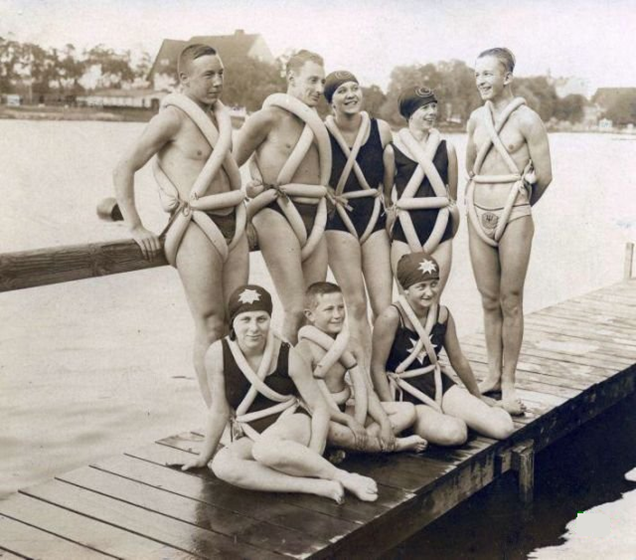
Usually we begin with something easy – provocative, but accessible. I like photographs as a first step:

Iffy Swimwear Choices

How many questions can you come up with? Come on, don’t just move on – try for a moment. Ten good questions? Twenty? The more questions we ask, the more details we notice. We think of things we wouldn’t have thought of if we were just ‘observing’. Here’s another:

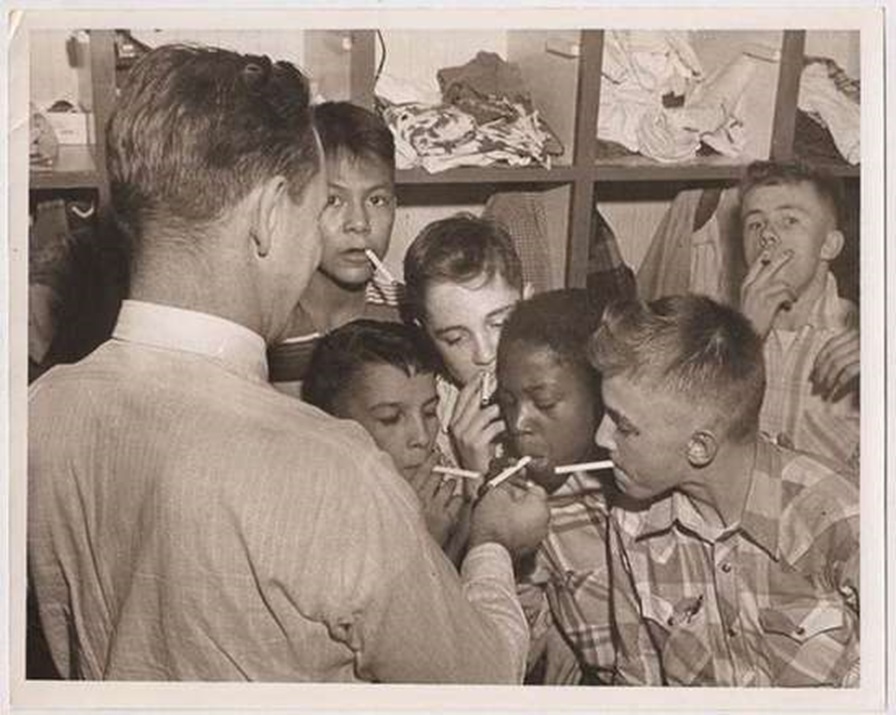
Smoking Boys

Stop and see how many you could ask. The first dozen or so are usually fairly predictable – when was this taken? Where are they? Who’s the man? Why is he giving these boys cigarettes? Is this a locker room? Is he smiling? Have they smoked before? Was smoking not evil at this time? Is he Philip Morris?

Eventually, though, some really interesting things begin to emerge – how do we reconcile the racial diversity of the boys with the time period indicated by the clothing, hair, and b&w photo? Is this a boys’ home of some sort? Are these actually cigarettes? Where’s the lighter? Are they candy? Is this a reward for something, or a lesson of some sort? What was the photographer intending to convey? And who IS that MAN?!?

It works with other types of visuals as well…

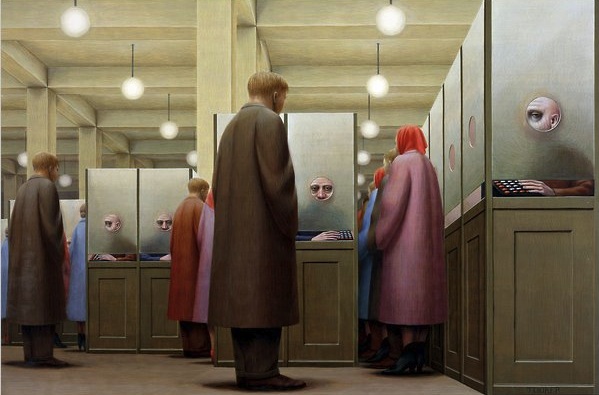
Government Bureau - G. Tooker

 “Government Bureau” (George Tooker, 1956)

The key is to S L O W  D O W N and prompt everyone to be involved. How you do that is up to you, but we have to let curiosity have time to brew. It doesn’t have to be curiousity specifically ABOUT anything represented here – just the experience itself is a good foundation for everything else ever.

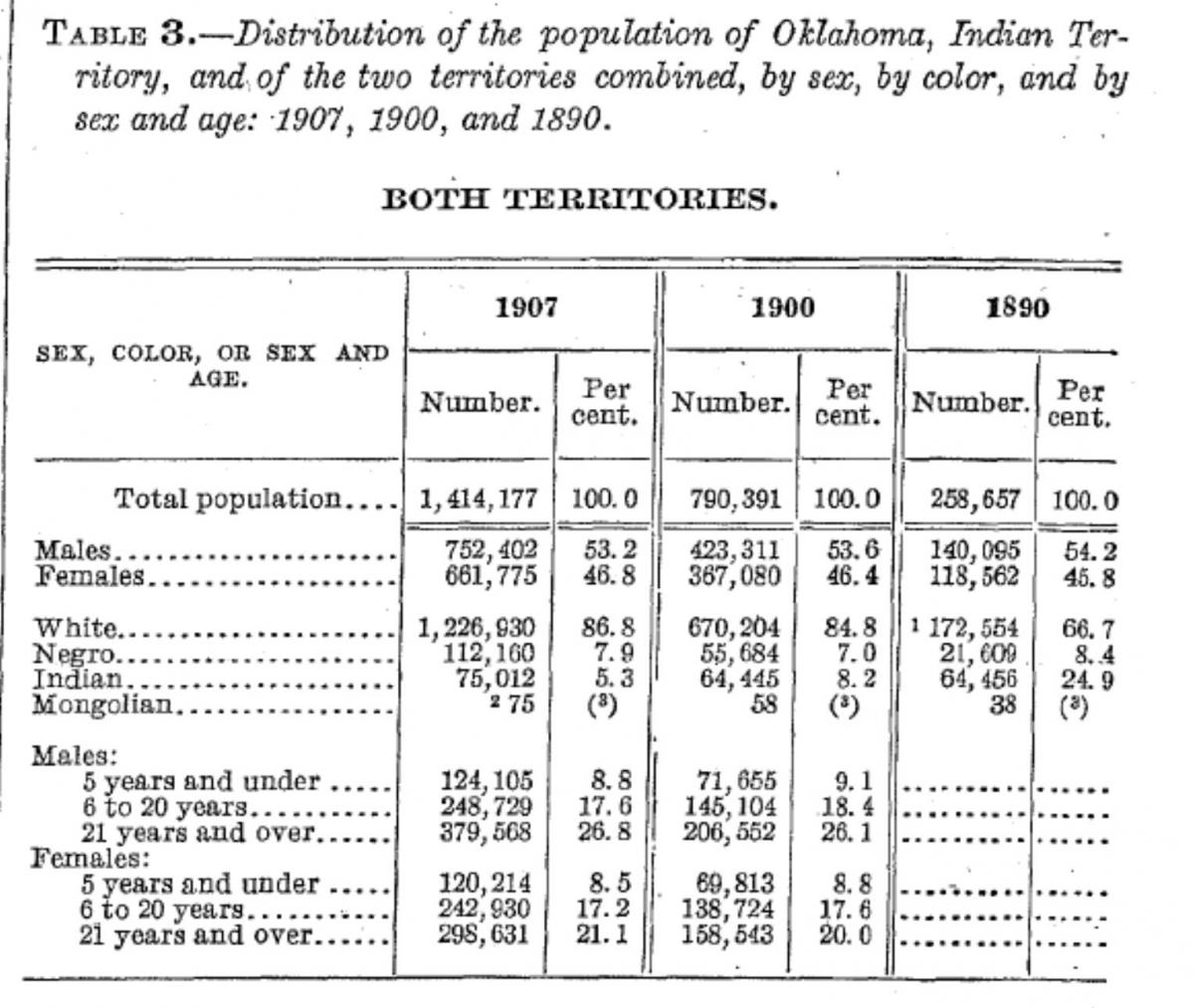
OK Stats

Scoff if you like, but you haven’t lived the good life until you’ve had to regain control of a room of teenagers (or teachers) arguing the implications and inferences of a good table full of numbers or the most important questions to ask about a swell bar graph. Seriously – who doesn’t love a good bar graph?

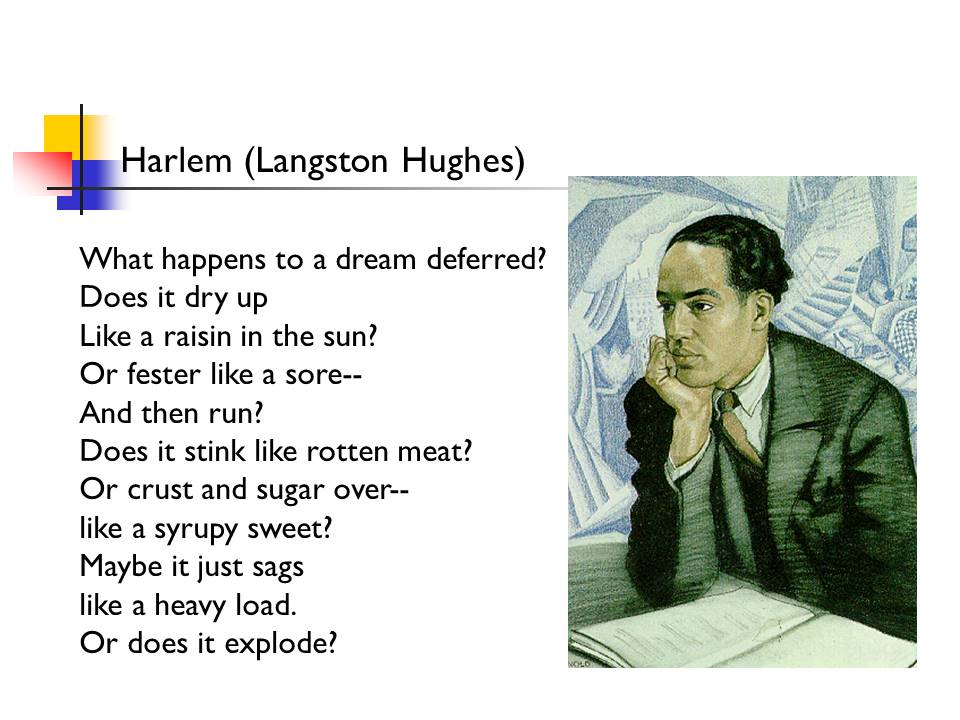
It works with text as well, if you’re so inclined… 

Harlem - Langston Hughes

I have a story that goes with this one, actually. See, I found out at the last minute one year that I was going to teach 10th grade U.S. History, and I had never really –

Actually, that one’s better in person. 

You don’t have to use these of course, or these kinds of visuals or text samples, or this many, or whatever. I am a big fan, however, of starting with ‘non-threatening’ material when learning and practicing a new skill. I like to start with stuff I find amusing or strange, and transition into the legit stuff. Whatever gets THEM doing more ASKING is YAY!

RELATED POST: Level Questions (More Interesting Than They Sound!)

 RELATED POST: My Five Big Questions (Essential Questions in History / Social Sciences)

RELATED POST: What Was Your Question?

RELATED POST: Who’s Asking? (from Alfie Kohn on AlfieKohn.org)

My Teaching Philosophy

Dammit JanetIt’s inherently vain to post lesson ideas, particulary those including thoughts on how to teach something in this or that situation. Most everyone reading this blog or receiving the email updates already does many things better than me and even more stuff of which I’ve never even thought. And yet…

When I have teachers share their own ‘best ideas’ in workshops, they usually hate the part where they’re sharing, but love the part where other people are demonstrating what they do. Sometimes new teachers just need some ‘seed’ ideas to get going, or to add some variety to their relatively young toolbox. Some of my favorite blog posts in the past six months have been other teachers sharing what they’re doing in class, or their personal pedagogy. 

So I’ve been gradually building a Classroom Resources section to Blue Cereal. Parts of it are being used regularly, if Google Analytics has any validity. Others… well, they’re still in progress.

But it’s June. Let’s talk about Skills. 

[[{“type”:”media”,”view_mode”:”media_small”,”fid”:”3″,”attributes”:{“alt”:””,”class”:”media-image”,”typeof”:”foaf:Image”}}]]

Actually I just wanted to work in that clip. We’ll talk classroom strategies, but first let’s talk Teaching Philosophy. Why listen to someone tell you WHAT to do or HOW to do it if you don’t share any common ground as to WHY?

Panda Vomits RainbowsIf you’ve been with me in a workshop setting, or know me at all, you know I’m a big fan of trusting teachers to know what’s best for their students in their reality in their subject. We absolutely MUST stretch ourselves as professionals, and push past our so-called ‘comfort zones’, yes. Always. But at the other end of that reasoning is a contrasting but equally important truth – follow your gut. Listen to the experts, trust those you trust, think with your brain, but when it’s time – trust yourself.
Kinda touchy-feely, right?

Nothing I model in workshops, write in instructions, or post on this website is intended to be even a little prescriptive. None of it’s static. At best it’s a series of efforts to capture some small part of a mindset, the expressions of which will vary greatly by time, place, grade level, student realities, class expectations, and your personal styles & preferences. The important thing on which to focus is this: everything you’ve done up until now is wrong and backwards and you’re ruining the future. 

Just kidding, except for about four of you – and you know who you are.  Actually my philosophy is closer to this:

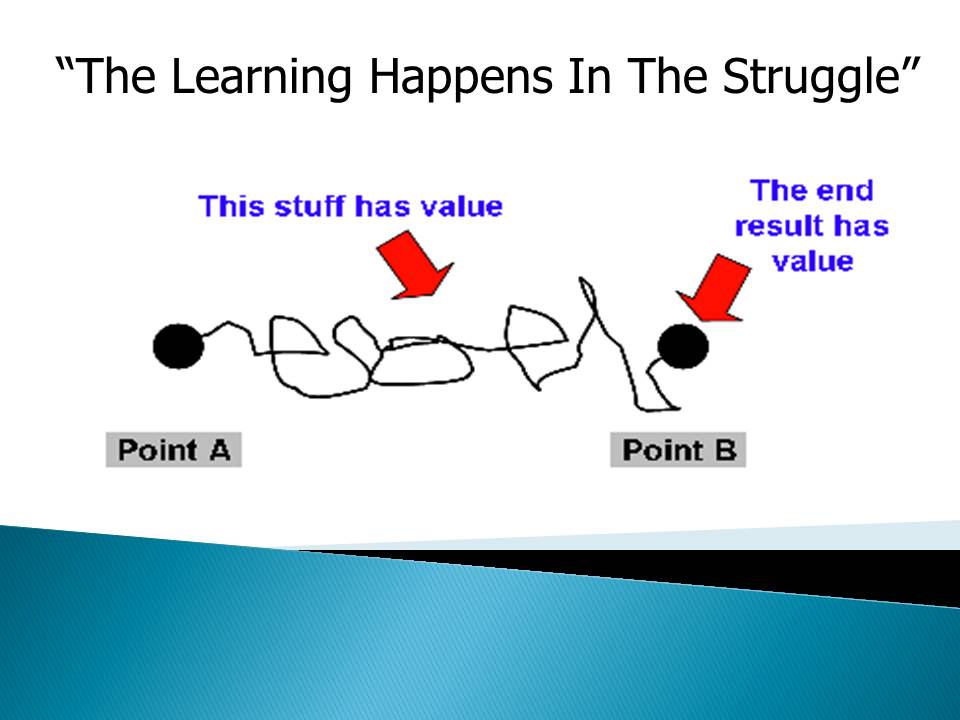
The Learning Happens in the Struggle

I totally stole this from Ayn Grubb in Tulsa Public, but she never reads my stuff so she’ll never know. Besides, teachers justify pretty much everything in the name of “IT’S FOR THE CHILDREN.”

‘Point A’ is where students are when they come to us – what they know, what they can do, what they think it’s all about, etc. Lest this visual seem overly simplistic, keep in mind that all 168 of your little darlings start at a different ‘Point A’, so already there’s a challenge to this whole ‘teaching’ thing.

‘Point B’ is where you’d ideally like to get them by the time they walk out of your class at the end of the year – what they really need to know, should be able to do, and their mindset about your subject and learning and all that stuff. All of ‘Point B’ is important, even though well-intentioned equally idealistic people are going to suggest in sneaky ways that it’s not. The content matters – our lil’ darlings won’t all just personal-journey-of-discovery it on their own. The skills matter as well, no matter how special and precious and unique and misunderstood Mummy thinks her baby be. (“He’s just not a writer – he’s more of a ramble-incoherently-while-I-swoon style of learner, and I think it’s wrong to try to force them to all be the same!”)  

But here’s the thing…

That middle part, what we often refer to euphemistically as ‘the journey’? Yeah, that part matters a whole lotta lot as well, and it’s the part we tend to shortchange. 

My best students come to me never having broken an academic sweat in their lives. School has never been difficult for them, and while they are sometimes rather detached from any real value or purpose for any of it, they play the game and their teachers just LOVE them and they all have 104% in every class. The flip side of this is that the first time they’re confused by a concept or struggle with an expectation, they think either I’m unreasonable and/or insane, OR that – oh no, what if – maybe they’re stupid after all!?! 

Neither of these is normally the case. 

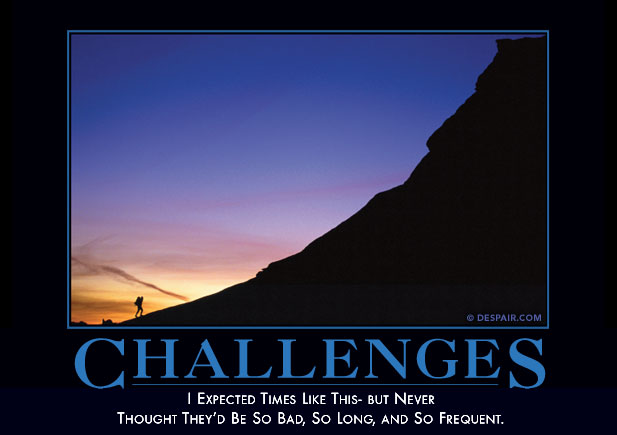
It’s OK that it’s hard. It’s OK that you’re confused. It’s even OK if you fail from time to time – an idea we seem to worship when it’s time to buy motivational posters but loathe when it’s even hinted at in real life.

Demotivational Challenges

The students I’ve failed most unforgivably aren’t just those who get an ‘F’ in my class but those who pass through without ever being stretched or challenged or forced to outdo themselves a little. This is trendy to say at the moment, but that doesn’t make it less true – struggling and failing and recovering and refiguring and adjusting and attempting and moving forward until you crash and burn again… that’s called ‘learning’.

If they don’t learn to risk, succeed, fail, get confused, frustrated, have epiphanies, rewind, triumph, etc, with ME when it’s relatively SAFE and I love them and desperately WANT THEM TO MAKE IT, one of two things will happen: (1) They’ll learn these lessons in much more painful ways later in high school, college, marriages, careers, parenting, etc., when the stakes are much higher and there’s no tutoring in the library at lunch, or (2) They won’t learn them, and their life will suck.  

The learning happens in the struggle. If there’s no struggle, there’s very little real learning. This is a whole prolonged thing we could discuss, but for now I’m just laying it out there as my personal philosophy.

For those of you who are deeply and emotionally invested in the whole ‘grit’ argument, keep in mind that students whose entire worlds are all about chaos and struggle and despair require a slightly different sort of assistance. If the comfortable kids need to be made uncomfortable, it is equally true that sometimes the best thing you can do for a child of dysfunction is provide a little security and predictability in their daily experience. And maybe some protein.

I realize that was a painful amount of hope and inspiration for some of you, but that’s what you get with me – pandas and rainbows. I believe that children are the future. Teach them well and let them – well, you get the idea.

[[{“type”:”media”,”view_mode”:”media_small”,”fid”:”146″,”attributes”:{“alt”:””,”class”:”media-image”,”typeof”:”foaf:Image”}}]]


NEXT: Asking Good Questions (And You Don’t Have To Mean It)

I Read The News Today, Oh Boy… (6/5/16)

[[{“type”:”media”,”view_mode”:”media_original”,”fid”:”2091″,”attributes”:{“alt”:””,”class”:”media-image”,”typeof”:”foaf:Image”}}]]

The 2016 Legislative Session is over, more or less – although we’ll be suffering from the fallout for at least another year.

If you’re aware enough of what’s going on statewide to be annoyed, but haven’t had the time or inclination to read up on every issue, here’s the Blue Cereal Guide to the Latest Oklahoma Clusterfoolery – State Budget Edition. You’re welcome.

My Favorite

The State Budget / Tax Polices

Because “throwing money at a problem doesn’t solve it,” our legislative leadership argues, eliminating all revenue and funding for constititutionally mandated functions MUST be the solution. Oklahoma Logic. 

‘Behind Smoky Doors’: Last-minute bills breed public distrust – David Blatt, Oklahoma Policy Institute (6/2/16) – “In May, most of the rules go out the window. Brand-new bills can be introduced, amended, and approved with lightning speed, with little if any opportunity for the public – and most legislators – to understand what’s going on.”

This part of the budget deal may be the greatest threat to Oklahoma’s economy – Gene Perry, Oklahoma Policy Institute (6/2/16) – “The link between education levels and state prosperity is clear. That’s why it is especially troubling that the long-awaited budget proposal from the Oklahoma Legislature and Governor Fallin would decimate funding for higher education.”

Two Things: Not A Flat Budget; Please Vote – Rick Cobb, OKEducationTruths (5/31/16) – This… “budget” our legislature finally threw together at the last minute is a mess, and not even faking it very well. 

Oklahoma Makes the Poor Poorer – The New York Times Editorial Board (5/28/16) – Our legislature this session was embarrassing and horrifying enough to grab attention in NEW YORK. Think about that for a moment. 

With colleges and universities taking harshest budget cuts, leaders worry about future of higher ed – Kathryn McNutt, The Oklahoman (5/29/16) – Why? Because these schools have been reckless and irresponsible enough to bank some of their resources. Fiscal responsibility is UNFORGIVABLE to the Oklahoma Legislature of 2016.

Where next year’s shortfall starts: Budget counts on $600-$750 million in one-time revenues – David Blatt, Oklahoma Policy Institute (5/27/16) – “Ultimately, the Legislature failed to make those hard choices and instead slapped a bunch of band-aids onto gaping wounds.”

New details: State budget agreement slashes funds for school activities and textbooks – Andrea Eger, The Tulsa World (5/27/16) – And before you ask, yes you can teach w/o textbooks. But that means you need other resources or tech instead – the sorts of things schools usually buy with – wait for it – “textbook money”. 

Republicans Willing to Let Oklahoma Burn – Arnold Hamilton, The Journal Record (4/28/16) – The entrenched right wing is willing to take a few lumps if it means clinging to their faith in destroying all public sector spending for their fiscal overlords. It’s almost a religion for them.

Ten Things: OCPA Math – OKEducationTruths (4/19/16) – If you simply make up stuff and choose numbers that sound like they fit, things are actually going pretty well…

The Best Resources For Understanding Why Money Matters To Oklahoma Public Schools – Oklahoma Education Journal (4/20/16) – A links page specific to an important topic, with just enough info to help you find what you need? What a great idea!

The Facts About Oklahoma Education – Oklahoma Education Coalition

Just Teach the Curriculum (Leave That Other Stuff At Home) – Blue Cereal Education (4/16/16) – My take on all this ‘wasteful spending’ on ‘non-teaching positions’ schools are doing, according to those needing a few more distractions.

Oklahoma’s Revenue Options for the Budget Emergency – Oklahoma Policy Institute (4/11/16) – Here’s a crazy place to start: PUT DOWN THE SHOVEL.

Aides, supporting positions proliferate at Oklahoma public schools – Ben Felder, The Oklahoman (4/10/16) – WHY do schools keep hiring people who don’t actually TEACH?! It turns out there are some pretty good reasons…

Why tax increases would be less harmful to Oklahoma’s economy than budget cuts – Gene Perry, Oklahoma Policy Institute (3/7/16) 

Oklahoma’s Real Gamblers – Rob Miller, A View From The Edge (3/2/16) – Hint: they’re the ones playing games with YOUR money…

The tax shift rears its head – Gene Perry, Oklahoma Policy Institute (2/16/16) – When tax cuts for the rich don’t work, cut taxes for the rich MORE and go after the poor. What could possibly go wrong?

10th Amendment & #OklaEd – David Burton, Idealistically Realistic (2/11/16) – With States’ Rights comes States’ Responsibilities… this is one of my favorite posts EVER on the subject of state government and public education

Oklahoma state agencies give raises despite executive order – Randy Ellis, The Oklahoman (2/7/16) – This was the trigger for a complete and meltdown on my part. But I was right. 

This chart shows why Oklahoma schools are broke… – Lucas, The Lost Ogle (1/26/16) – It’s sad when the humor sites make so much more sense than the ‘experts’ and those in power.

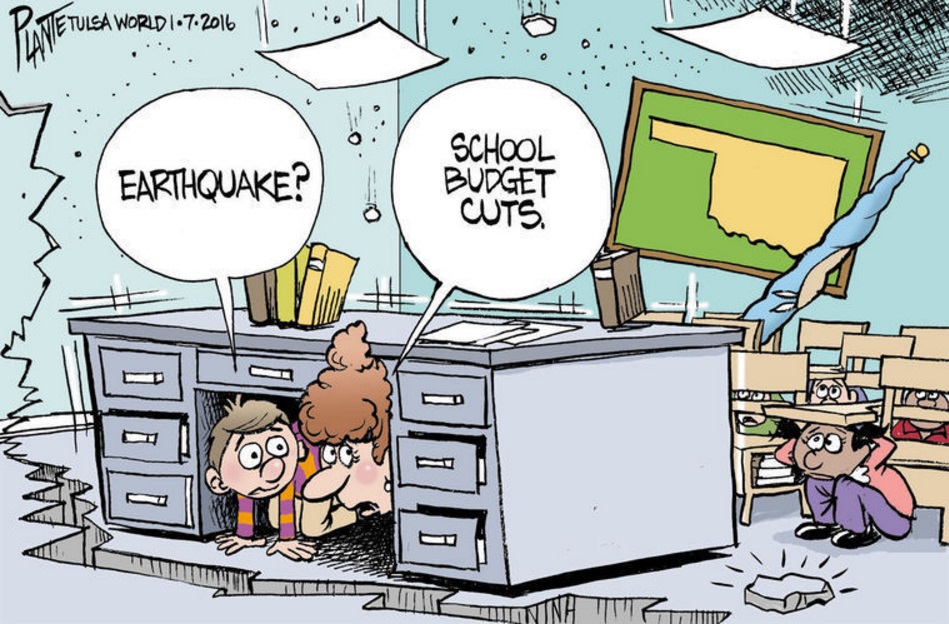
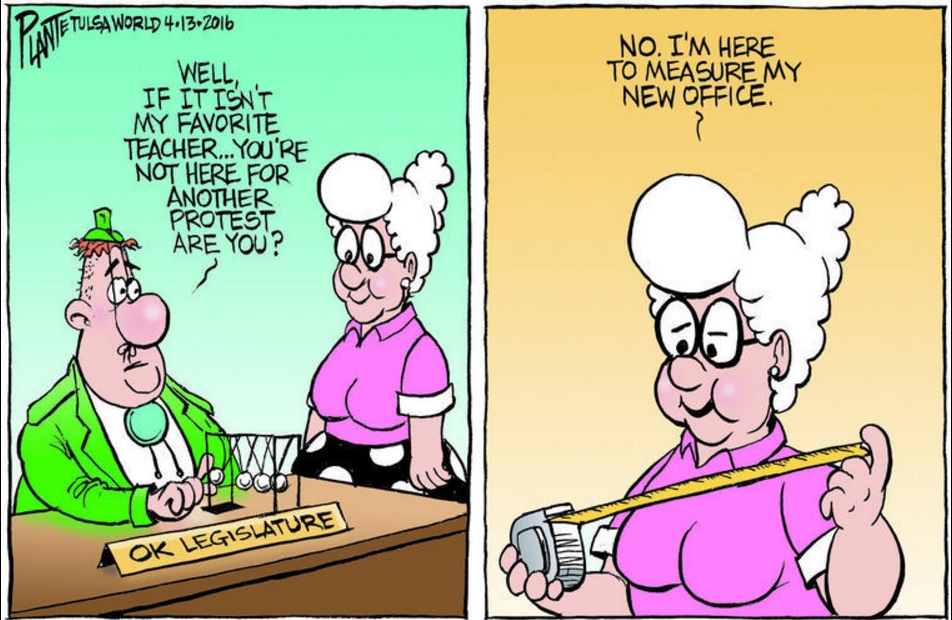
Plante Budget Earthquake

Teacher Pay / Teacher Retention

One way to deal with a shortage of teachers is to crash and burn the budget so we can’t afford more than one adult for every hundred or so kids – not MY favorite solution, but it’s something.

I’m bewildered that the state had to form a 60-member commission to study this issue for a year in order to come up with a few common sense measures (make it easier to move your certification here from other states) and some truly inane ideas (how about some ‘How Great It Is To Teach!’ flyers w/ pictures of happy educators on them?) That’s nothing compared to the ridiculous slew of promises from the Governor and any number of legislators this session that TEACHERS were all getting this GINORMOUS raises because they just LOVE us SO MUCH! It’s prettty hard to insult Oklahoma teachers more than the state leadership normally does, but that pretty much did the trick.

NO EDUCATOR ANYWHERE IN THE STATE believed for three seconds that any of this was even remotely plausible. Now, it’s always difficult to tell when our elected leaders are being cynical to the point of viciousness and when they’re simply so delusional that they probably shouldn’t be left home alone – at least not without removing all sharp objects and turning off the gas. But I for one grew weary of that particular brand of salt being constantly rubbed into our other wounds. 

State Could Fall to Bottom in Average Teacher Salaries – Jennifer Palmer, Oklahoma Watch (5/27/16) – “Boren and other supporters acknowledge that a higher sales tax is not the preferred solution to education funding, but say they have no other choice because state lawmakers refuse to address an education crisis that could harm the state for generations.”

Cuts to education spending hurt more than just our children (Guest post: Christiaan Mitchell) – Christiaan Mitchell, Oklahoma Policy Institute (4/21/16)

Teacher pay raise proposals probably going nowhere this session – David Blatt, Oklahoma Policy Institute (2/18/16) – Which is probably better than “we’re cutting your insurance and charging you for rolling chairs but on paper we’ll be able to claim you make more.” 

A Plan to Plan to Plan – Rick Cobb, OKEducationTruths (1/25/16) – A $10,000 raise for teachers without any new taxes? That’s… that’s… not how numbers work.

Teacher recruitment legislation not enough to fix Oklahoma’s teacher shortage (Guest Post: Jennifer Job) – Jennifer Job, Oklahoma Policy Institute (12/17/15)

Oklahoma’s teacher shortage is not just about salaries (Guest Post: John Lepine) – John Lepine, Oklahoma Policy Institute (12/14/15)

Plante Edu-Cartoon

I know it’s a lot to process, and you don’t have to read it all at once, but this is YOUR money, YOUR state, and YOUR kids’ future – short and long-term. Have a friend do the same, then talk about it and see if you’re coming up with the same interpretations. Heck, get a little circle together and divide them up – an adult version of the ‘jigsaw’ strategy every teacher knows in some form or another. 

GET INVOLVED. GET THE PEOPLE AROUND YOU INVOLVED. VOTE LIKE IT MATTERS. 

Because, you know… it does and all. 

[[{“type”:”media”,”view_mode”:”media_small”,”fid”:”2092″,”attributes”:{“alt”:””,”class”:”media-image”,”typeof”:”foaf:Image”}}]]

Open Letter to Legislators: Should You Legislate the Bible?

Church & State Streets

This post is addressed primarily to Oklahoma legislators or other office-holders in my poor, dysfunctional state. Since most of them won’t openly admit they read this blog obsessively – although obviously they must – loyal readers should feel free to send it to them or ask them these questions when calling or visiting their offices. I suspect some of our colleagues in neighboring states might find it relevant as well.

Ask not for whom the blog posts; it posts for thee. 

Any Oklahoma politician – current, previous, or aspiring – who wishes to respond is welcome. The comment section is always open, but if you have more than a few hundred words, I welcome you as a Guest Blogger – whether I agree with you or not. 

Dear Legislator:

Should you legislate the Bible?

I ask because it seems every time we read about something controversial being pushed through the legislature, the story is accompanied by a quote from the bill’s sponsor blaming God. 

We’ve been told that Jesus is against handgun registration, that the Bible frowns on people of different genders using neighboring bathroom stalls, and that while God doesn’t want young ladies to know where babies COME from, He DOES insist they know how magical and special the little critters are up until they’re born, at which point He loses complete interest in them. 

Jesus never did like children, as I recall. 

Dan Fisher - Black Robed RegimentJust last year we were assured that God wanted us to fudge our own history in order to play Him up – that He’d overlook our failings if we’d only brag about our national infallibility a bit more boldly. As it says in His Word, “Pride cometh before even more things to be proud of.”
He’s apparently uninterested in our tax policies, health care, or how we treat widows and orphans, but was QUITE worked up about Common Core for fear that someone at some point might read a dirty book – something inconceivable under existing guidelines. There’s simply no good reason to write about lust, rape, family dysfunction, or other perversion; such things suggest we are a fallen people in need of redemption. Better we stick to wholesome, happy stories like those in the Bible.

Our Legislators seem to have difficulty distinguishing between Yahweh, the “I Am”, and Tinkerbell, whose very existence hangs by the thread of our applause. Other times they treat the Lord Their God as a sort of corporate sponsor, demanding more patches and stickers pushing His brand or He’ll withdraw His funding.  Neither makes sense to me based on the Bible I remember from my days of faith, so I’m hoping you can help me clarify. 

Should you legislate the Bible?

If not, would you maybe briefly address what role faith should play for public office-holders in an intensely religious state such as ours? After that, thank you for your time – we’re good. 

If so, would you please explain how this is consistent with the First Amendment and established Case Law regarding separation of church and state? How do you justify citing the Holy Book of one specific faith – one whose meaning is regularly debated even by those who accept it as divine – to make secular law?

How do you reconcile your Oath of Office (“I… do solemnly swear… that I will support, obey, and defend the Constitution of the United States, and the Constitution of the State of Oklahoma…”) with elevating your personal theology above either constitution? Did you lie when you took the oath, or do you consider yourself above keeping your word? If you believe the Bible is a higher authority than secular law, shouldn’t you have objected to taking this oath as a matter of principle?

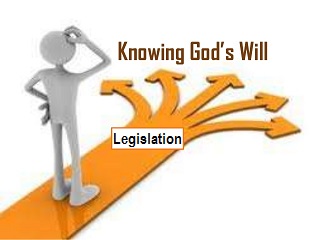
Knowing God's WillIf you support legislating the Bible, could you give us an idea of which parts you believe are appropriate to be written into secular law?
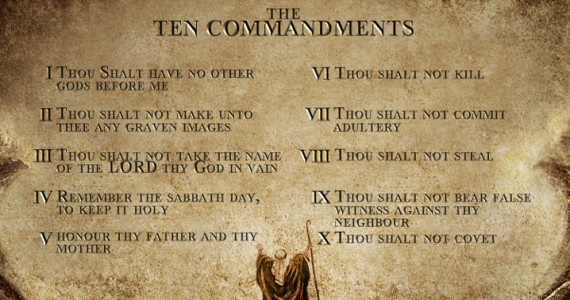
There’s been quite an obsession lately with having the Ten Commandments posted at the Capitol. Maybe we could start there. 

One – “I am the Lord your God, who brought you out of Egypt, out of the land of slavery. You shall have no other gods before me.”  Should this be secular law? No ‘gods’ before the Jewish god? How might we enforce that?

Two – “You shall not make for yourself an image in the form of anything in heaven above or on the earth beneath or in the waters below. You shall not bow down to them or worship them; for I, the Lord your God, am a jealous God…”

This one’s tricky. God isn’t apparently opposed to statues in general, only those which become objects of such obsession that the symbol takes focus off relationship with the divine – ceremony over substance, as it – 

Oh! Um… guess I answered my own question there. 

Awkward. 

Three – “You shall not misuse the name of the Lord your God, for the Lord will not hold anyone guiltless who misuses his name.”  For some reason this is commonly interpreted as exclusively about swearing. Sounds to me it pretty clearly includes those who claim to be acting in God’s name for selfish ends. 

Four – “Remember the Sabbath day by keeping it holy. Six days you shall labor and do all your work, but the seventh day is a sabbath to the Lord your God. On it you shall not do any work, neither you, nor your son or daughter, nor your male or female servant, nor your animals, nor any foreigner residing in your towns…” 

Why is this not law? This one would be so easy. And obviously it’s important to God – he made sure this was one of the TOP TEN, while stuff like homosexuality or handgun regulation didn’t even make the list. I assume you’re working on a bill of some sort…?

Five – “Honor your father and your mother, so that you may live long in the land the Lord your God is giving you.” I’m open to suggestions on this one. 

Ten CommandmentsSix – “You shall not murder.” Hey, this is a good one! This is already against the law, right? Score one for the Commandments! 

Seven – “You shall not commit adultery.” Biblically this includes divorce and remarriage. How many of your peers in the legislature are on their second spouse? How many have had pre- or extra-marital sex? I’m asking because, as with stores being closed on Saturdays, God obviously considered this one WAY more important than some of the stuff being legislated in His name. I just wondered why this one keeps getting skipped. 

Eight – “You shall not steal.” Too many easy jokes to be made here when the state is involved. Instead, we’ll count this one as another win for Commandments as Secular Statute. That’s what, two?

Nine – “You shall not give false testimony against your neighbor.” So… lying about someone else? Like, how you get elected, I guess? Or the various political games which are considered the norm ‘round those parts? Or the way various demographics or professions are caricaturized across the state and the nation, not because it’s true but in order to justify mistreating them? 

Hello?

Ten – “You shall not covet your neighbor’s house. You shall not covet your neighbor’s wife, or his male or female servant, his ox or donkey, or anything that belongs to your neighbor.” Coveting is like desiring, or lusting, yes? But in a negative way? I’m not sure how you legislate away want. We seem intent on creating it, actually.

There are entire books in the Old Testament dedicated to rules and laws – would you clarify which you believe should be enforced today? Incest is in there, and still a ‘no-no’ all these years later. Eating shrimp is also a severe offense – why are we letting that slide? Homosexuality is arguably frowned on in the Old Testament, as is wearing mixed fabrics or allowing women to go about their business in the community while they’re on their period. Should we pick and choose, or just put all three into one bill?

Denial PeepsFinally – and please, pardon my ignorance – why is it that nothing from the New Testament ever seems to be cited as justification for state legislation? Do we not believe the New Testament any longer, or is there something else I’m missing?

Liberals love to talk about Jesus’ treatment of children and the poor and such when it’s time to make public policy, at which point we’re firmly assured by those in power that such issues are best left to the church, the home, and private agencies. Could you help me understand why the ‘Thou Shalt Not’s are so essential, while anything helpful to the hungry, thirsty, foreign, poor, or sick – are clearly off-limits?

I wish there’d been professional law-makers and interpreters around while Jesus was physically walking the earth. They could have had these sorts of conversations and – assuming someone was willing to devote some papyrus and ink to recording them – we’d have a MUCH clearer understanding of how this whole law/grace balance is supposed to work. 

Sheep and GoatForgive my not being more up-to-date on my Bible scholarship. I’m sure there are good reasons to ignore Matthew 25:31-46 while focusing on the extensive time Jesus spent worrying about bathrooms, sexual immorality, handgun restrictions, and inadequate border patrol. That’s why I’m asking. 

The most likely explanation is that I’m missing something obvious to you and your legislative peers. Otherwise, the rhetoric coming for OKC over the past several years would be nothing but a stream of self-serving cynicism, glaring contradictions, and rampant hypocrisy. 

I look forward to better understanding this complex and emotional issue. Thank you for your time.