What IS An ‘Academic’ or ‘Historical’ Argument? (And What Is It NOT?)

There are essentially THREE types of writing we’re likely to do in school. I realize I’ve just dared purists out there to shake their little mechanical pencils at me and explain how really there are 17 distinct types of writing not counting Haiku or whatever, but I teach 9th Grade. So there are three.
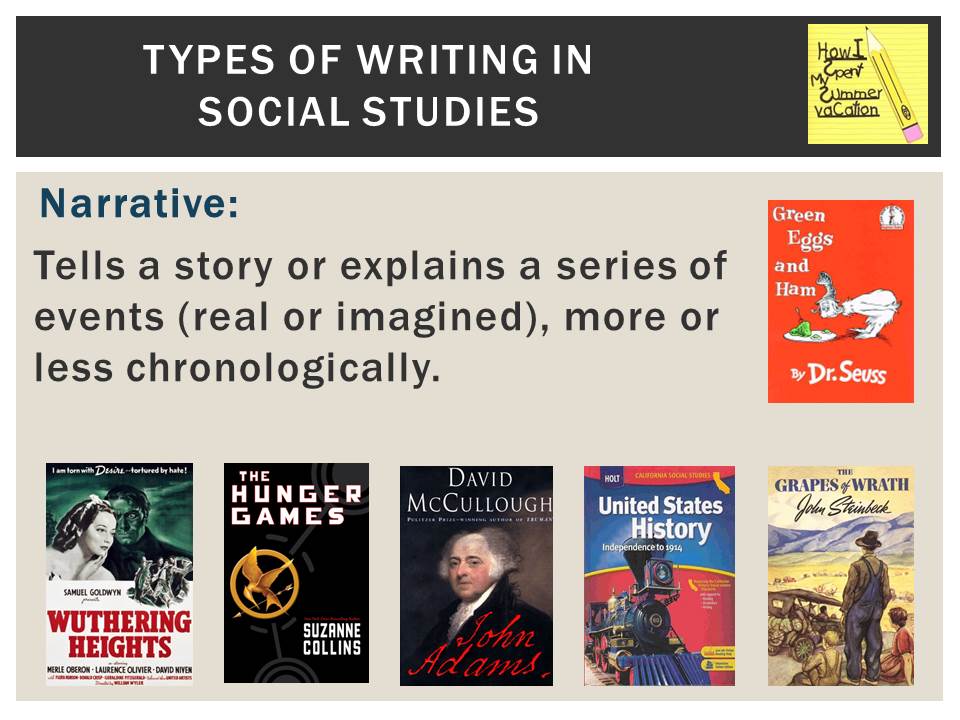
Narrative Writing

Narrative Writing essentially tells a story. It can be real or imagined, or some combination of the two. It usually starts at the beginning, moves through the middle, and ends at the end. Most popular fiction is in narrative form, as are most movies. ‘History’ history books (U.S. History, Texas History, European History, etc.) tend to structure themselves as narratives. If I cared what you did over your summer vacation (I don’t), you’d tell me in narrative form as well.

There’s nothing wrong with a good narrative, but that’s not the kind of writing we’re working on right now.
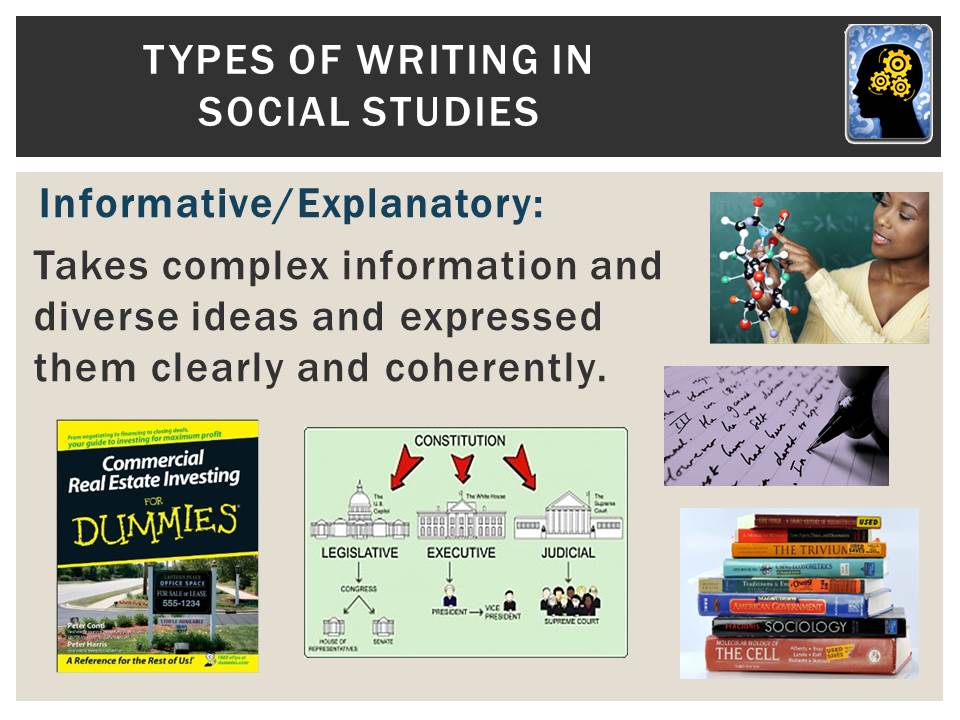
Informational / Explanatory

Informative / Explanatory Writing is any type of writing which takes a collection of related, but often complicated, information and tries to organize and present it so that it makes sense. Most Biology textbooks don’t begin with “Once upon a time, there was a lonely protozoa in a pool of primordial ooze. One day, he decided he was bored and that it was time to split – literally…” They may begin with the foundations of biology, or why we study biology, or share a bit about the first people to demonstrate an interest in this particular science, etc., but it’s not chronological. Different books on the same subject may organize the same basic information in different ways and it still works. Math books, American Government books, or anything “For Dummies” are Informative/Explanatory.

When I have students do Quick-Writes, they’re usually informative/explanatory. That’s not the kind we’re talking about right now, however. That leaves…
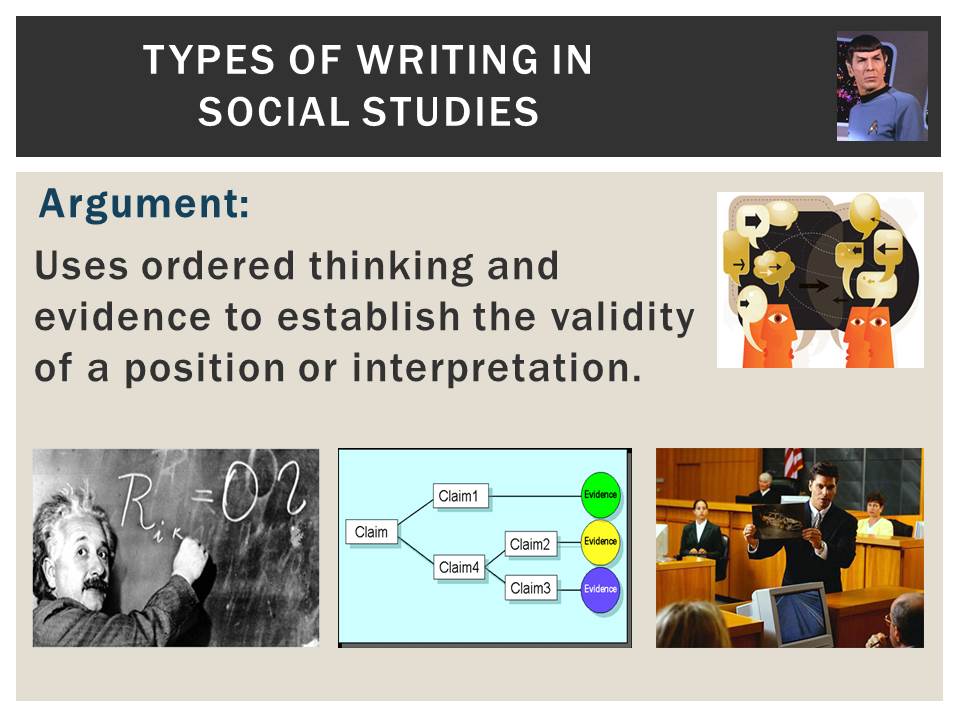
Argumentative Writing

Argumentative Writing attemps to use facts and reason to support a point or an interpretation. It’s all logical and stuff.

But “argument” is a loaded word for many of our students. It’s what happens when a friend is mad at them, or when their boyfriend is about to break up with them. It’s what Mom & Dad do after they think you’re asleep – especially when Dad’s been ‘doing it’ again. It’s the entire plot of many “Reality TV” shows.

But in an academic context, argument isn’t a bad thing at all. In fact, it’s crazy beneficial. It’s how science is supposed to work – great minds doing research and writing papers primarily so other great minds can criticize and question everything about them and explain why they’re flawed or incomplete. It’s our preferred format for difficult legal questions, whether determining the constitutionality of a company policy or trying to figure out if you actually stole that car before or after the body was stuffed in the trunk.

And it’s how history and its interpretation(s) get sorted out. It’s why there can be a dozen different explanations for the Salem Witch Trials or Pickett’s Charge although the sum total of primary source material hasn’t changed drastically. Historians major and minor wrestle with the available information and argue their viewpoints using proof and reason (well, that’s how it’s supposed to work, anyway). Over time, concensus often emerges. If not, the process continues.
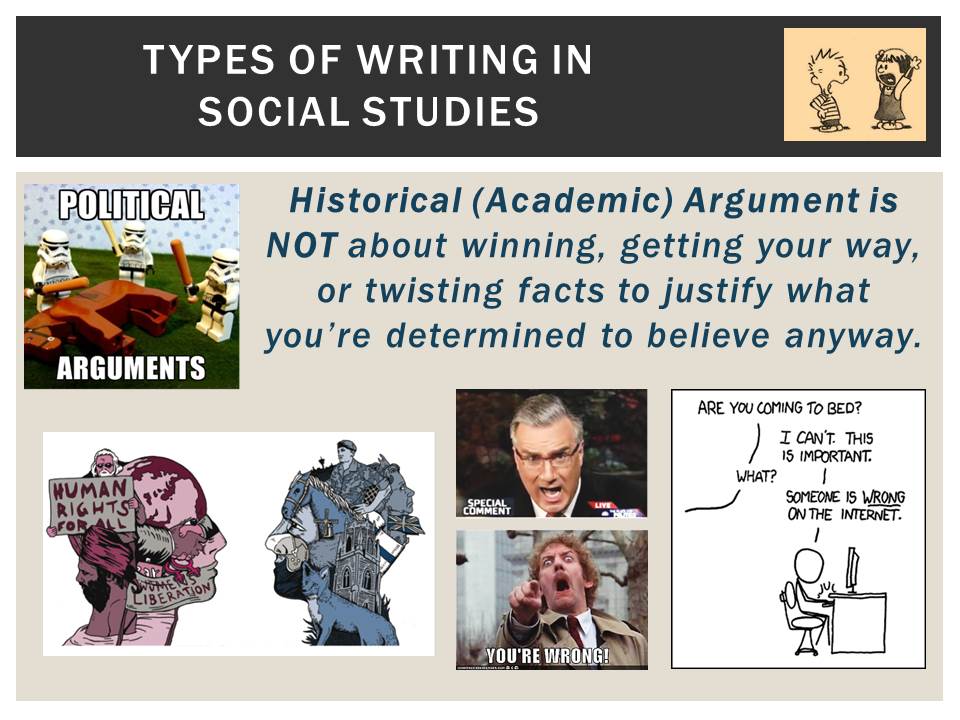
Argument Is Not...

Unlike scientists or politicians, historians are pure and without bias, seeking only the truth. We’re practically HOLY.
Effective Argument

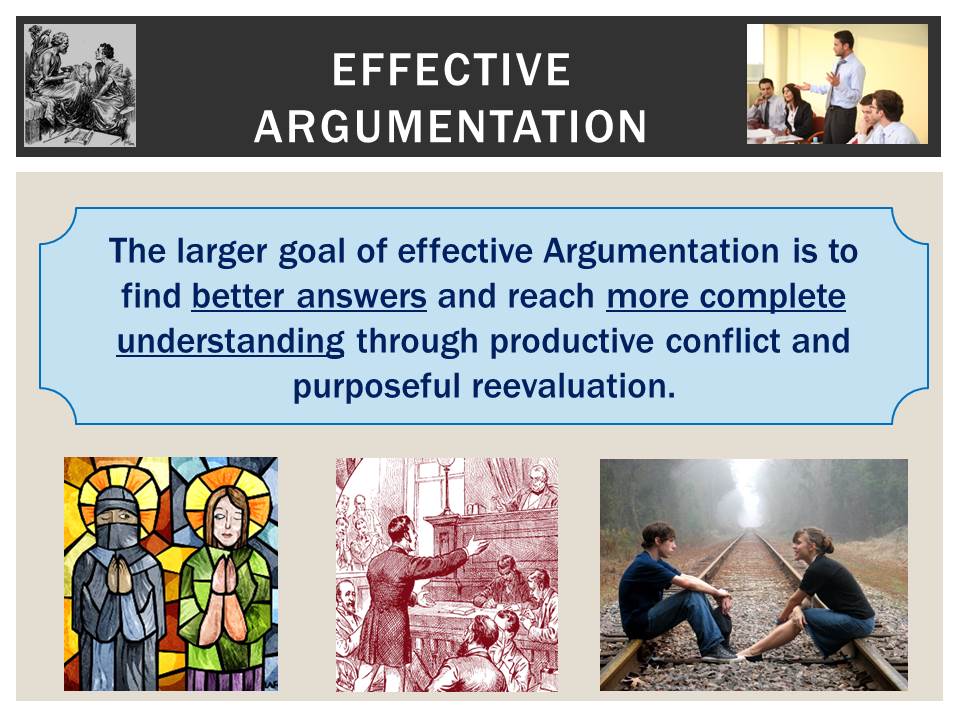
When I tell students that ‘winning’ is not generally the goal of academic argument, they are understandably suspicious. This DOES sound a little too much like that “everyone’s special in their own way” and “no set of beliefs is any more or less workable or useful or true than any other random set of beliefs” feel-good tripe with which they’ve been harangued since birth – and which they can repeat back more easily than believe.

But it’s not meant in a touchy-feely way. A weak or stupid argument is still weak or stupid. An unsupported claim is still unsupported and will receive the belittling and hostility it deserves.

In academic argument, however, it is through analytical argument that we broaden our understanding of people, events, or issues. Take a look at this cartoon:

POV Cartoon

I like this cartoon by way of example because the facts are not in question. The girl in the bikini KNOWS she’s in a bikini, and the girl in the burqa KNOWS she’s in a burqa. Where they differ is in what to make of the available information. They disagree as to interpretation, and importance, of what they know.

Bikini Girl could certainly make an argument for her assertion regarding Burqa Girl’s culture. She could use logic and reason and bring in other information to support her case. Burqa Girl could do the same for her stand regarding Bikini Girl’s culture. Formulating each argument would help to clarify and strengthen the thinking of each, and might even expose weaknesses in their thinking just by going through the process.

But you know what would REALLY hone each argument? If they went to get coffee and discussed it – NOT simply to coddle one another and be all accepting, but to rationally and with open minds probe and argue and question and challenge one another’s assertions and interpretations. Neither may leave persuaded, but they may find their interpretations modified and their understanding broadened. A Venti of learning goodness, extra mocha.

That’s just an example, of course – I don’t really want it to HAPPEN in this case. I LIKE living in a cruel, male-dominated culture. Your outfit’s fine, honey. Don’t let anyone else, er… “oppress” you by telling you otherwise. You’re actually, um… proving your INDEPENDENCE by dressing that way. Shake it, modern girl, shake it.

You may remember this classic from Monty Python’s Flying Circus:

Hopefully it goes without saying that the customer was correct – that was NOT an argument. But at least that sketch was intended to be funny. This was intended to be policy analysis:

What was the subject? The main points? Anything?

None of these three panelists are stupid, although you wouldn’t know that from this clip. It’s getting increasingly difficult to distinguish policy discussions from reality TV. For example, this tense moment from the first Trump / Clinton Presidential Debate:

Perhaps it would be better to begin with written arguments, since that is after all the skill towards which we’re building.

Also, there’s less slapping.

RELATED PAGE: Looking at the Arguments of Others

RELATED POST: 10 Steps to a Decent Thesis (Coming Soon)

RELATED POST: Writing With Brownies In A Box

RELATED POST: Do We Really Know How to Teach Argument? (from MiddleWeb.com)

How Power Confronts Dissent

Note: I’m writing this post in response to circumstances of which I’m a part, but it’s not really about me. I’m living the dream and daily thankful for the support of the #11FF and beyond. 

I confess that I’m developing a certain defensiveness, however, on behalf of others who have done far more good than myself and pay a greater ongoing price for daring to question power. If, after reading this, you wish to express dissent, please direct it to me. If you’re interested in offering support, please offer it to them. 

It seems the proverbial “teacher caucus” has ruffled a few entrenched feathers here and there across the state. That’s a good sign – it means we’re vocal enough that the powers-that-be are concerned. They don’t all represent the same sorts of power – some already hold office, while others have social sway or the backing of the usual slew of out-of-state fiscal overlords. 

A few are all-of-the-above.

The means of their pushback, however, are a lesson in how power responds to dissent – especially when that power is unable or unwilling to simply silence or crush the dissenters. As a history teacher I can’t help but look for larger themes – it’s a change and continuity over time thing, I’m afraid. 

So I command every student under my sway this July (all zero of you) to pull up a chair and prepare to be indoctrinated as we explore the tactics utilized, in hopes we might become more aware of these same themes when expressed elsewhere in history or across our lives.

[[{“type”:”media”,”view_mode”:”media_small”,”fid”:”2204″,”attributes”:{“alt”:””,”class”:”media-image”,”typeof”:”foaf:Image”}}]]


The most glaring element of the backlash so far, and the one I found most surprising (although there’s no reason it should have been), is that power rarely addresses the actual substance or specifics of the dissent.

I’ve been called names and assigned nefarious roles (“spewing antichrist venom” is by far my favorite, although “vitriol and obscenities” is still golden). My writing has been criticized in general ways, but without reference to any particular POINT those expressing their horror consider incorrect. 

In other words, I literally can’t get anyone to tell me – in the midst of their sputtering outrage – what they think I got wrong. It’s really rather bizarre. 

Each time I’ve become aware of a candidate or associated minions protesting that they’ve been misconstrued, or at least misunderstood, I’ve reached out to them with offers of adding their comments to my original post, or letting them write their own. If nothing else, tell me which parts I need to correct. 

I mean, I may be a bit snarky, but I do try to get my facts straight. 

So far, a total of zero have ever taken me up on that offer. 

The OPE list of candidate recommendations (i.e., the ‘Apple List’) created quite a stir as well. Numerous candidates, when the list was first posted, contacted members of this vulgar cabal of ours to ask if perhaps they, too, might be considered for an ‘apple’. I replied to several, as did others, with the exact same guidelines we used for everyone else. 

Keep in mind, there are a LOT of people running for office this time around. There are more candidates than there are countries in the world, and that’s AFTER last month’s primaries shaved the total significantly. 

Many of these political hopefuls responded professionally, some even politely, and the list evolved a bit as new information was added and new arguments considered. That’s how the academic world is supposed to work – you present a position with your supporting evidence, it’s challenged with new evidence, and over time the position is refined. 

There are always a few, however, simply unable or unwilling to go to such trouble. They then become the most vocal complainers without ever addressing the simplest heart of the issue – do they meet or have they attempted to establish their qualifications to be on the list? 

Even if they don’t lead with it, you’d think it would at least come up at some point in their tirades, yes? But not so much. 

Which. Specific. Part. Do. You. Think. Is. Incorrect?

The second element of the backlash worth noting is the prominence of innuendo and suspicion cast on the dissenters – again completely without reference to the content of the dissent. 

Rick Cobb has opinions! Horrifying words about things using descriptors and tone! And he works for a SCHOOL! How is that ALLOWED?!

Rob Miller disagreed with ME about something! And he’s within 100 yards of young people almost ALL DAY LONG! Is there no GOD?!

It’s a given at this point that anyone whose panties are in righteous wad over anything #oklaed-ish will immediately decry our right to have social or political opinions outside the school day. We are corrupt, brainwashing potentates using our positions of power and influence over young people to steer them into godless socialism and sexual deviancy. 

If only I could use this same dominance to get them to do their assigned reading once in a while. 

Corporations have a right to unlimited fiscal control of political speech. Churches may preach political advocacy as part and parcel of the very Word of God. State funds, collected from citizens of all makes and models, should be funneled into further isolating and uber-educating the chosen offspring of upper-middle-class evangelicals. And of course, a granite monument to the days of Christ-less wrath and judgment simply MUST secure a permanent home on Capitol grounds as a warning to those who remain.  

But those public school teachers who think we should vote to protect public education, well – that’s just crossing some lines! We don’t pay them the lowest salary in the nation to think or care, dammit! Opinions are for people with real jobs, like pastors or legislators. 

At no point does power actually argue with anything we’re saying, you understand; it instead perpetually seethes that we claim the right to say anything at all. 

The third element common to power’s assault on dissent is the targeting of those thought to be most individually vulnerable. I’m bemused more than distraught at what various demagogues or ideologues have to say about me. (Honestly, I thought they’d have done better by now.) Others in the mix have been doing this so long they’ve developed an immunity to most of the reindeer games. 

But power likes to intimidate without overtly threatening. Take the purely hypothetical example of a car parked across the street from a single mom every night for two weeks, beginning the day she’s announced as “Undesirable #1” on several groups’ “enemies lists.” The unknown occupant merely watches without ever approaching her door. No laws have been broken, no threats issued – but she stops letting her kids play outside. She worries about her pets while she’s at work. She’s strong, but she feels it

I know it sounds rather melodramatic, but power likes where it is. Power believes it has a right to be there, and you don’t. Power claims the moral high ground, and from way up there can hardly be held to the same rules as us commoners.  

Finally, power strikes and retreats into its own little “safe zones.” The accusations and innuendo don’t come in the comment sections of our blogs or other publicly accessible sites. They circulate in the protected corners of their own echo-chambers, where none may challenge them. Occasionally it leaks out through an incontinent editorial or summons a fauxlicious press conference, but mostly it inbreeds and deforms as it grows less and less coherent.  

Most of us welcome clarification, explanation, even disagreement. Instead, power hides and blocks and accuses. It’s really rather nasty sometimes. It’s like we all woke up as recurring minor characters on guilty pleasure T.V. 

[[{“type”:”media”,”view_mode”:”media_small”,”fid”:”2202″,”attributes”:{“alt”:””,”class”:”media-image”,”typeof”:”foaf:Image”}}]]


So here’s my open challenge, or offer, or whatever you wish to call it (although it’s really not new at all):

If you think I’m mistaken about a candidate, or a sitting legislator, or a policy position, you are welcome to comment on the relevant post. As long as you’re not obscene or threatening to anyone, I won’t censor or delete it. If you need a longer format, I’ll give you a guest blog slot. Share what’s on your mind. Again, you’ll have to moderate yourself in terms of overt ugliness towards those I hold dear, but you’re welcome to criticize me all you like or the ‘teacher caucus’ as an entity to your darkened heart’s content. 

I’d prefer to limit this to state issues and state candidates unless you persuade me otherwise. I’ve already let myself get too sidetracked by national madness and it makes me tired, and with far less to show for it. 

Of course, those of you who agree with me are welcome to do the same. The only difference is, you’d be allowed to include clip art. 

Otherwise – and I mean this sincerely…

[[{“type”:”media”,”view_mode”:”media_small”,”fid”:”2203″,”attributes”:{“alt”:””,”class”:”media-image”,”typeof”:”foaf:Image”}}]]


Writing With Brownies In A Box

TypingIf you ever want to have real fun, start talking about the ‘correct’ way to teach writing with any group of teachers. For serious fireworks, try it with AP History folks after you’ve all had a drink or two. Better you stick with safer, less provocative topics like abortion, religion, or the validity of comic books and superhero movies as cultural touchstones.
There are many good ways to write a decent argumentative (historical) essay, but even more ways to write a bad one. If there were only one ‘right’ way, we’d all teach it that way, students would all write them that way, and they’d all get 5’s on their AP exams and A’s on our semester tests. Wouldn’t that be swell?

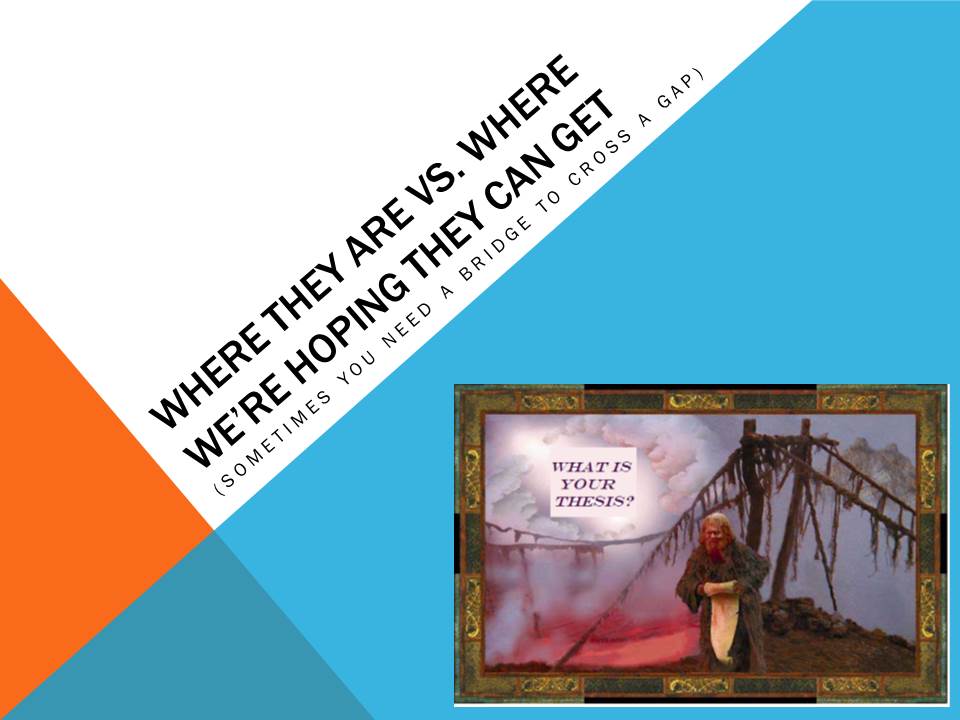
But it’s not that straightforward. There are too many different types of prompts about too many different subjects, and often a wide range of possible approaches to even the most straightforward of the lot. Writing in the Histories (or the ‘social sciences,’ if you prefer) is a booger because really, you can’t boil it down to a set of steps or rules likely to apply in every situation for every prompt. On the other hand, many students need structure and some modeling in order to begin learning a new skill – especially one as potentially intimidating as outlining a historical essay.

Writing Argument

Here are some ways to approach historical writing – in this case, the ‘Argumentative Essay’. If you’re uncomfortable with so much structure and worried about students thinking they must eternally cram whatever they have to say into the same Jello mold, you’re absolutely right to worry. On the other hand, if you genuinely believe that with little guidance and armed with sufficient content knowledged, students need only be pointed the right direction and set free to wax convincing, you’re – what’s the word? oh, yes – delusional.

Just kidding. You may simply be overly idealistic. After all, you DID become a teacher.

Writing Bridge

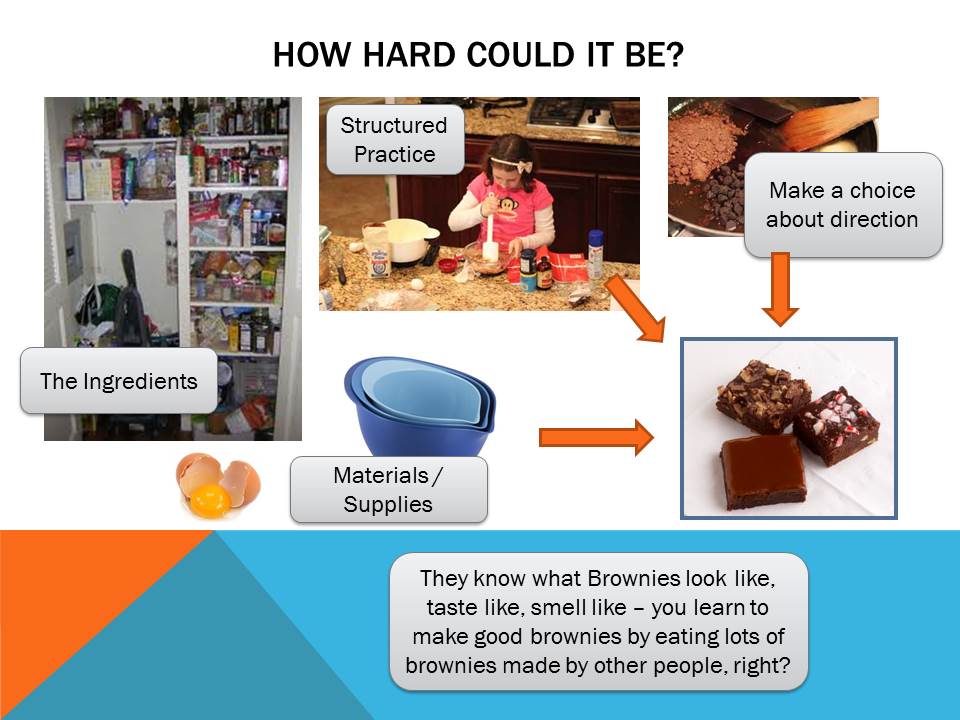
So let’s talk about making brownies.

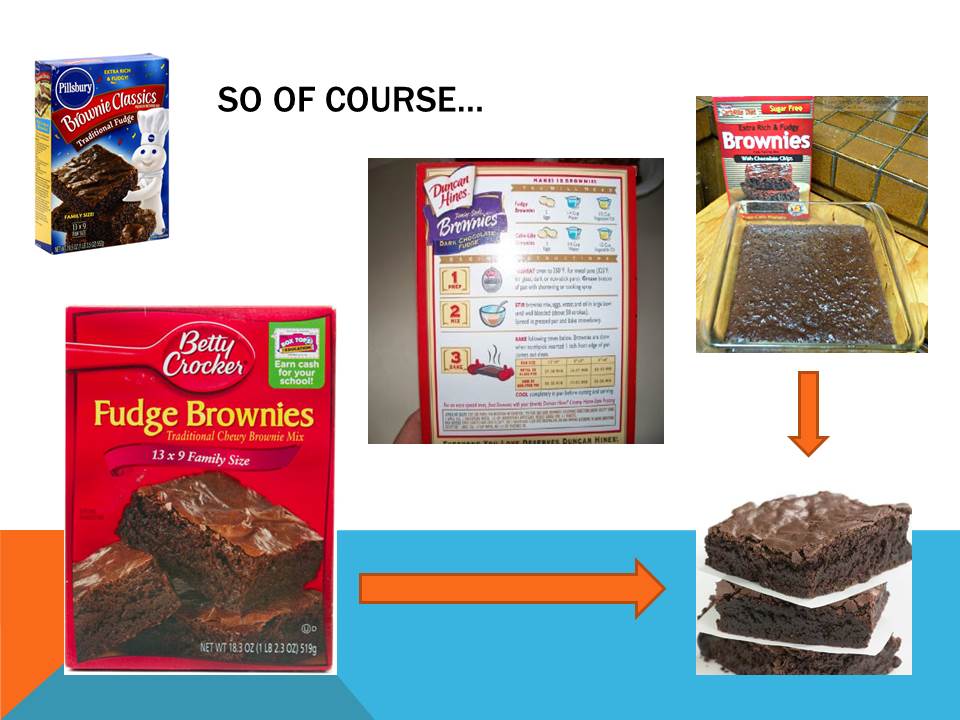
Few baked items in this mortal life are as tasty or straightforward as brownies. They’re one of the first things you learn to make as a child if you’re lucky enough to have an Easy-Bake Oven, or a mom. They’re just right for any social event which requires something nicer than store-bought cookies, but less labor-intensive than, say, homemade pie.

For anyone who bakes regularly, you don’t really even need to get overly hung up on specific instructions – if you can remember four or five basic ingredients, and know what ‘brownies’ are, you can make them at will. Heck, you can vary them endlessly with only minor adjustments – add walnuts, for example, or icing. OMG – mint!

Making Brownies

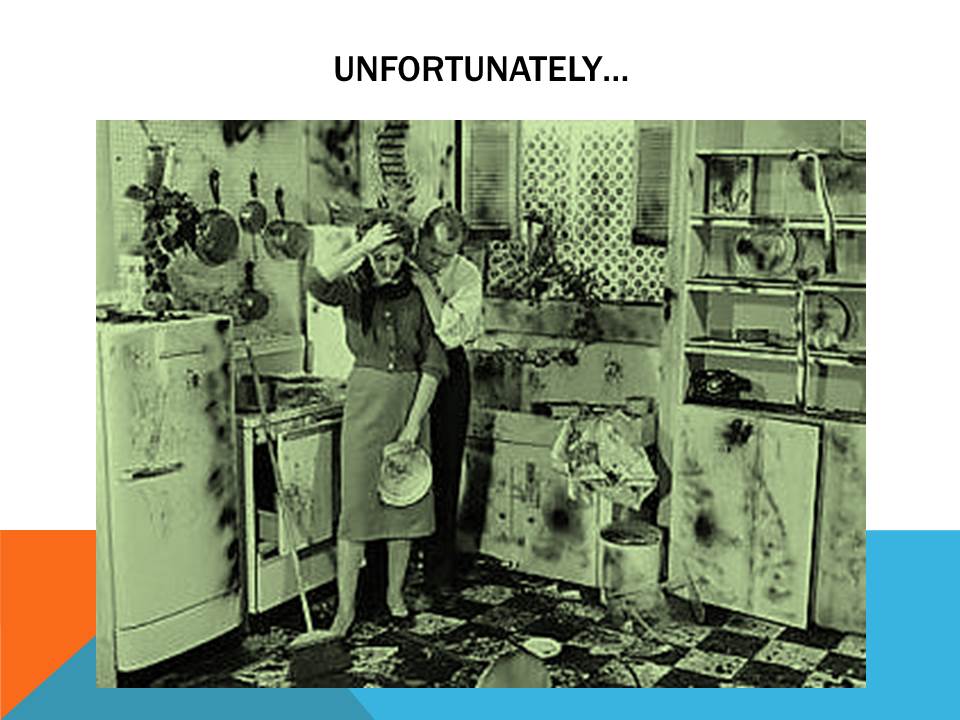
Unfortunately, not all of us are born with this skill, nor have we had occasion to develop it. When I try to just kinda… ‘bake’, it rarely turns out well. Kitchen Mess

Thanks to Adam Smith and a little greed, however, there are solutions:

Brownie Mix

What hath God baked?

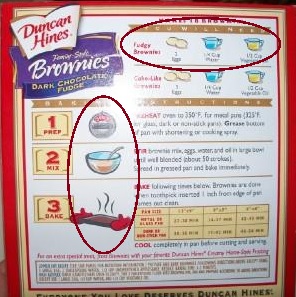
Let’s zoom in on those instructions on the back of the box. Notice…

Brownie Instructions

They don’t MERELY tell me I’ll need two eggs. Just in case that’s a bit vague or unclear, THEY’VE INCLUDED A DRAWING OF TWO EGGS. Measurements for water and vegetable oil are similarly illustrated. When it’s time to preheat the oven, there’s a picture of the dial on the correct temperature. And when it’s done, both a VISUAL and TEXT warning that when something’s been in the oven for 20 minutes at 350° IT WILL BE HOT.

That’s how little they assume I’ll figure out on my own.

Is it insulting? Perhaps? Entirely necessary? Maybe not. But I can make brownies this way. Every Almost every time. They’re not original, amazing, or demonstrative of deeper baking – but they’re consistently pretty decent. That’s because I’ve followed instructions proven to work with the contents of most boxes like this one.

Sometimes I even add those walnuts I mentioned – WITHOUT EVEN ASKING PERMISSION. I’m a wild man in the kitchen, it seems. Gordon Ramsey, kiss my icing!

But… there IS one tiny little shortcoming to this system:

Not The Brownies

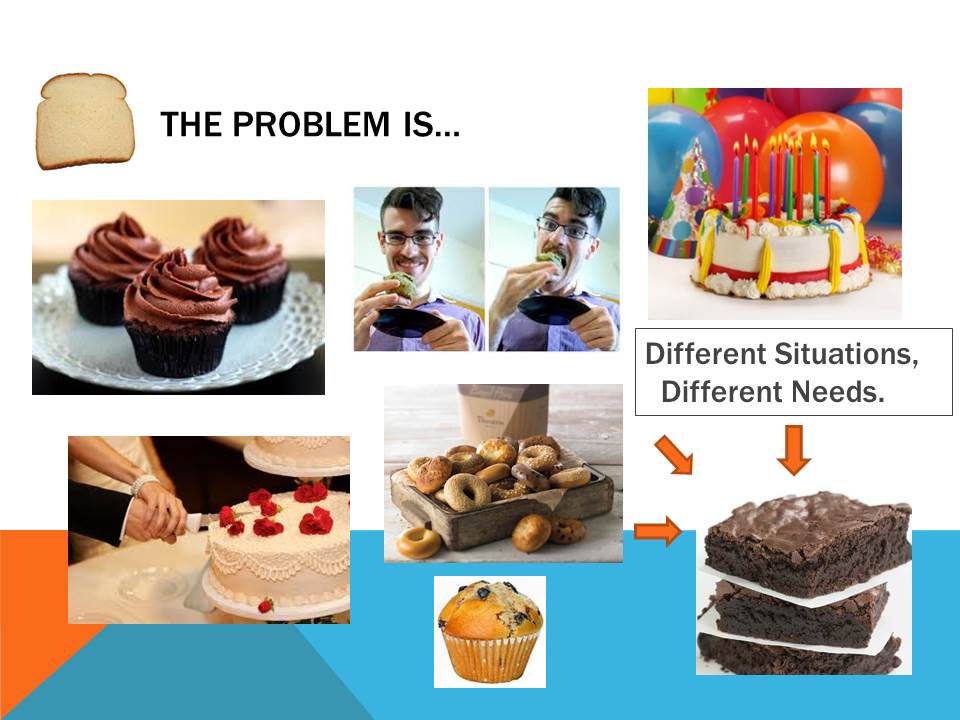
Sometimes I’m asked to make something other than brownies. Sometimes I’d prefer muffins, or cake, or even bagels. I can pour brownie mix into my muffin pan, and the results may be edible, but they’re not muffins. I can shape them like bagels or make several and pour it all into a cake pan, but the results are definitely not bagels or cake. I even tried adding candles and extra candy sprinkles.

It was just gross.

And yet, many of the same principles and ingredients I use to make brownies – even from a box – are in play when making muffins or other baked goods. The more things I learn to bake, the easier it is to vary them based on circumstances, need, or even my personal preferences. Ideally, then, even as I’m first learning to follow the steps demanded by Betty Crocker and her short-sighted, restrictive ilk, I notice certain patterns and common practices and the roles of various ingredients.

If I’m in a really good school kitchen, maybe someone who’s proficient at baking explains along the way why you add salt to chocolate chip cookies but not chocolate chip muffins, or prompts me to speculate why different temperatures would be required at different altitudes.

Summer DessertsEventually I can move from instructions on the box to recipes for which I gather the ingredients myself. Over time, who knows? Maybe I can go all crazy and try something on my own, based on what I’ve learned. If it works, great! If not, I’ll evaluate what went wrong – ask for help if necessary – and try again with adjustments.

If my goal is a gig in the kitchen at Merritt’s, my ability to follow the directions on the brownie box won’t cut it. If serious baking is in my future, I’m going to have to do better.

But when I’m 12, or just not that into baking, there’s no shame in structure. In fact, any confectionery chef who discovers I’m using the box and throws a horrified fit because that’s NOT how one CULINATES, just comes across as a snob and a bit of an ass. On the other hand, the cakemaster who lends a hand, begins offering insights and tips and helps me build my skills and understanding, well…

I think I just let a tiny bit of my middle school teacher defensiveness show through on that segment of the analogy. My bad.

As I lead my darlings through the basics of writing a historical (argumentative) thesis, we speak of ‘defaults’ and ‘tools’. Because I actually communicate with the English Department, I can refer regularly to what my students have been told in that OTHER writing class, and explain which parts are similar and which are different – and why. (It’s like we’re all wanting the same overall success for our kids – is that even allowed?) We discuss how Calibri 11 with one inch margins and 8.5″ x 11″ paper with ‘portrait’ orientation works as a ‘default’ pretty well for so many different situations, but how easy they are to change as necessary – and how that’s like the structure we’re going to use for writing. 

They’re tools, not rules. Structure, not stricture. Sometimes fences set us free, baby. Kites soar highest when someone’s holding the string. Fly-iy-iy, Freebird… (guitar solo).

Gymnastics Scaffolding

You practice various plays the way they’re drawn up, but come game time the ‘right’ place is to wherever the ball happens to be – NOT where the whiteboard says it was supposed to go. You march and play based on the tempo the Drum Major is actually directing and line up with your actual lines rather than the hashtags on the field. You catch the girl underneath wherever her flip takes her – you don’t let her hit the mat while your arms are locked in the exact spot they were in practice only a few hours ago. You write to the prompt you have, not the prompt you wish you’d been given.

None of which invalidates running the drills or practicing with the marked locations. It’s all about scaffolding and tools and learning and getting better – just like everything else in school is supposed to be. Zone of Proximal Development, baby – keep the harness on until they can do the flip without breaking their neck. Er… metaphorically speaking. It’s not so very difficult to make sure they understand the goal is for the harnesses, the limits which help give you structure, to come off. Soon.

[[{“type”:”media”,”view_mode”:”media_small”,”fid”:”988″,”attributes”:{“alt”:””,”class”:”media-image”,”typeof”:”foaf:Image”}}]]

Write, Forrest! Write! 

I realize I get carried away on this one, but the important thing is to recognize that young writers need structure just to move forward. At the same time, we must continuously insist that structure is temporary, and not the goal. The goal is whatever’s required by the prompt – brownies, muffins, cake, or lasagna.

Now we need to talk about what exactly we mean by ‘Historical Argument’…

RELATED POST: What IS An ‘Academic’ or ‘Historical’ Argument? (And What Is It NOT?)

RELATED PAGE: Looking at the Arguments of Others

RELATED POST: In Defense of the 5-Paragraph Essay

Appreciation (A Post About Thanks and Adding Value)

appreciation

It’s a tough stretch for much of #oklaed and those in whom we’ve invested our recent energies. 

Primaries seem like so long ago, runoffs are still a month away, and the general elections… oh dear, the general elections. 

The Republican National Convention has been a mess so far, and there’s no telling what its Democratic counterpart will be like. Nationally, the ‘Right’ openly despises us while the ‘Left’ suddenly wants to befriend educators over edreformers. Do we run to the guy who beats us or trust the one who keeps cheating on us? 

Locally, animosity over policies and posts has spilled offscreen as the provocative becomes personal and the political, omnipresent. I’ve unwittingly conflagrated several one-on-one conversations as I let tone trump substance and forget that the argument is never more important than the person

Sorry, J.B.  

Privately, I hear again and again how whipped people feel – teachers, administrators, parents, bloggers, advocates, candidates… even sitting legislators. It’s not quite despair, but it’s certainly not some new form of radiant hope. 

Teachers are stressed as back-to-school nears, and the realities of larger classes, fewer resources, and a haunting lack of actual clarity about just what’s expected THIS year hover over its approach. There’s something… taunting about the realization that – once again – new end-of-instruction tests are being proposed and new guidelines for ‘The Annual Shaming’ via A-F School Report Cards are being introduced and OMG-what-exactly-were-we-fighting-for-how-is-this-new?

Of course, such things seem petty in light of mad loners shooting our best, power continuing to abuse our weakest, and rationalization and cognitive dissonance stamping out the last bases for a “national conversation.” Different lives matter only to specific groups of people, and language is chosen to obscure intent so we don’t have to be honest even with ourselves about the true states of our hearts and minds. 

Also, it’s hot. Like, Africa hot. Tarzan couldn’t take this kind of hot.

Still, I believe. 

I’d like to take a moment and appreciate what many of you are doing, and how you’re doing it. I’d like to add a different perspective for those of you struggling with your own at the moment. And I’d like to point out an increase in value. An increase in hope, and quality, and style – because of you. 

Thank you, so very much, to all of you who ran in hopes of improving our collective situation and came up short in your party’s primaries this season. Your efforts made a statement, and your words and your handshakes and your time made a difference. We may not see it all yet, but you cast your bread upon the water and it will come back, even if it takes many, many days. 

You spent your time and money and put yourselves out there, drawing questions and criticisms and sometimes mocking disbelief that you’d even dare think you could make a difference. 

I want to assure you that you have, and that you still are, and that anyone who says otherwise is either lying or wrong on an epic scale. And I’m right about this. 

Thank you, so very much, to those of you still running – in whatever party – in the sincere conviction that we can do better, and that we don’t have to marginalize, segregate, or bully our way into prosperity for a few at the expense of the whole. You’re still in it, but sometimes secretly envy those you defeated in June – the ones who’ve gone back to their ‘real lives.’

Thank you for sacrificing yourselves and the comfort and security of your families and friends for the good of the rest of us. It matters. It matters whether you win or not, and it matters even if we don’t always agree with you on every little thing. You’ve thrown yourself into the breach, and we cheer you wildly. Illegitimi non carborundum!

Of course we want you to win – it’s something that colors every conversation and nags at every day for me. But even if you don’t, your voice has had and will continue to have an impact. Your efforts are not and will not be in vain. The results we can count and see are important, but they’re only part of the story. Faith, I’m told, is the substance of things hoped for, the evidence of things not seen. Have faith in what you’re doing.

Thank you, so very much, to those of you advocating on your blogs and on social media and in the press and through personal messages. I write about candidates and positions and like to think that I play a role, but I’m humbled and amazed by colleagues and peers who share their hopes, their fears, their experiences – even their pay stubs – in hopes it will make an issue a bit clearer or a position somewhat more relatable. 

I’ll let the rest of you in on a blogger secret – we value and appreciate the kind words, the shares, even the respectful clarifications or disagreements… but we feel the venom and the vitriol sent our way, no matter how small a percentage of the whole. It follows you into those moments just before sleep or jumps you while you’re showering yourself into consciousness the next morning. 

Your mind knows the importance of perspective, but your inner dialogues doesn’t want to let that scab heal sometimes.

OK, not me so much. I actually find the abusive feedback dynamic rather bizarre. But the less dysfunctional, more emotionally stable bloggers and advocates, with perspective and souls and better tastes in entertainment – many of them feel it more deeply than you’d think. And I love them, and I thank them. The blogs, the Facebook posts, the candidate lists – the work they do, and the knowledge they share. I adore them. 

Thank you, so very much, to those of you who disagree with grace and style. You speak and write to a mutually-defensive group not always known for receiving constructive criticism well, but you speak up anyway because you care about truth. Thank you to those of you who risk backlash because you believe reality is an essential ally to meaningful improvement. Some of you are quite funny, which makes pretty much anything palatable as far as I’m concerned, while others are simply well-spoken and sincere. How do you DO that?

God forbid we ever deteriorate to the point we merely echo one another, broken up only by periodic pats on the back. Thank you for your blunt-but-gracious dissent, and for establishing a tone of mutual respect – the maintenance of which it then becomes our obligation to maintain. 

You make me want to think more clearly, and write more gooder. You prompt me to check my attitude – especially when I’m on what I believe to be a righteous tear. Gracious but reasoned dissent forces all of us to become better thinkers. 

Once, I even realized I was wrong about something. Not that we want to always go THAT far. 

Take care during this stretch of mortal plodding. Stay cool, and drink plenty of water. Love someone it’s hard to love and say something nice to someone annoying.You amaze me, people. You make my part of the walk so much better, and this fallen world slightly more tolerable.

Thank you.

[[{“type”:”media”,”view_mode”:”media_small”,”fid”:”2195″,”attributes”:{“alt”:””,”class”:”media-image”,”typeof”:”foaf:Image”}}]]

Coronado’s Letter (“What I AM Sure Of Is This…”)

After Coronado gave up on the Seven Cities of Whatever, he penned a missive to the King summarizing his experiences and discoveries. Ask yourself what tone and intent are suggested by his choice of words nearly six centuries later. 

The full letter, a classroom edit, and printable versions can be found here

HOLY CATHOLIC CAESARIAN MAJESTY: On April 20 of this year I wrote to Your Majesty from this province of Tiguex, in reply to a letter from Your Majesty dated in Madrid, June 11 a year ago. I gave a detailed account of this expedition, which the viceroy of New Spain ordered me to undertake in Your Majesty’s name…  

“Caesarian” here presumably means “like Caesar” rather than referring to the circumstances of his delivery at birth. Still, it does open up some humorous alternatives – “Your Royal Breechness,” “Divine Preemie-inence,” etc.

It’s also nice for those of us reading 500 years later that he essentially begins with “previously, on Coronado’s Journey…” I wonder if that was a formal norm or an acknowledgement that the King was a busy man and might have no idea who Coronado was or why he should remember him.

I described it all, and the sort of force I have, as Your Majesty had ordered me to relate in my letters; and stated that while I was engaged in the conquest and pacification of the natives of this province…

You know, because that’s what people do to kill time – conquer and pacify…

…some Indians who were natives of other provinces beyond these had told me that in their country there were much larger villages and better houses than those of the natives of this country, and that they had lords who ruled them, who were served with dishes of gold, and other very magnificent things; and although, as I wrote Your Majesty, I did not believe it before I had set eyes on it… {but it seemed} important that it should be investigated for Your Majesty’s service, I determined to go and see it with the men I have here…

Already this sounds like a desperate effort to cover his own behind, doesn’t it? “OK, so, here’s what happened and I totally didn’t believe them but then I was like, I totes owe it to the KING to check it out ANYWAY and so, like… no WAY this was my fault!”

After nine days’ march I reached some plains, so vast that I did not find their limit anywhere that I went, although I traveled over them for more than 300 leagues. And I found such a quantity of cows in these, of the kind that I wrote Your Majesty about, which they have in this country, that it is impossible to number them, for while I was journeying through these plains, until I returned to where I first found them, there was not a day that I lost sight of them. 

Tatanka!

And after seventeen days’ march I came to a settlement of Indians who are called Querechos, who travel around with these cows, who do not plant, and who eat the raw flesh and drink the blood of the cows they kill, and they tan the skins of the cows, with which all the people of this country dress themselves here. They have little field tents made of the hides of the cows, tanned and greased, very well made, in which they live while they travel around near the cows, moving with these. They have dogs which they load, which carry their tents and poles and belongings. These people have the best figures of any that I have seen in the Indies…

That’s about as succinct a description as you could ask of life on the Great Plains – flat as far as you can see, nomadic natives, living in tipis and utilizing just about every part of the buffalo they hunted. The use of dog travois was common on the Plains as well. 

The last part about their figures was not nearly so awkwardly suggestive as some of you wondered just now. These were different times, and Coronado is trying to be descriptive, and thorough. I kinda wonder if it also suggests a tendency to see the Querechos as interesting creatures in nature rather than real live individuals. 

I traveled five days more as the guides wished to lead me, until I reached some plains, with no more landmarks than as if we had been swallowed up in the sea, where they strayed about, because there was not a stone, nor a bit of rising ground, nor a tree, nor a shrub, nor anything to go by. There is much very fine pasture land, with good grass. 

And while we were lost in these plains, some horsemen who went off to hunt cows fell in with some Indians who also were out hunting, who are enemies of those that I had seen in the last settlement, and of another sort of people who are called Teyas; they have their bodies and faces all painted, are a large people like the others, of a very good build; they eat the raw flesh just like the Querechos, and live and travel round with the cows in the same way as these. I obtained from these an account of the country where the guides were taking me, which was not like what they had told me, because these made out that the houses there were not built of stones, with stories, as my guides had described it, but of straw and skins, and a small supply of corn there…

Texans with painted bodies and faces? Must have been on their way to a college football game. This was the first sign of trouble with their journey to “Quivira” which couldn’t be ignored to accommodate avarice.

It seemed to me best, in order to see if there was anything there of service to Your Majesty, to go forward with only 30 horsemen until I should be able to see the country, so as to give Your Majesty a true account of what was to be found in it… And with only the 30 horsemen whom I took for my escort, I traveled forty-two days after I left the force, living all this while solely on the flesh of the bulls and cows which we killed, at the cost of several of our horses… and going many days without water, and cooking the food with cow dung, because there is not any kind of wood in all these plains, away from the gullies and rivers, which are very few.

I love the subtle reminder that Coronado was not, of course, doing any of this for himself, but for the King. It also says something about the size of the group with which he normally traveled that going on with 30 guys was really stripping it down to a skeleton crew. 

And perhaps I’m reading too much into what is, after all, a modern translation of a centuries-old letter in another language, but I sense his frustration leaking through already – “there was not a stone, nor a bit of rising ground, nor a tree…” and “cooking… with cow dung, because THERE ARE NO #@$%ING TREES OR TWIGS OR PICTURES OF TREES SO $%&@ IT WE’LL JUST USE POO!! THAT’S RIGHT – WE’RE COOKING WITH POO!!”

It was the Lord’s pleasure that, after having journeyed across these deserts seventy-seven days, I arrived at the province they call Quivira, to which the guides were conducting me, and where they had described to me houses of stone, with many stories; and not only are they not of stone, but of straw, but the people in them are as barbarous as all those whom I have seen and passed before this; they do not have cloaks, nor cotton of which to make these, but use the skins of the cattle they kill, which they tan, because they are settled among these on a very large river…

The people here are large. I had several Indians measured, and found that they were 10 palms in height; the women are well proportioned and their features are more like Moorish women than Indians. The natives here gave me a piece of copper which a chief Indian wore hung around his neck; I sent it to the viceroy of New Spain, because I have not seen any other metal in these parts except this and some little copper bells which I sent him, and a bit of metal which looks like gold. I do not know where this came from…

His disappointment is palpable, but it’s not the full-blown disgust and frustration we’re going to see further down. The sad desperation of sending a lone copper necklace to the viceroy almost breaks my heart for Coronado. The years, the hope, and the depravations endured… for a copper necklace of unknown origin.

The province of Quivira is 950 leagues from Mexico. Where I reached it, it is in the fortieth degree. The country itself is the best I have ever seen for producing all the products of Spain, for besides the land itself being very fat and black and being very well watered by the rivulets and springs and rivers, I found prunes like those of Spain and nuts and very good sweet grapes and mulberries. 

“So, your Majesty, the trip was pretty much a bust in terms of riches and gold and such. But OMG if you could have seen the PRUNES! So, um… can you maybe, like, not be too mad about the gold? Because… prunes?”

Here’s my favorite part.

I have treated the natives of this province, and all the others whom I found wherever I went, as well as was possible, agreeably to what Your Majesty had commanded, and they have received no harm in any way from me or from those who went in my company…

“…as well as was possible…”

What a wonderfully cautious bit of self-justification. 

And what I am sure of is that there is not any gold nor any other metal in all that country, and the other things of which they had told me are nothing but little villages, and in many of these they do not plant anything and do not have any houses except of skins and sticks, and they wander around with the cows; so that the account they gave me was false, because they wanted to persuade me to go there with the whole force, believing that as the way was through such uninhabited deserts, and from the lack of water, they would get us where we and our horses would die of hunger…

I can’t help but see his pen jabbing at his paper, Coronado muttering to himself as he scribbles his frustration within the confines of acceptability to one’s sovereign… 

“One thing IS for SURE, however… There’s. No. $#%&ing. Gold. Or. Metal. Or. Any. Thing. Else. $%#*. !@*%&%. #%&*TW#@&%@#$!!@# In. This. #$&@Y$@. Land.”

It’s here we see the first written expression of perhaps the single greatest conflict between white guys and the red guys over the next four centuries.

“They don’t plant anything… and they wander around with the cows…”

To the average European, nature is there to be subdued. Reworked. Made into your b*tch. 

To the average Amerindian on the Great Plains, nature is there to be understood. Utilized. Perhaps a bit revered. 

They were not starry-eyed environmentalists as some would have them portrayed, but they certainly asked for different things out of life than the typical white guy. The first bewildered, annoyed record of this realization comes from the European perspective comes from Coronado, right here.

It didn’t bode well for future white-guy / red-guy relations.

RELATED POST: Coronado (Why Don’t You Come To Your Senses?)

RELATED POST: Turkin’ Back And Forth