Mary Boykin Chesnut’s Diary, Part Two (Repost)

NOTE: I’m reposting a few past personal favorites as a palate-cleanser of sorts during this contentious election season. I thought it would be nice to remember when America was enjoying simpler times…
MBC Stars

Mrs. Chesnut has been recording for posterity the events surrounding the so-called “Battle of Fort Sumter.” Except she’s mostly not. 

Louisa Hamilton came here now. This is a sort of news center. Jack Hamilton, her handsome young husband, has all the credit of a famous battery, which is made of railroad iron. Mr. Petigru calls it the ‘boomerang,’ because it throws the balls back the way they came; so Lou Hamilton tells us.  

The ‘boomerang’ bit is a brag by Mrs. Hamilton on her husband‘s artillery unit – they not only hold their ground when taking incoming fire, they gather the cannonballs fired at them and send them back. Boo-yah! 

How much you wanna bet Mrs. H. works that into conversation one way or the other about every three minutes?

During her first marriage, she had no children; hence the value of this lately achieved baby. 

James & Mary Chesnut

Historical documents of a personal nature can be difficult – especially for students – because tone is everything. Overlook a little flirting, or sarcasm, or other emoticon-deficient vibe, and you can misread a source completely. 

Mrs. Chesnut is kind enough to write on both levels simultaneously – the obvious, smiling appreciation for a friend’s long-awaited offspring, and – unless I’m projecting – a little wry commentary on Louisa’s mothering as well.  

It might even be cruel. 

To divert Louisa from the glories of “the Battery,” of which she raves, we asked if the baby could talk yet. “No, not exactly, but he imitates the big gun when he hears that. He claps his hands and cries ‘Boom, boom.'” 

Her mind is distinctly occupied by three things: Lieutenant Hamilton, whom she calls “Randolph,” the baby, and the big gun, and it refuses to hold more…

*snort*

I do not wonder at Louisa Hamilton’s baby; we hear nothing, can listen to nothing; boom, boom goes the cannon all the time. The nervous strain is awful, alone in this darkened room. “Richmond and Washington ablaze,” say the papers – blazing with excitement. Why not? To us these last days’ events seem frightfully great.  
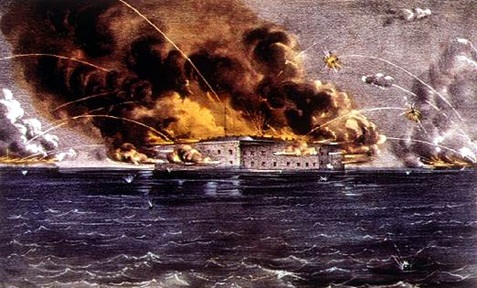
Ft Sumter On FireThat Chesnut always returns to the sincere – the actual experience. It anchors her prose in a way mere observation or gratuitous fiction could not. Her ability to grab descriptive slices of people and events and weave them in so transparently makes this something more alive than mere history is usually thought to be. 

But that’s what makes this real history. 

The war, the guns, the actions, the results – facts matter, and always will. But people, having experiences, and making choices, and feeling feels… in the end, that‘s usually what produces the wars and drives the actions. Like Anne Frank in her attic or Bridget Jones navigating high society in London*, that rare opportunity to zoom in and inhabit the past through the eyes and experiences of another – that’s why we love history. 

It gets even better.  

April 13th. – Nobody has been hurt after all. How gay we were last night…  

Yes, half of my students are 14-year old boys. This line is always a thing.  

19th Century Belles

Fort Sumter has been on fire. Anderson has not yet silenced any of our guns. So the aides, still with swords and red sashes by way of uniform, tell us. But the sound of those guns makes regular meals impossible. None of us go to table. Tea-trays pervade the corridors going everywhere. Some of the anxious hearts lie on their beds and moan in solitary misery. Mrs. Wigfall and I solace ourselves with tea in my room. These women have all a satisfying faith. “God is on our side,” they say. When we are shut in Mrs. Wigfall and I ask “Why?” “Of course, He hates the Yankees, we are told. You’ll think that well of Him.” 
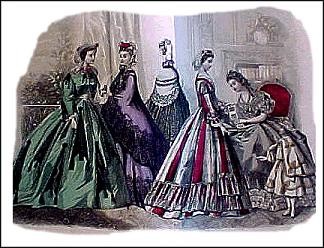
Mona Lisa“A satisfying faith” – once again, understated layers of meaning. Chesnut doesn’t directly comment, she portrays – with precision. I think she’s aware of us, all these years later, reading her through this… ‘documentation’ of events. Do you feel her Mona Lisa smirk on us?  

Not by one word or look can we detect any change in the demeanor of these negro servants. Lawrence sits at our door, sleepy and respectful, and profoundly indifferent. So are they all, but they carry it too far. You could not tell that they even heard the awful roar going on in the bay, though it has been dinning in their ears night and day. People talk before them as if they were chairs and tables. They make no sign. Are they stolidly stupid? or wiser than we are; silent and strong, biding their time? 

Southern nobility lived with themselves as slave-owners largely by learning not to ‘see’ those they enslaved. Perhaps overseers or smaller property owners were all too aware of what they were doing to real live people, but the elite seem to have largely trained themselves to give wide berth to troubling thoughts. 

Chesnut’s diary resonates, however, not only from her poignant word choices, but her willingness to watch, and listen, in the first place. She is fully present, and not afraid to see what she sees. We should do so well. 

Anyone could have made this observation – it’s glaring, once noted. People have an amazing capacity, though, to see what we wish to see and discard the rest. Whether slaves, dust, quiet students, personal faults, or moonwalking bears, our filters are really something else. We know this, but usually do a pretty good job ignoring this about ourselves as well. Ironic, right? 

So tea and toast came; also came Colonel Manning, red sash and sword, to announce that he had been under fire, and didn’t mind it. He said gaily: “It is one of those things a fellow never knows how he will come out until he has been tried. Now I know I am a worthy descendant of my old Irish hero of an ancestor, who held the British officer before him as a shield in the Revolution, and backed out of danger gracefully.” We talked of St. Valentine’s eve, or the maid of Perth, and the drop of the white doe’s blood that sometimes spoiled all… 

First Bull RunThe standard American History book will tell you the South was overconfident after First Bull Run, etc. I’d argue Colonel Manning and his ilk were way ahead of the crowd on this one.  

It’s still all a play, a fantastic story, to those involved at this stage. This is not something you’ll hear from men a year or two later in this war. Some will look back and shake their heads with a dark chuckle that they’d ever thought such things.  

Fort Sumter surrendered, and the war was officially begun. The next major action will be a bit better planned – although not by much. At First Bull Run, young men will actually be injured. Many will die. But not yet. 

April 20, 1861. – Home again at Mulberry. In those last days of my stay in Charleston I did not find time to write a word… I have been sitting idly to-day looking out upon this beautiful lawn, wondering if this can be the same world I was in a few days ago. After the smoke and the din of the battle, a calm. 

Indeed.
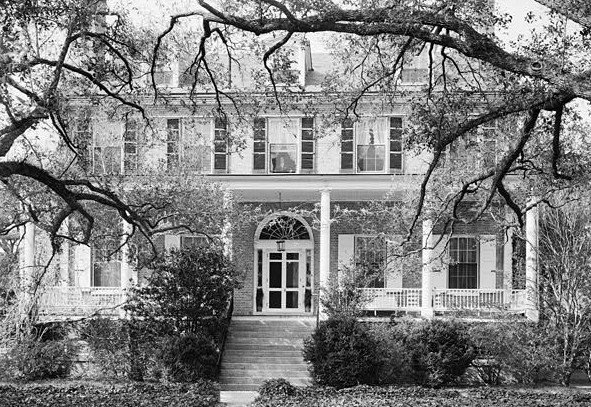
Mulberry Plantation

* Just seeing if you were paying attention.

RELATED POST: Mary Boykin Chesnut’s Diary, Part One (Repost)
Mary Boykin Chesnut’s Diary, Part One (Repost)

NOTE: I’m reposting a few past personal favorites as a palate-cleanser of sorts during this contentious election season. Better I own up to them this way than wait for Wikileaks to expose and belittle me all over the interwebs. 

(God, I wish Wikileaks would expose and belittle me all over the interwebs…)

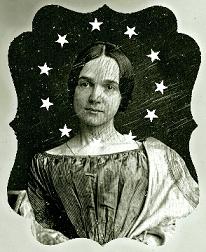
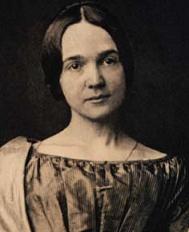
Mary Boykin Chesnut

Mary Boykin Chesnut was a Southern lady in the purest tradition.

Following Lincoln’s election in 1860, James Chesnut helped write South Carolina’s Declaration of Secession and during the subsequent war served as an aide to General Beauregard and President Davis, eventually rising to the rank of General. born into South Carolina’s political nobility and educated at one of the finest boarding schools in Charleston. Her husband was the son of a successful plantation owner and an upwardly mobile politico himself. 

Women in such circumstances were expected to be well-educated, but not given much opportunity to use their fancy brains. In retrospect, it might have been kinder to either keep them as ignorant as possible or let them do stuff – but such were the mores of the day. So she read, she observed, and she wrote. 

Lots. 

MBC Diary CoverThe diary of Mrs. Chesnut is one of the essential primary sources of the Civil War, and still readily available if you’re interested. It’s quite accessible to the casual reader – you won’t even know you’re learning history, I promise. 
The best-known passages describe events in and around her household (a very active place even when wars weren’t being started nearby) as the tensions between North and South approach conflagration, thanks in large part to the stubbornness of Union Colonel Robert Anderson, in command of Fort Sumter in Charleston Harbor. 

April 12th. – Anderson will not capitulate. Yesterday’s was the merriest, maddest dinner we have had yet. Men were audaciously wise and witty. We had an unspoken foreboding that it was to be our last pleasant meeting… Mrs. Henry King rushed in saying, “The news, I come for the latest news. All the men of the King family are on the Island,” of which fact she seemed proud. 

While she was here our peace negotiator, or envoy, came in – that is, Mr. Chesnut returned. His interview with Colonel Anderson had been deeply interesting, but Mr. Chesnut was not inclined to be communicative. He wanted his dinner. He felt for Anderson and had telegraphed to President Davis for instructions – what answer to give Anderson, etc. He has now gone back to Fort Sumter with additional instructions.  

When they were about to leave the wharf A. H. Boykin sprang into the boat in great excitement. He thought himself ill-used, with a likelihood of fighting and he to be left behind! 

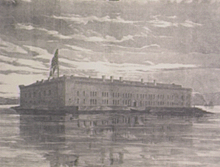
Ft. Sumter BeforeNever has a better case been made for teaching reading and writing, although her keen observations on human nature are perhaps harder to mandate.   
Mrs. Chesnut’s observations of her husband are appropriately loving and respectful, always. Her subtle commentary on others, however, brings her writing to life. Her snapshots of Mrs. King and the young Boykin are sympathetic, certainly – but tinted with bewilderment over their enthusiasm for war. 

The words themselves maintain perfectly plausible deniability, were posterity to challenge her tone – “Me? Oh, no no – I was just noting what I saw and heard… that’s all.” (*fans self with something lavishly decorative*)  

Underwater Tea Party“Men were audaciously wise and witty.” What a marvelous phrase. It sounds like the Mad Hatter’s tea party, but instead of pure chaos, her description is redolent of forced fearlessness and social gilding. F. Scott Fitzgerald has nothing on the wealthy belle when it comes to writing dinner parties.  
I do not pretend to go to sleep. How can I? If Anderson does not accept terms at four, the orders are, he shall be fired upon. I count four, St. Michael’s bells chime out and I begin to hope. At half-past four the heavy booming of a cannon. I sprang out of bed, and on my knees prostrate I prayed as I never prayed before. 

There was a sound of stir all over the house, pattering of feet in the corridors. All seemed hurrying one way. I put on my double-gown and a shawl and went, too. It was to the housetop. The shells were bursting. In the dark I heard a man say, “Waste of ammunition.”  

I don’t know who the man in the dark may have been, but if this were a work of fiction rather than a primary source, I’d point him out as a brilliant bit of literary slight-of-hand.  

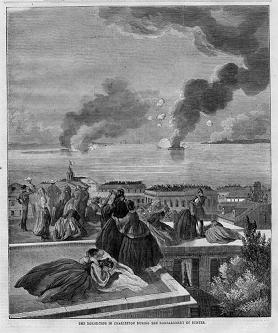
On The RoofWhile the rest of the city – and, by proxy, the South – celebrates the opening rounds of what will no doubt prove a majestic little melee, one anonymous voice just out of view notices that they’re firing land weapons at a fort designed to withstand attack by foreign navies. 
Nothing tangible is being accomplished – it won’t work. There’s kerfuffle enough, but no substance. There’s a cost, but for what prize?

I’m no expert on Mary Boykin Chesnut, but if someone who WERE wished to persuade me she’s taken literary license with her account to say things she could not, as a wife and loyal secesh, say – well, I wouldn’t argue. 

Last night, or this morning truly, up on the housetop I was so weak and weary I sat down on something that looked like a black stool. “Get up, you foolish woman. Your dress is on fire,” cried a man. And he put me out. I was on a chimney and the sparks had caught my clothes. Susan Preston and Mr. Venable then came up. But my fire had been extinguished before it burst out into a regular blaze. 

I realize it’s not exactly gut-splitting to read in the 21st century, but this is funny. It’s the 19th century equivalent of zany slapstick humor.  

If only the helpful man had said “nyuk nyuk!” and poked her in the eyes just after. 

Do you know, after all that noise and our tears and prayers, nobody has been hurt; sound and fury signifying nothing – a delusion and a snare. 

This sentence could be used as an example for about 43 different things in ELA, AND it’s a pleasure to read repeatedly. It’s like literary bruschetta. 

And remember that ‘plausible deniability’ from a bit ago? It’s about to get pushed to the limits of of beau monde.  That Chesnut is a real card. 

Next time.  

3 Stooges w/ MBC

RELATED POST: Mary Boykin Chesnut’s Diary, Part Two (Repost)

Blue Serials (10/16/16)

I know a place, ain’t nobody cryin’.  Ain’t nobody worried. No smilin’ faces, lyin’ to the races. I’ll take you there. 

Mercy now – I’m callin’ callin’ callin’ mercy. Mercy mercy – let me. I’ll take you there.

[[{“type”:”media”,”view_mode”:”media_small”,”fid”:”2459″,”attributes”:{“alt”:””,”class”:”media-image”,”typeof”:”foaf:Image”}}]]

i know you’re tired, in more ways than a few. We’re all ready for the elections to just happen so we can get on with the inevitable Apocalypse and be done with it. But in the meantime, my darlings…

Here are a few things you simply must not miss from the past few weeks in Edu-Bloggery:

Cult of PedagogyIs Your Classroom Academically Safe? – Jennifer Gonzalez, Cult of Pedagogy. I almost overlooked this post. I’m not a fan of reminders to be warm and fuzzy, and as a teacher of high school freshmen I have limited patience for the “po’ bebbee” school of teacher-scolding.

But then this bit caught my eye:

Here’s where I start to get irritated. “So did you say something?” I ask. “Did you tell your teacher you didn’t understand?”

“No,” my kid says. Then she adds, “I didn’t want to get in trouble.”

THAT’s something I deal with every day. Kids so trained in the terror of being wrong that they either lock up and do nothing or stick with the safest possible non-answers and filler, perfectly formatted but accomplishing nothing. So I read the post. 

Gonzalez wasn’t quite going the direction I anticipated, but she’s tricky like that. Here, she analyzes reasons kids don’t know what’s going on even when we’re positive we covered it eleventeen ways and gave every opportunity for them to ask. It’s not about teacher-blaming, and never about kid-shaming, but it is thought-provoking and… *sigh* OK, I’ll admit it. It was a bit warm’n’fuzzy as well – but in practical ways, dammit! 

Get practical with @cultofpedagogy on the twittering and let her provoke you as well. 

Scott HaselwoodStranger Things and the Upside Down World – Scott Haselwood, Teaching From Here. Haselwood has a passion for #edtech, mathematics, and kids. In his world, however, the first two are always about reaching, challenging, and uplifting the third. 

It’s what keeps my eyes from crossing every time he’s all excited about another app. Instead, we’re practically mothers of a different brother. Or… something like that. 

In this post, Haselwood starts with the Netflix Series “Stranger Things,” talks classroom realities a generation ago and today, and ends up on the importance of saving kids from the big darkness. I know it sounds odd, but I assure you – it comes together just fine. The video clip from the show is creepy as hell, but other than that – bring in the unicorns. 

Follow @TeachFromHere on the twittering and get frightened-yet-enlightened on a regular basis.  #oklaed 

Rob MillerBecause You Like Me… – Rob Miller, A View From The Edge. Is it important for your students to like you? Is it important for you to like your students?

While neither of these are goals in and of themselves, Miller thinks they matter. And he makes a pretty good case, with the grace and deftness we’ve come to expect from pretty much everything he writes.

Follow @edgeblogger on the twittering and get graced up and defted out on a regular basis. For realsies.  #oklaed 

Peter GreeneWhy Are Teachers So Stressed? – Peter Greene, Curmudgucation. Greene is perhaps edu-bloggery’s most prolific and pithy watchdog when it comes to ed-reformy nonsense, political b.s., and every other assault on actual learning, equity, and life-not-sucking for all the little children.

It’s easy to take for granted where he’s going with some of his favorite topics, but you risk missing the richness in so much of what he says. It’s like listening to music – sure, you can have it playing while you work on something else, but sometimes you’ve just gotta stop and close your eyes to hear it fully. THIS is a post you should stop and process fully. 

Although, I mean – obviously you’ll have to have your eyes open to do that. Let’s not take the analogy too far. 

Follow @palan57 on the twittering and keep processing. 

David Wong5 Helpful Answers To Society’s Most Uncomfortable Questions – David Wong, Cracked.com. This one breaks several rules of the weekly roundup.

First, it’s over a year old. But I just discovered it this week, and I’d argue it has fresh relevance and will probably (and unfortunately) remain relevant for some time to come. 

Second, it’s not really an edu-blog post. It’s not by an educator. It’s not even school-appropriate. Which leads me to…

Third. Oh the potty mouth! Tsk tsk. Unforgivable vulgarity. Must have been brought up in public schooling. You’ve been warned. 

What Wong tackles here, though, are some of the more antagonistic questions of our day – generally posed by those holding top slots in society’s power structures, and annoyed at what they perceive to be stone-throwing from below.

So, even when personal choices finally come into play, you’re still choosing within that framework — you can choose between becoming a poet or a software engineer, but only because you were raised in a world in which other people had already invented both poetry and computers. That means every single little part of your life — every action, every choice, every thought, every emotion, every plan for the future, everything that you are and do and can potentially be — is the result of things other people did in the past.

Look, just go read the thing. Have I ever led you astray before? And follow @JohnDiesattheEn on the twittering for more thoughtfulness disguised as snarky humor flung your way like truth poo. 

That’s it this week my beloved #11FF.

I’m trying not to talk #OKElections16 in the weekly wrap-ups, but please educate yourself and those around you and advocate for thoughtful voting – especially at the state level. 

You’re doing more than you realize, and better than you think. I promise.

[[{“type”:”media”,”view_mode”:”media_small”,”fid”:”2461″,”attributes”:{“alt”:””,”class”:”media-image”,”typeof”:”foaf:Image”}}]]

I’ll Support Vouchers If You’ll Support Parent Choice

School ChoiceI think it’s a shame the way so many voucher proponents are so staunchly against parent choice. 

Oh, I know they fling these two words about a great deal, but they contradict themselves repeatedly in their proposals. And I, for one, think it’s time we call them out on it. 

For those of you who haven’t kept up with the conflict, vouchers are a means by which parents would be given a percentage of the per-pupil funding otherwise going to their local public school in order to use that money at a comparable educational institution of their choosing. The schools would thus lose a percentage of the money they’re allotted per student, the argument goes, but they’d also have one less student to serve – thus reducing the cost of bussing, heating and air, teacher salaries, food service, nursing, administration, grounds care, building maintenance, technology, and classroom supplies by a comparable percentage each time a student leaves. 

Parent choice. 

Opponents of vouchers are repeatedly called out as being against “parent choice,” when nothing could be further from the truth. I wholeheartedly support the right of every parent to homeschool their child, or send their child to a private school – religious or otherwise – or to seek out strictly online options, or whatever else they see fit to do. And in Oklahoma, they already have and always will have those options, completely and fully protected by both popular opinion and explicit legislation.

The only point of dispute is whether or not public tax dollars will be used to assist these parents in their endeavors. That’s a perfectly reasonable debate to have. 

Voucher Boy

Voucher supporters argue that the money belongs to the student or the parents, to be used for whatever they think best for their child. Opponents counter that public money belongs, once collected, to the public, to be used for whatever is determined to be best for the community. 

Voucher supporters argue that schools need competition and tougher oversight to improve, while opponents counter that schools are not businesses, their goals are not profits, and their kids are not products – they need support if they are to improve. 

But the most flyer-friendly, talking-point-ready argument from voucher supporters keeps coming back to that term – “parent choice.” So if we must have this discussion yet again, let’s at least make sure the parents are, in fact, being offered a choice.

I’m ready to support vouchers. Seriously. In the name of parent choice. But…

If we institute vouchers, they should be for the full amount of per-pupil spending designated by the state. If the money belongs to the kid, as proponents insist, then it all belongs to the kid. Tying it to family income level or district ‘grades’ on that horrible A-F report card makes no sense if the issue is parent choice. If it is, in fact, their money, then all parents should be granted the same choice to take it and go. 

Vouchers EquityIf we institute vouchers, all participating institutions should be required to accept every student who applies. If they accept any vouchers, they should be required to accept all vouchers. Otherwise, that’s not parent choice. If we’re going to rattle on incessantly about the holy status of parental control, let’s make it a fact as well as a talking point. Whatever their child’s special needs, academic ability, personality traits, behavior issues, background, race, religion, or sexuality, parents should have the widest possible range of choices what’s best for their child.  

If we institute vouchers, no participating institution should be allowed to charge parents even a dollar above and beyond the value of the voucher. Otherwise, that’s not parent choice. I realize this may prove a hardship for some schools, who already run on a rather tight budget. But surely this is easily addressed by first identifying waste and abuse. I mean, it’s not like parents aren’t already pouring godawful amounts of money into these places. They’re obviously just not using it efficiently. 

I’m sure the various sectarian and other private schools in the state could cut back on administrative costs. And have you seen the numbers spent on non-classroom positions? It’s shameful. 

They don’t really need a five-day school week when they could get in just as many hours going Monday through Wednesday if they’d just tweak the schedule a bit. Sorry, teachers – you’ll have to put in full work days like the rest of us; you might not get home in time for Ellen and bon-bons every afternoon. 

If we institute vouchers, all participating institutions should be expected to provide supplies and equipment for any child participating in any extra-curricular activity offered by the school. Of course they can sell candles or whatever to raise money if they prefer – but it must be consistent with what every other child participating is doing or able to do. Otherwise, it’s not really parent choice. We also need to talk about providing breakfast, lunch, and of course transportation to and from school. Art supplies. Uniforms. Additional reading or math tutoring as required. If a school is only able or willing to serve some students and not others, then that’s not really parent choice

Vouchers ProtestWhile we have any number of top quality private options across Oklahoma currently, there are also those less… reputable, and there’s no telling what sorts of fly-by-night, exploitative institutions might appear once all that state money is flowing so freely. So if we institute vouchers, all participating institutions should be subject to some sort of quality control by the state. We’re already considering legislation to protect adult students from for-profit colleges; refusing to do the same thing for minors would be blatant negligence.  

Surely it can’t be that burdensome to comply with a few basic requirements and submit a few reports to make sure things are above-board. Much like with public schools, we must of course proceed under the assumption that all private school administrators are scam artists and their teachers both incompetent and wanna-be child-rapists. 

Besides, you don’t expect us to just keep throwing money at your little “school” without asking what we’re getting in return, do you? It shouldn’t really bother your staff how many man-hours are involved in red tape and compliance if you have nothing to hide. This isn’t your money, you know – didn’t we cover that part already?

Vouchers CartoonAnd of course, if we institute vouchers, we absolutely must have an annual ‘report card’ of some sort so parents can know how various schools are doing. Surely the whole premise of vouchers and their ability to magically solve problems, increase productivity, and reduce costs, assumes that parents are making informed choices, yes? If they’re not capable of figuring out if their child’s existing public school is doing a good job or not without something published in the local press to great fanfare every year, I don’t know how you’d expect them to choose from dozens of other options they’ve never even seen.
As a public school teacher, I’ll take my chances with that kind of parent choice. I even genuinely hope that some good comes of it – some innovation, some mutation of which we’ve not yet conceived… anything that ends up being good for kids.

But if voucher supporters aren’t willing to get serious about parent choice, then I’m not sure I can take their rhetoric seriously. If they’re not really in this for the reasons they claim, what in subsidized elitism’s name could they be fighting for instead?

I, for one, can’t imagine.

To Get Better Republicans (You Might Have To Vote For Some Democrats)

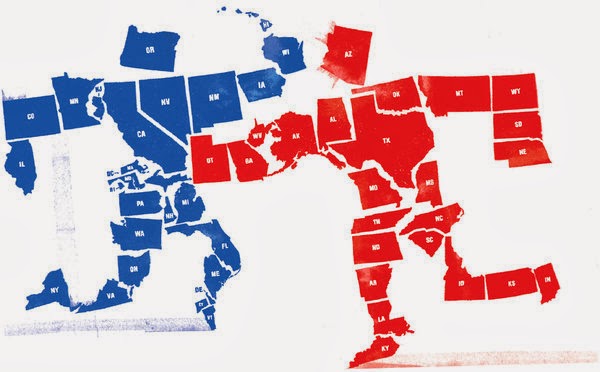
Dems vs Reps StatesI haven’t done a very good job being diplomatic this election season. I’ve been too annoyed, too frustrated, and at times a bit too idealistic. It feels like we have the best chance in a generation to make a real difference in state elections this November, and…
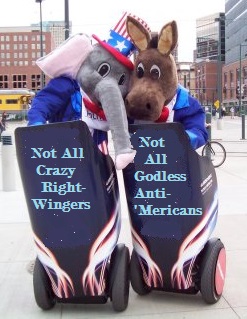
We won’t. I’m pretty sure we won’t. 

I don’t even know what counts as success in my mind. I’m certainly happy that a few of the crazier options were eliminated in primaries. Several existing problems termed out. The activism and commitment of #OklaEd has already made a difference, right?

Just… agree. Please. 

Along the way I’ve been accused of being all kinds of things – some with elements of truth, others simply bizarre. My favorite, though, is being called a socialist. A crazy godless liberal, out to destroy American culture and undermine the One True Faith along the way.  

Because those are the two options, apparently – borderline fascist, or jobless hippie reprobate. 

The thing is, as I communicate with various legislators and edu-candidates in my efforts to brainwash the masses for #OKElections16, the majority of them don’t really fit their respective party’s supposed mold. There are few true progressives in the mix – Representative Emily Virgin would proudly wear that moniker, I suspect. Candidates Paul Sullivan and Jason Lowe might fit that description. But they’re in the minority.  

Dems vs Reps BuddiesBut most of our Democratic candidates have strong ratings from the NRA. Several are pro-life and pro-traditional family. Very few are running on social issues – the handful who want to legalize marijuana are far more interested in its potential as a revenue source than freeing anyone’s minds and hoping the rest will follow. Most simply want the legislature to meet its basic obligations under the Oklahoma Constitution and stop telling people what they can and can’t believe or who they can and can’t fall in love with. 

Asking the government to stick to the constitution and stay out of people’s business used to be a conservative position, didn’t it?

As much as it pains me to admit, there are also more sensible Republicans out there than you’d think. Some currently hold office, others are running – or were, until primaries were settled. 

The GOP currently holds substantial power at the state level, and the pressure can be brutal for anyone unwilling to fall into goosestep. Some, like Lisa Kramer and Tom McCloud, were defeated in primaries – essentially at the bidding of their own parties. Their sins weren’t letting gay people have a place to pee, or taking anyone’s guns. They were both pro-life, pro-capitalism, pro-fiscal responsibility candidates… they simply refused to fall into line with ALEC and OCPA marching orders regarding manufactured austerity and elitist, destructive policies towards public education and basic government services. 

They let reality and the good of the whole interfere with ideology and the will of their out-of-state fiscal overlords. 

I look at other Republican candidates who don’t seem like bad people, or sitting legislators who seem to genuinely want what’s best for Oklahoma and all of its citizens, and I catch glimpses of the sorts of pressures they’re under to swing further and fuhrer towards the Cliff of the True Believers. Some don’t survive challenges from their own parties, while others jerk to the right repeatedly – like a bad shopping cart – in order to save their capital for a handful of issue they consider most essential. 

Dems vs Reps Brains

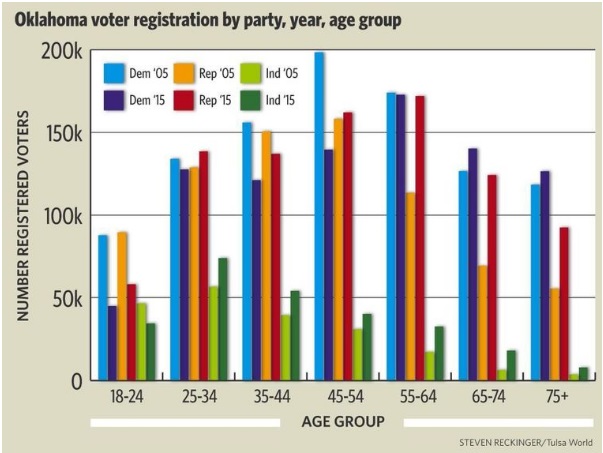
This strategy on the part of the GOP works for several reasons. First and foremost, the extremists have all the money. People with interests far beyond the 4-day school week or whether or not SoonerCare should cover single mothers write big, big checks for scary platforms. Second, primaries – and thus elections in general – are largely controlled by the extremes. Primary voters tend to be the most involved, and they vote at every opportunity. 

But it’s the third reason that has me most discombobulated at the moment. And, my Republican friends, I’d like your help recombobulating – together, perhaps. 

Tell me if this pattern sounds familiar:

Several Republicans run for the same office – state legislator, governor, whatever. One is crazy right-extreme, one is fairly average as Oklahoma Republicans go, and one is relatively moderate by state standards. 

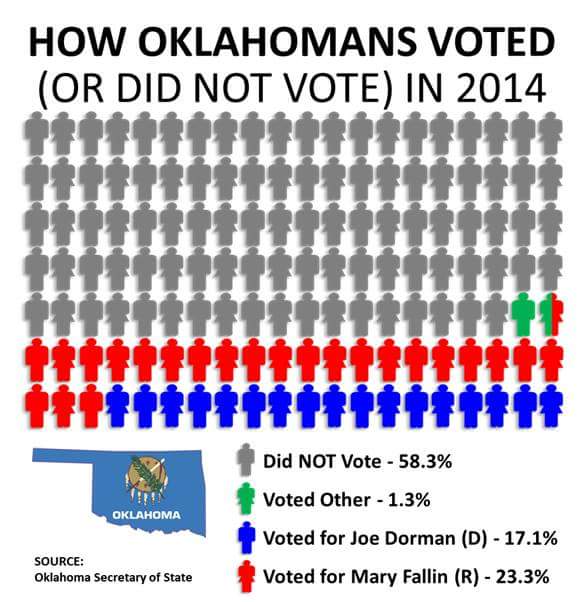
Because it’s primaries – where extremes tend to win out – the candidate running furthest to the right wins the nomination. He or she may represent a very small percentage of Republicans in their realm, but the rest didn’t vote. They have jobs, or don’t like to think about politics because it’s depressing, or otherwise simply don’t get involved. If they DO get involved, it’s not until the “real” elections. 

Between the money and the nature of primaries, average or moderate candidates are destroyed – and not just in terms of tallied votes. Their character is maligned, their qualifications belittled, and their right to absorb oxygen the rest of us could be breathing severely questioned. 

Soon, most decent Oklahomans not interested in spending tens of thousands of dollars just to have their families strained, years of their lives exhausted, and their character and qualifications assassinated, quickly learn not to get involved in politics. 

Leave it to the crazies, in other words. 

OK Voter Registration

Then, come November – when a slightly larger percentage of the potential voting population is starting to pay attention – voters are left without moderate choices. Many will show up and mark (R) without a second thought, then turn around and vent on social media about THOSE IDIOTS IN CHARGE OMG WHO ELECTS THESE PEOPLE?! 

Ask from whom this hell polls, friend – it polls from thee. 

Others will pay slightly more attention and realize they are left with two options – a right-winger they may not really like, and who they don’t believe represents their attitude or goals, and someone with a (D) next to their name who they can only assume wants to initiate state-wide orgies, legalize heroin, make everyone use the same restrooms, and open our borders to any terrorists willing to immediately apply for welfare. 

They’ll hold their nose and vote for the guy on the far right. It’s not that much different from what we hear in Presidential elections every year – “I’m not voting FOR X; I’m voting AGAINST Y.” 

How do we change this?

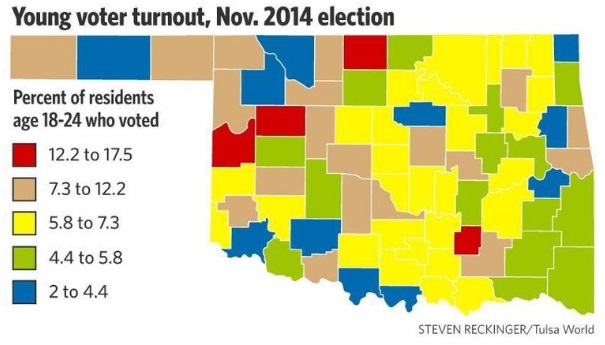
First, we need to get involved in state level elections at the earliest possible stages. As soon as candidates file in April, we should be researching, writing, and then volunteering and donating. At the very least, we need to consistently vote in primaries, and get our friends, co-workers, and loved ones to vote as well – even in those damned runoffs, if they happen in our district. 

OK Voter Turnout

In other words, if you want better choices, you need to do something about it. 

Second, and more radically, we need to be willing to vote for that scary (D) person on the ballot if the alternative is more of the same. I assure you, the Left is NOT taking over Oklahoma if you do. I doubt they’ll even be able to muster a good pagan orgy or two in their first term. 

More Democrats would merely put some drag on the more extreme behavior of the state GOP. It would be slightly harder to pass blatantly unconstitutional, red-meat bills. It would require slightly more compromise to cut basic services. It wouldn’t be a true balance, but there’d at least be a few more voices at the table. 

More Democrats would make it slightly more difficult for the state to do those crazy things you said weren’t your idea and stop-blaming-me-we’re-not-all-like-that-I-don’t-know-who-elects-these-people. A few unexpected (D) wins would say to the powers-that-be that you demand better options if you’re to remain loyal to your party. More reasonable options. People more like… you. 

Pay attention to your choices on November 8th, starting now. There’s a good chance that “other” choice on your ballot isn’t the lefty nightmare you picture, but a rational, educated individual. He or she may not believe exactly as you do, but then again – neither do the people you’ve BEEN voting for. The question is, which one is more likely to lead to positive change?

The Republicans used to be the party of facts, even if they hurt your feelings, and accountability, even if it proved uncomfortable to assert. You want a better Republican Party? Expect more of it, starting November 8th.

OK Doesn't Vote