I’m a big fan of reading in social studies. I realize there are reasons we don’t do more of it, but I don’t want ‘lack of ideas’ to be one of them.
At the end of this post is a link to some content-specific lists compiled from teacher suggestions at various workshops and in my own department. I’ve read most of them along the way, but some descriptions are paraphrased from other sources. I’ve tried to stick with titles either recommended by multiple teachers or at least recommended somewhat passionately by whoever did the recommending. I’ve also tried to leave out titles not currently in print, since that would render them rather difficult to use in class.
I’m also looking for your suggestions for other titles, or comments if you’ve used any of these in class yourself – what you liked, or didn’t, thoughts for other teachers considering them, or other titles you’d use instead – and why. Don’t do it for me – do it for… *sniff* the children.
Questions about why and how and when to fit in reading to an already overcrowded schedule deserve more time and wisdom than I’m able to give them here, but that hasn’t stopped me from anything else on this site, so…
First – I teach a non-tested subject in a district which has consistently prioritized literacy for over a decade. I have my kids read because I can. I never ever judge another teacher for doing what they think is best for their kids in their classroom, but I will try to make the case for you to consider rethinking the time you’re not dedicating to reading.
OK, I might actually be judging you a little. But I assure you, I’ll do my best to hide it.
Second – In my department, every class uses at least two novels or other ‘outside books’ (i.e., non-textbooks) per semester. Most of us use three or four. If you can’t do that, do one per semester. Different teachers in the department do it different ways – some read to their kids, others have them in small groups, etc. We struggle with the right balance between supporting the reading (previewing vocab, setting the scene, etc.), holding the kids accountable for reading (quizzes or small projects), and just leaving them alone to READ without always thinking of it as one more requirement to check off the list.
But we all read. Regularly.
Third – Reading supports content. ‘Going deep’ on a few key moments, issues, or individuals provides an ‘anchor’ in students historical understanding. It makes knowledge from before, during, and after that anchor ‘stickier’ – easier to understand, easier to remember.
Fourth – Reading is good for them. It’s good for them long-term for a dozen reasons you know as well as I do. It’s good for them short-term because it helps them learn to focus and think in ways disrupted by modern conveniences and technology. I’m not anti-tech by any means, but our darlings need more practice than ever before committing to one linear task at a time. So do many of us.
Fifth – Reading has a chance of being enjoyable. I don’t want my kids to leave my class hating history for all the reasons many of my peers did years ago. History is so neato keen awesome swell strange, don’t you think? Novels increase the odds they’ll get a taste of that. Do you really think their test scores will be higher if they hate EVERYTHING they’re supposed to know, but in more detail?
Speaking of which…
Sixth – Reading increases test scores. I know, I know – we’re trying to pretend to be above such things. But how much of YOUR state test is reading comprehension? Even if it’s not, how many of your kids are missing stuff they shouldn’t miss because they can’t or won’t read the entire question, the provided excerpts, or whatever?
Seventh – Reading is good for them. I know I said this one already, but it merits repeating. I realize every state has different pressures, and every district and building and classroom different challenges, but at some point we all signed up for this gig to help kids, right? I want to make it to retirement without getting in trouble as much as anyone, but if we’re not pushing for what’s best for our kids while we’re here, maybe we should bail now and go sell shoes or something where we’ll do less damage.
There’s a discussion worth having about how to come up with books, etc. Feel free to email me if you’d like some ideas, but chances are you or those around you have a half-dozen things you could try if you decide it’s important to you. There are usually ways. That being said, I’m always happy to discuss – [email protected].
I’m not even going to talk about the national elections, other than to note we sent back to the U.S. Congress – by wide margins – the exact sorts of people I’m regularly criticized for assuming the majority of Oklahomans support. So… I’ll let you work that out.
But the state elections. I just…
I really thought they’d go better.
Not well. I didn’t expect them to go well. I was no longer hoping for a dozen seats flipped from “entrenched radical ed-hater” to “teacher running for the first time.” I’d resigned myself to the idea that there might not be much to celebrate.
But I thought we’d get something.
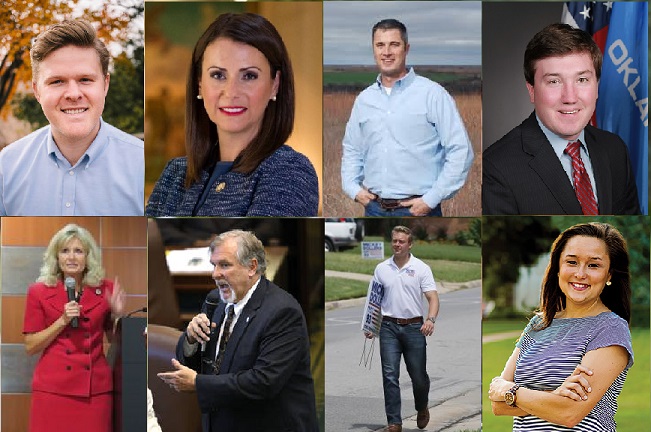
I don’t wish to disparage the accomplishments of the handful of winning edu-slators yesterday. Several incumbents historically supportive of public education kept their seats – David Perryman (D) of HD56, John Montgomery (R) in HD62, Jadine Nollan (R) for HD66, Katie Henke (R) in HD71, and Cyndi Munson (D) of Lake Hefner.
New candidate Mickey Dollens (D) took HD93, no doubt through his genuine commitment to the district and his unmatched work ethic. (His opponent’s ability to personally alienate and horrify almost everyone in the district over the past decade probably didn’t hurt, either.) Forrest Bennett (D) won HD92 and Chris Kidd (R) SD31. So… that’s something.
But dozens of others went down in flames. Not even close in most cases. Even candidates like John Waldron and Lloyd Snow were defeated, while far too many other voices passionate for positive change were simply crushed.
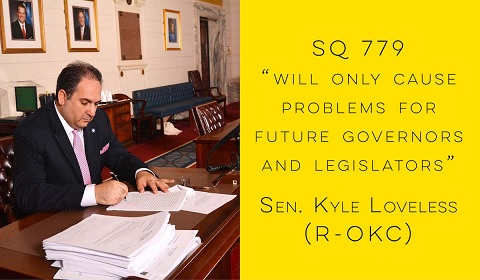
SQ779, after polling well for months, was soundly defeated as well. There were good reasons to vote against it, but added to the rest of the night, it rubbed enough rock salt into the wounds of public education to keep our highways clear for another decade, were it ever to snow again – which of course it won’t, but-don’t-say-climate-change-because-Inhofe-once-had-a-snowball.
It sends a pretty strong message. One I think it’s time we embrace. This is a democracy, after all, and when the people issue this sort of mandate, it’s our civic and professional duty to respect it.
So… I quit.
Not the profession, necessarily. I mean, maybe – it depends on what else I can do at 50 years old. I’m reasonably intelligent and gregarious, though, and despite my shifting politics I’m still an angry old straight white guy – that gives me some leverage in Trump’s America, yes?
But it’s time for #OklaEd to get the message. You are not wanted here. The vast majority does not think you’re worth even what you make now, and they certainly don’t think most of your kids deserve any better. Strong percentages say “we could fix education if only these teachers weren’t in the way” or “those damned districts have been given too much without accountability.” And they believe it. To paraphrase their patron saint, “Public education is not the solution to the problem; public education is the problem.”
I know what many of you will say:
“We’ll just regroup and do even better for our kids!”
“It’s not just a job; it’s a calling!”
“It’s a marathon, not a sprint!”
Like Boxer, you are sure if you only work harder, eventually Animal Farm will prosper. Your convictions about how things should work and what most people must believe become your Napoleon, and no matter how desperately reality tries to get your attention, you remain darned and determined to build that windmill – the better to tilt at, my dear.
That’s noble, in a way, but like Boxer, you’re wrong. Not just “how sad for you” wrong, but “you’ve become part of the problem” wrong. You’re the wife buying her alcoholic husband beer then complaining about how he treats you. You’re the friend doing everyone else’s homework so they won’t get a bad grade, unwittingly condemning them in the long run by enabling their bad choices.
Denial is a powerful sedative – it allows us to tell ourselves all sorts of deluded stories. But it only perpetuates and strengthens the problems we’re trying to avoid.
Oklahoma doesn’t want you here. They don’t like you, and they openly despise many of your kids. If you stay, and keep doing what you’re doing, you’re supporting that – willingly or not. I’m sorry, but it’s true. Don’t get careless in your martyrdom – there are kids in other states who need good teachers. There are other meaningful ways to make a living.
It’s not just about a pay raise – I’d easily support a plan to fund public education and pay young teachers and provide for students that carried a provision denying veteran educators more than a little cost-of-living bump here or there. It’s about a decade of single-party rule with one theme: “You are the problem. If only we could get rid of greedy superintendents and lazy teachers and useless support positions, we could fix it all. But… you know those teachers’ unions and their entitlement mentality…”
We’re largely to blame. We’ve proven year after year that we don’t vote in meaningful numbers, or if we do, we vote our fears instead of our ideals. We jump and bark and pee on their legs every time they dangle “Pay raise! Pay raise! We’ve really got a plan for a Pay Raise! Come get it, boy! That’s a good constituency!”
It’s embarrassing.
The party in unmoderated power could have addressed this any damn time they wished over the past decade. And it’s already starting again. Sitting legislators who’ve just watched the state reject all things education by historic margins are setting up that football and asking us to take another run at it because this time they’re totally certain for REALSIES going to hook us up!
Dance, you pathetic monkeys – dance!
The 2017 Oklahoma State Legislature would be foolish to pass actual teacher raises. They’d be crazy not to ram through the voucher bills so long sought after by their out-of-state fiscal overlords, mandate consolidation across the board, and change all the state standards yet again just to prove they can. Elections have consequences. Legislators don’t do things to be nice; they do things because it gets them elected, and re-elected.
Supporting public ed is a losing issue in Oklahoma. Like, WAY losing. “And-your-little-dog-too” losing.
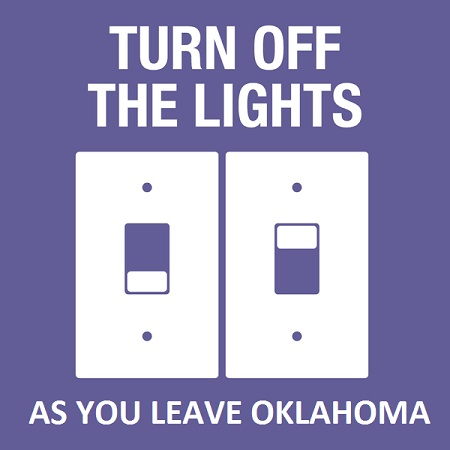
This past February, I wrote what many assumed was a hyperbolic call for all of #OklaEd to simply turn in their keys and go. I wasn’t being hyperbolic, and I’m feeling great internal pressure to stand by it today. If I had the power, I’d set Winter Break as the ideal time to get a real job – or a teaching gig elsewhere. Classroom teachers, para-professionals, administrators, bus drivers, lunch ladies, school secretaries – just sign the pink slip over to the victors and wish them well.
I don’t have that power, so do what you will. If you stay, however, spare us the noble platitudes. I’m all for sacrificing yourself when it serves a purpose, but the only thing you’re accomplishing here and now is to perpetuate the conviction of those in power that they’re on the right course and should keep it up. Anything that doesn’t work, you’ll cover for them whatever the cost to yourself, your family, and your kids.
And it’s wrong.
I realize I’ll be accused of being a “sore loser” – of taking my blog and going home. There’s probably some truth in that, but not enough to put the house up for sale (nice 3-bedroom, Union schools, glorious breakfast nook, if you’re interested). I think I’m being quite reasonable – Obama won’t be strapping himself to the desk in the Oval Office, desperately clutching his favorite pen, yelling that he’s staying “for the children!” He’ll politely pack up a few personal items, and call a cab.
I’ve been too vocal to back down at this point. It may take a few months, but I don’t see any way out of it without selling out everything for which I’ve fought – albeit unsuccessfully – over the past year. I’ll be reworking the website to focus more on general content and teacher issues, washing my hands of state politics once the moving van is loaded.
I appreciate those of you who worked so hard and did so much over the past few years trying to change things in Oklahoma. I’m sorry we accomplished so little to assist you. I wish you better.
Graduation ceremonies provide an interesting dilemma when it comes to questions of church-state separation. They are inherently connected to public schooling and school officials, and participating students are largely accountable to those authorities during the event. At the same time, they often take place outside of school hours and off school grounds, and are in most cases technically voluntary – students need not attend in order to graduate.
So are they bound by the same restrictions established in Engel and Abington and clarified by Wallace and other subsequent decisions? The short answer is yeah, they pretty much are.
In 1989, a middle school principle named Robert Lee in Providence, Rhode Island selected a local Rabbi to deliver prayers at a middle school graduation ceremony – which I guess is a thing in some places. Lee gave the Rabbi a pamphlet called “Guidelines for Civic Occasions,” which provided tips on “inclusiveness and sensitivity” and encouraged “non-sectarian” prayers.
Lee’s intentions were clearly good. The Rabbi followed the protocols. The same basic scenario was repeated annually across the state at both middle and high school events.
Daniel Weisman, a parent, objected to prayers of any sort being an official part of the ceremony. His concerns were overruled, and the Rabbi delivered a very nice benediction. Weisman took his case to the federal courts claiming this amounted to “establishment” and was thus unconstitutional.
The federal district court applied the “Lemon Test” and agreed. The First Circuit Court of Appeals followed suit. Finally, in Lee v. Weisman (1992), the Supreme Court in a 5-4 decision confirmed the lower courts – you can’t do that.
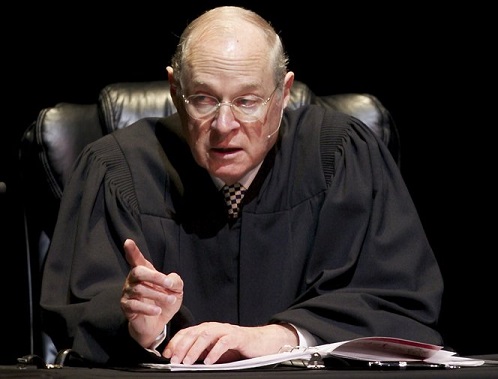
Justice Anthony Kennedy wrote the Majority Opinion. I’ll try to limit myself to the highlights…
The school board… argued that these short prayers and others like them at graduation exercises are of profound meaning to many students and parents throughout this country who consider that due respect and acknowledgment for divine guidance and for the deepest spiritual aspirations of our people ought to be expressed at an event as important in life as a graduation…
Daniel Weisman filed an amended complaint seeking a permanent injunction barring petitioners, various officials of the Providence public schools, from inviting the clergy to deliver invocations and benedictions at future graduations… {A} a live and justiciable controversy is before us…
I kept that last bit because it’s fun to try to pronounce “justiciable.” Go ahead, try it a few times. Justishubble… JUST-is-a-bull… a LIVE and JUSTshibble controversy!
This is one of those awkward moments that I’m the only one having fun, isn’t it?
The court applied the three-part Establishment Clause test set forth in Lemon v. Kurtzman (1971). Under that test as described in our past cases, to satisfy the Establishment Clause a governmental practice must (1) reflect a clearly secular purpose; (2) have a primary effect that neither advances nor inhibits religion; and (3) avoid excessive government entanglement with religion…
There it is again – that zany ol’ Lemon Test. You should be getting used to it by now.
The court determined that the practice of including invocations and benedictions, even so-called nonsectarian ones, in public school graduations creates an identification of governmental power with religious practice, endorses religion, and violates the Establishment Clause…
Kennedy eventually addresses some of the arguments made in defense of graduation prayer:
State officials direct the performance of a formal religious exercise at promotional and graduation ceremonies for secondary schools. Even for those students who object to the religious exercise, their attendance and participation in the state-sponsored religious activity are in a fair and real sense obligatory, though the school district does not require attendance as a condition for receipt of the diploma…
In other words, just as in Wallace v. Jaffree (1985), calling something “voluntary” doesn’t change all of the rules when it comes to minors and government coercion. He’ll come back to this theme later.
Kennedy then addresses the suggestion that prohibiting the state-sponsored prayer in some way interferes with the “free exercise” of those desiring its inclusion.
For those of you just tuning in, the First Amendment opens with not one, but two ‘freedom of religion’ clauses – the “establishment clause” (government can’t do anything to promote or encourage a particular religion) and the “free exercise clause” (government can’t do anything to discourage or limit a particular religion.) Government “neutrality” sounds pretty straightforward, but in practice these two goals are often in tension with one another.
The principle that government may accommodate the free exercise of religion does not supersede the fundamental limitations imposed by the Establishment Clause. It is beyond dispute that, at a minimum, the Constitution guarantees that government may not coerce anyone to support or participate in religion or its exercise…
The State’s involvement in the school prayers challenged today… is as troubling as it is undenied. A school official, the principal, decided that an invocation and a benediction should be given; this is a choice attributable to the State, and from a constitutional perspective it is as if a state statute decreed that the prayers must occur. The principal chose the religious participant, here a rabbi, and that choice is also attributable to the State…
He continues, but the point is there were clearly a series of decisions made by adult representatives of the state which established required religious ceremonies for minors. The fact that the authorities in question made a good-faith effort to be as inclusive as possible doesn’t negate this reality.
Here’s a section I really like:
The First Amendment’s Religion Clauses mean that religious beliefs and religious expression are too precious to be either proscribed or prescribed by the State…
Just because you’re being all justiciable doesn’t mean you can’t keep it catchy, right?
It must not be forgotten then, that while concern must be given to define the protection granted to an objector or a dissenting nonbeliever, these same Clauses exist to protect religion from government interference.
James Madison, the principal author of the Bill of Rights, did not rest his opposition to a religious establishment on the sole ground of its effect on the minority. A principal ground for his view was: “{E}xperience witnesseth that ecclesiastical establishments, instead of maintaining the purity and efficacy of Religion, have had a contrary operation”…
This echoes a theme found in Engel and similar cases since – that government entanglement in religion is not only bad for those of other faiths, but it’s bad for the entangled faith as well. Cooperation between church and secular authority rarely ends well for either church or state.
Kennedy elaborates on other legalities before addressing my favorite argument by defenders of the prayers – that the world isn’t always going to cater to your weird beliefs or other druthers, so you’d better get used to it.
To endure the speech of false ideas or offensive content and then to counter it is part of learning how to live in a pluralistic society, a society which insists upon open discourse towards the end of a tolerant citizenry. And tolerance presupposes some mutuality of obligation. It is argued that our constitutional vision of a free society requires confidence in our own ability to accept or reject ideas of which we do not approve, and that prayer at a high school graduation does nothing more than offer a choice.
The actual case in question is a ‘middle school’ ceremony of some sort, but the Court had earlier acknowledged it was collectively addressing all varieties of such ceremonies.
By the time they are seniors, high school students no doubt have been required to attend classes and assemblies and to complete assignments exposing them to ideas they find distasteful or immoral or absurd or all of these. Against this background, students may consider it an odd measure of justice to be subjected during the course of their educations to ideas deemed offensive and irreligious, but to be denied a brief, formal prayer ceremony that the school offers in return. This argument cannot prevail, however. It overlooks a fundamental dynamic of the Constitution.
In other words, one might make an interesting argument that this is part of the educational process… but they’d be wrong. Or so Kennedy explains:
The First Amendment protects speech and religion by quite different mechanisms. Speech is protected by ensuring its full expression even when the government participates, for the very object of some of our most important speech is to persuade the government to adopt an idea as its own…
The method for protecting freedom of worship and freedom of conscience in religious matters is quite the reverse. In religious debate or expression the government is not a prime participant, for the Framers deemed religious establishment antithetical to the freedom of all.
Free speech, then, may often include the individual trying to persuade the government, or the government reasoning with or compelling the individual. Matters of faith, on the other hand, do not require the government’s approval or cooperation – nor should they be shaped by the whims of the state. Secular authority too easily throws the spiritual into the same blender as the mundane and vulgar, then hits “puree.” And that’s when it has good intentions.
Kennedy comes back to the question of whether or not students participating in the ceremony are being coerced into demonstrating support for beliefs contrary to their own. This part is going to provoke quite a backlash from the dissenting Justices, so sit up straight and pay attention, kids!
The undeniable fact is that the school district’s supervision and control of a high school graduation ceremony places public pressure, as well as peer pressure, on attending students to stand as a group or, at least, maintain respectful silence during the invocation and benediction. This pressure, though subtle and indirect, can be as real as any overt compulsion.
Of course, in our culture standing or remaining silent can signify adherence to a view or simple respect for the views of others. And no doubt some persons who have no desire to join a prayer have little objection to standing as a sign of respect for those who do. But for the dissenter of high school age, who has a reasonable perception that she is being forced by the State to pray in a manner her conscience will not allow, the injury is no less real.
There can be no doubt that for many, if not most, of the students at the graduation, the act of standing or remaining silent was an expression of participation in the rabbi’s prayer. That was the very point of the religious exercise. It is of little comfort to a dissenter, then, to be told that for her the act of standing or remaining in silence signifies mere respect, rather than participation…
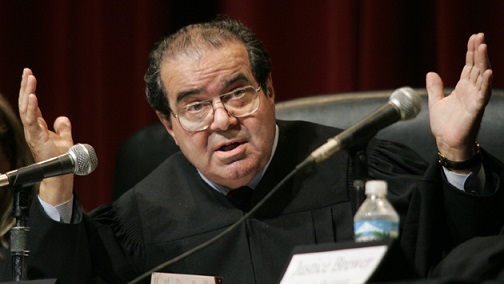
Let’s skip for a moment to Justice Scalia’s dissent on this particular piece of the argument. “Dissent” is probably too mild – it’s really more of an eruption of disdain.
The Court declares that students’ “attendance and participation… are in a fair and real sense obligatory.” But what exactly is this “fair and real sense”? According to the Court, students at graduation who want “to avoid the fact or appearance of participation” in the invocation and benediction are psychologically obligated by “public pressure, as well as peer pressure… to stand as a group or, at least, maintain respectful silence” during those prayers…
This assertion – the very linchpin of the Court’s opinion – is almost as intriguing for what it does not say as for what it says. It does not say, for example, that students are psychologically coerced to bow their heads, place their hands in a Durer-like prayer position, pay attention to the prayers, utter “Amen,” or in fact pray. (Perhaps further intensive psychological research remains to be done on these matters)…
Is that… sarcasm pouring forth from a pen of the Divine Nine?
The Court’s notion that a student who simply sits in “respectful silence” during the invocation and benediction (when all others are standing) has somehow joined – or would somehow be perceived as having joined in the prayers is nothing short of ludicrous. We indeed live in a vulgar age. But surely “our social conventions” have not coarsened to the point that anyone who does not stand on his chair and shout obscenities can reasonably be deemed to have assented to everything said in his presence…
Stuff like this is why Scalia’s loss was so devastating, whatever one’s politics. This is glorious dissent.
But let us assume the very worst, that the nonparticipating graduate is “subtly coerced” … to stand! …
{M}aintaining respect for the religious observances of others is a fundamental civic virtue that government (including the public schools) can and should cultivate – so that even if it were the case that the displaying of such respect might be mistaken for taking part in the prayer, I would deny that the dissenter’s interest in avoiding even the false appearance of participation constitutionally trumps the government’s interest in fostering respect for religion generally.
Clearly Scalia and the three other Justices who signed off on this dissent are NOT impressed by the Court’s decision. Their outrage is both palpable and a tad pissy.
But back to the majority opinion…
Kennedy proceeds to address the state’s argument that these are harmless little ceremonial prayers, not enough to constitute “establishment.” He finds this contradicts the state’s own arguments regarding the importance of prayer. Kennedy cycles through several of his points again with renewed vigor before hitting his home stretch with a somewhat defensive denouement too long to reproduce here. Well, except for this bit:
Our jurisprudence in this area is of necessity one of line-drawing, of determining at what point a dissenter’s rights of religious freedom are infringed by the State…
“Look! We have to draw the lines somewhere, OK?! This isn’t an exact science, we’re talking about real people and some rather complicated situations, so just back off, haters!”
OK, maybe I’m over-interpreting his tone here.
And he’s not wrong. A review of related jurisprudence over the previous half-century certainly confirms his suggestion that such lines can be tricky. The Court is seeking balance, which sometimes means a frustrating lack of predictability.
As suggested earlier, Justice Scalia’s dissent really deserves a post of its own, but I’ll limit myself to a few brief excerpts, with minimal commentary. But, oh my – Antonin!
{Today’s opinion} is conspicuously bereft of any reference to history. In holding that the Establishment Clause prohibits invocations and benedictions at public school graduation ceremonies, the Court – with nary a mention that it is doing so – lays waste a tradition that is as old as public school graduation ceremonies themselves, and… an even more longstanding American tradition of nonsectarian prayer to God at public celebrations generally.
This is the case most likely to be made when pushing one’s own version of faith into the public sphere – tradition and history. It’s Christianity’s strongest claim to why it should be treated differently than other faiths – although they’ll never quite come out and put it that way. It’s effective because there’s truth in it – it’s a mistake to try to tease out every last thread of spirituality in our history and culture for fear we’re not being “neutral” enough.
Hmm… I guess that’s more than “minimal commentary.” Sorry.
As its instrument of destruction, the bulldozer of its social engineering, the Court invents a boundless, and boundlessly manipulable, test of psychological coercion… Today’s opinion shows more forcefully than volumes of argumentation why our Nation’s protection, that fortress which is our Constitution, cannot possibly rest upon the changeable philosophical predilections of the Justices of this Court, but must have deep foundations in the historic practices of our people…
The Court’s argument that state officials have “coerced” students to take part in the invocation and benediction at graduation ceremonies is, not to put too fine a point on it, incoherent.
So… I’m thinking he disagrees on this one.
The Court today demonstrates the irrelevance of Lemon by essentially ignoring it, and the interment of that case may be the one happy byproduct of the Court’s otherwise lamentable decision. Unfortunately, however, the Court has replaced Lemon with its psycho-coercion test, which suffers the double disability of having no roots whatever in our people’s historic practice, and being as infinitely expandable as the reasons for psychotherapy itself…
Despite the rhetorical spittle flinging everywhere, Scalia concludes with strong, slightly less bitter, words:
The reader has been told much in this case about the personal interest of Mr. Weisman and his daughter, and very little about the personal interests on the other side. They are not inconsequential. Church and state would not be such a difficult subject if religion were, as the Court apparently thinks it to be, some purely personal avocation that can be indulged entirely in secret, like pornography, in the privacy of one’s room…
I didn’t say they weren’t bitter – just that they were slightly less so than before.
Religious men and women of almost all denominations have felt it necessary to acknowledge and beseech the blessing of God as a people, and not just as individuals, because they believe in the “protection of divine Providence,” as the Declaration of Independence put it, not just for individuals but for societies… One can believe in the effectiveness of such public worship, or one can deprecate and deride it. But the longstanding American tradition of prayer at official ceremonies displays with unmistakable clarity that the Establishment Clause does not forbid the government to accommodate it…
I must add one final observation: The Founders of our Republic knew the fearsome potential of sectarian religious belief to generate civil dissension and civil strife. And they also knew that nothing, absolutely nothing, is so inclined to foster among religious believers of various faiths a toleration – no, an affection – for one another than voluntarily joining in prayer together, to the God whom they all worship and seek. Needless to say, no one should be compelled to do that, but it is a shame to deprive our public culture of the opportunity, and indeed the encouragement, for people to do it voluntarily… To deprive our society of that important unifying mechanism, in order to spare the nonbeliever what seems to me the minimal inconvenience of standing or even sitting in respectful nonparticipation, is as senseless in policy as it is unsupported in law.
In a few days, Oklahoma will vote on whether or not to repeal the ‘Blaine Amendment’ in our state constitution by passing SQ 790. The proclaimed goal of the change is to allow the posting of the Ten Commandments on public grounds. Is it constitutional for government to make this happen? What if they merely allow it to happen? Is it constitutional for them to prohibit it if someone else wants it to happen?
Turns out the answers are a bit messy.
In Stone v. Graham (1980), it was determined that schools could not post the Ten Commandments or other religious materials in classrooms without historical or other pedagogical context – even if the materials were paid for by private money. Then again, that’s school – not the State Capitol.
In 2003, Alabama and Tennessee handled debates over the Ten Commandments in government offices by either firing the offender (Alabama) or moving the display to a slightly more private location, although still on government property (Tennessee). Neither situation reached the Supreme Court.
It was in 2005, though, that things got really interesting. On the same day, the Supreme Court announced its decisions in both McCreary County v. ACLU of Kentucky (2005) and Van Orden v. Perry (2005) – both cases involving the Commandments on public land. While Kentucky’s displays were determined to be unconstitutional, the monument in Texas was acceptable. Both were split decisions, and the difference came down to context – both the displays themselves and the history behind them – and intent.
That’s where we left off last time. And now… now things get even murkier.
The little town of Pleasant Grove, Utah, allowed privately donated displays in its public park. Among the items placed there as of 2008 was a monument of the Ten Commandments – donated by that same Fraternal Order of Eagles group we met in Van Orden. The problem in this case didn’t stem from anyone’s request to remove the Commandments – quite the opposite. Instead, another faith wished to place their own monument in the park as well.
Summum is a faith and/or philosophy which originated in the 1970s, although it draws on ideas and sources from ancient times. It’s built around the Seven Aphorisms in the same way one might argue Judeo-Christian traditions are anchored in the Ten Commandments. According to Summum teaching, Moses was given these Seven Aphorisms by God on Mount Sinai, engraved on twin tablets. The Israelites were not ready, however, and Moses smashed the originals in frustration.
Moses returned with a second set of tablets, this time inscribed with “lower laws” which were more readily understood. These were the Ten Commandments, basic guidelines providing a starting place for the Israelites to grow and develop themselves.
Side Note: Summum produces a “spiritual nectar” – wine, by worldly legal definitions – infused with various “resonations” to help absorb spiritual concepts. Each variation contains a different concept, so followers consume whichever nectar corresponds to the truth they’re seeking that day. Presumably, it helps loosen up one’s understanding.
I, for one, find this a brilliant addition to any theology. They also have this thing about mummifying yourself and your pets after death which I’m much less excited about, but perhaps with enough “enlightenment nectar”…
In any case, the Summum church wanted to place a monument of the Seven Aphorisms in the park. They thought it would make a nice companion piece to the Ten Commandments already there. The city of Pleasant Grove disagreed. The mayor denied Summum’s request because the monument did not “directly relate to the history of Pleasant Grove.”
So here’s the question – is Pleasant Grove constitutionally required to accept all religious monuments if it accepts any religious monuments?
The Summum convinced the 10th Circuit Court of Appeals that it was. This decision was overturned when the case reached the Supremes, but it’s worth noting the initial leanings of the Circuit Court whose purview includes Oklahoma.
Of course, lower courts generally defer to decisions from higher courts – that is, after all, the whole idea – and the 10th will no doubt follow the lead of the Supreme Court if they think the case before them is comparable to something previously decided. But if there are critical differences in the details – and there are almost always critical differences in the details – things might easily go the other way.
The Supreme Court found that Pleasant Grove had a right to decide what was and wasn’t posted in its park – there was no “establishment” or “free exercise” issue. The decision was unanimous, but in addition to the majority opinion there were four separate concurring opinions submitted. This suggests that while the outcome was clear, the reasons behind it were varied. That matters the next time a similar case comes up – the results might depend on those critical details we just mentioned.
The majority opinion in Pleasant Grove v. Summum (2009) went something like this…
The placement of a permanent monument in a public park is a form of government speech and is therefore not subject to scrutiny under the Free Speech Clause.
A government entity is entitled to say what it wishes and to select the views that it wants to express. It may exercise this same freedom when it receives private assistance for the purpose of delivering a government-controlled message. This does not mean that there are no restraints on government speech, but neither do they have to send messages which don’t represent their views.
Here, the Park’s monuments clearly represent government speech. Although donated, the City has “effectively controlled” their messages by selecting monuments that present the image that the City wishes to project to visitors; it has taken ownership of most of the monuments in the Park, including the Ten Commandments monument; and it has expressly set out selection criteria.
A park is different from a forum at which many different speakers might represent many different viewpoints. Monuments are also different than holiday displays or temporary demonstrations favoring one belief or idea over another. The city has a right – within reason – to determine what’s appropriate for a permanent installation. If anyone can place any message in the park, it will soon be all messages and no park.
Point of Interest: The Summum tried to put up the same monument in a different city – Duchesne, Utah. In Duchesne, there was only one monument in the park – the Ten Commandments. After the decision in Pleasant Grove, Duchesne realized that they would be unable to refuse the Summum. An assortment of statues may be cultural and historical, but a single monument is “establishment of religion.”
They relocated the Ten Commandments to avoid the lawsuit.
There was one other case of interest in 2009 which involved a display of the Ten Commandments. This one never made it to the Supreme Court, but was decided by that same 10th Circuit Court mentioned above.
Haskell County, Oklahoma, had a Ten Commandments monument on their Courthouse lawn, along with several pieces honoring military veterans of various wars. James Green, a local resident, believed the monument violated the separation of church and state. With the help of the ACLU, he sued to have the monument removed.
The 10th Circuit Court of Appeals ruled in favor of Green. Haskell county commissioners appealed the decision, but the Supreme Court of the United States declined to hear the case. When that happens, the decision of the lower court stands.
In other words, during the same year the Highest Court was confirming Pleasant Grove’s right to pick and choose park displays, it was perfectly comfortable with Haskell County being forced to move their copy of the Ten Commandments.
I might have mentioned earlier how often the difference is in the details…
The Haskell monument was moved to the lawn of the American Legion, only a few feet away from the courthouse, where it remains today. Much like the graven image at the OCPA, within throwing distance of the State Capitol, anyone wishing to view the Ten Commandments can easily do so within easy reach of government land – just not ON that government land.
There’s one last case, from only a few years ago.
The city of Bloomfield, New Mexico, allowed the installation of a ginormous Ten Commandments monument on the front lawn of City Hall. While technically funded by private money, the proposal and oversite were the work of Kevin Mauzy, a member of the City Council.
Two locals objected to the monument as a government endorsement of religion and sued. The 10th Circuit Court of Appeals confessed the issue was somewhat tricky in light of McCreary County v. ACLU of Kentucky (2005), Van Orden v. Perry (2005), and other related precedents. In the end, however, the monument was ordered to be removed.
It’s possible that Felix v. Bloomfield (2014) is still being appealed, but I was unable to find any indication it’s going to the Supreme Court anytime soon. That means that the 10th District Court – the highest level of Federal Court likely to hear any case involving an Oklahoma monument – has consistently ruled for removal of religious artifacts from public grounds. The Supreme Court has slightly less consistent, finding at least one circumstance (in Van Orden) in which context and history offset any First Amendment concerns, but otherwise rejecting state efforts to “contextualize” religious displays after the fact – especially when the clear goal is to make a statement via the Ten Commandments.
Needless to say, Oklahoma’s efforts are very much of the latter sort. Only quite recently have proponents begun trying to pretend they want anything other than to be ‘King of the Religious Mountain’ with this issue.
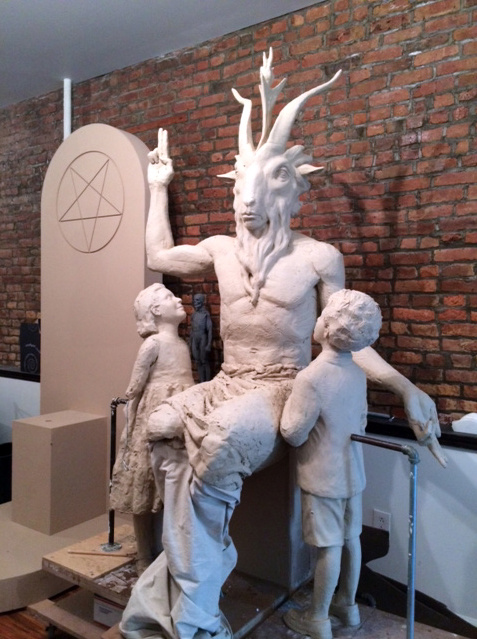
Should SQ790 pass and the state proceed with relocating the Ten Commandments to Capitol grounds, we’ll no doubt quickly hear from the Satanic Whoevers and other non-Christian faiths, demanding to erect their own idols as well. While the decision in Pleasant Grove might give hope to those wishing to prevent a ram-horned Satan smiling down on innocent children from crowding out the “Thou Shalt Nots,” we will at the very least be looking at years of expensive litigation, with limited odds of long-term success – especially if any slightly more mainstream religions choose to get involved.
None of which has historically mattered to state leadership when it comes to throwing red meat to their constituents. As long as they can keep the masses convinced their guns are about to be taken, their kids forced to turn gay in order to graduate high school, or the Mooslims coming to enforce Sharia Law, they continue to be voted back into office. At the rate they’re decimating public education, there’s no reason to think things will be changing any time soon.
Too bad there’s not a “Thou Shalt Not” about that.
Election season brings out the worst in many of us. Oklahoma is certainly no exception – which is somewhat ironic, given that historically only about four people in the entire state actually bother to vote most years.
This election, though, there’s an unusually high number of contested seats in the state legislature. The “teacher caucus” has made national news. Spittle – both literal and figurative – has been flinging all ‘bouts.
And then there’s those state questions! My god, there must be eleventeen hundred of them! The penny sales tax for education is probably the most controversial, but coming in a close second is SQ790 – repeal of the Blaine Amendment. This one has been a long time coming, and emotions are high on both sides.
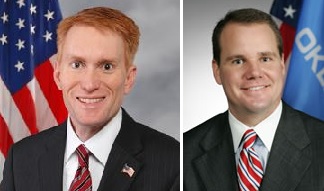
It’s possible there are rational arguments to be made for repealing Article II, Section 5 of the Oklahoma Constitution. I’m not sure what they’d be, but surely they exist. One place you will not find them is in the recent editorial by Senator James Lankford and Lieutenant Governor Todd Lamb. It first appeared in the Tulsa World late last week, and is now making the rounds on Facebook via something called the Baptist Messenger.
If this organization is indeed associated with Baptists proper, that’s a shame. Jefferson’s famous letter coining the phrase “wall of separation between church and state” was written in response to Baptist concerns that the new Constitution didn’t do enough to keep government out of their religious business.
This editorial makes a wonderful study in reading with your brain on. Let’s take a gander, shall we?
On Nov. 8, by voting Yes on State Question 790, Oklahomans will have the chance to directly increase their religious freedom, a rare opportunity in this age when liberal courts and governments are actively seeking to narrow religious liberties.
Definitions are everything in socio-political debate. Most Americans, for example, are big fans of “fairness,” “accountability,” or “equality.” The difficulty comes when we have to decide what exactly those things mean in practice – suddenly my idea of “fair” and your idea of “fair” can crash into one another rather unpleasantly.
Lankford/Lamb open their editorial with the bold assertion that “religious freedom” is in danger, and that more government spending on religious symbols is the solution. I’m not clear on what they base their conviction that religious liberty is being “narrowed” – it’s difficult to imagine a time in American History when an individual was more free to believe (or not) pretty much anything they chose, and to act on it with greater latitude.
Unless, of course, you assume “narrowing religious liberties” means something very different – for example, “chipping away at the privileged positions certain flavors of Christianity have held for centuries.” If you define “increasing religious freedom” as “reducing the religious freedoms of others”, this assertion suddenly makes sense. Of course we’re seeing “narrowed” religious liberties – because religious liberty is being dramatically expanded for people who are not us. Ours feels smaller in comparison.
The Blaine Amendment prevents government from taking my money to promote your religious ideas. Only by defining “religious freedom” as “using political power to prop up selected beliefs” does the argument that eliminating Blaine will increase anyone’s “liberty” make any sense.
We support SQ 790 because it would remove from Oklahoma’s Constitution the “Blaine Amendment” a provision added in the 19th century during a time of anti-Catholic prejudice for the primary purpose of preventing Catholic schools – and Catholic orphanages, hospitals and charities – from receiving any government benefits.
This is technically and historically correct. But are Lankford/Lamb seriously suggesting that Oklahoma – over a century later – has been oppressing Catholics? Or are they suggesting we go back through every statute and amendment since ratification and weed out those whose motives may have been misguided or whose original purpose is outdated?
Seems like if we’re going to urgently push a “solution,” there should be a problem somewhere to which we can attach it. Bring forth the state-abused Catholics of 2016, please!
These provisions, were at one time present in the Constitutions of nearly every state, and their history steeped in bigotry has never been in dispute. As the United States Supreme Court noted in Mitchell v. Helms (2000), Blaine Amendments have a “shameful pedigree” rooted in “pervasive hostility to the Catholic Church and to Catholics in general.”
The Republican Senator from Oklahoma, who enthusiastically supports Donald Trump for President, is heartbroken over our history of theoretical bigotry – so much so that he’s quoting Supreme Court decisions to add some completely irrelevant color.
Blaine hasn’t changed in over a century, and no one’s discriminated against Catholics as a result. That’s an awful lot of emotion over a problem no one’s even pretending actually exists.
Over time, these provisions have gone beyond bigotry against Catholics and been used to curtail religious freedom of all kinds.
What a setup! Over time, they tell us, things have gotten SO much worse! Blaine has been used to curtail religious freedoms of ALL KINDS! So many kinds. All the kinds. Kinds above and beyond that theoretical Catholic thing that never actually happened.
For example…
Oklahoma’s Blaine Amendment was cited by the state Supreme Court in 2015 when it ruled that the provision prohibited the display of a Ten Commandments monument at the state Capitol, even though the U.S. Supreme Court ruled in Van Orden v. Perry (2005) that a display of Ten Commandments on public property does not necessarily violate the U.S. Constitution.
That’s the entire list of curtailed religious freedoms. One thing. THEY WOULDN’T LET US HAVE OUR STATUE EXACTLY WHERE WE WANTED IT AND WE HAD TO MOVE IT, LIKE, NINETY FEET!
That must have been horrible for them, this long list of curtailed freedoms they’ve had to endure.
Lankford/Lamb neglect to mention that on the exact same day the Court announced its decision in Van Orden, it also announced the results of McCreary County v. ACLU of Kentucky (2005) – a very similar case in which displays of the Commandments on government property were found to be unconstitutional. McCreary was just as big as the Texas case, and its circumstances far more similar to those unfolding in Oklahoma. It’s just that in this other major case about the exact same issue, the Court refuted the idea that states can go around throwing up religious statues just to make a point.
Lankford/Lamb know this. It’s not hidden knowledge available only to the Illuminati or anything. They chose to lie via omission in order to pretend their argument is stronger than it is. Both men are successful politicians – they count on the ignorance of the masses for their livelihood. Perhaps if they’re so concerned about the survival of their faith, though, they could help it out by not using deception and half-truths just to get their way?
Under our state Supreme Court’s interpretation of the Blaine Amendment, hundreds of millions of state and federal dollars being expended annually for Medicaid patients at nonprofit but religious-based hospitals are being spent in violation of our state Constitution.
Read that again.
As currently applied, they write, the Blaine Amendment – which has been part of our state constitution since statehood – has caused absolutely no problems for Medicaid patients or religious-based hospitals. But if the state Supreme Court ever chose to inexplicably challenge these non-problems, and declared a bunch of stuff unconstitutional, then OMG – a bunch of other stuff would then be unconstitutional!
Also, Medicaid! Grandma – did you hear that? Old people, panic!
If read too broadly, church groups could even be prohibited from using state parks, engaging in after-school tutoring, helping solve our foster care crisis, working with prison ministries and a myriad of other partnerships which benefit the state.
“If this section of the Constitution were read incorrectly, it might even lead to a host of other theoretical problems which have never happened here or anywhere else as a result of the Blaine Amendment.”
Well, yes. It would also be bad if mom accidentally used human blood instead of ketchup next time she makes meatloaf, so maybe we should outlaw the Red Cross while we’re solving potential problems that will probably never happen.
Or am I reading their editorial “too broadly”?
Not only does our Blaine Amendment prohibit the display of the Ten Commandments on public property – but it also prohibits parents from making decisions about their children’s education that they believe are best.
Ah, here we go. It took several paragraphs of balderdash and faux crises, but they finally got to… vouchers.
If you want to make the voucher argument, that’s fine. I’ve written about them several times, as have numerous others smarter than me. But of all the folks who argue in favor of spending public money to resegregate our schools by race and socio-economic status, none have buried their case so deeply in deception and demagoguery as Lankford/Lamb here.
It’s really quite horrifying. Unless I’m reading it too broadly.
It has been used for lawsuits aimed at stopping parents of special needs students from using state scholarships to better educate their children.
This fabricated image of high-needs kids presenting their golden voucher to Word-of-Faith-of-Hope-of-Grace and finding the acceptance and attention they’ve so long been denied is complete nonsense. But again – the whole voucher argument is well-trod territory elsewhere.
For now, the weird reality is that Lankford/Lamb are arguing that the constitution as it currently stands has been determined by the courts to be totally fine the Lindsey Nicole Henry Scholarship to which they refer. They won that case without changing the constitution.
They’re demanding a change to the constitution because what if the case had been decided differently – like if it were heard on Opposite Day? Wouldn’t that have been unfortunate?
If a student used this as a supporting argument in class, I’d circle it in red pen and tell them not to make their opponent’s case for them.
It has been used in other states to stop Education Savings Accounts programs which help those stuck in poverty take advantage of educational opportunities.
Such as… where? The lovely community of Theoryville?
And it has been used to try to prohibit even student-led prayers before high school sporting events.
Oh please.
Yeah, I’m sure there’s a story somewhere in which this almost kind of happened. Thanks to the internet, you can find examples of pretty much anything. But seriously? It’s been “used to try to prevent” student-led prayer?
In other words, it didn’t prevent student-led prayer?
Another enormous peril based on what mighta-coulda-happened-this-once but didn’t because unfortunately, everything’s working just the way it’s supposed to, constitutionally speaking.
They’ve saved the best for last:
Like the “Jim Crow” laws that promoted segregation, the Blaine Amendment is a discriminatory provision in our Constitution that flies in the face of many of the Oklahoma values we cherish – love of neighbor, reverence for humanity and respect for the right to express religious freedom.
Jim. Crow. Laws.
The Blaine Amendment is like Jim Crow Laws.
We can’t have our statue where we want it and we have to pay for our own kids’ schooling if we want them in church school. In the world of Lankford/Lamb, they are experiencing almost EXACTLY what happened to Blacks for a century after the Civil War – segregation, second-class citizenship, denial of the right to vote, sharecropping, poverty, cross-burning, and lynching.
But the white privilege version. The one with happier music and no actual suffering of any kind.
And by the way… if you can’t “love your neighbor” without altering the state constitution, you’re doing it wrong.
Our hope is that Oklahomans will exercise their compassion for others
Well, their compassion for us, at least. The rich white evangelical males suffering from Jim Crow. Or am I reading that too broadly?
and expand religious freedom for everyone
Again – definitions, people!
on Nov. 8 by voting “Yes” on SQ 790.
You should be offended that two such prominent and powerful Oklahomans consider you – and your faith – unworthy of a more honest or thoughtful argument.



 Third – Reading supports content. ‘Going deep’ on a few key moments, issues, or individuals provides an ‘anchor’ in students historical understanding. It makes knowledge from before, during, and after that anchor ‘stickier’ – easier to understand, easier to remember.

 New candidate Mickey Dollens (D) took HD93, no doubt through his genuine commitment to the district and his unmatched work ethic. (His opponent’s ability to personally alienate and horrify almost everyone in the district over the past decade probably didn’t hurt, either.) Forrest Bennett (D) won HD92 and Chris Kidd (R) SD31. So… that’s something.
  But it’s time for #OklaEd to get the message. You are not wanted here. The vast majority does not think you’re worth even what you make now, and they certainly don’t think most of your kids deserve any better. Strong percentages say “we could fix education if only these teachers weren’t in the way” or “those damned districts have been given too much without accountability.” And they believe it. To paraphrase their patron saint, “Public education is not the solution to the problem; public education is the problem.”
 We’re largely to blame. We’ve proven year after year that we don’t vote in meaningful numbers, or if we do, we vote our fears instead of our ideals. We jump and bark and pee on their legs every time they dangle “Pay raise! Pay raise! We’ve really got a plan for a Pay Raise! Come get it, boy! That’s a good constituency!”
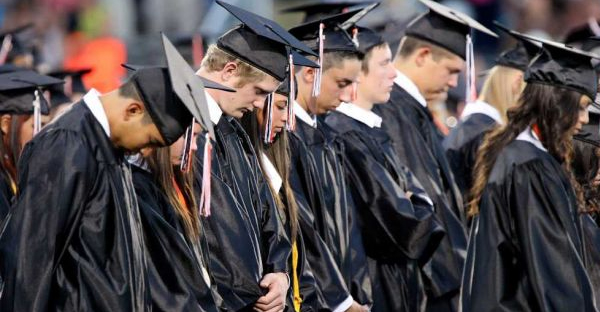 Graduation ceremonies provide an interesting dilemma when it comes to questions of church-state separation. They are inherently connected to public schooling and school officials, and participating students are largely accountable to those authorities during the event. At the same time, they often take place outside of school hours and off school grounds, and are in most cases technically voluntary – students need not attend in order to graduate.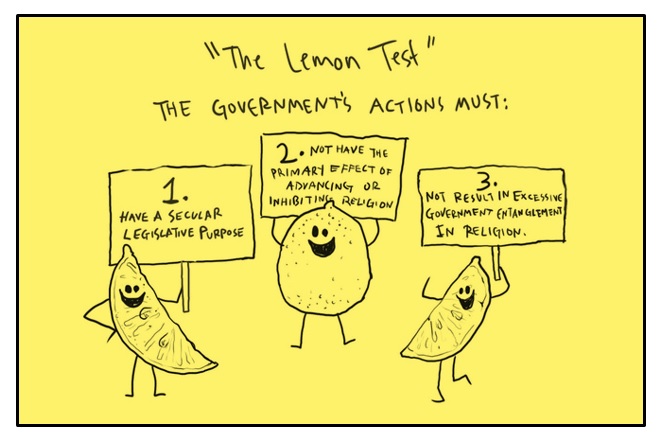
 For those of you just tuning in, the First Amendment opens with not one, but two ‘freedom of religion’ clauses – the “establishment clause” (government can’t do anything to promote or encourage a particular religion) and the “free exercise clause” (government can’t do anything to discourage or limit a particular religion.) Government “neutrality” sounds pretty straightforward, but in practice these two goals are often in tension with one another.
  This echoes a theme found in
  Free speech, then, may often include the individual trying to persuade the government, or the government reasoning with or compelling the individual. Matters of faith, on the other hand, do not require the government’s approval or cooperation – nor should they be shaped by the whims of the state. Secular authority too easily throws the spiritual into the same blender as the mundane and vulgar, then hits “puree.” And that’s when it has good intentions.
  Let’s skip for a moment to Justice Scalia’s dissent on this particular piece of the argument. “Dissent” is probably too mild – it’s really more of an eruption of disdain.
  Clearly Scalia and the three other Justices who signed off on this dissent are NOT impressed by the Court’s decision. Their outrage is both palpable and a tad pissy.
  The Court today demonstrates the irrelevance of Lemon by essentially ignoring it, and the interment of that case may be the one happy byproduct of the Court’s otherwise lamentable decision. Unfortunately, however, the Court has replaced Lemon with its psycho-coercion test, which suffers the double disability of having no roots whatever in our people’s historic practice, and being as infinitely expandable as the reasons for psychotherapy itself…
 In a few days, Oklahoma will
 Of course, lower courts generally defer to decisions from higher courts – that is, after all, the whole idea – and the 10th will no doubt follow the lead of the Supreme Court if they think the case before them is comparable to something previously decided. But if there are critical differences in the details – and there are almost always critical differences in the details – things might easily go the other way.
  Haskell County, Oklahoma, had a Ten Commandments monument on their Courthouse lawn, along with several pieces honoring military veterans of various wars. James Green, a local resident, believed the monument violated the separation of church and state. With the help of the ACLU, he sued to have the monument removed.
 Needless to say, Oklahoma’s efforts are very much of the latter sort. Only quite recently have proponents begun trying to pretend they want anything other than to be ‘King of the Religious Mountain’ with this issue.
  Election season brings out the worst in many of us. Oklahoma is certainly no exception – which is somewhat ironic, given that historically only about four people in the entire state actually bother to vote most years.