
Freedom of Choice

{This Post is Recycled – Reworked from a Previous Version and Reposted In It’s Updated Glory}

As if the cutting-edge special effects and thespian excellence weren’t enough, Devo ushered in the 1980’s with rather high expectations of their listening audience. It wasn’t enough for us to merely whip it – we were expected to whip it good. On the title track of the same album, they scolded us for demanding “freedom of choice,” while in the same breath accusing us of not even wanting it – not really.

We were still getting over disco and they hit us with this philosophical barrage? No wonder they couldn’t get no satisfaction.

Too Many ChoicesBut they had a point. Freedom is a terrifying thing. There’s great comfort in structure – even confinement. I’ve seen this dramatically demonstrated in recent years as I’ve watched students navigate my decision to give them greater leeway in what they research, how they demonstrate it, and how they wish to be assessed. Some have flourished with the sudden reduction in boundaries, but many find themselves… hindered by too much freedom – especially if it comes with too little scaffolding, given too suddenly.

And that’s the academic version – the relatively easy one to fathom, and to fix.  Trickier are historical, social-political happenings. You know – the “real world” stuff.

One of the things about growing up around Tulsa is that you become rather familiar with people of faith and the variety of ways in which they interpret and express that faith. There are some complexities to being People of a Book, not least of which are sorting out which values and practices captured in one’s holy text are eternal, or literal, and which are temporal, or illustrative – important, but shaped by the time and place in which they were written.

Some are fairly easy. The “don’t kill each other over stupid stuff” tends to transcend time and place, and specific cultures or faiths, as does “don’t steal,” “don’t lie (at least not for selfish reasons)” and “don’t boink your neighbor’s wife on any sort of regular basis.” At the opposite end of the scale we find the other kind of “easy” – things few contemporary believers feel compelled to apply in a literal, ongoing way: “don’t eat shrimp,” “don’t wear mixed fabrics,” “keep the women quiet” (seriously – did that EVER work?), or “have fun with snakes and poison – you’ll be fine.”

Opinions SignIt’s not always so clear, however. Some stuff is tricky. Obeying your parents certainly has practical, cultural, and maybe spiritual value even today, but to what extent and in what circumstances? It’s easy to become dogmatic about something like hair length or tattoos (it wasn’t that long ago these were deal-breakers) while warnings against too much planning, or saving, are set aside quickly – often without even bothering to come up with good reasons. The modern Christian simply is NOT going to forsake ALL ELSE to follow Him – we’ll come up with the theology afterwards, if we must, but dude – seriously?

We deal with this all the time in history as well. Yes, slavery was evil, but to what extent was each and every slave owner twisted and maniacal? (Frederick Douglass and Solomon Northup both seem to suggest that the institution of slavery created evil men as much as evil men created the institution.) Religious persecution was brutal by today’s standards – the same Puritans who so famously came to the New World to escape the yokes of others quickly imposed their own harsh punishments on those in their communities who failed to fall in line. (Poker through the tongue, anyone?) But surely community standards as a general concept are not inherently… awful?

How do we balance a modern appraisal of not only the accomplishments and failures of our progenitors, but of their motivations and culpability as well? Whatever we come up with will be imperfect at best, and probably nowhere near THAT good.

Added to the complications of time and place is the fact that most cultural norms and the laws enforcing them have trade-offs we don’t like to acknowledge. The roles of women, for example, even a century ago, were rather constrained by today’s standards. There were assumptions and attitudes in play which we find offensive today, perhaps rightly so. I’d never suggest we should roll back the progress made (note the yellow rose on my lapel), but neither should we run from the realities of other cultures (including our own in decades past) which gave context to some of the practices and mindsets we today condemn.

And reality can be a hell of a mitigating circumstance.

Two Girls Two CulturesBy way of example, it may not be inherently evil and oppressive in all times and places for women and men to have had more rigidly defined roles than we’d like to see in modern America. There’s a certain security and stability that comes from carefully defined social structures, and – depending on one’s surroundings – practical benefits as well.

Were those Victorian dances you see in the movies, with fancy moves and complex expectations, limiting? Absolutely. But consider in contrast the awkward terror of stepping out on the dance floor of any modern club and being expected to shake your sober booty with, um… “freedom.” Suddenly some good ol’ western line dancing – where everyone does the same basic thing in the same basic way – makes more sense than you’d have ever accepted watching from your seat.

Pride & Prejudice society certainly comes with its own difficulties, but those cultural and legal structures evolved to protect participants as much as to crush their individual hopes and dreams. It may seem burdensome to seek an introduction by an appropriate mutual acquaintance or follow some basic formalities before openly wooing the opposite sex, but the process is far easier to understand than figuring out whether or not complimenting a co-worker’s shoes is more likely to lead to a first date or a sexual harassment complaint.

It’s a balance – freedom vs. security. Just like the war on terror, but with notes saying “Do you like me? Circle Y/N” instead of drone strikes. The structure that limits also supports. To support, it must limit. That’s the tricky thing.

Also, I think I just compared all of social and legal history to a good bra.

Two Views of the ConstitutionAs times change, or as understanding expands, freedom tends to become more and more of a priority. More choice – more freedom – means less structure. More often than not, at least in recent history, moving that direction means reaching a bit closer to our own ideals. I’m not saying it’s a bad thing.

I AM suggesting that not all historical or contemporary social or moral issues are entirely obvious, unalienable, or easily solved by a little indignation. I’m suggesting not every clash reduces to a morality tale of liberty triumphing over entrenched ethical fascism, or god-fearing decency once again restraining vice. Perhaps we should ride more moderately-sized moral horses as we exclaim over social issues – some of which center around clear violations of all we hold sacred, but others which speak to evolutionary changes more complex than ‘good’ people conquering ‘bad.’

I’m suggesting that it’s valuable to look back in history – whether decades or centuries – and evaluate the motivations and choices of those who came before. A little wrestling with their realities and assumptions can clarify rather than obscure. At the very least it can produce some much-needed uncertainty on our part. Some appreciation for the tension between security/stability and freedom/choice may prove… illuminating.

An appreciation for the gray can make us better historians and better teachers. It might even make us less annoying on Facebook.

RELATED POST: Cognitive Dissonance

RELATED POST: Condemnation Bias

RELATED POST: Liberty, Part One – The Causes Which Impel Them… 

RELATED POST: Liberty, Part Two – On Your Mark, Get Set…

Liar, Liar, Twitterpants on Fire (A Little Knowledge Is A Dangerous Thing, Part Three)

“My client wasn’t even IN the bar the evening of the murder, and if he WAS there, he doesn’t even OWN a gun! If he DOES own a gun, he didn’t have it with him that evening, and if he DID have it with him, it wasn’t loaded! Even if it WERE loaded, he didn’t use it – he didn’t even KNOW the victim. If he DID know the victim, he liked him, and if he didn’t like him, he at least didn’t kill him. But if he DID kill him, it was self-defense. And if it wasn’t self-defense, he still had a very good reason. Otherwise, he’s crazy and can’t be held accountable. Come on, he was carrying around a loaded gun – what sane person DOES that?!

I’ve told you that one way or the other he’s innocent – and all you can do is call me names? That’s so hurtful!”

Laws & SausagesIt is difficult for those of you with the slightest shred of decency to appreciate how the law and politics work. They do not operate according to anything most of us consider reasonable, moral, or even explicable. In the past they didn’t have to. Those affected had little expectation of being fully informed and no real control of the outcome.

Modern American politics has even less decency, but for different reasons. Most of us are too busy to keep up or sort it all out, and too quick to share or retweet anything with a headline confirming what we want confirmed or feigning outrage over whatever we find outrageous. Or maybe we’re just too stupid and easily distracted.

Not criticizing here – just keeping an open mind about possible explanations.

It’s amazing to me how easily we roll our eyes or exclamate our declamations over things done in the past – successfully, for centuries – and yet find it inconceivable the same things may be happening today, because… well, that’s CRAZY!

What, exactly, is it you think has changed about either mankind or the nature of power? Please – I’ll wait.

Hello?

The South attempted to secede and lost. The war destroyed lives and property on both sides, but the South had the worst of it by far. Reconstruction began, things got weird again.

Dead CW SoldierAnd then the South began writing the history of the war and the events which led to it. The war they’d lost. The one fought over a variety of issues, but in which slavery and its continuation were central and essential as defined by the South in the very documents they issued to justify their cause.

Only suddenly the war hadn’t been about slavery at all. In fact, the South was collectively rather wounded at the suggestion! Slavery?! You think – you think this was about SLAVERY?

Imagine what’d they’d have rewritten if they’d WON?

No less an authority than Jefferson Davis began cranking out volumes on the REAL story of the Lost Cause of the Confederacy. Others picked up the theme, and before long their United Daughters (still active today) were tea and cookie-ing this theme across the land.

Historians still argue about the war (they’re allowed to do that still, outside of Oklahoma and Texas) – that’s fine, it’s what they’re supposed to do.

Confederate FlagWhat’s less tolerable is the fervent hurt and chagrin evidenced by the South’s defenders at the very suggestion that secession had ANYTHING to do with slavery. It’s not that they wish to lay out a reasoned argument, you understand – it’s that they’ve reshaped history and historiography solely through repetition and strong emotion.

“To suggest secession was about SUH-LAVERY, well it it it’s it’s just… *sniff* DISHONEST!”

The rest of the nation has cooperated, by the way – we don’t like acknowledging our role in making chattel out of humans with souls any more than they do. Better to focus on tariffs and elections and economies and cultures – all persuasive alternatives, since all were involved.

The best deceptions are mostly true, after all – or true but for omissions. That’s how laws are made and history written – so be it.

Why does it matter if the South wishes to save a little face? What’s so wrong with simply focusing on the good parts in our collective history? I mean, the naysayers won their little war and got their way, didn’t they?

Can we at least keep the damn flag without everyone having a hurt-feelings-fit every time?

J Benn InterviewMy favorite hockey team captain after a tough loss and horrible officiating: “There were some tough calls, but the real problem is that we didn’t take care of business in our own end. We let too many pucks get past us and didn’t take advantage of our opportunities.”

I hated the poor play, and the poor officiating even more – but my decisive and lingering memory is how much I love the class of my team.

Also, he’s pretty.

More importantly, the team is able to go into practice the next day aware of the things they CAN control, and which led to problems. By acknowledging what they did wrong, instead of merely casting blame, they can improve – or at least that’s the goal.

You may remember the contrast between how Kanye and Beyonce handled this situation:

Swift seems to have recovered and keeps recording albums that sell zillions and zillions of copies. Beyoncé called Swift up to the stage later in the evening to give her back her moment in the spotlight. And West… well, he’s still Kanye (or not – he sometimes likes to go by “Tigerlily” or something else I can’t remember).

The lingering perception is that Kanye is a nut, Beyoncé is a class act, and that apparently Taylor Swift is a country artist (as she mentioned in the full version of her pre-interrupted speech). Reality may differ, but what we remember is what shapes events going forward.

It matters what happened and how it’s remembered because we can’t learn from mistakes we don’t think we made. Left uncriticized, Kanye is just a fighter for justice and Swift a bewildered blonde. Without her subsequent efforts to make things right, Beyoncé could just as easily been remembered as a sore loser, despite winning bigger better things that same night.

If the war was about slavery, and slavery is evil, and the South lost, then the reasonable thing to do is to start trying to repair some of the damage done by slavery. If the war was about a race-based chattel system, then we have some serious introspection to do about ourselves as a people and the extent to which we’ve failed to live up to our own ideals.

Reconstruction Cartoon - SmallOf course, if the real issues were states’ rights-ish, that’s not as bad. Federalism is about balance, after all, and if perhaps the South got out of balance, that’s clearly rectified now. If anything, the central government is much stronger than originally intended as a result!
We can spend some time trying to Reconstruct the South and push for some reforms, but at some point we’re going to need to get back to being a country again. We’ve made our point – let’s let them rebuild and trust whatever gradual progress can be made in terms of race and society.

If the war was about slavery, then both Lincoln and John Brown were right – we’ve paid for our national sin with national bloodshed. Time for a new birth of freedom.

If the war was about different understandings of the Constitution, then might makes right and we won by decimating our enemies by any means necessary. Next time the meaning of our founding documents may swing back a bit the other direction.

If the war was about slavery, then Black America may well need time and support to recover from a sort of collective PTSD. There would be imbalances to correct and scars which may never be quite healed. If we’re willing to go to war with ourselves to keep an entire race of people in degradation and servitude, what must we confess and how might we repent to set a better future course?

If 620,000 men died over tariffs or electoral procedures, then our nation is charted by whichever political and popular mechanizations produce the desired result. If the war was about anything other than slavery, maybe Black people need to just get over it and be less, you know… ‘Black’ about everything.

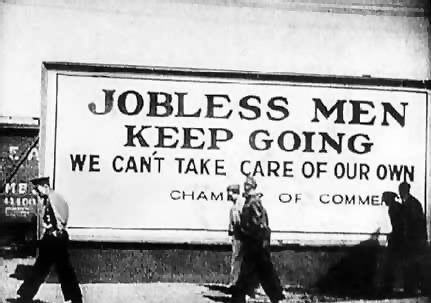
Keep GoingIf our ideals are as flawless and our procedures as sound as we clearly wish to promote, then inequity and suffering must stem from personal or cultural failures. If America is ‘exceptional’ in the way those now in power demand we acknowledge, whatever failures have occurred within it are individual and not national. Potential solutions or cures must, logically, come from the same. Anything else is charity. Or enabling. Or corruption.

We can’t repent of sins we can’t confess, or repair that we are unable to see as broken. This applies across any number of historical and national issues. If we build our actions and beliefs on a foundation of national amazing-ness, the ramifications are much, much larger than which textbooks we adapt or which tests we take to graduate. Conversely, if we believe the human heart – even the American heart – is desperately wicked, and deceitful above all things… who can know it? Well, that leads to humility and grace as we push forward, aware of what we are capable, for good or ill.

Two Men PrayingI’ll close with a little Bible talkin’, since that seems to be such a motivator for those pushing a better whitewashing for our lil’uns. Whatever we may disagree on, I wholeheartedly concur that we’ve lost much in our upbringing if we feel the need to run from the wisdom found in small red print:

“And he spake this parable unto certain which trusted in themselves that they were righteous, and despised others:

Two men went up into the temple to pray; the one a Pharisee, and the other a publican. The Pharisee stood and prayed thus with himself, God, I thank thee, that I am not as other men are, extortioners, unjust, adulterers, or even as this publican. I fast twice in the week, I give tithes of all that I possess.

And the publican, standing afar off, would not lift up so much as his eyes unto heaven, but smote upon his breast, saying, God be merciful to me a sinner.

I tell you, this man went down to his house justified rather than the other: for every one that exalteth himself shall be abased; and he that humbleth himself shall be exalted.”

(Luke 18:9-14, KJV)

If there’s an argument to be had, let’s have it. But let’s base it on our best understanding of the truth and the wisest possible course consistent with our proclaimed ideals – not on what best covers our collective behinds and casts the remaining blame on those least able to carry the burden.

Tulsa Race Riots

{This Post is Recycled – Reworked from a Previous Version and Reposted In It’s Updated Glory}

RELATED POST: Secession & Superiority (A Little Knowledge Is A Dangerous Thing, Part One)

RELATED POST: Forever Unfit To Be A Slave (A Little Knowledge Is A Dangerous Thing, Part Two)

RELATED POST: History Songs


Forever Unfit To Be A Slave (A Little Knowledge Is A Dangerous Thing, Part Two)

{This Post is Recycled – Reworked from a Previous Version and Reposted In It’s Updated Glory}

FD Learning To Read

In Part One, I waxed eloquent about secession and the South’s stated reasons for attempting to leave. Among their many complaints – most of which involved perceived threats to slavery – was the North’s tolerance of those who snuck in and taught slaves stuff.

A little knowledge, it turns out, can be a dangerous thing.

Frederick Douglass, in his first autobiography (1845), describes his epiphany regarding education:

My new mistress proved to be all she appeared when I first met her at the door,—a woman of the kindest heart and finest feelings. She had never had a slave under her control previously to myself, and prior to her marriage she had been dependent upon her own industry for a living. She… had been in a good degree preserved from the blighting and dehumanizing effects of slavery…

One thing Douglass’s account shares with those of Solomon Northup, Harriet Jacobs, and others, is their insistence that not all slave-owners were naturally cruel and evil people. They avoid neatly dividing people into ‘good’ and ‘bad’ and instead focus on the system, and its effect on those involved – slave or free, black or white.

Rather than letting a few slaveholders off the moral hook, it puts the rest of us on it. When the problem is bad people, we’re safe because we’re not them. When the problem is something larger, something systemic, which we either ignore or tolerate, we’re no longer absolved.

Very soon after I went to live with Mr. and Mrs. Auld, she very kindly commenced to teach me the A, B, C. After I had learned this, she assisted me in learning to spell words of three or four letters… 

Mr. Auld found out what was going on, and at once forbade Mrs. Auld to instruct me further, telling her, among other things, that it was unlawful, as well as unsafe, to teach a slave to read. To use his own words, further, he said… “A nigger should know nothing but to obey his master—to do as he is told to do. Learning would spoil the best nigger in the world.”

Knowledge Is PowerMr. Auld was no fool. He knew that control – whether of populations or individuals – begins through the information to which they have access. Whoever controls knowledge controls everything else – especially when it comes to maintaining a system based on privilege and inheritance.

You know, like the one we pretend we don’t have today.

”Now,” said he, “if you teach that nigger (speaking of myself) how to read, there would be no keeping him. It would forever unfit him to be a slave. He would at once become unmanageable, and of no value to his master. As to himself, it could do him no good, but a great deal of harm. It would make him discontented and unhappy.”

Mr. Auld is at least honest. Rather than claim young Frederick CAN’T learn, the problem is very much that he CAN – and as things stand, that helps no one. Raised expectations are a curse both ways.

These words sank deep into my heart, stirred up sentiments within that lay slumbering, and called into existence an entirely new train of thought…

Isn’t that what the best learning does? Challenge everything, and force you to separate the assured from the assumed?

I now understood what had been to me a most perplexing difficulty—to wit, the white man’s power to enslave the black man… From that moment, I understood the pathway from slavery to freedom. It was just what I wanted, and I got it at a time when I the least expected it…

If your room under the stairs is all you’ve ever known, you may not be happy, but you can hardly fathom more. Once you’ve gone to a museum or zoo, your horizons are forever altered – there are things out there of which you didn’t know. And Hogwarts… still full of limits, but compared to the room under the stairs…?

HP Under StairsThere’s nothing wrong with learning to be content with what you have, but that’s a choice we can only make if we have some glimpse of the alternatives. Until then, you’re just… stuck.

Douglass started tasting something bigger than he’d known, and for the first time found himself able to give form to his sense of bondage.

I was now about twelve years old, and the thought of being a slave for life began to bear heavily upon my heart. Just about this time, I got hold of a book entitled “The Columbian Orator.” Every opportunity I got, I used to read this book. Among much of other interesting matter, I found in it a dialogue between a master and his slave.

The slave was represented as having run away from his master three times. The dialogue represented the conversation which took place between them, when the slave was retaken the third time. In this dialogue, the whole argument in behalf of slavery was brought forward by the master, all of which was disposed of by the slave. The slave was made to say some very smart as well as impressive things in reply to his master—things which had the desired though unexpected effect; for the conversation resulted in the voluntary emancipation of the slave on the part of the master…

Slavery is bad, and running away was illegal. Talking back to one’s master was dangerous and not to be advised – it was unlikely to lead to your emancipation. All this book lacked to be utterly perverse by the standards of the day were zombies and a gay shower scene. And yet, Douglass discovered benefit in reading this work of subversive fiction.

FDDouglass connected with a character who was in some ways like himself – not in wise words or holy determination, but in the ways his life sucked, like being a slave. This fictional character, however, was able to demonstrate at least one possible way to endure or even flourish in the ugly, imperfect situation in which he was mired. He resonated far more than an idealized hero-figure of some sort could have, belching platitudes while fighting off the darkness with patriotic pluck.

Douglass became who he was partly because of a banned book.

The reading of these documents enabled me to utter my thoughts, and to meet the arguments brought forward to sustain slavery; but while they relieved me of one difficulty, they brought on another even more painful than the one of which I was relieved. The more I read, the more I was led to abhor and detest my enslavers. I could regard them in no other light than a band of successful robbers, who had left their homes, and gone to Africa, and stolen us from our homes, and in a strange land reduced us to slavery. I loathed them as being the meanest as well as the most wicked of men. 

Here’s the number one reason governments and religions and parents and schools ban whatever they ban. It’s nearly impossible to maintain the illusion you’re doing someone a huge favor by keeping them locked under the staircase once they’ve visited Hogwarts – even by proxy. The power to question is the power to overcome.

As I read and contemplated the subject, behold! that very discontentment which Master Hugh had predicted would follow my learning to read had already come, to torment and sting my soul to unutterable anguish. As I writhed under it, I would at times feel that learning to read had been a curse rather than a blessing. It had given me a view of my wretched condition, without the remedy. It opened my eyes to the horrible pit, but to no ladder upon which to get out.

In moments of agony, I envied my fellow-slaves for their stupidity. I have often wished myself a beast. I preferred the condition of the meanest reptile to my own. Anything, no matter what, to get rid of thinking!

Finally, something our elected representatives could support.

Douglass went on to become one of the most powerful speakers and important writers of the 19th century. He also turned out to be a pretty good American, despite his dissent regarding any number of issues.

Turns out you can do that.

Martin Luther & His 95 ThesesLearning is dangerous, but not to the person doing the learning. It can hurt along the way, but you usually end up better off for it.

Learning is dangerous to men whose ideas lack sufficient merit or whose systems lack sufficient substance to maintain their influence over people once they have other options. 

Schoolhouse Rock intoned in the 1970’s that “It’s great to learn – ‘Cause Knowledge is Power!” A few thousand years before, Jesus of Nazareth had promised his followers that “you will know the truth, and the truth will set your free.” He was speaking most directly of Himself and salvation, but the principle echoes past the specifics. 

In a time of strict codes and limited freedom, He offended the churchiest of them with his associations, the liberties he took with the law designed to protect them from damnation, and by suggesting we might not need holy arbiters any longer to find our way.

At the risk of getting preachy, the curtain tore long before Martin Luther nailed his complaints to the door.

Perhaps the Scribes and Pharisees had underlying good intentions, being naturally rooted in the ways of Old Testament law. They grew up under a God who’d kill you for touching His ark, even if it was to prevent it falling to the ground. We’ll cut them some slack.

Scarlet Letter ShadowThe Inquisitions and Puritans and Assigners of Scarlet Letters in New Testament times have no such excuse. If their faith is what they claim, it’s a faith based on light and truth and – above all – informed choice. Jesus and Paul may not have had much in common, but there’s no record of either lying or hiding something they didn’t want the world to see. They had enough faith in their message that it could withstand freedom of choice. They didn’t want to capture anyone who didn’t wish to be won. 

You don’t make better citizens or better Christians by hiding or prohibiting things you don’t want them to know. You can’t strengthen faith by torturing those who sin. You certainly can’t narrow the gap between young people and American ideals by doing a better job bullsh*tting them.

It’s wrong to even try, of course, but it also just doesn’t work.

Let’s have a little faith in our spiritual ideals, and our foundational values as a nation. Let’s offer enough light and live enough of an example that we can risk letting those we love have a little freedom. If they come back…

Well, you know the rest.

Darth Dove

RELATED POST: Secession & Superiority (A Little Knowledge Is A Dangerous Thing, Part One)

RELATED POST: Liar, Liar, Twitterpants on Fire (A Little Knowledge Is A Dangerous Thing, Part Three)

RELATED POST: I’d Rather Be Aquaman

Secession & Superiority (A Little Knowledge Is A Dangerous Thing, Part One)

{This Post is Recycled – Reworked from a Previous Version and Reposted In It’s Updated Glory}

Secession Map

In the Election of 1860, despite almost unanimous opposition from southern states, Abraham Lincoln was elected. Between the announcement of his victory (it took a little longer to tally everything back then) and his inauguration in early March, seven southern states announced they were leaving the Union.

From Georgia’s Declaration of Secession:

The people of Georgia having dissolved their political connection with the Government of the United States of America, present to their confederates and the world the causes which have led to the separation. For the last ten years we have had numerous and serious causes of complaint against our non-slave-holding confederate States with reference to the subject of African slavery. They have endeavored to weaken our security, to disturb our domestic peace and tranquility, and persistently refused to comply with their express constitutional obligations to us in reference to that property…

A brief history of the rise, progress, and policy of anti-slavery and the political organization into whose hands the administration of the Federal Government has been committed will fully justify the pronounced verdict of the people of Georgia. The party of Lincoln, called the Republican party, under its present name and organization, is of recent origin. It is admitted to be an anti-slavery party… anti-slavery is its mission and its purpose…

Notice the way the format consciously echoes the Declaration of Independence – the basic proclamation followed by a list of complaints explaining why they are never ever ever getting back together. 

From Mississippi’s Declaration:

In the momentous step which our State has taken of dissolving its connection with the government of which we so long formed a part, it is but just that we should declare the prominent reasons which have induced our course. 

Our position is thoroughly identified with the institution of slavery – the greatest material interest of the world. Its labor supplies the product which constitutes by far the largest and most important portions of commerce of the earth. These products are peculiar to the climate verging on the tropical regions, and by an imperious law of nature, none but the black race can bear exposure to the tropical sun. These products have become necessities of the world, and a blow at slavery is a blow at commerce and civilization. That blow has been long aimed at the institution, and was at the point of reaching its consummation. There was no choice left us but submission to the mandates of abolition, or a dissolution of the Union, whose principles had been subverted to work out our ruin.

They all pretty much go like this. Based on these documents, produced by the Southern states for the explicit purpose of proclaiming to the world the causes of their secession, the main issues seemed to be (1) slavery, (2) slavery, and – in some cases – (3) slavery. 

Slavery Chains

South Carolina took the lead as they always did when steps towards racial equity needed to be crushed:

But an increasing hostility on the part of the non-slaveholding States to the Institution of slavery has led to a disregard of their obligations… {The northern} States… have enacted laws which either nullify the Acts of Congress, or render useless any attempt to execute them… Thus the constitutional compact has been deliberately broken…

Those {non-slaveholding} States have assumed the right of deciding upon the propriety of our domestic institutions*; and have denied the rights of property** established in fifteen of the States and recognized by the Constitution; they have denounced as sinful the institution of Slavery***; they have permitted the open establishment among them of societies,**** whose avowed object is to disturb the peace… They have encouraged and assisted thousands of our slaves to leave their homes; and those who remain, have been incited by emissaries, books and pictures to servile insurrection. 

*i.e. ‘slavery’
**i.e. ‘slaves’
***i.e. ‘Slavery’ – oh wait, it says it this time, doesn’t it? My bad.
****i.e., abolitionists 

South Carolina was upset that the North allowed so much discussion of things which threatened their way of life and went against their beliefs. They listed as one of their central reasons for trying to break the country their collective outrage that other states weren’t doing enough to stifle debate.

Their little white feelings were hurt and their dominant role in the world inconvenienced. Poor things. 

Seriously, it goes on for several pages like that.

Lincoln ThoughtfulWas Lincoln’s election really such a threat to their way of life? Maybe. Not according to Lincoln, it wasn’t, but the new Republican Party openly advocated for restrictions on slavery – particularly in terms of limiting its expansion. Perhaps that was a debate worth having, in the context of the times.

But the time for discussion and compromise, it seems, was over. The writing was on the wall, and the South feared that reason and decency would no longer produce the outcome they wished. So, they circumvented both and tried to change the rules. They chose theatrics over the much more difficult path of introspection.

…those who remain, have been incited by emissaries, books and pictures to servile insurrection.

Slavery was not simply about physical bondage, as central as that was. It required a type of brainwashing and systemic manipulation so that the slave remained perpetually hopeless, and largely helpless. They were kept ignorant of all but the most basic skills or concepts. Slave-owners – the same ones who would soon rebel based on their right not to be bossed around – were forbidden by law from teaching their slaves to read, or otherwise expanding their horizons beyond what was absolutely necessary. 

The shocking thing about slave revolts isn’t that they happened – it’s that there were so few of them. Most resistance was covert, cultural – playing dumb, breaking things, maintaining an identity bewildering to white slave-owners. 

The Underground Railroad was pretty amazing, but the total numbers carried to freedom were miniscule compared to the size of the institution. And yet…

…incited by emissaries, books and pictures…

Do you feel the past reaching out to you through that line? I get goosie-bumps. 

Reading Free“We don’t like the thinking prompted by your teachers, your books, your visuals. We don’t appreciate you complicating their worlds or ours by introducing problematic ideas. Ignorance is bliss, buddy – our version of reality is good enough, despite its apparent inability to withstand the slightest scrutiny.”

See? I coulda been a Southerner. Or an Oklahoma legislator!

The problem with education is that it gets people thinking. The problem with thinking is that they don’t always think what we want them to. And, in the South’s defense, sometimes a little knowledge IS a dangerous thing – we’ll look at that in Part Two.

The South understood the dangers of expanded thinking. As lovers of tradition – and of being in charge – they had little taste for new or threatening ideas. They codified narrow-mindedness as a virtue and framed the ignorance of those in bondage as a mercy. 

Turns out the human race is pretty good at legal, intellectual, and moral contortions when it’s time to rationalize something we really really want to be true. 

South Rising Again

After the War – which they lost – the South continued to fight against dangerous levels of education for others. They also began denying their own explicitly stated causes for trying to leave in the first place. When you feel strongly enough that your cause is just, reality is just one more adversity to nobly overcome for the greater good.

That’s Part Three.

There’s a common saying about people who don’t know their history being doomed to repeat it. That’s true enough, but it doesn’t acknowledge those who want to recapture the ignorance and sins of the past – who find antebellum ideals to be the very core of American greatness. Today, as then, that requires ignoring or subverting knowledge and debate.

Both are still dangerous.

RELATED POST: Forever Unfit To Be A Slave (A Little Knowledge Is A Dangerous Thing, Part Two)

RELATED POST: Liar, Liar, Twitterpants on Fire (A Little Knowledge Is A Dangerous Thing, Part Three)

A Wall of Separation – The Story So Far…

Church and State

Now that the elections are over and all that is good or true in the world has been destroyed, I’m trying to shift my focus back to educational stuff. You know, the things that at one time seemed important enough to shape the title of this blog?

A few months ago, I started by blogging about Supreme Court cases delineating the relationships between religion and public schooling. In order to use some of the case summaries in class, I started editing and reformatting them afterwards. Then I figured since the work was already being done, and this effort at providing classroom resources in PDF format was already underway… why not just post them as I go?

Here’s my in-progress summary of cases involving church/state issues in relation to public schooling – and a few which aren’t.  

Building A “Wall of Separation” (Faith & School) – Brief background to the First Amendment and the Bill of Rights and Jefferson’s Letter to the Danbury Baptists which introduced the phrase “a wall of separation between Church & State.”

Everson v. Board of Education (1947) – It’s OK for the state to reimburse parents for transportation costs of getting their children to school, whether public or private, sectarian or secular.

McCollum v. Board of Education of School District (1948) – The use of public school facilities by religious organizations to give religious instruction to school children violates the Establishment Clause of the First Amendment. This does not prohibit teaching about religion, or schools allowing religious groups to use their facilities outside of school ours (as long as they do so equitably). It does prohibit coercing students into religious instruction as part of the school day. 

Engel v. Vitale (1962) – The state can NOT require – or even promote – prayer in public schools as part of the school day. 

Abington v. Schempp (1963) – The state can NOT require or promote the reading of Bible verses or recitation of the Lord’s Prayer as stand-alone activities during the school day. (Studying the Bible or the Christian religion as part of history, literature, etc., still perfectly appropriate.)

Board of Education v. Allen (1968) – It’s OK for the state to provide textbooks free of charge to all secondary students (Grades 7 – 12), including those in private schools. An important part of the Court’s reasoning in this case was that the textbooks constituted aid directly to students, rather than institutions.  

Walz v. Tax Commission of the City of New York (1970) – Not specifically a ‘religion in schools’ case. It’s OK for states to offer property tax exemptions for groups serving the public good – even if they’re religious in nature.

Lemon v. Kurtzman (1971) – State aid to sectarian institutions such as private Catholic schools violates the Establishment Clause and is unconstitutional. This case also established “The Lemon Test” – “Three such tests may be gleaned from our cases. First, the statute must have a secular legislative purpose; second, its principal or primary effect must be one that neither advances nor inhibits religion… finally, the statute must not foster ‘an excessive government entanglement with religion’…”

Wisconsin v. Yoder (1972) – The state’s interest in an educated citizenry is outweighed by the right of the Amish to maintain their faith and their communities. Parents may pull their children out of public schooling for religious reasons once they turn 16 – especially given the Amish track record for becoming productive, well-behaved members of society. The Court had previously attempted to distinguish between regulating beliefs and regulating behavior – in this case, the two were the inseparable. They instead introduced the idea of “balanced interests’ – the state’s interest in an educated populace vs. the parents’ or individual’ interest in pursuing their faith as they see fit. 

Meek v. Pittenger (1975) – It’s unconstitutional for the state to provide materials and equipment for non-public schools, or to pay for support services for students at those schools. As in Allen, however, textbooks (for traditional subjects) were fine. 

Stone v. Graham (1980) – State cannot require schools to post the Ten Commandments in public school classrooms, even if paid for by private money. 

Mueller v. Allen (1983) – It’s OK for the state to let parents deduct expenses related to “tuition, textbooks, and transportation” for their children, regardless of whether their child attends public or private school, even if sectarian. Significantly, the Court determined that as long as the intent is secular, it’s OK for the effect to significantly favor parents sending their kids to religious schools. This case is considered one of the three foundational cases leading up to vouchers. 

Wallace v. Jaffree (1985) – While a “moment of silence” is fine, any nudging towards prayer, especially with teacher participation, is unconstitutional. This issue will come up again. 

Aguilar v. Felton (1985)–  A NYC program sending public school teachers into parochial schools to provide extra help for disadvantaged children was ruled an unconstitutional “entanglement” of church and state, thus violating the Establishment Clause. This ruling was overturned a decade later in Agostini v. Felton (1997).

Witters v. Washington Department of Services for the Blind (1986) – A state agency which provided assistance to blind students pursuing education or job training may continue to do so even if the education/profession being pursued is religious in nature. This case didn’t involve public education, but did nudge along an understanding of the law which certainly does. This case is considered one of the three foundational cases leading up to vouchers.

Hazelwood v. Kuhlmeier (1988) – Students produced two articles for the school newspaper which dealt with teenage pregnancy and in which students at the schools shared their firsthand experiences, including various conflicts involving their families. The school principal determined the subject matter to be inappropriate and efforts to protect the girls’ identities insufficient, and the stories were pulled. Students protested that their First Amendment rights were being violated. The Supreme Court eventually ruled 5-3 that the principal had the right to make this decision because the newspaper was a product of the school and created as part of a journalism class, for which students were receiving credit and a grade.  

Lee v. Weisman (1992) – It’s unconstitutional for schools to have clergymen offering prayers at graduation ceremonies, no matter how general or brief the prayers. Even if not technically ‘required’, or even on school property, participation is still coerced and thus a violation of the “establishment clause.” 

Zobrest v. Catalina Foothills School District (1993) – Students attending private sectarian schools are still entitled to support services from public schools – in this case, a sign-language interpreter for a deaf student. This case is considered one of the three foundational cases leading up to vouchers. 

Agostini v. Felton (1997) – Overturned Aguilar v. Felton (1985). It was no longer considered a violation of the Establishment Clause for a state-sponsored education initiative to send public school teachers into religious schools, so long as reasonable steps were taken to minimize “entanglement.” 

Zelman v. Simmons-Harris (2002) – Seminal Supreme Court Case in which education improvement efforts undertaken by the State of Ohio, and which included school vouchers as part of the while, were determined to be constitutional in terms of the Establishment Clause. I’ve written several posts about this one, starting with the background, the decision, and the majority opinion. I’ve also summarized more recent court decisions at various levels dealing with vouchers and other “school choice” variations. 

The Ten Commandments (Part One) – Background, the “Lemon Test,” some cases which made the news but not the Supreme Court Docket, and two that did – McCreary County v. ACLU of Kentucky (2005) and Van Orden v. Perry (2005).

The Ten Commandments (Part Two) – Recap of Part One, Pleasant Grove v. Summum (2009), Green v Haskell County Board of Commissioners (2009), and Felix v. Bloomfield (2014).

There will be more. I’m looking at “moment of silence” cases, some other “prayer in schools” situations, and of course that “vouchers” case I’ve been building up to for awhile.  If you’re into that sort of thing, check back soon.