
 The State of Oklahoma, like many others, is determined to assign numbers and letters to the schools and teachers within its purview. Like the standardized testing of students on which many of these numbers and letters are based, the conviction seems to be that if you just keep pretending to measure things in ridiculously oversimplified ways designed to guarantee widespread failure, you’re “reforming” the system and calling forth a brighter future for all. This is analogous to – actually, never mind the analogy. It’s just stupid.
For those of you who are not teacher-types, there are two basic types of assessment. Formative Assessment is primarily intended to ascertain student understanding or accomplishment. Do they understand the material? Can they demonstrate the skills you’ve deemed important? Are they making an effort to plow through whatever you’ve assigned in your efforts to help them ‘get it’?
We’re all familiar with tests and quizzes, but Formative Assessment can be made through discussions, artsy-fartsy projects, tickets-out-the-door, etc. In some cases the grade is the grade, and in others students are expected to redo, relearn, retry, etc. Either way, the goal is to figure out what’s going well and what’s not, and to adjust, or to identify what students do or don’t get, and decide what you – and they – can maybe do about that. The “grades” handed out by the State of Oklahoma make little claim of such goals, and our legislature clearly has no intention of adjusting or contributing in any way. So… THAT’s not the purpose of these statewide ‘report cards’.
Why do students fail? Some kids are doing the best they can, and just don’t get it. They are mostly present and involved, but just aren’t there yet. Our job is to figure out how to help them. Far more fail simply from not doing what they could or should be doing – in other words, by choice or something that looks a great deal like choice. We don’t write them off, or use this as an excuse not to try different approaches, but solutions begin with identifying sources of problems – not with the scores assigned after the fact.
The State of Oklahoma and the OKSDE have shown a determined lack of interest in the underlying sources of low achievement. It would actually be a huge step forward if they merely covered their ears and ran about yelling ‘NANANANA ICANTHEARYOU NANANANA ICANTHEARYOU!’ Even in the classroom, the oversimplification of A B C D F hinders recognition that no two kids excel, survive, or fail in the same way, or for the same reasons. Whatever the root of shortcomings, our question is the same – what can we as teachers, as teams, as districts, do differently so more kids DO succeed? Even when many factors are undeniably out of our control – home life, background, socio-economics, DNA, etc. – any ethical educator asks themselves what they COULD try… what they COULD do.
Which, as I may have mentioned, the state has shown absolutely no interest in considering.
 Summative Assessment is the other category. It’s the ‘BIG TEST’ at the end of a unit or a semester. These attempt to document what students “walk away with” in knowledge and skills. The data can identify strengths and weaknesses of individual teachers so we can help each other improve, or help compare classes from year to year. For students it’s generally the finish line, for better or worse – here’s how you did, now off with thee.
What type of assessment you choose depends on your purpose. That sounds rather obvious, but it’s easy to fall into doing stuff mostly because that’s just… how it’s done. But grades should have a purpose. Otherwise, why bother?
Each semester, 18 weeks of a student’s experience in a given class – their effort, their understanding, their organization, their attitude, their ability – is summarized by a single number between 0 – 100, which in turn translates to one of 5 letters. This is, of course, inane. But it’s been how we’ve been doing things for so long it’s rather entrenched. That number and letter could mean so many different things they’re essentially useless as formative assessment. They’re only real functions are as carrots, sticks, or labels.
Most teachers still give these numbers and letters – they’re pretty much required – but we tweak them based on a variety of formal and informal assessments of our own. We tell students their grades, but we spend far more time talking them through more specific, potentially useful feedback about what they seem to be doing well and what they might try instead if they’re not. In other words, while we still retain the trappings of an outmoded grading model, we do our best within structure to more fully discern and more effectively assist.
 The A-F Report Card given by the State of Oklahoma to its public schools each year does none of the things assessment is supposed to do. It provides no support, and intentionally limits the data it is willing to consider. There are no adjustments on the part of the state based on how well a given school is doing, and no conversation regarding options for improvement. It’s not even measuring most of the things we claim are most valuable to us. It is merely calculated and published, and each year more and more schools are sent to sit in the corner with their ‘dunce’ caps on.
If the goal isn’t to help struggling schools, and there’s no state interest served merely by comparing apple schools to the orange, what exactly is the purpose? Is the OKSDE going to call our parents and ask for a meeting? Are our state legislators going to suggest we be tested for meds or glasses? Best case scenario, what are we hoping happens as a result?
I suppose they could be onto some cutting edge pedagogy I’ve overlooked. Perhaps if I just keep posting my kids grades in the main hallway outside the front office, I’ll be the highest standards most teachingest educator ever! I won’t even lesson plan or teach anymore, and when kids ask for help, I’ll explain I have so many obligations and just can’t spare the time or resources unless it’s to give them more tests to post.
A teacher who just kept failing more and more kids while providing less and less assistance or supplies would be condemned as completely useless and unethical. A state that just keeps failing more and more schools while providing less and less is the same – but moreso.
Related Post: #OKSDE & The A-F School Report Card
Related Post: He Tests… He Scores!
 There is a good case to be made that part of our job as educators is to prepare students for the ‘real world’ – whatever that is. We could thus argue that deadlines and responsibility are valid goals of public education. In the ‘real world’, you’re expected to do stuff when it needs to get done. Rolling in at 3 p.m. with “hey, here are those burgers you asked for during the lunch rush” isn’t going to cut it, nor will you get paid half if you simply don’t make them at all.
 And no matter how modern or flipped or inquiry-based I may try to be, there are still things that require grading. I hate grading, but there’s a limit to how much I can job out to students and still be able to sleep at night. There are things they can learn from peer evaluation, but half-a-class spent announcing that #1 is A, #2 is C, etc., is an embarrassing waste of limited time. Besides, most of what I’m grading isn’t multiple choice.
 Yeah, yeah – poor overworked teacher. But this isn’t about me missing my tee time after school. What it means instead is that when I am working, at my desk or at home, I’m spending far more time and energy trying to figure out why little Johnny has handed in a page of Level Questions over some – well, over SOMETHING, I’m not sure WHAT – and whether or not they correspond to anything he’s missing in the gradebook – than I’m spending coming up with better ways to teach Johnny’s 150 peers the next unit. Flexible deadlines and nurturing late work policies mean I spend more time grading than preparing, or teaching, or collaborating, or whatever.
 How many angry lil’ Republicans are created this way – barely into high school and already learning that the harder they work, the more they are expected to drag along those who can’t or won’t, often at the expense of their own progress? At least under the old framework the best and brightest were merely ignored and marginalized under the assumption they’d still pass state tests and stay out of discipline trouble – under this new approach we can actively punish them for being responsible!
 My daughter wanted a new backpack last year about this time, and after several unfulfilling stops, we ended up at Target. The selection was a bit slim, but she found something that seemed like a good combination of practical and not-entirely-embarrassing, and we took it to the nearest register.
 I remember losing my composure and at some point nearly yelling that “THE COMPUTERS. ARE. NOT. IN. CHARGE!!!” before blacking out. Whatever happened seems to have worked – a few days later, my phone showed up.
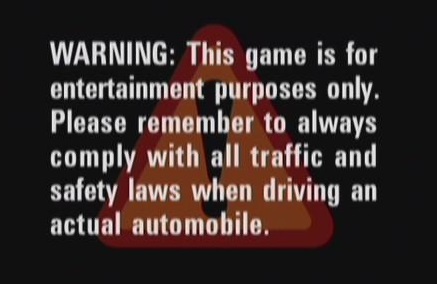 There’s a legal division somewhere covering someone’s corporate behind by advising me not to throw a rhino at a helicopter. We need a rule for that? Is there a label on the rhino?
 We don’t judge teachers or their students on what they do well, but on what items they miss. Inspire your kids all you like, but if you don’t happen to be demonstrating requirements 4a, 4b, 7, and 11 and have your learning objectives on the board when your administrator drops in for five minutes, you suck. Write with passion, but if the MLA heading is on the top left instead of the top right, I can’t and won’t read it. It’s all about the policies.
 It’s not working, by the way – somehow no matter what we do, there’s always that bottom 5%.
 I’m a bad person.
 Don’t get me wrong – it’s just peachy keen swell that throwing a few computers in the middle of an impoverished village and making sure no teachers interfere practically guarantees a bunch of eight-year olds will master calculus, cure cancer, and reverse climate change. Here’s to the success of every one of those dusty darlings and even newer, bigger opportunities for them to challenge themselves AND the dominant paradigm. Seriously.
 Maybe it would be better to do the entire building… eleven hundred freshmen set free to learn with a bank of Dells and no silly adults with their stifling expectations. Imagine the money saved on staff – and computers never take personal days or violate professional dress code!
 I’m not unsympathetic. I get what these writers and speakers are going for. Most are trying to make the very valid point that when we try to cram kids’ heads full of 87-pages of curriculum standards compiled by committees and approved by states to be tested by bubbles, we are unlikely to either fill their buckets OR light their fires.
 It’s not. Remember that Oregon Trail game we were all so excited about a few decades ago? That’s still about as cutting edge as educational games have managed, and that’s not even what most virtual learning is attempting.
 There are glaring problems with this system, some within the school’s control and many more without. The biggest problem with the current model is also the most substantial barrier to all this self-directed learning we keep hearing will save us all – state legislatures dictate most of what’s supposed to be “important” and decide how these things will be assessed.
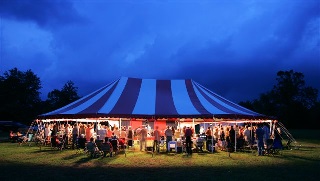 I’m from Tulsa. That means many things, but among them is an essential familiarity with Evangelical Protestantism in all its flaws and glory. I’m not a practicing evangelical, but neither do I find them so strange – they are my people, in warts as well as wisdom.
 It is in that spirit I’d like to remind some of us of some things we already know. Stuff we’ve learned from both study and practice, in the classroom and out. Feel free to throw out an ‘amen’ or raise your hands, although if you’re more of the snake-handling variety, I’d appreciate a heads up first. Otherwise, please allow me to preach to the choir a bit…
 (3) On that note, it’s totally OK for you to do stuff that works in class, even if it’s not what works for everybody else. It may not be what’s trendy at the moment, or hi-tech, or flipped, or project-based. Some of you give killer lectures that suck kids in, while others work magic with a few markers and an unnatural enthusiasm for asymptotes. I know one lady who makes “foldables” a meaningful genre, which so never works for me.
 Mind the gap between acknowledging factors beyond your control (don’t blame yourself for every miracle you can’t work) and justifying lethargy by blaming the kid and his or her world. It’s not their job to come from better backgrounds – it’s yours to overcome that background.
  (9) Our kids have potential, even when they hide it rather well.