

Education reform efforts have been facing quite the backlash recently. You may suspect that teachers as a body are resistant to change, and perhaps afraid of a little accountability. You may wonder why they resent rhetoric promoting ‘higher expectations’.
 You’re not entirely wrong. Few of us, teachers or no, like change or higher demands on our time and energy – especially when they come from people who have no idea what we do or what they’re talking about.
I’d like to respectfully suggest, however, that we make note of some of the assumptions behind most education reform talk. If the assumptions are accurate, then we can debate the best course forward.
If, however, the majority of ‘reform’ rhetoric is based on mistaken assumptions or intentionally propagated inaccuracies (what we in the education business sometimes call ‘lies’, or in the Latin, bovis stercus), then those assumptions and assertions must first be corrected. Otherwise, anything built upon them is destined to fail – and perhaps do great harm along the way.
Assumption #1: Teachers just aren’t trying very hard.
 The only way VAM and TLE and other teacher evaluation measurements make any sense or improve anything is if they spur teachers to do a better job. If teachers are capable of doing something better, and aren’t doing it now, the only reasonable inference is that they don’t care enough to improve otherwise.
If we believe that, let’s say so. A little evidence to support such an idea wouldn’t hurt, either. It’s probably not true in most cases, so that part might be tricky.
Assumption #2: Teachers aren’t very good at anything, including teaching.
You remember the old line – “Those who can, do; those who can’t, teach.” It’s been updated recently – those who can’t do, can’t teach, either.
 If the solution is ‘raising the bar’ for those entering the classroom, then the problem must be that those choosing education aren’t smart enough to do what they’re hired to do. If that’s true, it’s worth asking what would be useful in drawing ‘smarter’ people into the field – or how to better educate those already willing.
But in the same way it’s tricky to devise a universal method to accurately assess a diverse body of students, it’s nearly impossible to delineate a specific knowledge base and set of skills you wish to demand of adults working with a heterogeneous mass of kids through a long series of unpredictable circumstances.
So… good luck with that.
Assumption #3: There’s a surplus of highly qualified, brilliant, dedicated people just dying to get into the classroom if the bad, tenured and unionized teachers would just get out of the way.
 No one wants this job.
Buy a few drinks for an administrator of your choice and start asking them for funny ‘teacher interview’ stories. You don’t like the people they’ve hired? You should see the lot they’ve turned away, even when it means unfilled positions.
I’m curious… what’s preventing YOU from applying for the gig?
Yeah, that’s what I thought.
Districts can’t keep warm bodies in place, let alone top notch, hungry-to-martyr-themselves educators. It’s a real wet blanket on the ‘higher standards’ rhetoric when you can’t fill the positions already open.
Assumption #4: Every kid should be able to master a certain level of math, history, reading, writing, science, government, financial literacy, computer skills, current events, and a wide variety of both life and academic skills, and demonstrate those things on some kinda big test.
Why?
Also, they can’t. At least not all of them can. Turns out kids aren’t as similar as you might wish.
I’m bewildered why adults who maintain such passion about various subject areas or testing standards won’t take the same tests we want our kids to master. If that knowledge and those skills are so essential, you should do great! If they’re not – and if you’re doing just fine without being able to score whatever arbitrary number has been chosen this year – why should 16-year olds have to die in that ditch?

Do you know the answer, without looking anything up?
If not, you have no value as a person, student, or employee. Period. Let’s try another.
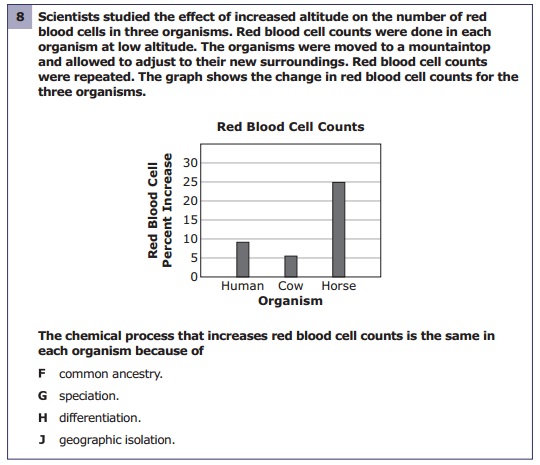
How’d you do?
Keep in mind that if you can’t answer these off the top of your head, you’ll never be successful at anything ever, and neither will they.
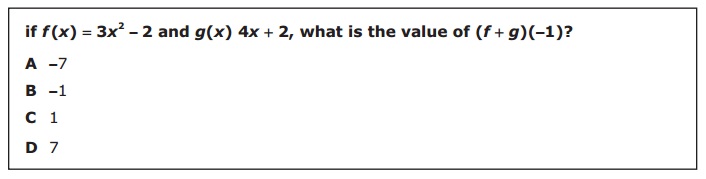
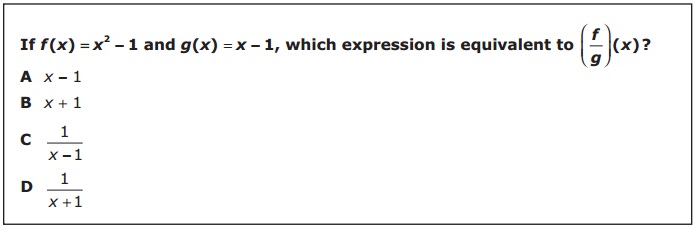
Should I even ask?
There’s nothing wrong with any of these subjects or questions, but every time you hear yourself or someone else wonder why kids can’t be expected to know “the basics” or “anything important,” remember how you did with these and the extent to which that answer has shaped the rest of YOUR life.
And if you got them all, congratulations – you’ve mastered 10th grade.
Assumption #5: Schools fail because of problems within the school – bad teachers, bad leadership, bad kids, etc.
The obsolete structure and mindset of the public school system is a disaster. There are certainly problematic students in the mix, but most behavior and other problems stem from trying to fit 21st century teenagers with a wide variety of interests, backgrounds, and skill sets, into a 19th century factory model designed for entirely different priorities in very different times.
We can’t break all of them – some of them survive, unfortunately for our state rankings.
 We can’t vary the curriculum significantly – state law. We can’t afford meaningful, hands-on learning of the sort you keep reading we should be doing, nor can we spare ‘core curriculum’ time to do anything interesting that kids might actually want to explore (and on which we could then build essential universals, like reading and writing and mathematical reasoning) – state law and legislative purse strings.
We can’t show great flexibility with time trapped in desks, whether in quantity or times of day students must be detained – state law. We can’t toss the A-F grading system or the 100% scale which reduces everything a child learns or does in a semester to a single digit, nor can we commit to something more meaningful and descriptive than traditional GPA – higher ed and parents demand those numbers.
We can’t pull out kids with similar needs or challenges to receive customized help or guidance in separate classes or specialized schools – state law. Nor are we given the resources to do it properly within our current structures – legislative pursestrings.
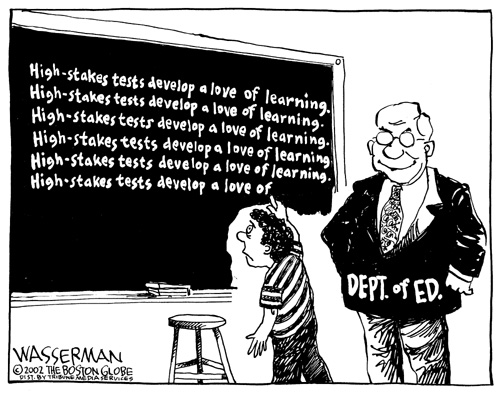 We can’t hold kids with the most potential to real academic standards or expectations of personal responsibility – angry parents, strange cultural ideals about the need to have 102% in everything and never struggle or fail, and administrators who are under a lot of pressure to show that every single child in the district is Top 10%.
I don’t offer any of this up as an excuse, or even a complaint. I do offer them as rebuttal to the most common complaints – and worse, the most common ‘solutions’ – I hear regarding public education.
There are MANY problems with the current system, the current standards, current resources, current restrictions – maybe even some of the current teachers and current leaders. But until we can address the whole picture accurately and honestly, no degree of rhetorical chicanery will do much more than kick the corpse of our ideals and rifle its pockets for change.

RELATED POST: #EdReform is NOT that Difficult
RELATED POST: Chipotle Mexican Grill & Charter School
RELATED POST: We Are Building A Religion…

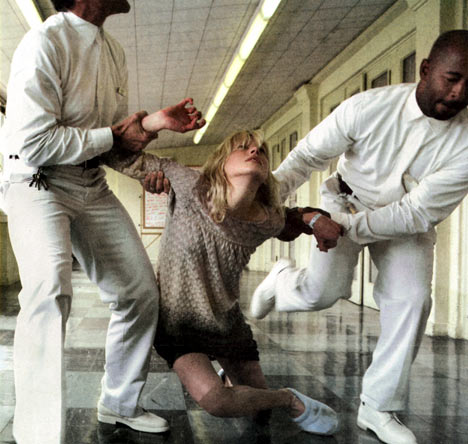
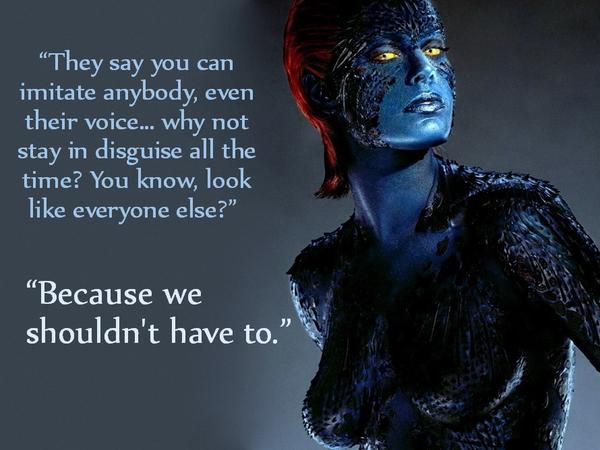
 Look, you and I both know things have gotten ridiculous lately. The inmates are running the asylum, and we can’t even say anything about it because the only protected speech these days is nutty liberal speech – am I right?
 OK, so everyone’s gay now. Fine – live it up. We’ve got girls who are pregnant, boys who think they’re “really” girls, and a few wrecking ball personalities who insist they’re trans-bi-something or other.
  Silence for just a bit your inherent skepticism about just how innate or genetic or legitimate any variety of lifestyles, identities, or issues might be. In fact, feel free to assume that they’re all poor choices and family dysfunction – every last one – from dyslexia to pony play, it’s all just f****** up and unnatural.
  They’re our kids.
  To them, it’s all the same – delusional though it sounds, many of them believe and feel deeply that they’re overwhelmed, underloved, misunderstood or maligned, abused or marginalized. That kind of stuff is all SO relative that it’s usually impossible to know when you’re looking at a survivor some black hole of personal trauma or the teenage equivalent of a two-year old who doesn’t get a cookie and thinks their world is over.
 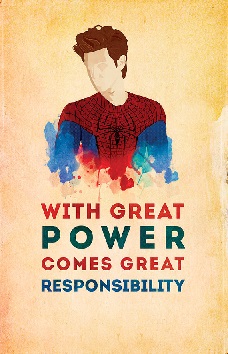 Some of them you couldn’t impact if you used a sledgehammer, I get that – but you impact more of them more strongly than you probably signed up for. Sorry. With power comes culpability and all that. James 3, baby.
 Yeah, they have a circle of friends – but you really think anyone sharing their Island of Misfit Toys is a good replacement for a relatively stable adult willing to accept and push them a bit? Besides, you have a professional and moral obligation not to be part of the problem, however subtle you think your looks and tone might be.
 Consider being a reasonable, normal, loving person in whatever style you are for the other kids – the ones you ‘get’. You won’t go to hell for it, I promise.
 It is difficult for those of you with the slightest shred of decency to appreciate how the law and politics work. They do not operate according to anything most of us consider reasonable, moral, or even explicable. In the past they didn’t have to (and in some systems today they still don’t). Those affected had little expectation of being fully informed and no real control of the outcome.
 And then the South began writing the history of the war and the events which led to it. The war they’d lost. The one fought over a variety of issues, but in which slavery and its continuation were central and essential as defined by the South in the very documents they issued to justify their cause.
 What’s less tolerable is the fervent hurt and chagrin evidenced by the South’s defenders at the very suggestion that secession had ANYTHING to do with slavery. It’s not that they wish to lay out a reasoned argument, you understand – it’s that they’ve reshaped history and historiography solely through repetition and strong emotion.
 My favorite hockey team captain after a tough loss and horrible officiating: “There were some tough calls, but the real problem is that we didn’t take care of business in our own end. We let too many pucks get past us and didn’t take advantage of our opportunities.”
  Of course, if the real issues were states’ rights-ish, that’s not as bad. Federalism is about balance, after all, and if perhaps the South got out of balance, that’s clearly rectified now. If anything, the central government is much stronger than originally intended as a result!
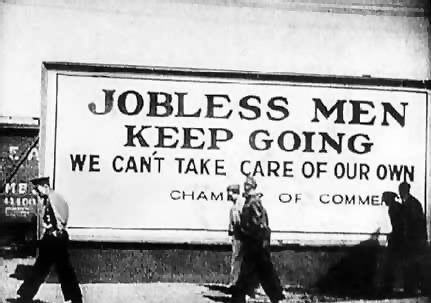 If our ideals are as flawless and their realizations as consistent throughout our history as current legislation insists, then inequity and suffering are primarily a result of personal or cultural failures. If America is ‘exceptional’ in the way they demand we acknowledge, whatever failures have occurred within it are individual and not national. Potential solutions or cures must, logically, come from the same.
 I’ll close with a little Bible talkin’, since that seems to be such a motivator for those pushing a better whitewashing for our lil’uns. Whatever we may disagree on, I wholeheartedly concur that we’ve lost much in our upbringing if we feel the need to run from the wisdom found in

 Mr. Auld was no fool. He knew that control – whether of populations or individuals – begins through the information to which they have access. Whoever controls knowledge controls everything else – especially when it comes to maintaining a system based on privilege and inheritance.
 There’s nothing wrong with learning to be content with what you have, but that’s a choice we can only make if we have some glimpse of the alternatives. I may wish I were rich, but as I endure Kardashians and Trumps, there are trade-offs I’m not willing to take to get there.
 Douglass connected with a character who was in some ways like himself – not in wise words or holy determination, but in the ways his life sucked, like being a slave. This fictional character, however, was able to demonstrate at least one possible way to endure or even flourish in the ugly, imperfect situation in which he was mired. He resonated far more than an idealized hero-figure of some sort could have, belching platitudes while fighting off the darkness with patriotic pluck.
 Learning is dangerous, but not to the person doing the learning. It can hurt along the way, but you usually end up better off for it.
 The Inquisitions and Puritans and Assigners of Scarlet Letters in New Testament times have no such excuse. If their faith is what they claim, it’s a faith based on light and truth and – above all – informed choice. Jesus and Paul may not have had much in common, but there’s no record either ever lied or hid anything they didn’t want the world to see. They didn’t want to capture anyone who didn’t wish to be won.