#OklaEd ‘King for a Day’ Submission

 King for a Day Challenge

I must confess I like the responses so far, most of them more than whatever I’m about to say. Scott Haselwood’s is one I could particularly get behind – I was tempted to simply cut’n’paste it here and claim it was ‘group work’. 

But in the interest of adding to the conversation rather than simply standing on the shoulders of giants, here are the approximately two things I’d sweepingly reform were I sovereign #oklaed ‘King for a Day’, in, um… six hunmumblemurmer or so words (hey, Common Core math).  I eagerly await the letter from Congressional Republicans reminding the rest of #edreform that my efforts will probably be reversed as soon as the next ‘King for a Day’ takes office. 

#1 – Eliminate the Cult of College Readiness. 

Not everyone needs to go to college. Not everyone needs 4 math credits, 3 science credits, 3 history credits, etc. Sure, in an ideal universe I’d endorse every United States citizen having a comfortable familiarity with every core subject. In that ideal universe, every child can learn everything about everything in their own unique way while held to universally high standards. 

But you’ve all had those conversations, sometimes in conspiratorial whispers – “look, we’re just trying to get this kid through – we’re not doing him any favors by trying to go by the book…” We constantly circumvent the system even while demanding it be reinforced, because of all of the ‘exceptions’. 

Which are MOST of our kids, if we’re honest. 

We juggle our convictions regarding what SHOULD happen in theory with our concerns about what’s actually GOOD for the real kids in front of us. Let’s stop. 

Our terror of tracking is valid, but it’s led us to overstandardize curriculum and students in a way which is not only harmful, but doesn’t actually work. We’re hurting the top kids in various academic and ‘extra-curricular’ realms in order to pretend that if we just grunt harder, the kids who can’t or won’t engage will rise towards excellence and discover how truly fulfilling it is to argue themes in a self-selected novel. 

#2 – Get rid of semesters and required cores.  

Four week units, one week off between each, teacher and student-selected. Students are offered a wide range of teacher and subject options created by teachers according to their own interests and abilities, and we do our best to work in some reading, writing, and other essentials through these. 

But oh! The gaps in knowledge! The missing essentials! 

Have you seriously talked to a single high school student or adult ever? They’re not all emerging as Renaissance Peeps, dear – there’s little danger of things getting worse and much potential that given the choice to teach something you care about or learn something you’ve chosen from actual options… well, real education might happen. 

How do we maintain ‘high standards’ while we do this? I have no idea. But if you reject it on that basis, you’ll need to first demonstrate there’s something currently successful that we’ll be losing in the effort. 

#3 – Allow kids to fail. 

Yeah, I don’t like it either, but the problem with eliminating failure is that success becomes impossible as well. As I type this, March Madness is killing productivity in offices across the country. For every game played, the failure rate is 50%. Given those numbers, how are all of the teams involved SO good? Excellence matters, and that requires falling short be a real possibility. 

School isn’t a competitive sport, but the mechanisms necessary for dragging everyone across the finish line willingly or not prevent anyone else actually running, or falling, or getting up, or getting faster or better at anything. You cannot be both a baby and an adult effectively. 

We’re stuck in our efforts to maintain the illusion we’re promoting struggle and growth while focusing most of our energy and other resources towards dragging along the least engaged portion of our populations. Not only is it disingenuous, it doesn’t work – the bottom isn’t becoming the top and the top isn’t fooled as they sink towards mediocrity, frustrated by trying to beat a game whose rules most of them recognize as well-intentioned lies. 

Other Responses from #OklaEd Bloggers (Please let me know who I’ve missed):

Fourth Generation Teacher / Claudia Swisher – #oklaed Queen for a Day

OkEducationTruths / Rick Cobb – Blogging from a Prompt: If I Were King 

Teaching From Here / Scott Haselwood – If I Am The #Oklaed King for a Day!

Tegan Teaches 5th – Queen for a Day!

Nicole Shobert, Thoughts and Ramblings – If I Were Queen of Education for the Day

Choosing the Road Not Taken / Shanna Mellott – Another Brick in the Wall

A View From the Edge / Rob Miller – If I Were King of #Oklaed

The Principal’s Cluttered Desk – King for a Day of #OklaEd

Thoughts on Oklahoma Education / Jason James – King for the Day

RELATED POST: This Week in Education / Dr. John Thompson – Schools and L’Dor V’Dor; From Generation to Generation
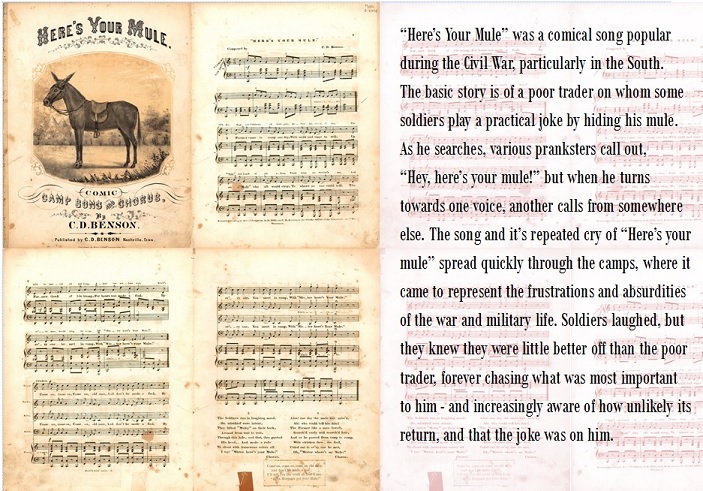
“Here’s Your Mule,” Part Four – On To Richmond!

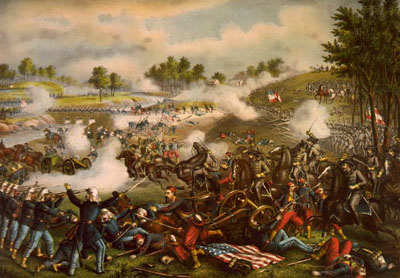
First Bull Run

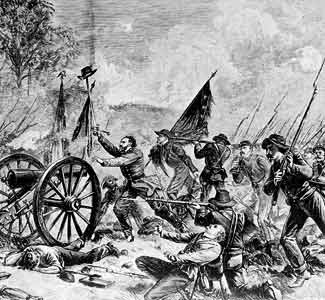
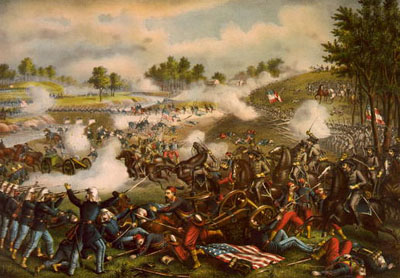
Firing on Ft. Sumter officially started the Civil War, but Bull Run was the first time two armies clashed on purpose, each side with a (sort-of) plan. If Sumter was a preview of the unpredictability of this burgeoning kerfuffle, First Bull Run set the tone and attitude of the war – at least for a while. 

It seemed simple enough, except to the people actually expected to make it happen. 

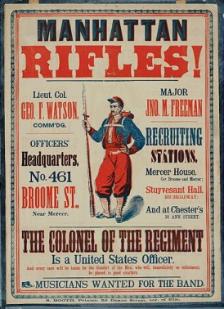
Recruitment PosterAfter Sumter, the Union called for soldiers from the loyal states, some of whom actually sent them. Generals were often elected by their men or appointed for their political connections, so knowing what you were doing wasn’t really top priority at this stage. Men signed up eagerly for the good times to come – war was a mostly theoretical adventure, and defeating the silly South would be good times. 
Plus, chicks dig soldiers. It may sound shallow – even sexist – but I know women 150 years later who still order stuff they don’t want from TV just so some buck in brown shorts will come to their door and ring their little bell.

Boys signed up because they believed women loved a man in uniform. 

[[{“type”:”media”,”view_mode”:”media_small”,”fid”:”706″,”attributes”:{“alt”:””,”class”:”media-image”,”typeof”:”foaf:Image”}}]]

Different war, same hormones. 

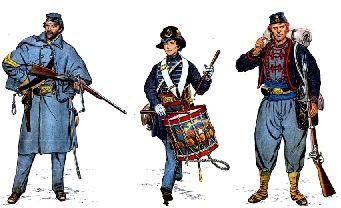
The uniforms in question weren’t standardized at this point – the war had barely started, and whatever militias existed were still local and small. Ladies’ auxiliaries would sew outfits for their fine lads, or existing stocks were raided for garb. When the noble volunteers had input, a surprising number demonstrated an affinity for flash and bling. Unlike today, city boys used to be shallow and prone to peacocking a bit.

The motley crew gathered in Washington, D.C., looked like a circus drug trip gone wrong – some were in red coats, some were in blue, others in whatever they had at home. A few regiments with pride in their Scottish heritage wore kilts and poofy hats, and at least one – the Zouaves – wore bright red M.C. Hammer pants. Can you imagine their marching song? 

[[{“type”:”media”,”view_mode”:”media_small”,”fid”:”711″,”attributes”:{“alt”:””,”class”:”media-image”,”typeof”:”foaf:Image”}}]]

The plan was simple – march down to Richmond and stop the bad guys. Capture the capital of the so-called ‘Confederacy’, and we win! It’s like chess, or capture the flag. Maybe even laser tag.

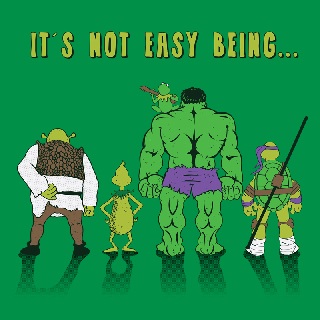
Being GreenPresident Lincoln appointed Irvin McDowell to make this happen, but McDowell was skeptical about the supposed ease of such a mission. He’d done real war before, and was concerned about trying to send men into battle based on the harassment of impatient politicians and newspapers. He was famously reassured by President Lincoln, “You are green, it is true, but they are green also; you are all green alike.” 
‘Green’, in this case, meant ‘inexperienced’ – new, not yet ripe. Like a banana.

Lincoln was technically correct, although his reasoning was questionable (“maybe if EVERYONE is confused the SAME, it will go really well”). He probably knew this, and made the decision pragmatically rather than idealistically. McDowell was under no obligation to join him in that mindset.

But when the President tells you to go have a war, you go have a war. 

So, in mid-July 1861, some 35,000 men gathered outside the White House ready to go. They had weapons, a few rations, and in some cases even a little bit of training. Forward….! 

Finally! Here we – wait, hang on. Why are we stopped? Excuse me, sir – why are we- 

Wow, that fella on the horse yells loud! And if my momma heard that language… Hey, I’m thirsty, do you have any…? Yeah, me too. I wonder if there’s a – 

Oh! Here we go! March! March! March! Mar- STOP! What now? 

I’m sorry, does ANYONE know why we keep – hey, berries! You ever seen berries like this, Bo? Let’s eat ‘em; we aint’ getting’ nowhere anyhow. The we gotta find some water – I’m parched. 

Bo, my stomach – oh Bo I gotta go, something about them berries…

Uniforms One

Any teacher who’s ever attempted to lead a class from their room to the school Media Center only a few turns and one staircase away knows the chaos of such travel. It takes forever, it’s loud and disorganized, and you inexplicably lose people along the way.  

Imagine marching them a hundred miles, fully equipped and armed, outside on a hot day – when they’ve never been asked to do anything like this before and aren’t particularly adept at taking orders. 

What a mess. 

The South had spies in Washington and probably in the military as well, but they were hardly necessary for this one. Between the sound, the dust, the chaos, and the media, Barnum & Bailey would have had better luck sneaking up on Richmond. 

McDowell, having set aside his concerns, had a plan. He was going to fake to the right, attack hard on the left, flank the enemy, take Richmond, war over – here come the ladies and the glory. 

CW BattleUnfortunately P.G.T. Beauregard, our friend from the attack on Ft. Sumter, was waiting for him just outside of Richmond. He had a plan as well, once the Yankee oppressors arrived – fake to the right, attack hard on the left, flank the enemy. Once between the army and the capital, they’d have no choice but to surrender. War over – here comes the honor and the glory (and let’s use some discretion regarding the ladies). 
That ‘green’ issue prevented such complex execution, otherwise the first major battle of the Civil War might have ended up going in circles, like a giant revolving door as each side rotated around the other indefinitely.  

As it turned out, the men on both sides did well, all things considered. They mostly followed orders, mostly stayed and fought, mostly fired their guns before reloading them, etc. After two days of marching – or, in the South’s case, waiting – the battle so long-anticipated was an extended hell few had conceived.

Good thing they had ‘grit’.

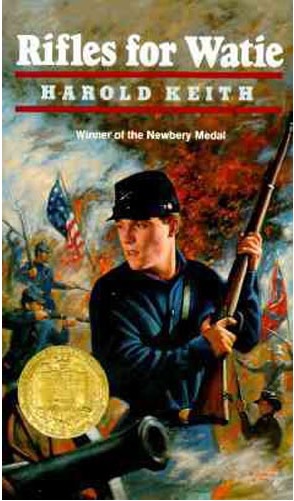
Rifles For WatiePeople were getting SHOT! IN THE BODY! Cannonballs were tearing off limbs, and bullets were splattering the brains of friends. Many bowels and bladders were emptied in those opening hours, and shame quickly gave way to survival instinct for some as this glorious adventure turned out to suck majorly. This was NOT GLORIOUS AND WHAT THE HELL THEY’RE TRYING TO KILL US ALL! 
But most fought anyway. That’s the glorious part, or the unforgiveable part – depending on your perspective.

I’ve never been in real battle, but surviving accounts suggest time can work at all different speeds during such conflagrations. It will race by blurrily while events within remain crisp, in fully textured slow motion. Hours pass in seconds, seconds take hours – you get the idea.

By early afternoon of that eternal flash of a day, both sides were exhausted, running out of everything, and confusion was beginning to give way to the sudden irrational concern this might go on forever, locked in eternal half-hell.

What no one could have anticipated was that very shortly, three things were going to happen to tilt this battle in favor of the Confederate Secesh. Two of them were completely unexpected, and none of the three were particularly ‘normal’ by any common definition. 

But then, that’s how this war was going so far. 

RELATED POST: “Here’s Your Mule,” Part One – North vs. South

RELATED POST: “Here’s Your Mule,” Part Two – Slavery & Sinners

RELATED POST: “Here’s Your Mule,” Part Three – That Sure Was Sumter

RELATED POST: “Here’s Your Mule,” Part Five – Bull Run Goes South

RELATED POST: “Here’s Your Mule,” Part Six – Soiled Armor

RELATED POST: “Here’s Your Mule,” Part Seven – Grant Me This

Here's Your Mule

Fake History Repeats Itself

[[{“type”:”media”,”view_mode”:”media_small”,”fid”:”685″,”attributes”:{“alt”:””,”class”:”media-image”,”typeof”:”foaf:Image”}}]]

Oh god,  here we go again. I knew it would be back, but I thought it would take longer. 

As a teacher, you fight ignorance, apathy, a little delusion here and there… part of the job is that kids are clueless, and we’re trying to help de-ignorize them. 

Rainbow Connection

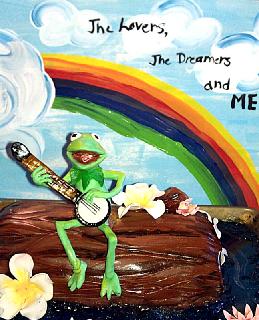
From time to time (more and more often, I’m afraid) you have that kid whose parents are doing everything they can to prevent their child from ever having that first clue. They go to extreme, hostile measures to shield them from the least little bit of accountability, from any real academic or behavioral expectations, and they demand high marks and rainbow connections in return. You know they’re ruining whatever chance this kid has to ever not be useless – you know they’re probably setting the kid up for a long, painful existence even when they’re NOT in jail.

But they’re the parents, and while you have some control over what you will or won’t do, in the end they’re pretty much in charge of their minor child. 

That’s what it’s like to live in Oklahoma. The entire state is, in the end, controlled by malicious idiocy. We can rant and complain, we can “educate” our understaffed little asses off, but we can’t fix it. They’re in charge – and they’re going to stay in charge for the forseeable future.

Tell me again what a GREAT idea democracy is. Good thing we gave the vote to all the stupid people, isn’t it?

Fisher Armed

Representative Dan Fisher, Black Robed Regiment Bringer Backer, has authored a Concurrent Resolution condemning APUSH for not being ‘Merican enough. A Concurrent Resolution isn’t a law – it’s the kind of thing usually used to commemorate the local football team’s one win of the season or acknowledge National Potato Week – but it’s still worth looking at. 

I’m trying to clarify a few things for myself regarding what actual impact a ‘resolution’ can have on the State Board of Education or how tax dollars are or are not spent before I rant further – not that having all the facts should be an issue here, given the nature of the legislation we keep having to debunk. 

In the meantime, here it is, word for word. Keep in mind that if you don’t like something you see here, it’s because you’re “dishonest” and because you’re too stupid to understand what he means.  

You gotta love small people with just enough power to become truly loathsome.  

HOUSE OF REPRESENTATIVES – FLOOR VERSION 

STATE OF OKLAHOMA – 1st Session of the 55th Legislature (2015)

HOUSE CONCURRENT RESOLUTION 1002 By: Fisher

AS INTRODUCED 

A Concurrent Resolution urging the College Board to change the Advanced Placement United States History course framework and examination; directing the State Board of Education not to award grants or expend certain money for any Advanced Placement United States History course or examination until certain conditions are met; directing the State Board to explore certain options; directing the State Board and boards of education to make certain decisions using certain criteria; and directing distribution.  

WHEREAS, approximately 500,000 students in the United States take the College Board’s Advanced Placement United States History course each year; and WHEREAS, in Oklahoma, approximately 5,000 students are enrolled in an Advanced Placement United States History course for the 2014-2015 school year; and WHEREAS, traditionally the Advanced Placement United States History course was designed to present a balanced view of American history and to prepare students for college-level history courses; and 

WHEREAS, the College Board is a private not-for-profit organization that is responsible for administering the SAT college readiness examination and for developing and providing Advanced Placement (AP) courses and examinations in various subject areas; and 

WHEREAS, the College Board released changes to the Advanced Placement United States History course framework which took effect for the 2014-2015 school year and will be assessed with the May 2015 administration of the Advanced Placement United States History examination; and 

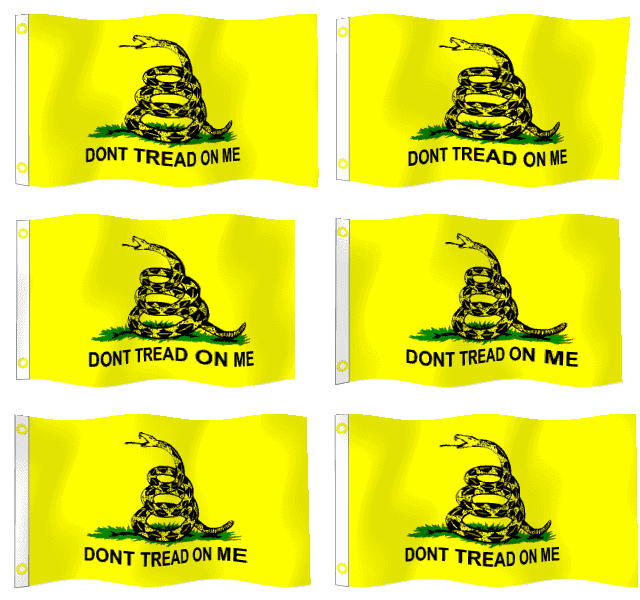
DontTreadOnMe

WHEREAS, the new Advanced Placement United States History course framework differs from the current Oklahoma Academic Standards for Social Studies-United States History; and WHEREAS, the new Advanced Placement United States History course framework and examination emphasize the negative aspects of our nation’s history using the ideology of race, gender, class, and ethnicity to teach themes and events in United States history while omitting or minimizing positive aspects of United States history, which presents a radically revisionist, biased, and inaccurate view of United States history; and 

WHEREAS, the Advanced Placement United States History course framework and examination neglect critical topics that were formerly part of the Advanced Placement United States History course. For example, very little is mentioned about the Founding Fathers, the principles of the Declaration of Independence, and the religious influences on our nation’s history; and 

WHEREAS, the Advanced Placement United States History course framework and examination present inaccurate and incomplete views of historical events such as the motivations and actions of 17th through 19th century settlers, the causes of the Great Depression, and the development of and victory in the Cold War; and 

WHEREAS, the Advanced Placement United States History course framework and examination exclude discussion of the United States military (no battles, commanders, or heroes), and omit individuals and events that greatly shaped our nation’s history such as Albert Einstein, Jonas Salk, George Washington Carver, Rosa Parks, Dr. Martin Luther King Jr., the Tuskegee Airmen, the Holocaust, and many other critical topics that have long been part of the Advanced Placement United States History course and examination; and 

WHEREAS, some of the best and brightest students in Oklahoma will be studying history according to the Advanced Placement United States History course framework developed by the College Board, which has stated “any teacher who presents the principles of the American Constitution taught in the traditional way would be severely disadvantaging students for the College Board examination”; and 

WHEREAS, despite offering revisions and clarifications to the Advanced Placement United States History course framework, the College Board has refused to change the themes and key concepts of the framework; thus the Advanced Placement United States History required knowledge that is currently being taught to Oklahoma students is inaccurate, biased and negative and includes revisionist themes and concepts; and 

WHEREAS, in order to prepare students for the Advanced Placement United States History examination, Oklahoma teachers who teach the Advanced Placement United States History course will have to be trained in and adopt materials which are in conflict with the Oklahoma Academic Standards in Social Studies-United States History; and 

WHEREAS, if the Advanced Placement United States History course framework is taught in classrooms in the state it will usurp the Oklahoma Academic Standards in Social Studies-United States History. 

NOW, THEREFORE, BE IT RESOLVED BY THE HOUSE OF REPRESENTATIVES OF THE 1ST SESSION OF THE 55TH OKLAHOMA LEGISLATURE, THE SENATE CONCURRING THEREIN: 

THAT the College Board is hereby urged to withdraw the new Advanced Placement United States History course framework before the beginning of the 2015-2016 school year and replace it with the Advanced Placement United States History course framework that was in place prior to the 2014-2015 school year. 

THAT the State Board of Education is directed not to use taxpayers’ money to implement or administer the Advanced Placement United States History course or examination and to withhold the award of grants under the Oklahoma Advanced Placement Incentive Program for funding teacher training, curriculum, instructional materials, examination awards and examination scholarships for the Advanced Placement United States History course and examination for the 2015-2016 school year and subsequent school years until the College Board reverts back to the previous Advanced Placement United States History course framework. 

THAT the State Board of Education is directed to explore alternatives to the College Board’s Advanced Placement United States History course and examination that would offer Oklahoma students the same opportunities that the Advanced Placement program offers and is in agreement with the Oklahoma Academic Standards for Social Studies-United States History. 

THAT the State Board of Education and all boards of education of school districts in Oklahoma are directed to make all decisions concerning the curriculum and materials used in courses and programs in United States History, Honors United States History and Advanced Placement United States History in accordance with the Oklahoma Academic Standards for Social Studies-United States History adopted by the State Board of Education and that all curriculum and materials have an emphasis on America’s founding principles, exceptionalism, and unique role in the world. 

THAT copies of this resolution be distributed to David Coleman, President and Chief Executive Officer of the College Board, the State Superintendent of Public Instruction, the Governor of Oklahoma, and the Lieutenant Governor of Oklahoma. 

DIRECT TO CALENDAR.

I don’t want to write about this again. I was enjoying my little Civil War series, and more than anything I wish I could afford to just pack up and move tomorrow. I’ve never known a state to work SO hard at getting even worse. 


Intermission: Mary Boykin Chesnut’s Diary, Part Two

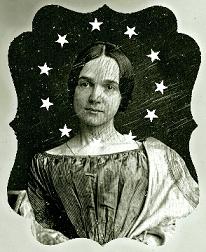
MBC StarsMrs. Chesnut has been recording for posterity the events surrounding the so-called “Battle of Fort Sumter.” Except she’s mostly not. 
Louisa Hamilton came here now. This is a sort of news center. Jack Hamilton, her handsome young husband, has all the credit of a famous battery, which is made of railroad iron. Mr. Petigru calls it the ‘boomerang,’ because it throws the balls back the way they came; so Lou Hamilton tells us.  

The ‘boomerang’ bit is a brag by Mrs. Hamilton on her husband‘s artillery unit – they not only hold their ground when taking incoming fire, they gather the cannonballs fired at them and send them back. Boo-yah! 

How much you wanna bet Mrs. H. works that into conversation one way or the other about every three minutes?

During her first marriage, she had no children; hence the value of this lately achieved baby. 

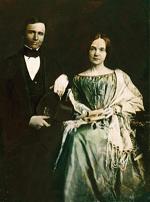
James & Mary Chesnut

Historical documents of a personal nature can be difficult – especially for students – because tone is everything. Miss a little flirting, or sarcasm, or other emoticon-deficient vibe, and you can misread a source completely. 

Mrs. Chesnut is kind enough to write on both levels simultaneously – the obvious, smiling appreciation for a friend’s long-awaited offspring, and – unless I’m projecting – a little wry commentary on Louisa’s mothering as well.  

It might even be cruel. 

To divert Louisa from the glories of “the Battery,” of which she raves, we asked if the baby could talk yet. “No, not exactly, but he imitates the big gun when he hears that. He claps his hands and cries ‘Boom, boom.'” 

Her mind is distinctly occupied by three things: Lieutenant Hamilton, whom she calls “Randolph,” the baby, and the big gun, and it refuses to hold more…

*snort*

I do not wonder at Louisa Hamilton’s baby; we hear nothing, can listen to nothing; boom, boom goes the cannon all the time. The nervous strain is awful, alone in this darkened room. “Richmond and Washington ablaze,” say the papers – blazing with excitement. Why not? To us these last days’ events seem frightfully great.  

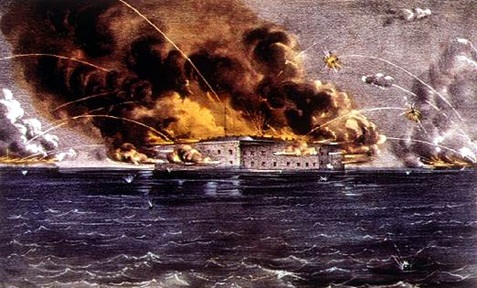
Ft Sumter On FireThat Chesnut always returns to the sincere – the experience – anchors her prose in a way mere observation or fiction could not. Her ability to grab descriptive slices of people and events and weave them in so transparently makes this something more alive than most find mere history to be. 
But that’s what makes this real history. 

The war, the guns, the actions, the results – facts mattered, and always will. But people, having experiences, and making choices, and feeling feels… in the end, that‘s usually what produces the wars and drives the actions. Like Anne Frank in her attic or Bridget Jones navigating high society in London*, that rare opportunity to zoom in and inhabit the past through the eyes and experiences of another – that’s why we love history. 

It gets even better.  

April 13th. – Nobody has been hurt after all. How gay we were last night…  

Yes, half of my students are 14-year old boys. This line is always a thing.  

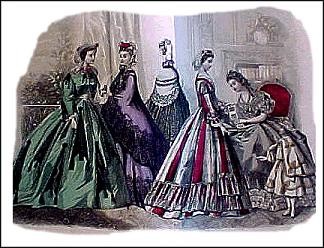
19th Century Belles

Fort Sumter has been on fire. Anderson has not yet silenced any of our guns. So the aides, still with swords and red sashes by way of uniform, tell us. But the sound of those guns makes regular meals impossible. None of us go to table. Tea-trays pervade the corridors going everywhere. Some of the anxious hearts lie on their beds and moan in solitary misery. Mrs. Wigfall and I solace ourselves with tea in my room. These women have all a satisfying faith. “God is on our side,” they say. When we are shut in Mrs. Wigfall and I ask “Why?” “Of course, He hates the Yankees, we are told. You’ll think that well of Him.” 

Mona Lisa“A satisfying faith” – once again, understated layers of meaning. Chesnut doesn’t directly comment, she portrays – with precision. I think she’s aware of us, all these years later, reading her through this… ‘documentation’ of events. Do you feel her Mona Lisa smirk on us?  
Not by one word or look can we detect any change in the demeanor of these negro servants. Lawrence sits at our door, sleepy and respectful, and profoundly indifferent. So are they all, but they carry it too far. You could not tell that they even heard the awful roar going on in the bay, though it has been dinning in their ears night and day. People talk before them as if they were chairs and tables. They make no sign. Are they stolidly stupid? or wiser than we are; silent and strong, biding their time? 

Southern nobility lived with themselves as slave-owners largely by learning not to ‘see’ those they enslaved. Perhaps overseers or smaller property owners were all too aware of what they were doing to real live people, but the elite seem to have largely trained themselves to give wide berth to troubling thoughts. 

Chesnut’s diary resonates, however, not only from her poignant word choices, but her willingness to watch, and listen, in the first place. She is fully present, and not afraid to see what she sees. We should do so well. 

Anyone could have made this observation – it’s glaring, once noted. People have an amazing capacity, though, to see what we wish to see and discard the rest. Whether slaves, dust, quiet students, personal faults, or moonwalking bears, our filters are really something else. We know this, but usually do a pretty good job ignoring this about ourselves as well. Ironic, right? 

So tea and toast came; also came Colonel Manning, red sash and sword, to announce that he had been under fire, and didn’t mind it. He said gaily: “It is one of those things a fellow never knows how he will come out until he has been tried. Now I know I am a worthy descendant of my old Irish hero of an ancestor, who held the British officer before him as a shield in the Revolution, and backed out of danger gracefully.” We talked of St. Valentine’s eve, or the maid of Perth, and the drop of the white doe’s blood that sometimes spoiled all… 

First Bull RunThe standard American History book will tell you the South was overconfident after First Bull Run, etc. I’d argue Colonel Manning and his ilk were way ahead of the crowd on this one.  
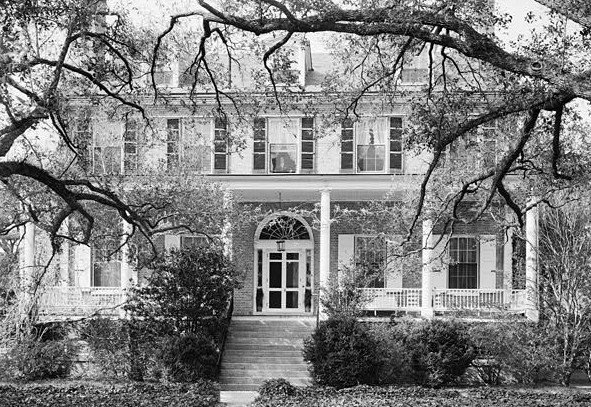
It’s still all a play, a fantastic story, to those involved at this stage. This is not something you’ll hear from men a year or two later in this war. Some will look back and shake their heads with a dark chuckle that they’d ever thought such things.  

Fort Sumter surrendered, and the war was officially begun. The next major action will be a bit better planned – although not by much. At First Bull Run, young men will actually be injured. Many will die. But not yet. 

April 20, 1861. – Home again at Mulberry. In those last days of my stay in Charleston I did not find time to write a word… I have been sitting idly to-day looking out upon this beautiful lawn, wondering if this can be the same world I was in a few days ago. After the smoke and the din of the battle, a calm. 

Indeed.

Mulberry Plantation

* Just seeing if you were paying attention.

RELATED POST: Intermission: Mary Boykin Chesnut’s Diary, Part One

RELATED POST: “Here’s Your Mule,” Part One – North vs. South

RELATED POST: “Here’s Your Mule,” Part Two – Slavery & Sinners

RELATED POST: “Here’s Your Mule,” Part Three – That Sure Was Sumter

Intermission: Mary Boykin Chesnut’s Diary, Part One

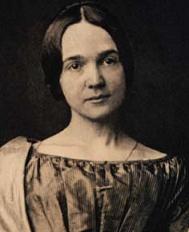
Mary Boykin ChesnutMary Boykin Chesnut was a Southern lady in the purest tradition, born into South Carolina’s political nobility and educated at one of the finest boarding schools in Charleston. Her husband was the son of a successful plantation owner and an upwardly mobile politico himself. 
Following Lincoln’s election in 1860, James Chesnut helped write South Carolina’s Declaration of Secession and during the subsequent war served as an aide to General Beauregard and President Davis, eventually rising to the rank of General. 

Women in such circumstances were expected to be well-educated, but not given much opportunity to use their fancy brains. In retrospect, it might have been kinder to either keep them as ignorant as possible or let them do stuff – but such were the mores of the day. So she read, she observed, and she wrote. 

Lots. 

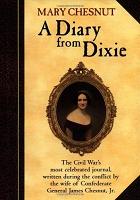
MBC Diary CoverThe diary of Mrs. Chesnut is one of the essential primary sources of the Civil War, and still readily available if you’re interested. It’s quite accessible to the casual reader – you won’t even know you’re learning history, I promise. 
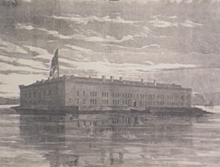
The best-known passages describe events in and around her household (a very active place even when wars weren’t being started nearby) as the tensions between North and South approach conflagration, thanks in large part to the stubbornness of Union Colonel Robert Anderson, in command of Fort Sumter in Charleston Harbor. 

April 12th. – Anderson will not capitulate. Yesterday’s was the merriest, maddest dinner we have had yet. Men were audaciously wise and witty. We had an unspoken foreboding that it was to be our last pleasant meeting… Mrs. Henry King rushed in saying, “The news, I come for the latest news. All the men of the King family are on the Island,” of which fact she seemed proud. 

While she was here our peace negotiator, or envoy, came in – that is, Mr. Chesnut returned. His interview with Colonel Anderson had been deeply interesting, but Mr. Chesnut was not inclined to be communicative. He wanted his dinner. He felt for Anderson and had telegraphed to President Davis for instructions – what answer to give Anderson, etc. He has now gone back to Fort Sumter with additional instructions.  

When they were about to leave the wharf A. H. Boykin sprang into the boat in great excitement. He thought himself ill-used, with a likelihood of fighting and he to be left behind! 

Ft. Sumter BeforeNever has a better case been made for teaching reading and writing, although her keen observations on human nature are perhaps harder to mandate.   

Mrs. Chesnut’s observations of her husband are appropriately loving and respectful, always. Her subtle commentary on others, however, brings her writing to life. Her snapshots of Mrs. King and the young Boykin are sympathetic, certainly – but tinted with bewilderment over their enthusiasm for war. 

The words themselves maintain perfectly plausible deniability, were posterity to challenge her tone – “Me? Oh, no no – I was just noting what I saw and heard… that’s all.” (*fans self with something lavishly decorative*)  

Underwater Tea Party“Men were audaciously wise and witty.” What a marvelous phrase. It sounds like the Mad Hatter’s tea party, but instead of pure chaos, her description is redolent of forced fearlessness and social gilding. F. Scott Fitzgerald has nothing on the wealthy belle when it comes to writing dinner parties.  
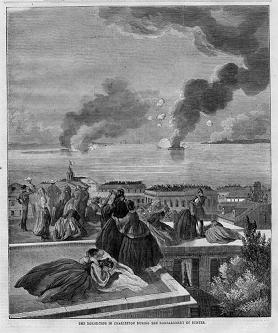
I do not pretend to go to sleep. How can I? If Anderson does not accept terms at four, the orders are, he shall be fired upon. I count four, St. Michael’s bells chime out and I begin to hope. At half-past four the heavy booming of a cannon. I sprang out of bed, and on my knees prostrate I prayed as I never prayed before. 

There was a sound of stir all over the house, pattering of feet in the corridors. All seemed hurrying one way. I put on my double-gown and a shawl and went, too. It was to the housetop. The shells were bursting. In the dark I heard a man say, “Waste of ammunition.”  

I don’t know who the man in the dark may have been, but if this were a work of fiction rather than a primary source, I’d point him out as a brilliant bit of literary slight-of-hand.  

On The RoofWhile the rest of the city – and, by proxy, the South – celebrates the opening rounds of what will no doubt prove a majestic little melee, one anonymous voice just out of view notices that they’re firing land weapons at a fort designed to withstand attack by foreign navies. 
Nothing tangible is being accomplished – it won’t work. There’s kerfuffle enough, but no substance. There’s a cost, but for what prize?

I’m no expert on Mary Boykin Chesnut, but if someone who WERE wished to persuade me she’s taken literary license with her account to say things she could not, as a wife and loyal secesh, say – well, I wouldn’t argue. 

Last night, or this morning truly, up on the housetop I was so weak and weary I sat down on something that looked like a black stool. “Get up, you foolish woman. Your dress is on fire,” cried a man. And he put me out. I was on a chimney and the sparks had caught my clothes. Susan Preston and Mr. Venable then came up. But my fire had been extinguished before it burst out into a regular blaze. 

I realize it’s not exactly gut-splitting to read in the 21st century, but this is funny. It’s the 19th century equivalent of zany slapstick humor.  

If only the helpful man had said “nyuk nyuk!” and poked her in the eyes just after. 

Do you know, after all that noise and our tears and prayers, nobody has been hurt; sound and fury signifying nothing – a delusion and a snare. 

This sentence could be used as an example for about 43 different things in ELA, AND it’s a pleasure to read repeatedly. It’s like literary bruschetta. 

And remember that ‘plausible deniability’ from a bit ago? It’s about to get pushed to the limits of of beau monde.  That Chesnut is a real card. 

Next time.  

3 Stooges w/ MBC

RELATED POST: Intermission: Mary Boykin Chesnut’s Diary, Part Two

RELATED POST: “Here’s Your Mule,” Part One – North vs. South

RELATED POST: “Here’s Your Mule,” Part Two – Slavery & Sinners

RELATED POST: “Here’s Your Mule,” Part Three – That Sure Was Sumter