
Most of you are or have been classroom teachers – whether that classroom is actually in Oklahoma, in a traditional public school, or whatever. We talk policy a great deal – and rightly so. From time to time we’re inundated with pedagogy – which can be either helpful or a tad pompous depending on who’s doing the inundating. But it’s not all that common to use the wonders of the interwebs and edu-blogosphere to get all giddy sharing something content-related that gets us all tingly in our hoo-ha.
 So, as I’ve been locked in eternal (well, two days) combat with the unacceptable word count of my most recent elucidation of favorite Civil War shenanigans, I thought it would be diverting as a group to share similar loves from our classrooms, our book research, or whatever. It would certainly entertain ME to hear from YOU, and it might even promote bonding and academic conversation and maybe even stir up things about this gig that DON’T make us want to take up cordless bungee-jumping.
So, here’s my challenge to each of you, whether specifically named in my Twitterpalooza when I send this out or not, AND whether you’re part of the #OklaEd world or not:
1200 words or less describing, explaining, or otherwise sharing a favorite bit of content from whatever you teach, taught, write, or otherwise shine upon the future. You may reference the pedagogy involved, but I’m not asking for teacher techniques – I’m looking for an education about a favorite book or event or equation or chemical reaction.
Talk content to me, baby. Talk content to me HARD.
Please prod me when you post so I can compile a link-list below. Bonus points for appropriate visuals, and triple dog bonus points for submissions before May 1st.

RESPONSE POST: The Grandaddy of Trig Identities! (Teaching From Here) – Scott Haselwood is a confirmed longtime #11FF and one of those rare people who make math seem possible to me – maybe even fascinating. I think it’s because he genuinely seems to love it, both as an academic exercise and as something that happens in the real world. After you check out this content post, you should follow him on the Twitter and subscribe to his blog. He writes purdy for a math fella.
RESPONSE POST: BlueCerealEducation Content Challenge (JennWillTeach) – Jenn is a charter #11FF (the kind that means she’s an original member; not the kind that makes all the public members mad by drawing away money and glory) and this response might give you some hint as to why. Rather than pick a single lesson on which to elaborate, she’s laid out several weeks of ideas by grade level, 8th – 12th. This is a woman who chose the RIGHT online moniker. Her blog is brand spankin’ new, so go give her some edu-blogger love. She’s also rather amusing and insightful and stuff on Twitter, so check her out.
RESPONSE POST: BlueCerealEducation Content Challenge – I Teach The Blues (JethroBlank) – Jed Lovejoy is a relatively new #11FF who, I’m discovering, is full of surprises. You may not think, for example, that a breakdown of the musical curriculum for a small children’s home in Tipton, OK, would be particularly fascinating reading (and some listening) – but you, like me, would be so very wrong. We should keep an eye on this guy – he might end up changing the world while we’re not paying attention.
RESPONSE POST: “Beat It” (This Teacher Sings) – Mindy Dennison gets serious about Beat vs. Meter. I’m starting to see a theme in how many of these lessons are about taking the unfamilar and connecting it to the familiar before moving into the new. Hmmm….
RESPONSE POST: Blogger Challenge & The Heartbreakers (OkEducationTruths) – Rick Cobb of the legendary OkEducationTruths starts with Tom Petty and takes kids to Wordsworth before they realize they’ve been taught. (If he’d been in charge of getting that guy to eat green eggs & ham, that whole book would have been about 3 pages long.) Turns out even the bloggers get lucky sometimes.
RESPONSE POST: Flying, Fickle Apostrophes (Debbie Matney) – Debbie is a legend in all things ELA, but she doesn’t cotton much to that ‘Twitter’ stuff or them edu-blogs. She was kind enough, however, to send one of her favorite 6th Grade ELA lessons and some student work samples. Kinda makes me want to be eleven again, just so I could have her class…
RESPONSE POST: Talkin’ Content Challenge – History Edition (Marauding Mentor) – I somehow missed this one in the original sweep, but I love the approach. And they say History Teachers just show movies…
The peer pressure is building for the rest of you. Whatcha got? Huh? HUH?!?
Talk content to me.
**If you’ve posted something in response to this and don’t see it here, please nudge me on Twitter (@BlueCerealEduc) or email ([email protected]) – My intentions are good, but my brain is old.
 I’m a 2nd year 7th grade Texas History teacher. When I started – I was thrown into the mix mid year, in an urban, Title 1, public school. I was a first time teacher and was completely overwhelmed. I was learning all new curriculum, getting the hang of balancing the piles of paperwork and deadlines, learning classroom management, and trying to grow professionally all at one time. It was a mess.
 It’s so teacher of us – a variety of challenges complete with topics and word limits have been issued to various #oklaed bloggers lately, some with DUE DATES! In other words, we’re giving each other actual assignments.


 “They are, indeed,” said the Scarecrow, “and I am thankful I am made of straw and cannot be easily damaged. There are worse things in the world than being a Scarecrow.”
 I think the hardest thing about teaching, about marriage, about parenting, about citizenship, about socializing, cooking, fixing, feeling, running, thinking, being – is paying attention.
 I’ve taught some great lessons in my time, and watched some young people have some pretty impressive lightbulb moments. Not every day, though – not most days, or most kids, or most lessons. Sometimes I really step in it, saying or doing something reckless and unnecessary – which, I mean, is the same reason the good stuff works. But sometimes it doesn’t, and I hurt someone, one of my kids, or peers, or worse – I alienate them. Lose them for the light.
 Your standard American History textbook will tell you that after First Bull Run, the Union realized the War was going to be a bit trickier than they’d thought, and began preparing more substantially. The South, on the other hand, felt validated in their assessment of the Yanks and suffered from overconfidence.
  The vanity and honor culture of the South was pretty much unbearable long before First Bull Run, but their routing of the North after such build-up and so many supposed disadvantages reinforced the conviction of many Secesh that they simply could not, would not, should not lose – ever ever ever ever.
 Here’s the problem with that kind of enemy: they don’t give up. I mean, I’m a big fan of all that ‘hold on tight to your dreams’ stuff, but there’s a time to make like Elsa and let it go.
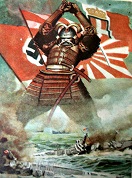 Germany took a pretty severe beating before Hitler’s suicide opened the door to surrender, leaving Japan alone in the fight – but they couldn’t let themselves accept the inevitable. WE DROPPED AN ATOMIC BOMB ON THEM, and they were still, like “I dunno – seems to me we can still make this work.”
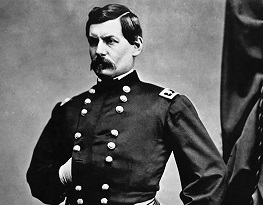 If Bull Run left the South feeling confirmed in their invulnerability, it left the North soiling their armor at rabbits. Yes, the President and co. dug in for a real war, but the psychological impact of blowing a ‘sure thing’ – so much so that they skulked back to Washington in terror and shame – didn’t fade quickly. Add to this the grand delusions of General George B. McClellan, who led Union troops through much of the first part of the war – and we have a problem.
 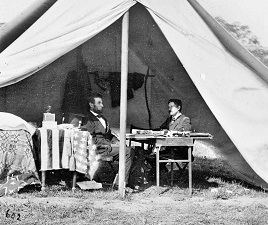 You’d think this would mean less bloodshed, but in reality it protracted the conflict unnecessarily for months – maybe years. It drove Lincoln crazy, despite his calm veneer – at one point he wrote to McClellan asking if perhaps he could borrow the army for a time, seeing as how he wasn’t using it for anything.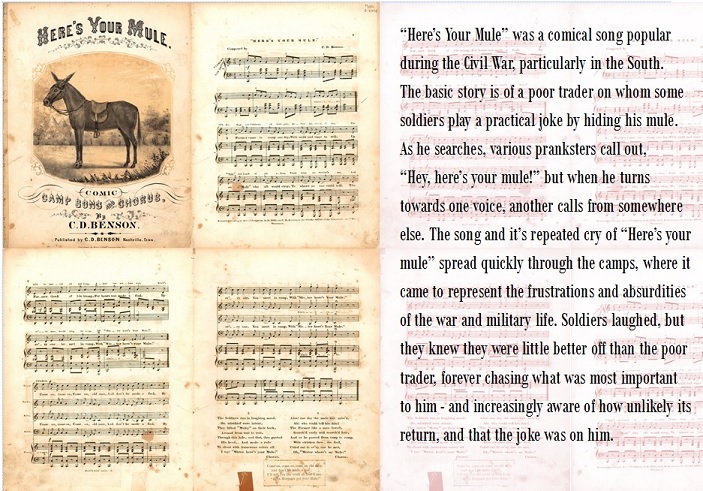
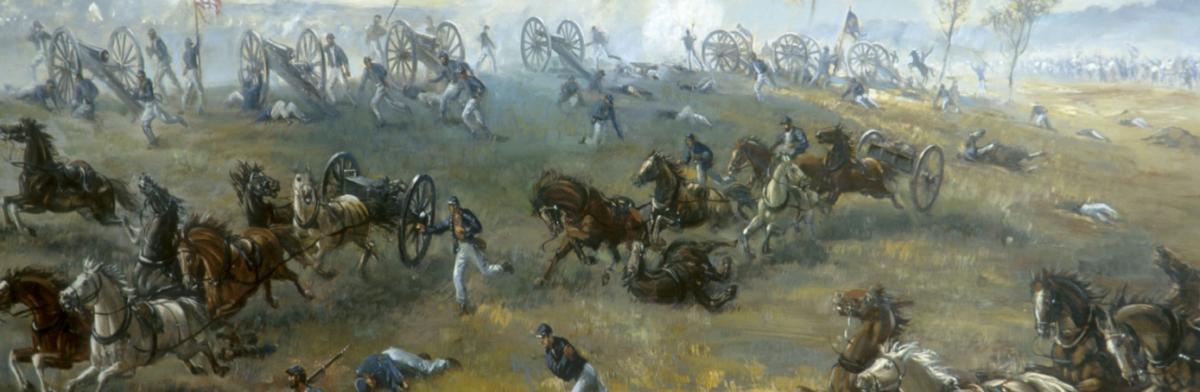
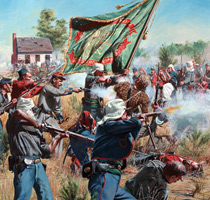 Through the smoke and haze of battle, the boys who would later be in blue could tell fresh troops were falling into place across the way. Those looking behind for their own reinforcements were… disappointed.
 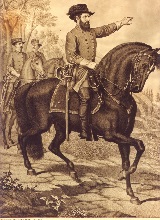 OK, he was already weird before the battle. A brilliant strategist, Jackson was nonetheless an unlikely leader of men. He was socially awkward, and his classes at Virginia Military Institute were notorious for their tedium.
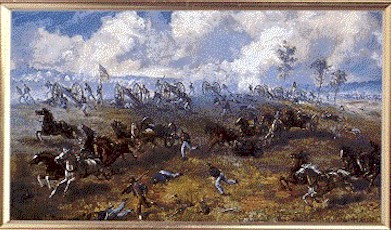 It was THIS figure who confronted the men who’d begun to fall back in the face of superior firepower. Jackson didn’t yell, so his voice would have been raised only in order to be heard above the din. He told them to form a line and hold it.
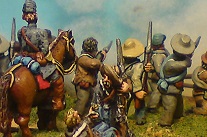 General Bee, who was not particularly weird OR inspiring, saw this from across the way and recognized its power. Knowing he couldn’t pull it off personally, he instead pointed it out to his men: “Look! There’s Jackson, standing like a stone wall! Rally behind the Virginians!”
  First Bull Run was the first time Union troops would experience one of the more bone-chilling elements of the Civil War. This was possibly Jackson’s doing as well. (Hey, once you’ve got a cool nickname, anything is possible.)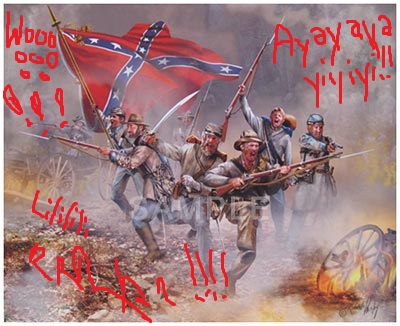
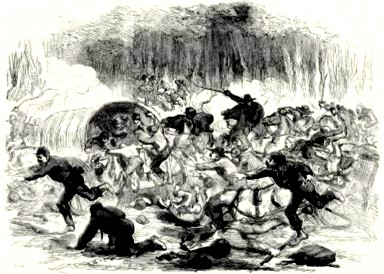 And yet, things remained relatively calm. Disorderly, to be sure – frustrating, and volatile. But there was no panic – at first.
  Your standard American History textbook will tell you the Union realized the War was going to be a bit trickier than they’d thought, and begin preparing more substantially. The South, on the other hand, felt validated in their assessment of the Yanks and suffered from overconfidence.