1927-28 saw the publication of a full 12 volumes of The Class Room Teacher by Corinne A. Seeds, A.M., Principal of the Training School, Assistant Supervisor of Training, University of California at Los Angeles, with the cooperation of Milo B. Hillegas, Ph.D., LL.D., Professor of Education, Teachers College, Columbia University.
What a mouthful.
I am not aware that either of these individuals has a blog of their own, and as the series was published almost a century ago, chances are good both have gone to that great Teachers’ Lounge in the sky to mimeograph with the angels, as it were.
The following excerpts are from the first volume, in a chapter titled (dryly enough) “Classroom Control: Methods of Control.” While we often chuckle at antiquated teacher requirements or student behavior issues from days gone by, there are parts of this I find fascinating.
The problem of classroom control is most vital and of outstanding, far-reaching importance. The future welfare of our country depends largely upon the methods of control used upon its future citizens. By these very methods teachers can produce anything from slaves who obey their masters explicitly without thinking, to freemen who make their choices only after careful deliberation and discussion. Thus it is of the utmost importance that teachers should know what types of control are best for the future welfare of a democracy.
Melodramatic much, Corinne?
 Note the assumptions in this introduction to what we’d today call ‘classroom management’ (the change in terminology itself suggests a very different mindset). First, that teachers actually have this much power over their students or anything else – so much so that we’re literally determining the future of democracy. Second, that young people must be molded and trained like pets, or a good horse, to function effectively in the world.
The idea that the young require careful grooming in order to be useful was not unique to public education; it was more or less ubiquitous until the late 1950’s, when the concept of ‘teenager’ was born. This whole ‘discover their own way’ and ‘follow your dreams’ stuff is relatively new. You may blame or credit the 1960’s as you see fit.
Once they were robots – useful, but stifled. Then they were butterflies, free, but useless. What today?
Our democracy is composed of a conglomerate mass of individuals at all stages of ethical development, from those who obey the laws made by the group for the welfare of all only when they are forced to do so to those unselfish souls who realize that their highest development and happiness are reached only as they consider all and act according to the best interests of the whole group. Midway between these two extremes we find those who obey only because they have been trained to do so, some who conform because of fear of the disapproval of their fellow men, and still others who act in accord because they long for approbation.
Hmmm… does she use all those big words because she longs for conglomerated approbation?
Either way, this essentially holds true today – some follow the rules only when forced, others as long as they believe those rules to be ‘right’. Most are somewhere in between, adjusting with circumstances and personal issues.
It would be folly to assume that one method of control, even the ideal, would prove sufficient to promote the best interests of the group. There should be as many types of control as there are attitudes toward it. While it is necessary at times to use the lower forms of control, yet it should be the hope of the democracy that in the dim distant future, through our methods of education, the ideal can be truly reached – “a government of the people, by the people, and for the people.”
 Such single-mindedness regarding the preparation of our young to become useful citizens! How very ‘spirit of the times’ – post WWI, pre-Depression and pre-WWII. Pretty patriotic for the ‘Roaring Twenties’, you little red, white and blue ‘flapper,’ you!
Here’s my favorite part, though:
The problem of control which the classroom teacher must meet is a miniature of the greater problem which confronts the democracy. It is not easy for the teacher to know how to manage Mexican Pedro, whose father digs in the street, Isadore, the son of the Rabbi, Mary Evelyn, whose mother is president of the philosophical society, and forty others who differ more or less in native and acquired characteristics, so that they may live richly and cooperatively together in their school community and grow into better, happier boys and girls. Like the democracy she should be cognizant of the fact that the highest control is that which comes from within as a result of reason, and she should strive toward that as her ideal. But she should not be utterly crushed if at times she has to resort to coercion in order to promote the greatest good for the greatest number.
Ha! OK, let’s set aside for a moment our 21st century ‘racism-alert’ and our commensurate ‘be-offended-by-everything’ genes. This is an effort to acknowledge diversity, circa 1920’s, and to encourage teachers to recognize the balance between preparing students from very different backgrounds to maintain their individuality while at the same time learning to function in as part of a community.
 I mean, in its own way it’s rather enlightened. Add the emphasis on reason and it’s rather Enlightened as well.
It’s interesting that she omitted Langston the clichéd Negro, whose father does something manual labor-ish or whatever. Is that a product of the segregation common in many cities at the time, or a choice based on other realities?
In order to meet the control problems found in the typical American classrooms, teachers use methods based upon the following general types or combinations of two or more types:
(1) No control, wherein the children all do as they please.
(2) Teacher control, wherein rules are made and enforced by the teacher.
(3) Group control, wherein rules are made and enforced by the group working together for a common purpose.
(4) Unselfish self-control, wherein each person considers the good of the whole.
This ultra-listy super-scientific-sounding approach to pedagogy and classroom management is what makes so many teacher books onerous even today. It’s partly leftover from the categorization-happy Enlightenment and the love the philosophes had for lists. Today it’s an immediate sign of too much time in teacher school and too much research.
Seriously, when do your kids or anything you try to do in class fit neatly into such categories? Ever?
Next time, we’ll explore true atrocities in the classroom – dangerous projectiles, inappropriate uses of technology, and boys with their feet ON THE STOVE. It’s madness!

RELATED POST: Classroom Management, 1920’s Style (Part Two)
RELATED POST: Classroom Management, 1920’s Style (Part Three)
 This one’s a little longer than I normally like – a fact which isn’t exactly helped by adding 54 words up front to tell you so. I wanted to wrap this one up, but couldn’t bring myself to cut more than I already have. For the #11FF actually plowing through these with me, my apologies
 I like it, and I cannot lie.
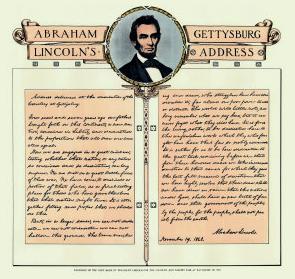
 What beautiful sentence structure. He’s already hit us with repeated uses of ‘dedicate’ in the opening segment. Either he needs a thesaurus, or he’s intentionally layering in a theme before becoming more specific with his thesis.

 This part is difficult for my kids. Even those who are Sunday-go-to-Meetin’ types don’t really do much super-sacred any more. We talk about what these ‘brave men’ must have done to ‘consecrate’ that ground. They came, they fought, they died, all for a hypothesis about men being created equal, according to Lincoln.
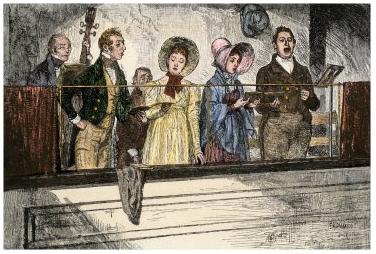 “Would you be free from your burden of sin? There’s POWER in the BLOOD, POWER in the BLOOD…”
  That’s a mouthful, and the hardest part for students to memorize when they’re reciting it to the class for extra credit. Lincoln’s word-weaving turns the purpose of the occasion, the war, and the entire nation inside out – bringing to the foreground the ideals we still espoused, but had long since negated through abuse and neglect.
  Lazarus, John Baptizing in the Jordan, Jesus emerging from the tomb – it’s all about the rebirth, baby. There’s a reason we hunt eggs (of all things) on Easter.
 When I talk about this speech in workshops, I never know how much to assume teachers already know, or whether my ‘givens’ and their ‘givens’ are likely to be compatible. We cover so many different things in so many different ways… there’s very little we can assume to be universal in Social Studies content knowledge (or pedagogy, for that matter). And that’s OK.
 Why do we call them our ‘fathers’? What makes someone a ‘father’?
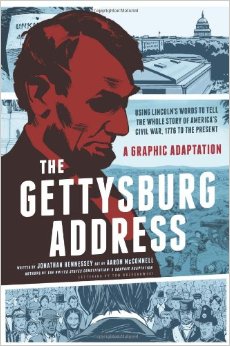 But Baby ‘Merica isn’t dedicated to God – at least according to Lincoln . (Don’t tell the Republicans!) It’s dedicated to an idea, a proposition – that all men are created equal.
 Does that work? This… ‘all men are created equal’ – can you run a country based on that, or will it fail?
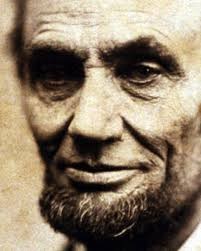 This, incidentally, would have been news to many of the men being honored that day. Most thought they were fighting for the Constitution, the Union, maybe their states or families, or just because they were annoyed with the people on the other side. A few sensed the long game, but it was hardly the norm.
 The Battle of Gettysburg was a three-day conflagration resulting from Robert E. Lee’s second and final attempt to bring the Civil War into the North, in hopes citizens therein would tire of the fighting and tell their elected leaders – Lincoln in particular – to knock it off.
 The same month saw the fall of Vicksburg in the Western Theater, the rapidly growing acceptance of black soldiers in the Union after Denzel Washington and Matthew Broderick martyred themselves in the attack on Fort Wagner, and the pivotal Battle of Honey Springs in Indian Territory (the ‘Gettysburg of the West’, according to my state-approved Oklahoma History textbook).
 It wasn’t decent, and it certainly wasn’t healthy.
 President Lincoln was invited as well, but unlike today the presence of the President did not automatically presume he would become central to everything else. Lincoln’s role was to give some closing comments before the final song or prayer – not to upstage Everett. While it’s likely people anticipated more than the two or three minutes it would have taken for him to deliver what became known as his “Gettysburg Address,” they certainly weren’t expecting anything particularly extensive either. That wasn’t why he was there.
 The ‘holy inspiration’
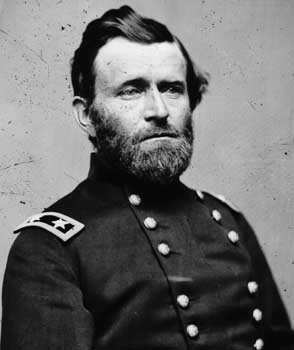 Grant was perhaps the single most bearded example of nothing working quite the way it should have during the American Civil War. He’d have never ended up a war hero, let alone future President, in a more ordered universe. I’m not sure he’d have existed at all.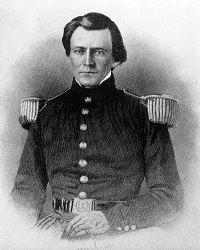
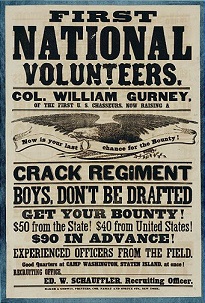 After several years of failed businesses and rocky times, opportunity struck when the Civil War erupted. He helped recruit and train volunteers in Illinois, but what he really wanted was a position in the “real” army. McClellan turned him down due to his reputation for drinking, which will prove ironic a few years later when Lincoln suggests someone find out WHAT Grant was drinking – and send it to the rest of his generals so they’d fight like he did.
  He ended up leading a little campaign to take Ft. Henry along the Tennessee River, which connected to the Mississippi and ran near or through about 43 different states in play during the war. It became a fun little experiment in geography, strategy, and the pre-cell phone zaniness of coordinating land forces and ‘ironclads’ – experimental watercraft made of wood but clad in, well – iron.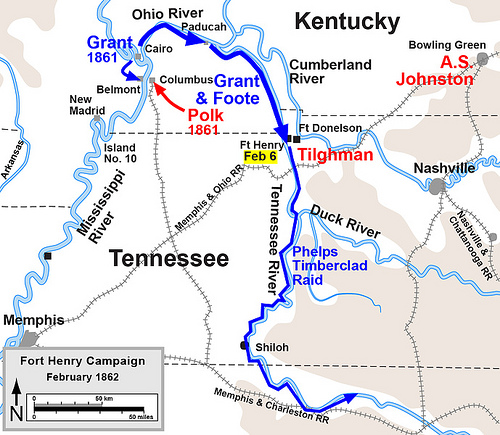
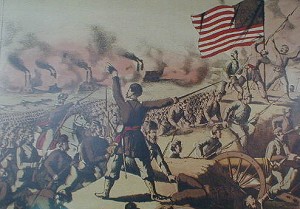 It’s at Ft. Donelson that U.S. Grant first makes the history books. After various military maneuvering of the sort some people seem to enjoy reading about in great detail, Grant had the Confederates in a world of hurt.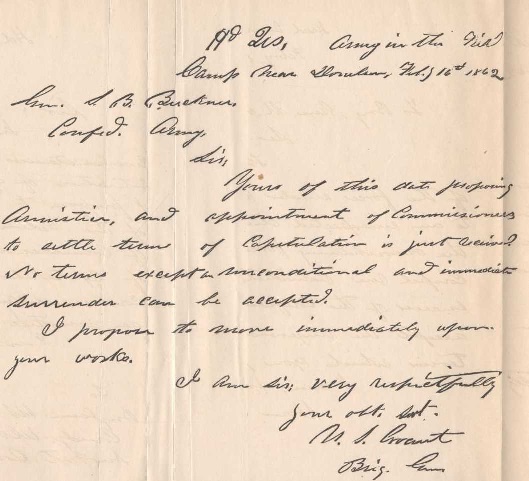
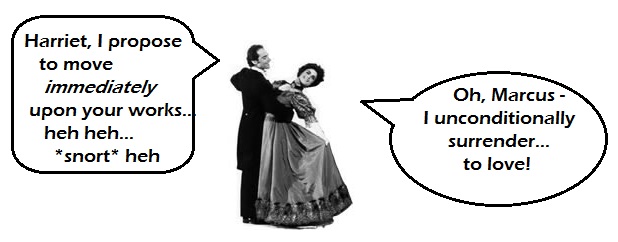
 “I propose to move immediately upon your works” became a catchphrase throughout the North for almost any situation. Those of you who endured the decades of “Where’s the Beef?” or “Whatchu talking’ bout, Willis?” know how these things can go. Then again, this one grew organically – not as a result of marketing or even intent – so perhaps bringing up Different Strokes is a bit too harsh.