I’m an idealist with little use for idealists. It’s not personal. I like those I actually know. But their articles, and books, and speeches make me want to break things and yell school-inappropriate yells.
I resent speakers and writers who build their reputations on explaining how amazing children are and could be if these damn teachers would just get out of the way. I’m sure they’re nice people, smarter and probably better traveled than myself. It’s just that what starts as a neat isolated experience becomes a TED Talk, then a doctrine, then a Pink Floyd cover band.
“Hey, teachers! Leave those kids alone!”
Don’t get me wrong – it’s just peachy keen swell that throwing a few computers in the middle of an impoverished village and making sure no teachers interfere practically guarantees a bunch of eight-year olds will master calculus, cure cancer, and reverse climate change. Here’s to the success of every one of those dusty darlings and even newer, bigger opportunities for them to challenge themselves AND the dominant paradigm. Seriously.
Variations of this theme abound on Twitter, the blogosphere, and administrators’ bookshelves. Hand any teenager an iPad and stop crushing his little spirit with your outdated ways and he’ll learn like the wind. Enough, you fiend – let them love learning!
But I don’t buy it. Not even a little.
I can’t point to research or books with provocative edu-titles. If you really want me to, I’ll try it – I’ll lock my students in my classroom with the two relatively outdated computers available there and come back in May to release them.
Maybe it would be better to do the entire building… eleven hundred freshmen set free to learn with a bank of Dells and no silly adults with their stifling expectations. Imagine the money saved on staff – and computers never take personal days or violate professional dress code!
Forgive me if I don’t anticipate an education revolution as a result.
My bet is something more akin to Lord of the Flies, although I could be WAY off – it could be more Hunger Games or Clockwork Orange-y. I’m not prescient; I’ve just met teenagers.
It probably doesn’t help that my students have so much else they could do instead of take a self-directed learning journey of personal discovery. The kids in the inspirational anecdotes don’t tend to have an Xboxes, smart phones, cable TV, malls, or meals which include protein.
Remember how entertained you now think you were as a kid with just a cardboard box and some Cheez Whiz for a whole afternoon? That was great, mostly because you had ABSOLUTLEY NOTHING ELSE TO DO. Teeter totters are awesome compared to staring at dirt; they lose some magic compared to Halo: The Arousing. It’s just all so relative. In the land of rotary dial, he with the Atari is king.
But only there.
I’m not unsympathetic. I get what these writers and speakers are going for. Most are trying to make the very valid point that when we try to cram kids’ heads full of 87-pages of curriculum standards compiled by committees and approved by states to be tested by bubbles, we are unlikely to either fill their buckets OR light their fires.
Our American spawn resist being cajoled into dronehood – which is largely what public ed does and is designed to do. We do try these days to at least beat them into more CURRENT drone models… it’s just that things in the real world keep changing so fast…
But… technology! ALL LEARNING CAN BE GRAND MATH AUTO!
I’m not against online coursework. I know for a fact that it serves a useful function for certain kinds of students in specific situations. But let’s keep a little perspective.
We’re swept up in the promise of ‘individualized pacing’, intense engagement, and infinite branches of exploration – like the Holodeck or those Divergent serums. One would think educational software must be on the verge of surpassing the major video gaming companies in terms of graphics, storylines, and immersion. (Watch out Elder Scrolls VII – here comes Bioshock Civics: How the Powers of the Executive Branch Have Evolved Commensurate to Expansions in Mass Media!)
It’s not. Remember that Oregon Trail game we were all so excited about a few decades ago? That’s still about as cutting edge as educational games have managed, and that’s not even what most virtual learning is attempting.
The vast majority of online coursework consists of reading short passages, watching videos, following a few links, then answering multiple choice questions. There may be a little writing. You work alone, and guess at the multiple choice questions as often as necessary to hit 75% or whatever before you move on.
This pedagogy is everything we’ve been fighting against since Horace Mann. Nothing wrong with utilizing textbooks or lectures or video, but a teacher whose class is driven by such things is unlikely to win a Bammy.
To be fair, the more cutting-edge programs let you email your teacher or make a few lame required posts to a ‘discussion group’ from time to time. Truly this is leaps and bounds beyond my foldables or a good Socratic circle, but Fallout: Populism it is not.
Most learning happens because teachers in rooms keep trying to figure out how to inspire, motivate, cajole, or trick their darlings into learning things the teacher thinks are important even though the 11-year old may not realize it just yet.
There are glaring problems with this system, some within the school’s control and many more without. The biggest problem with the current model is also the most substantial barrier to all this self-directed learning we keep hearing will save us all – state legislatures dictate most of what’s supposed to be “important” and decide how these things will be assessed.
But the absurdity of rigid state mandates doesn’t mean the logical solution is to eliminate all adult guidance regarding essential knowledge or skills. Crazy as it may sound, many good teachers are perfectly capable of finding balances based on the abilities and interests of their kids – some non-negotiables, because hopefully the certified professional knows a few things the pre-teen does not, and some choice for the child regarding what they pursue and how they pursue it.
And if that doesn’t work, we can go back to your plan. But I’m not cleaning up after the pig head on a stick.
{This post is a repeat from many long moons ago. I still mean it, though, or I wouldn’t have chosen it to repost. Duh.}
There are folks you expect to write all fancy. Poets, for example. Certain flavors of novelists. Artsy musician types. George Will.
Education bloggers, not so much.
That’s just as well. Rhetorical flourish is a tricky business. Like cilantro, it can add unexpectedly welcome flavor and complexity, or make an entire passage taste like old soap. And language evolves in such unpredictable fashion that you can never be sure how that bit of clever wordplay might read a generation or two later.
Some historical figures clearly labored over word choice with sufficient fervor that even their personal letters play like Dvorak’s lost drinking songs. Consider Thomas Jefferson in a letter to fellow Virginian and Founding Father-type Edmund Pendleton, dated August 26, 1776:
You seem to have misapprehended my proposition for the choice of a Senate. I had two things in view: to get the wisest men chosen, and to make them perfectly independent when chosen. I have ever observed that a choice by the people themselves is not generally distinguished for its wisdom.
They’ve apparently been corresponding about politics – no surprise there, given the parties and the date. Jefferson proffers a sophisticated balance of Enlightened precision and dry wit. His understatement is both amusing and a tad vain.
Then again, he was Thomas Jefferson – so maybe we can let him slide on the latter.
This first secretion from them is usually crude and heterogeneous. But give to those so chosen by the people a second choice themselves, and they generally will chuse wise men.
He’s proposing what was essentially an electoral college for selecting Senators. That’s not how we ended up doing it, although until the 17th Amendment Senators were chosen by their States rather than the people directly, providing a comparable filter. What’s golden here, though, is the straight-faced use of slug imagery in reference to the common man and democracy.
Jefferson was an idealist – he genuinely believed a nation of ever-revolutionary small farmers was as close to heaven on earth as mankind could ever approach. And he does get there – “they generally will chuse wise men.” It’s just that the process, in his mind, must be carefully designed to accommodate those initial “crude secretions.”
Is it sad that I’m eternally entertained by phrases like that? On second thought, don’t answer that.
Later in the same letter, Jefferson considers the issue who is or is not qualified to vote or hold office.
You have lived longer than I have and perhaps may have formed a different judgment on better grounds; but my observations do not enable me to say I think integrity the characteristic of wealth.
Again with the understatement, this time combined with a purely rhetorical deference to his cohort.
In general I believe the decisions of the people, in a body, will be more honest and more disinterested than those of wealthy men: and I can never doubt an attachment to his country in any man who has his family and peculium in it.
‘Peculium’ here means ‘stuff’. It’s one of those vocabulary words that gives my kids fits. It’s rare enough that it’s not always in student dictionaries and it gives them nothing to work with in terms of root words or prefixes or whatnot. It does, however, come up again in evolved form in President Jackson’s speech to Congress on Indian Removal in 1830:
The consequences of a speedy removal will be important to the United States, to individual States, and to the Indians themselves. The pecuniary advantages which it promises to the Government are the least of its recommendations…
It’s the same Latin root as ‘peculiar’ – uncommon, or distinctive. Go back far enough and it suggests property belonging or assigned to a specific person. Suddenly what seem like unrelated definitions start to make sense. ‘Peculium’ = someone’s stuff. ‘Pecuniary’ = related to wealth. ‘Peculiar’ = weird. All from ‘distinctive,’ but said fancy.
Which is, if you think about it, rather fitting, given the definitions.
Sometimes what grabs your attention is simply the way language changes over time:
The fantastical idea of virtue and the public good being a sufficient security to the state against the commission of crimes, which you say you have heard insisted on by some, I assure you was never mine. It is only the sanguinary hue of our penal laws which I meant to object to. Punishments I know are necessary, and I would provide them, strict and inflexible, but proportioned to the crime.
Good Lord, Tom – gasconade, much?
Still, how can you not love “sanguinary hue”? So highbrow, yet so graphic. My students, of course, are completely derailed by ‘penal laws’ and rarely manage to return to the richness of the phrase preceding it. Because, you know, they’re 14. Literally.
But that’s Jefferson – a known intellectual and proud froo-froo. He was, after all, the guy to whom a bunch of other smart people turned when it was time to boldly-but-nobly declare our breakup with England. “We hold these truths to be self-evident” and all that.
I’ve been compiling primary sources on David L. Payne and the “boomer” movement lately – an important part of Oklahoma and American history, to be sure, but not a group you might assume prompted much purdy talkifying. And yet, a century after the lofty rhetoric of the Founders and their ilk, we find the most interesting phraseology in humble local newspapers when he’s discussed.
From The Sedalia Weekly Bazoo, Sedalia, MO (August 24, 1880):
Capt. L. D. Payne, arrested for an alleged violation of the federal laws governing intercourse with the Indian territory west of Arkansas…
Yeah, sometimes it’s not the fancy talk so much as it is the repeated use of words like “intercourse.” Again, 14.
…arrived Thursday at Fort Smith in custody of the United Marshal and will be tried before Judge Parker, of the western district court of Arkansas, whose jurisdiction covers Oklahoma…
The question to be decided in it is whether or not for the present white settlers shall be barred from that territory, which includes some of the most fertile land in the world, and that land be used only by nomadic tribes who will not cultivate and develop its resource; whether it shall be a farm or a hunting-ground; an abode of civilization or savagery; a garden or a wild.
My my! Of course, major media back then tended to more openly editorial. They weren’t all fair and balanced like we’ve come to expect today.
From The Weekly Kansas Chief, Troy, KS (May 05, 1881):
A private dispatch was received by Oklahoma Payne in this city yesterday, announcing an unfavorable result of his trial before the United States court at Fort Smith. The faces of a number of men who had gathered to his headquarters in response to a call for a meeting to-day visibly lengthened…
{Payne} made a full statement of his arrest and trial and the formal announcement of the result, but urged the settlers to stand by their organization until victory should crown their efforts…
That bit of divine flourish may have reflected Payne’s speech rather than the reporter’s biases, but still…
And I like the “visibly lengthened” faces by way of description. It reminds me of the way sportscasters come up with hundreds of ways to say “ran,” “scored,” “failed,” or “wow.”
There were eighty-seven present at the meeting… Resolutions were reported from a committee and adopted urging Payne to renew his efforts at affecting a lodgment in territory; criticising the place of Payne’s trial, and asking a change of venue. After which the great Oklahoma boom collapsed.
Funny how concise can convey so much dismissiveness. Also, “his efforts at affecting a lodgment”? I chuckle thereforth.
From the Omaha Daily Bee, Omaha, NE (November 30, 1881):
Out of the active brain and adventurous spirit of Capt. Dave Payne, known in border life and drama as the Scout of the Cimarron, grew the project known as the Oklahoma colony, scheme. And that scheme is the settlement of the lands belonging to the government of the United States, a vast body of fine arable land in the Indian Territory, on the north fork of the Canadian river.
This reads less like the first paragraph of a newspaper report and more like a pitch for a TV miniseries starring Brian Keith and Rob Schneider in his dramatic comeback role.
The project of planting a white colony in the very heart of the Indian Nation was at first regarded with indifference and afterwards with absolute ridicule; but to those who personally know Capt. Payne, and know him as he is, this project is not the dream of a fanatic. To them Payne is fostering no wild, filibustering scheme, nor lawlessly defying the government of the United States. Capt. Payne is a man of ability and legislative experience…
He is thoroughly conversant with Indian customs, manners, and warfare, skilled in woodcraft, and the peer of any marksman on the border with the rifle. His courage never was questioned. He is a giant in stature and a marvel in strength. Such, then, is a pen-picture of Capt. Dave Payne—”Oklahoma” Payne as he is now called…
I confess I mostly just like the created term, “pen-picture.”
The Kansas City Journal, quoted by The Wichita City Eagle, Wichita, KS (May 25, 1882):
“…if Payne and his followers would display one-half the energy and perseverance in tilling a few acres of Kansas soil as they do in getting a foothold in the Indian Territory, they would have no cause to complain of impecuniosity.
Isn’t it funny how once you know a strange new word, you seem to come across it, or its variations, everywhere? Impecuniosity…? Expialidocious!
It is a too common fault of the Indolent and shiftless that they nurse their idleness by dreams of something just beyond their reach. The farmer who by poor management finds it impossible to accumulate even a small store of money for a rainy day, is often found making elaborate calculations for selling out and removing to the Pacific coast; whereas, if he would devote as much money to the comfort of himself and family or to the improvement of his farm or stock, as it would cost him to remove his family to Oregon or Washington Territory, he would be much the wiser.”
Don’t hold back, Kansas. What do you really think of the boomers?
From The New York Times, New York, NY (February 03, 1883):
The language of PAYNE’S circular glows with adjectives and promises. The beautiful land of Oklahoma is “the garden spot, the Eden of modern times.” “Come,” says PAYNE, “and go with us to this beautiful land and secure for yourself and children homes in the richest most beautiful and best country that the Great Creator in His Goodness, has made for man.” But the circular fails to convey with sufficient clearness the information that this garden spot is no more open to settlement by PAYNE and his colonists than are the Central Park and Boston Common. The Territory belongs to the Indians and is secured to them by treaties.
That’s a nice analogy, the park thing. It plays off of Payne’s Eden imagery, while offering a sharp rhetorical contrast. His ideas are diminished and refuted by the sudden downshift in language. Sweet!
PAYNE has been taken by the nape of the neck once already and pitched out of the Territory. If he carries out his announced intention and the Government does its duty, he will be pitched out again and the foolish citizens who allow themselves to be inveigled into an unlawful enterprise by his fine promises will get into serious trouble.
“Now, Junior – don’t be getting inveigled into no unlawful enterprises!”
My absolute favorite, though, is less about vocabulary and more about structure and tone. It’s also from The New York Times, this time on April 9, 1891:
Topeka, Kan., April 8.- Is Oklahoma really overrun with negroes, and has there been an influx of pauper negroes from the South? So many conflicting answers have been given in response to these two questions that it was impossible to arrive at the truth…
In order to determine the truth, THE TIMES’s representative determined to visit the Territory and see what was to be seen, and to learn from interested persons as much of the truth as they could be prevailed upon to surrender. Those who have never attempted to draw the truth from an Oklahomaite can hardly realize the difficulties that are presented.
Imagine, if you can, a day and age in which the Times was periodically a tad opinionated about such things.
And… “Oklahomaite”?
The Territory was born in falsehood, was baptized in falsehood, and falsehood has been the principal article of diet ever since that fateful 23rd day of April, 1889, when the “sooners” became the leading citizens of a country opened to settlement too late in the year for the planting of crops, and to which the poverty-stricken were invited by speculators and impecunious lawyers…
OH-MY-GOD-ARE-VARIATIONS-OF-THAT-WORD-GOING-TO-BE-EVERYWHERE-NOW?!?! Was it trending that century or something?
…who had been permitted to enter beforehand by a pig-headed Administration, which could see nothing good outside the ague-stricken Wabash bottoms of Indiana.
That last bit is a jab at President Benjamin Harrison. While I’m sorry for the ghost of the man who officially opened up O.T. to white settlement, I can’t help but experience mild rapture at any outburst involving “ague-stricken Wabash bottoms.”
*snort*
I actually love this whole piece enough that I wrote at length about it here and here, and even transcribed it in its entirety. For now, though, I’m well-past my own self-imposed rambling limits and have said far too little with far too many words of my own.
I assure you that I rue this impecunious, if epiphenomenal, imbroglio.
Nope – doesn’t really work when I try it. Oh well.
{Reposted From Days Gone By At No Extra Charge To You}
Several years ago, in what seems like a very different place and time, I had a horrible school year. Some of you know how it can go – I was trying new things, and they weren’t working. Or, if they were, they weren’t being supported, and had to be abandoned, whatever prior promises. The stuff that used to work wasn’t working either, and the student rapport to which I was accustomed just wasn’t there – at least not to the extent on which I’d grown reliant.
Then the parent calls started. I’m not a teacher who gets that many upset parents, or – if I do – has trouble resolving them.
Usually.
But that year… that year they just DID NOT LIKE ME.
It took on a life of its own as little cliques began talking to each other, and as students became aware I was anathema to mom and dad, oh god it just spiraled. In retrospect, I should have found better ways to anticipate, nip, resolve – but I didn’t, and it grew.
Introducing… Courtney. Of course her name wasn’t really Courtney, but for purposes of this blog she’s Courtney. Her real name was Alisha, but I’d never use it – it would be unprofessional.**
Courtney was popular and pretty and a straight ‘A’ student. Her father coached and her mother taught at another building. All of my superiors knew and loved her parents – and her mother hated me with the fire of a thousand suns.
Neither Courtney nor her primary progenitor cared for the way I taught, the skills in which I found value, or the policies I implemented. By Labor Day they more or less resented the oxygen I was breathing which would have been better inhaled by worthier beings.
Courtney often left school just before my class to go with dad to athletic events – which is, you know, fine in and of itself. But that’s when I really stepped in it. I followed the school policy guide regarding missed days and make-up work – a procedure which, as it turned out, was completely unacceptable. The entire Courtney family was soon convinced I had it in for their daughter, and mom began copying people way above my pay grade on every email – of which there were many.
Now, you might think the inclusion of the people who write and approve the policies would bring some sanity to the discussion. You know, if they ever replied, or acknowledged, or joined the conversation in any way – even when I begged.
Which they didn’t, although I did. So it didn’t.
I’d never felt so… angry? Wounded? Humiliated? Worse, I felt foolish for being so blindsided. I’m hardly an idealist – what made me feel immune from the realities of bureaucracy and cronyism?
I was young enough to still cling to a FEW ideals and principles – should I give in so easily when I didn’t think it was best for classroom dynamics and expectations, best for me, or even best for Courtney? Did we want to teach her that sufficient complaining could solve any problem?
It probably didn’t help that I was myself outraged on a weekly – sometimes daily – basis by some district policy or building decision or the other. I didn’t see the irony at the time, of course – and it probably wouldn’t have helped if I had.
Everything I tried to do to improve the situation just made things worse and embarrassed me further. In hindsight, I probably could have done better – but I just kept rolling down that hill of broken glass. On fire. Without shoes.
By summer I was looking for other employment. At the very least I wanted another building (different administrators), maybe even another district. I had a good shot at a curriculum coordinator position in a district closer to home, but… I mean, I still wanted to be in the classroom…
That was the summer the movie 300 came out. For those of you who haven’t seen it, it’s a rather elastic take on the Spartans at Thermopylae. It’s not a great movie by any definition, but it’s very entertaining. I was home alone for a few weeks (my wife has a real job) and Netflixed it.
And in the two hours I spent immersed in some very bizarre choices regarding nudity and testosterone-laden CGI violence, I had an epiphany. A paradigm shift, if you will. One whose impact has lasted for a number of years.
I was trying to fix things – the student, the parents, the situation. More than that, I was trying to fix the system, the district, the underlying assumptions and realities of public education. I wanted – I NEEDED – agreement, support, understanding, validation, and action by others to make this happen. I could understand resistance, but not inertia, or apathy, or complete denial of things which were to me so glaringly clear.
I knew odds were slim and the task was great and the fields were ripe for harvest, but I still carried a faith from my evangelical days that we could win.
We could save them. We could change the system. We could make a measurable difference. If only a few key people would ‘get it’, would listen, would cooperate… we could win.
None of those things were delusions of the Spartans as they prepared to face the Persian hoards storming their shores. They positioned themselves at the narrowest pass between the oceans and their homeland, and determined to hold it as long as possible – but with little illusion what that would mean.
“Come back with your shield, or on it.” The parting words of a good Spartan mother to her son, or wife to her husband, as he left for battle. One did not flee under any circumstances. The glory of the moment was far more important, and the price of failure too high.
The Spartans didn’t do much well in terms of variety, but they were tough sons-of-bee-hatches. It was always a good day to die.
I found myself running through edu-quivalents of the more dramatic phrases uttered at Thermopylae – reshaping the content while attempting to maintain the testosterone:
(Annoying Persians) – “We will fill the air with arrows of bureaucratic nonsense!”
(Classroom Teachers) – “Then we will teach… in the SHADE!”
Yeah, it didn’t sound much better in my head, but I kept trying.
(The Hoards of Ignorance) – “Lay down your lesson plans!”
(Classroom Teachers) – “Come and GET THEM!”
So that part didn’t work. At all. Even then. But the larger paradigm shift did stick.
It wasn’t about winning. Winning would have been fine, and is often worth striving for, but that focus could often lead to frustration and poor strategy.
What mattered was the fight. Going down gloriously. Holding the pass for as long as you might, no matter the cost. Standing in the gap full of idealistic defiance for as long as you can before you are inevitably overrun.
Don’t get sidetracked by history, or home, or hope – focus on this pass, this moment, the tiny pieces of success. Claim them and don’t let go.
Well, until the part where you’re slaughtered in futility. But not until then at least.
Most of my students – even the high maintenance examples like Courtney – lack literal swords, but the battle is a draining one. The variety of pressures from within and without have been covered extensively by those far more gifted than myself.
And yeah, teaching can be a noble profession and all that. I mean, we don’t do it for the money or the glory or the clarity of expectations from above. We do it because on some naïve, idealistic, melodramatic level, we want to change the world.
I don’t think of it that way anymore. I have found great freedom and comfort, actually – and I share this without cynicism or sarcasm – in the fact that I’m pretty sure we’re going to lose.
The bureaucrats have more bullsh*t than we have shovels, and the hordes of ignorance are legion. Those who are with us are far, far fewer than those who are against us, and whether you use Common Core math or give up and figure it the old way, we are totally and completely screwed.
But it is a good day to teach.
OK, yeah, that phrase didn’t work either, but that’s the thing – I’m going to just keep at it because I don’t have a better plan. This is it. This is the better plan.
I’ve shared this with a few people in person, and with a few important exceptions they don’t find it encouraging AT ALL. Several have found it rather the opposite, actually – and I apologize if that’s its impact on you, my Eleven Faithful Followers, here and now.
But try, just for a moment, to taste the glory of wildly doing what you do best without recourse to future progress or past circumstances. Imagine knowing you’re not alone, and that if you’re going down, you’re going down doing all you know how to do – insufficiently, to be sure, but leaving it all in the fields.
Teach like a rock star, a badass, or whatever other silly name you choose – because it all comes out the same.
Of course, maybe – and I hesitate to even consider – maybe our collapse will buy enough time for someone else far behind us to gather their – no, never mind. No time for such distractions. Here they come.
And I, for one, feel great.
**In case you’re worried, of course her name’s not Alisha, either. I just said that to be funny, and perhaps a bit shocking. Her real name was Shannon.
I’m a fairly narcissistic fellow. I don’t mean to be, it’s just that I’m vain and self-absorbed. At least I have the skills, style, and cojones to make it work for me. I make no apologies; every rose has it’s – oh, are you still here? I hadn’t noticed.
There’ve been a slew of books and workshops in recent years promising to help you teach like a pirate, like a rockstar, like a hero… I received something rather spammy recently promising to help me become a more exciting presenter and unlock a fabulous career leading teacher workshops. Just call Robert in Wisconsin at ###-###-####!
I’m not knocking any of these books or workshops. I haven’t read or attended any of them, but I see happy teachers carrying on about them on Twitter and such… they sound great.
Except the one with Robert in Wisconsin. WTF, Bob?
It’s just that I don’t want to be a pirate, or a rockstar, or a hero. I want my kids to learn a little history, ask some better questions, and maybe learn to like reading a little. And I want to do it as… me.
I’m pretty entertaining, and I have a degree. That should buy me some leeway, yes?
Of course, you don’t need to buy books or go to conferences to hear how you should be doing everything differently. There are no shortage of researchers scolding us for forcing our kids to recite from their McGuffey’s Readers and practice multiplication tables on their chalk slates, or whatever it is they think we do.
Seriously, if I read one more heavily-footnoted interview with yet another person who’s discovered that worksheets have limited effectiveness and some people are boring when they lecture, I may become violent. Can we steer some of the funding for these redundant studies into something more useful – maybe fresh blue ink for the mimeograph machine or another History Channel Documentary on VHS?
They’re not all bad, of course. Many make some fascinating observations and connections. They challenge us to reconsider some of our assumptions about kids and how they learn, or ourselves and how we teach.
I’m a huge fan of rethinking what we do in our classrooms. I make a decent living leading workshops and peddling my teaching philosophy, sometimes for edu-entities and sometimes just as lil’ ol’ me. We should ABSOLUTELY step out of our comfort zones from time to time. It’s unforgiveable to plan our class time around what we have saved from LAST year rather than what might work best with THESE kids THIS year.
And there are some GREAT teacher books! That ‘Weird Teacher’ one and that ‘Zen‘ fellow and even one by a TFA teacher recounting her entire first year in the most IMPOSSIBLE situation. Occasionally I’m even inspired by something shared by state edu-staff, or my own district superiors. Turns out there are a bunch of really smart, experienced educators around who love helping the rest of us impact our evasive darlings.
Sometimes their ideas are better than mine. And sometimes research is right about stuff. I have much to learn about some of my students and how they think, feel, and perceive – so here’s to training, challenging, changing, and reviving.
BUT (and I have a big ‘BUT’)…
I hereby declare my official hostility towards anyone who gets paid to tell teachers they’re doing it wrong. I don’t care if they’re researchers, reformers, authors, or bloggers – kiss my class agenda, edu-snobs.
My ethical obligation to regularly seek better ways to reach more kids more deeply does NOT validate your desire to lecture me or talk down to me or my comrades. Quite honestly, if your research and ideas and pedagogy are THAT great, you wouldn’t need to be so condescending about it – we’d run to you hungry for more.
Which, by the way, is pretty much what many of you keep telling the rest of us about OUR teaching methods – that if we were doing it right, we wouldn’t have to work so hard to coerce and browbeat our darlings into cooperation. Like you’re trying to do to us.
You see, sharing ideas, stories, successes and failures, speculation and goals, are what professional development and collaboration and edu-blogging are all about. Maybe this time I’m at the front of the room and next time you’re showing us something your kids created, but at no point is it about being better, or smarter, or anyone ‘fixing’ anyone else.
Because at the end of the day, teaching is as much art as science. It’s as much educated guesswork as strategy. Given that you’re you and I’m me and that quirky new girl is the quirky new girl, consistency may be limited.
More significantly, my kids are my kids and your kids are yours. We may be in different rooms, different districts, or even different states, confronting different cultural variables, working with different resources, building on very different backgrounds and expectations… we’re lucky we ‘speak the same language’ at all.
When I’m in my classroom, my number one ethical and professional obligation has absolutely nothing to do with your studies, your strategies, and sure as hell not your tests – mandated or not. I’ll certainly consider the input of my department and my building leadership, but even those should take a back seat to what I think and feel and believe will be best for MY kids, today, right now.
And you have the same obligation.
I hope you play along in my workshops and that you consider my thinking, just as I appreciate yours. I hope you’re open enough to risk and change and stepping outside comfort zones to evolve as an educator and a professional, even when you’re getting by just fine already.
But when it’s go time, follow your gut. Do what you know is best for you kids, now and down the road. Do it however you think will best work for them, from you. Don’t think about your evaluations, your VAM, your scores on this or that assessment, or even your career. If there’s testing to consider, then consider it – but not at the expense of what your gut tells you is best for your students.
We’ve become SO comfortable doing things we know are bad for our kids because they’re ‘required’. Maybe we’re afraid, or maybe we simply hide behind what everyone else is doing. Is this such a rewarding career in terms of money, power, and glory, that we’ll sacrificing the very things that made it matter to begin with in order to keep it secure? Must be a helluva extra duty stipend.
Teach like a rockstar if that works for you – or like that Freedom Writers lady or Marzano or To Sir, With Love. Challenge yourself and those around you to evolve, to up our game, and to WIN THEM ALL somehow.
But don’t you dare do anything that doesn’t ring true in your gut because I told you to, or because it’s required. Don’t you dare dismiss your inner strategist because what you’re envisioning might be stupid, or doesn’t align with something official, or might get you into trouble.
We’re trying to save kids in an unsaveable world. We’re trying to do the impossible with the insufficient. I’m not sure how many ‘right’ ways there are to attempt such madness. I’m confident the ‘wrong’ way is to try to do it as someone else.
My daughter wanted a new backpack several years ago, and after several unfulfilling stops, we ended up at Target. The selection was a bit slim – it being a few weeks after school had started – but she found something that seemed like a good combination of practical and not-entirely-embarrassing, and we took it to the nearest register.
It didn’t have a tag, which was inconvenient, so the girl at the register called a guy from the back. He found similar backpacks of the same brand, but not an exact match. A third person was called, a manager of some sort, who finally explained to me that she couldn’t sell me the backpack because it lacked a tag and thus could not be scanned by the computer.
By now we’re 20 minutes into our effort to purchase this backpack, and my daughter likes this one – not the ones we saw at Academy, or the ones we examined at Wal-Mart, and not the selection at Dick’s.
Yes, there’s a major chain of sporting goods stores which chose to call itself “Dick’s.”
I offered to pay the highest of the various prices listed along that aisle. Worst case for the store, I pay the correct price. Chances are I’m paying more than it’s worth, but I’m happy, and they’d be rid of the one without the tag.
No.
The manager couldn’t, or wouldn’t, because there was no tag. I could not have it at any price because they couldn’t scan it.
Let’s step back for a moment and ponder the nature of Target. Its sole function is to sell people things they want, and in so doing make a reasonable profit after paying their employees and other overhead. To the best of my knowledge they don’t claim to do or be anything more or less. They guess what we might buy, procure it, tell us it’s pretty, and we flock.
But not this time. Compliance with the system trumped the primary function of the institution. They followed the rules, but lost the sale. Permanently.
The summer prior I’d had a similar problem with AT&T, who wouldn’t send me a phone I’d ordered. The website said they had it, the guy in the warehouse confirmed they had it, and even the manager I finally reached after 90 minutes of minion phone-tag hell acknowledged that it was on the shelf in front of her – but the computer wouldn’t let them send it to me because it showed they were out.
I remember losing my composure and at some point yelling that “THE COMPUTERS. ARE. NOT. IN. CHARGE!!!” before the vitriol and obscenities took over. Coherent English simply lacked the necessary elements to capture what I was feeling at that point. Most of it was a blur.
But whatever I ended up saying seems to have worked – a few days later, my phone showed up. Someone had to break the rules in order to fulfill the most basic function of the institution.
The problem is NOT that a few individuals at Target or AT&T are idiots – I doubt that’s the case. It’s systemic. In our ongoing efforts to legislate, codify, and policy away bad decisions and stupid behavior, we tie the hands of the people actually DOING useful stuff until they can do little BEYOND blindly following those policies.
I doubt anyone particularly wanted to deny me the joy of giving them money for their products. It’s far more likely they’d been trained to follow the rules at all cost, or face who-knows-what consequences. They did the defensible thing – even when diametrically opposed to their fundamental purpose – rather than the risky thing. They followed the rules by missing the point.
Why do those policies exist in the first place? Presumably, most began because someone did something stupid or dangerous without them.
You’ve probably noticed the tag on your hairdryer warning you not to use it in the shower, or the instructions in eleven languages not to let your kids play with large plastic bags. A recent commercial involved a post-apocalyptic warrior picking up a rhino by the horns and throwing it into the sky to knock down a helicopter. This scene is accompanied by small print warning us not to try this at home.
There’s a legal division somewhere covering someone’s corporate behind by advising me not to throw a rhino at a helicopter. We need a rule for that? Is there a label on the rhino?
A friend visiting his wife’s family in China a few years ago was surprised to notice while parking on the top level of a garage that there were no fences or other barriers to prevent someone falling. He asked about this, and was told with some bewilderment that anyone capable of driving a vehicle and parking it on the 15th story should be capable of not walking off the edge of a building.
We don’t assume that in America in the 21st century, and because we don’t, we can’t. We devote great energy and expense in our legislation, our business practices, and – yes – our public education, to make sure we raise an entire generation completely unable to make basic decisions or take risks or otherwise step out in ANY WAY. We begin, logically enough, by doing the same thing to their teachers.
We reward those who most closely mimic one another and culture at large, individually or in groups. We schedule conferences and base assessment not on great ideas but on how to best ensure uniformity.
The system doesn’t judge teachers or their students on what they do well, but on what items they miss. Inspire your kids all you like, but if you don’t simultaneously fulfill requirements 4a, 4b, 7, and 11 and have your learning objectives on the board when your administrator drops in for five minutes, you suck. We, in turn, tell our students to write with sincerity and passion, but if the MLA heading is on the top left instead of the top right, we can’t accept it, won’t read it, and you fail.
It’s all about the policies.
We dictate the curriculum EVERYONE should know, mandate the tests EVERYONE must pass, and – perhaps out of necessity – regulate their dress, their behavior, and anything else we can standardize. We legislate away their choices in lunch, daily schedule, personal giftings, or genuine interests. We process them in the hundreds and in the thousands and quite honestly we can’t tailor very much or it all falls apart.
If only we had more laws, more rules, more guidelines… utopia!
We can’t even blame administration. The public demands that those in charge be held accountable for the worst behaviors, the worst choices, the worst outcomes. The majority of our energy is consequently devoted to limiting the damage done by the bottom 5%, whatever the cost to the other 95%.
It’s not working, by the way – somehow no matter what we do, there’s always that bottom 5%.
In the process we’re crushing the initiative, the energy, and the ability to make sensible decisions based on the realities of the moment out of our best teachers and students. And the average teachers and students. And the slightly below.
We’re making policy based on worst-case scenarios and bottom-enders, at the expense of everyone and everything else.
Of course we’re left with a ‘real world’ whose populace seems so clueless, so helpless, so lacking in initiative or even concern. Of course I can’t buy the backpack without the right tag or get the phone on the shelf without having a complete meltdown. It’s what we’ve been fervently working towards for years.
I’d like to see us try something different, but it’s against – well, you get the idea.
This is a slightly reworked repeat of an older post – like when a band covers their own song years later. Unfortunately, you probably still can’t dance to it.

 I’m a bad person.
 Don’t get me wrong – it’s just peachy keen swell that throwing a few computers in the middle of an impoverished village and making sure no teachers interfere practically guarantees a bunch of eight-year olds will master calculus, cure cancer, and reverse climate change. Here’s to the success of every one of those dusty darlings and even newer, bigger opportunities for them to challenge themselves AND the dominant paradigm. Seriously.
 Maybe it would be better to do the entire building… eleven hundred freshmen set free to learn with a bank of Dells and no silly adults with their stifling expectations. Imagine the money saved on staff – and computers never take personal days or violate professional dress code!
 I’m not unsympathetic. I get what these writers and speakers are going for. Most are trying to make the very valid point that when we try to cram kids’ heads full of 87-pages of curriculum standards compiled by committees and approved by states to be tested by bubbles, we are unlikely to either fill their buckets OR light their fires.
 It’s not. Remember that Oregon Trail game we were all so excited about a few decades ago? That’s still about as cutting edge as educational games have managed, and that’s not even what most virtual learning is attempting.
  There are glaring problems with this system, some within the school’s control and many more without. The biggest problem with the current model is also the most substantial barrier to all this self-directed learning we keep hearing will save us all – state legislatures dictate most of what’s supposed to be “important” and decide how these things will be assessed.
 There are folks you expect to write all fancy. Poets, for example. Certain flavors of novelists. Artsy musician types. George Will.
  Jefferson was an idealist – he genuinely believed a nation of ever-revolutionary small farmers was as close to heaven on earth as mankind could ever approach. And he does get there – “they generally will chuse wise men.” It’s just that the process, in his mind, must be carefully designed to accommodate those initial “crude secretions.”
  It’s the same Latin root as ‘peculiar’ – uncommon, or distinctive. Go back far enough and it suggests property belonging or assigned to a specific person. Suddenly what seem like unrelated definitions start to make sense. ‘Peculium’ = someone’s stuff. ‘Pecuniary’ = related to wealth. ‘Peculiar’ = weird. All from ‘distinctive,’ but said fancy.

 And… “Oklahomaite”?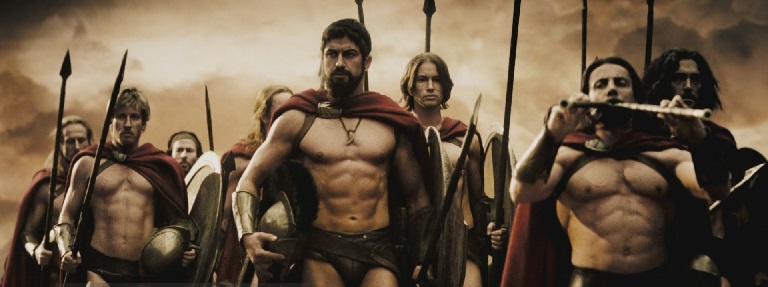
 Introducing… Courtney. Of course her name wasn’t really Courtney, but for purposes of this blog she’s Courtney. Her real name was Alisha, but I’d never use it – it would be unprofessional.**
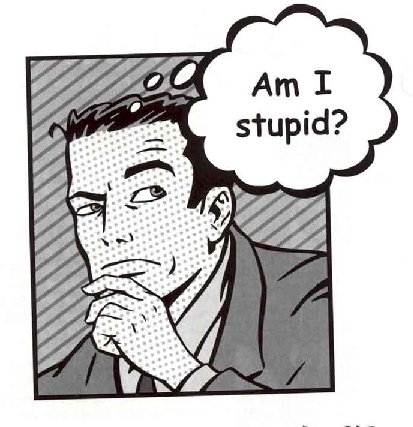 I was young enough to still cling to a FEW ideals and principles – should I give in so easily when I didn’t think it was best for classroom dynamics and expectations, best for me, or even best for Courtney? Did we want to teach her that sufficient complaining could solve any problem?
 What mattered was the fight. Going down gloriously. Holding the pass for as long as you might, no matter the cost. Standing in the gap full of idealistic defiance for as long as you can before you are inevitably overrun.
 The bureaucrats have more bullsh*t than we have shovels, and the hordes of ignorance are legion. Those who are with us are far, far fewer than those who are against us, and whether you use Common Core math or give up and figure it the old way, we are totally and completely screwed.
 But try, just for a moment, to taste the glory of wildly doing what you do best without recourse to future progress or past circumstances. Imagine knowing you’re not alone, and that if you’re going down, you’re going down doing all you know how to do – insufficiently, to be sure, but leaving it all in the fields.
 I’m a fairly narcissistic fellow. I don’t mean to be, it’s just that I’m vain and self-absorbed. At least I have the skills, style, and cojones to make it work for me. I make no apologies; every rose has it’s – oh, are you still here? I hadn’t noticed.
 I’m pretty entertaining, and I have a degree. That should buy me some leeway, yes?
 Which, by the way, is pretty much what many of you keep telling the rest of us about OUR teaching methods – that if we were doing it right, we wouldn’t have to work so hard to coerce and browbeat our darlings into cooperation. Like you’re trying to do to us.
 When I’m in my classroom, my number one ethical and professional obligation has absolutely nothing to do with your studies, your strategies, and sure as hell not your tests – mandated or not. I’ll certainly consider the input of my department and my building leadership, but even those should take a back seat to what I think and feel and believe will be best for MY kids, today, right now.
 We’ve become SO comfortable doing things we know are bad for our kids because they’re ‘required’. Maybe we’re afraid, or maybe we simply hide behind what everyone else is doing. Is this such a rewarding career in terms of money, power, and glory, that we’ll sacrificing the very things that made it matter to begin with in order to keep it secure? Must be a helluva extra duty stipend.
  My daughter wanted a new backpack several years ago, and after several unfulfilling stops, we ended up at Target. The selection was a bit slim – it being a few weeks after school had started – but she found something that seemed like a good combination of practical and not-entirely-embarrassing, and we took it to the nearest register.

 There’s a legal division somewhere covering someone’s corporate behind by advising me not to throw a rhino at a helicopter. We need a rule for that? Is there a label on the rhino?
 The system doesn’t judge teachers or their students on what they do well, but on what items they miss. Inspire your kids all you like, but if you don’t simultaneously fulfill requirements 4a, 4b, 7, and 11 and have your learning objectives on the board when your administrator drops in for five minutes, you suck. We, in turn, tell our students to write with sincerity and passion, but if the MLA heading is on the top left instead of the top right, we can’t accept it, won’t read it, and you fail.
 It’s not working, by the way – somehow no matter what we do, there’s always that bottom 5%.