Helen Churchill Candee & Oklahoma Boosterism (Part Two)

HCC SmallIf for some strange reason you’ve not already read Part One several times already and copied favorite bits onto sticky notes to post around your bedroom and kitchen, I there waxed adoring over Helen Churchill Candee and her first extensive article about life in Oklahoma Territory, published in The Forum, June 1898. She wrote at least three other articles about O.T. in the time she lived there, all very positive towards her temporary homeland but varied in style and focus. 

The shortest of these was published only a month after the Forum piece in Lippencott’s Monthly Magazine (July 1898). Lippencott’s had been around since just after the Civil War and was well-known for its literary criticisms, science articles, and other general-interest-type essays and stories. It’s the magazine which first published The Picture of Dorian Gray (Oscar Wilde) and which convinced Arthur Conan Doyle to write a second adventure (The Sign of the Four) featuring this “Sherlock Holmes” character he’d introduced a few years before.

You get the idea.

Oklahoma Claims” takes a far more narrative format than her other O.T. essays, consisting largely of Candee’s (fictionalized?) account of riding out to a claim with a good ol’ boy named “Ollin” and his “buxom niece,” Leora. It’s dialect-heavy, somewhat humorous, and the closest of the four pieces to almost actually criticizing homesteaders or others in the Territory who took advantage of the system.

As we rode along over the red rutted roads that cross the prairies, Ollin remarked,—

“My woman won’t go to the claim, for she says if I ever get her there she’ll have to stay an’ hol’ it down. But that ain’t so, for we’ve lived there long enough every year to satisfy the law, an’ I’m just about ready to prove up and sell it.”

“That isn’t what ‘Uncle Sam’ gave it to you for, is it? Weren’t the claims given away so that each man could have a chance to provide a settled home for his family, and land enough to support them if well cultivated?”

Ollin’s leathery face wrinkled into a smile; his small blue eyes lost their habitual look of searching, which had been gained through years of prairie work with Indians, outlaws, and herds. 

“Uncle Sam is an awful nice man,” he drawled, “but he’s got to sit up all night to be up early enough for Oklahoma folks. There’s slick ways of holdin’ down claims you’d never dream of…” 

The “hundred an’ sixty” refers to acres, the standard size of a plot under the Homestead Act (1862) and generally followed for homesteads in O.T.  Town lots, of course, were substantially smaller.

”There’s our girl, now,” and he glanced at the bovine maiden, who had, however, a shrewd look in her eyes and a general air of self-possession. “She’s got a claim up in the Strip, but she lives with my woman an’ me. Every two weeks she takes some one with her an’ goes to spend a Sunday. That’s an awful nice way to earn a hundred an’ sixty, ain’t it?”

I’d like to be the kind of reader who goes high road on stuff like “the bovine maiden,” but it’s funny and effective beyond its role as essentially a ‘fat joke.’ It implies much about the niece’s true personality and intellect – not all of it bad, certainly, but largely unflattering. Combine that with “a shrewd look in her eyes and a general air of self-possession” and we’ve got the sort of condensed characterization far more typical of a strong short story than an informational piece. 

Still, we somehow keep getting informed:

“But I thought that the government demanded that a homesteader should improve the land,” I suggested. 

“That’s right. Our girl’s nobody’s fool. She’s let her claim to a family who farms it an’ goes half on the profits,” he responded, with an admiring glance at the clumsy monument of shrewdness, whose ample form and voluminous drapery hid all of her wiry pony save hoofs, head, and tail.

Much like a political cartoon, painting the niece as comically obese implies she’s something of a ‘weight’ or burden on the system, or society. Perhaps lazy, perhaps dull, she’s the antithesis of everything an Oklahoma homesteader was expected to be – from her gender to her work ethic to her ability. Candee would never stoop to overtly suggesting such a thing, of course, but she makes sure that Ollin’s admiration for her is suspect throughout – not because he’s insincere, but because we recognize the general absurdity in his evaluations of both people and circumstances. 

“You should have seen the day the Cherokee Strip was opened. She rode right in with the best of them, lickity-split through bush an’ timber an’ draws till she left most of ‘em behind, an’ then out she whipped her gun an’ a hatchet an’ began to chop the sprouts off a black-jack. ‘Whatcher doin’, Leora?’ I hollers as I was a scootin’ past. ‘Improvin’ my lan’!’ she yells back; an’ I’m blessed if that very thing didn’t save her when some feller tried to driver her off—that an’ her gun.”

That Leora – she’s a feisty one alright. 

“Did you run for a claim in the Strip when you had one here in the original territory of Oklahoma?” I asked the question as a reproach, for I did not like to discovery chicanery in a son of the prairies. 

“Yes, I run for one,” returned Ollin, with a sheepish laugh. “First, off I started in to help our girl, but when I saw her get so quick suited I looked out for number one. I got a mighty nice place, too, an’ set there four hours happy as a horned toad. Then four fellers come along an’ pointed their guns at me an’ tol’ me that was their claim and I’d better get off. So I got off. But it was a blamed shame. I had no more right to it ‘n you have, but they might ‘a’ let me alone till some feller come along I could sell it to. That was all I wanted.”

Now, Olin was an honest man, but who could resist the temptation to grab when a free grab-bag is opened by the government? Besides, the man who has once led a life of adventure can rarely settle down permanently to conventional regularity. 

And there it is. Candee won’t deny the “chicanery” she observes, but neither will she generally condemn the individuals partaking in it. Ollin didn’t mean to violate the system – it just kinda happened. Who could resist the temptation when the government set things up in such a way? Besides, he’s an adventurer by nature – a knight errant, of sorts. Only not. 

Clearly a Joss Whedon fan, Candee uses plot and humor to frame pith and poignancy, often at the most unexpected moments:

…{B}ut life on a claim is narrower than life in a city tenement. Fancy two rivals living on the same quarter-section, hating each other as bitterly as ever did contestants for a throne. For these the whole world is narrowed down to one hundred and sixty acres, and all evil is concentrated in the person of the other claimant. 

Remember that both men have regarded his venture in a new country as the last throw of the dice, and to lose now means a living death. Brooding over the threatened loss, feeling that earthly happiness can be secured only by the removal of the obnoxious one, it is small wonder if some day one of the men is found murdered… 

Well that turned dark rather quickly. Note, though, that yet again, circumstances drive vice – not the moral failings of the individual. 

He has found the processes of the law too slow, and has exhausted his funds in lawyers’ fees. If neither the law nor the Lord would give relief, he must seek it with his own hands; he has a wife and children dependent on him; he is sure of the priority of his arrival on the claim; and so, persuaded by reason and crazed by apprehension, he kills his adversary. 

And then we’re quickly back to Ollin and his corpulent niece, discussing their homesteading shenanigans. We’re left well-informed – a reader wishes to feel educated for having read, after all – but nonetheless sympathetic towards those not created by this universe to rest easily at the top of every food chain. 

We’re left somehow caring about these desperate, backwards souls. 

We’ll get a much-expanded and far more serious look at the Territory a few years later when she writes for the folks back east again. She’s also going to make a weird dis on bicycles. 

Next time.
Helen Churchill Candee & Oklahoma Boosterism (Part One)

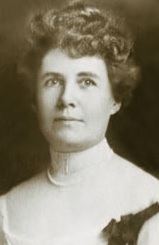
Helen C. CandeeHelen Churchill Candee came to Guthrie, Oklahoma Territory (O.T.) in the mid-1890s, primarily drawn by its lax divorce laws. She brought her two children, Edith and Harold, and ended up staying for several years. I carried on at some length ]]last time about how fascinating I’ve come to find this enigmatic chronicler – particularly in terms of her empathetic pith and generous promotion of early Oklahoma.  
It’s really quite unhealthy on my part, I’m sure. 

Candee was already a freelance writer when she arrived in O.T.  Before arriving in Guthrie, she’d mostly done pieces on lifestyle tips, social etiquette, or other types of “women’s writing.” 

(In digging around for these earliest bits, I’ve ended up spending way too much time absorbed in old issues of Ladies’ Home Journal and whatnot. It starts innocently enough, hunting down H.C.C. columns and capturing them before noticing surrounding articles and ads. A fortnight later, I stumble into the living room unshaven and half-starved, wondering what day it is and whether or not I’m fired. I’m either a very deep researcher or a tragic example of what happens when you don’t get out more.)

Eventually Candee would be recognized as an authority on a number of historical and cultural topics, but it was during her time in Oklahoma that three important things happened to make the rest possible. First, she got her divorce and escaped an abusive relationship with an angry, insecure man. Second, in January 1900, she published her first book, How Women May Earn a Living, which was commercially successful as well as critically well-received.

Finally, and most importantly for our purposes, she became one of the most influential voices in promoting Oklahoma Territory as a valuable – if misunderstood – part of the nation. Her boosterism, though at times a bit ambitious, seems sincere. She stood out from fellow Okla-dvocates with her colorful ‘voice’ and her penetrating perspective – seeming to ‘zoom’ in and out smoothly, briefly capturing individuals while summarizing decades. 

She brought a moral clarity and insight expected of a woman with the confident authority and knowledgeable tone presumed from a man.

The earliest Pro-klahoma piece of Candee’s (of which I’m aware) was for The Forum, an ambitious periodical known for its “symposium” features, in which prominent thinkers or authors would debate various sides of contemporaneous social and political issues. The magazine had already featured several essays by future President Theodore Roosevelt, and over the years managed consistent respectability with bursts of greatness, publishing notables-to-be and tackling complex issues via diverse voices. 

In short, it was fairly legit. 

Candee opens “Social Conditions In Our Newest Territory” (June 1898) with what I suspect is a nod to The Forum’s reputation for dialectic: 

“No matter what people tell you to the contrary, there is not a man in this town who would stay if he could get out.” This was the pessimistic remark of a prominent Oklahoman to a stranger, made in a weary time of waiting for a Government appointment; but, fortunately for the growth of the Territory, there are those within its bounds who do not feel that way. They see in the new country a chance to make a fresh start, unhampered by the competition of crowded districts, and relieved of the over-stimulation of haste.

The piece goes on to backstory the territory’s openings, its developmental hiccups, and its reputation for lawlessness. While her tone suggests a certain resignation towards the bureaucratic foibles of Washington, D.C., she somehow covers the corruption inherent to Oklahoma’s birth without actually condemning the Territory or anyone in it. Even her recap of trouble with “sooners” – arguably the most foul creatures to ever soil our past – has an almost “boys will be boys” spirit:

For several weeks before the opening, the country, then being ready for the reception of homesteaders, was cleared of all individuals except the soldiers stationed there to prevent the arrival of “sooners.” The latter, however, ingeniously effaced themselves for the time only; for, when the signal gun was fired, they seemed to rise from the ground, as though Cadmus had been on earth again sowing the fabled dragon’s teeth. 

They “ingeniously effaced themselves”? She means they hid – those same soldiers being paid by taxpayer dollars to keep out cheaters – and subsequently robbed those foolish enough to follow the rules and trust the system. Candee doesn’t condone the behavior exactly, but she tells it like a preacher recounting the time they snuck beer into the dorms rather than condemning the individuals involved. 

Cadmus ended sparking a new community by following a cow, conquering some water issues, then farming – albeit with teeth. The allusion may simply be a nice turn of phrase, but it certainly lends some mythical mojo to what were otherwise dirty land swindlers – also known as the first generation of successful Oklahomans. 

I’m just saying. 

Men who had herded cattle, and those who had traded with the Indians for years, were not to be outdone by the vigilance of soldiers ignorant of sheltering “draws,” hidden “dug-outs,” and obscuring fastnesses of scrub-oak and blue-stem. “A feller had to keep mighty quiet until the marshal’s gun fired,” said a successful “sooner”; “every draw kept fillin’ with men all night long; an’ it was hard to keep from seein’ and bein’ seen.”

It’s a great story, even today. Of course, it’s been 125 years or so and every last hiding cheating sooner is long dead (may their souls burn forever). As of Candee’s writing, many of those cases were still in court, or resolved at gunpoint, or had simply led to the law-abiding sucker leaving empty-handed, having sacrificed everything for that one last chance. 

She does not so much condone as capture these men and their motivations – not via explanation or argument, but with poignant snapshots of words and moments. It is, after all, difficult to truly revile or condemn anyone we begin to understand. That is arguably Candee’s greatest strength, at least when writing about Oklahoma; she refuse to give up on the individual, even when decrying the system or the crowd.

It was a crowd of determined, almost desperate, men and women, many of whom, having failed in the fight for prosperity, had gathered here for a fresh trial. 

You can’t frame a government-sponsored ‘Hunger Games’ much more nobly than that. And she’s not wrong – at their most ideal, that’s exactly what the Oklahoma land openings were. 

Every man’s hand was against his fellow. His neighbor on the right, placed there by accident, might be the one who would beat him in the race… and, when finally the signal was given, a mad race began, the results of which make interesting history. All men started as enemies. The reward was to the selfish and to the bully; and greed and strength were the winners. 

She discusses the many disputes over lots, leading to prolonged legal action in the best cases, and bloodshed in the worst. Note, however, the tone – a sort of heartfelt hurting on behalf of those involved. The villain seems to be cruel universe or a distant bureaucracy; never the hard-working individuals. 

So much litigation is an expense which all cannot bear; and many a rightful contestant loses his claim for want of money to defend it. This condition of injustice and criminality is passing away as the time allotted by the Government for “proving up” approaches expiration; but the hatred engendered in each man’s breast was an unhappy handicap in the settlement of a new country. 

Besides this, the uncertainty, whether a man is or is not the permanent possessor of the land, robs him of ambition to improve it; for he may be working for the good of one whom he would rather kill than benefit. 

A little plug for clear property rights and an efficient legal system there. 

As I have said, the men who rushed into the Territory, and located themselves on claims, were actuated by an impelling necessity, the instinct of self-preservation, excepting always a few adventurers, who ultimately passed to more attractive fields. 

“Actuated by an impelling necessity.” If I could *phew!*-whistle in print while raising my eyebrows, here’s where I’d do it. 

Candee’s affection for her adopted state arguably rose-colors her rhetoric, but she stops short of denying all of Oklahoma’s flaws or justifying its sins. She instead chronicles the essentials while persistently searching past them for humanity and meaning. I’ve opted not to rehash her accounting of crop development, the placement of townships, or the other logistics she conveys so efficiently. Those things are of interest historically, but not germane to her voice, her writing’s “soul,” if you’ll indulge me. 

Candee is reporting, and documenting, and – let’s be honest – entertaining, but in the end, more than anything, she’s advocating. She’s making a case for a slighted Territory to be better understood and appreciated by its very distant cousins back home.

A thorn in the side of the Oklahoman is the indifference with which the Territory is treated in the East. He and his fellow feel themselves to be more loyal Americans than are New-Yorkers, and to be doing more than they to increase the spirit of patriotism… 

It is here that pure patriotism and Americanism are found. Idlers here have time to loaf; thinkers have time to deduce; and the man of ability and ambition outstrips his fellows. In this far district is again illustrated the truism, that when all men start life equal, in a few years each will find his natural level.

I don’t think that’s always true, but I love that she did – and that maybe, for a moment, it was a little.

Save

Save

Addicted To Candee

Helen Churchill CandeeHistory is full of people. 

I know, kinda self-evident – right? Like, obviously.

But stop and think for a moment about everyone you currently know or know of – people you love, people you envy, people you admire, even people you kinda wish would get eaten by aliens who digest their victims alive while mating with other scarier aliens with lots of sharp parts and stinky excretions. Everyone.  

Now multiply that number by, oh… let’s say infinity. That’s essentially how many people have lived at some point, but who you’ll never meet. People you’ve never even heard of. Human lives for which you couldn’t unearth an iota of real understanding if you devoted the rest of your life to it. 

Everything they said. Everything they did. What they felt, how they reacted, what they thought about – it can be a bit overwhelming. I mean, I can’t even remember the Presidents in order. (I’m always so distracted by Fillmore that I lose Franklin Pierce. Damn you, Millard!)

And then there are those unpredictable moments when someone catches your attention. You start to actively seek whatever little information is out there about them. It’s particularly tantalizing if there’s enough out there that you’re able to keep digging, but they’re far from being a household name. It’s like discovering that awesome indy band before they sold out and went commercial. You find yourself wanting great things for them, historically speaking, but no – the label wants the cute lead singer out front although everyone should have understood that what made it all work in the first place was the synergy and tension between all three of the songwriters, so what the hell, Balderdash Biscuit?! Warner $#%^ing Brothers?! Yeah, Color Me Viscous sold thirty-thousand copies, but you know who didn’t buy it on both vinyl AND CD? Integrity, that’s who!

Er… what I mean is, it’s hard to describe the sensation when you discover those obscure historical figures, noteworthy enough to have left a mark, but essentially unknown today. Especially when you fall in love. It’s magical, and yet unfortunate, because they’re dead. Seriously dead. Way, way dead.

Helen Churchill Candee was born in 1858 as Helen Churchill (her mother’s maiden name) Hungerford of New York. Her father was a successful merchant, and Helen grew up in relative comfort. More importantly, she was exposed to ideas and stories, music and art, history and culture, in ways unlikely to have been possible had she lived a generation before, or in her generation in almost any other part of the country. She started her formal education young in one of America’s first kindergartens, then attended the sort of girls’ boarding school only available to a certain quality of family, and even then primarily in New England.

Before she was a teenager she knew multiple languages, was schooled in grace and etiquette, and probably knew more history and literature than a majority of adult men in the nation at the time. She was particularly inspired, according to one diary entry, by an event at which Charles Dickens read aloud from one of his works. 

I’m telling you all of this because I’m going to be singing Helen’s praises soon, and I’m probably going to try to make a point about opportunity and upbringing in relation to education and long-term success and personal fulfillment. I don’t run the most focused or coherent blog you’ll ever adore, but I do tend to circle back to the ‘education’ theme. It’s in the title, you know. 

I’m firmly convinced Candee had a gift for observing people and a writing about them in amusing, poignant, and illuminating ways. I’ll carry on about her knack for capturing architectural nuances, crop production reports, and historical minutia accurately and informatively, but still continually circles back to the human experience and make all the rest of it matter. Some of that, no doubt, was from good genes and good choices. But those gifts were nurtured, and honed, drawn out, and refined, by her social and economic status. As a mid-19th century female, her abilities were given full shine due thanks to her specific geography. She took advantage of her opportunities, no doubt – and made some of her own along the way. It’s just that they were opportunities unavailable to most, whatever their gender or birthplace.  

That’s one of the things about history which just slaps you in the brain sometimes – the unimaginable variety of factors that play into who someone is or becomes, does or doesn’t do. Honestly, it boggles. I like to think choice still plays a pretty important role as well, but you can only choose from, um… your options

My word count is skyrocketing and I haven’t really gotten to the nature of my Candee addiction, have I?

Maybe I should skip to what brought her to Oklahoma and started her writing professionally. That’s how I came to know of her, after all – her pieces on Oklahoma Territory and the people therein. It wasn’t until I started researching her that I found out about her helping to remodel the White House or surviving the Titanic or riding that white horse at the head of the women’s rights march in Washington, D.C., the day before Woodrow Wilson took office. All that came later – for me, at least. It started in pre-statehood Oklahoma. 

Helen fell in love with successful businessman Edward Candee of Connecticut, and they married in 1880. She was 22. For 15 years, Edward was able to continue and expand the lifestyle to which Helen had grown accustomed. They traveled and they entertained – and not in that desperate, Gatsby-sort-of-way we read about a generation later. The Candees didn’t use their money to buy imitation culture; they used their resources to become cultured and to support culture. They were how success is supposed to work.

But there was one little problem. Henry turned out to be short-tempered and abusive. The details are thin, and even what we have from court records is suspect (being testimony given in order to secure a divorce and all), but apparently he drank excessively and often exploded at Helen and the kids, Edith and Harold. Helen decided to leave him. 

The thing was, in addition to the substantial social stigma of divorce in the 19th century, it was a damned difficult thing to secure legally. Helen hired a private detective to follow Henry on his various business trips, and while specific accusations are a bit fuzzy, she went to court in New York convinced she had sufficient proof of his unfaithfulness and/or abusiveness to secure her freedom.

The court did not agree. And now it was in the papers – public records being public and all. 

Here’s where specifics of time and place insert themselves into the equation yet again. Divorce was problematic across most of the civilized northeast, but there were places further west quite proud of their liberal unmarrying laws. The Dakotas had become the traditional vacation spot for those wishing to reboot their personal narratives with minimal time and effort – residency there could be established in a mere six months, and the courts were generous when it came to breaking sacred bonds. Lawyers and boosters in other western states advertised the comfort and convenience of their hotels, their climate, their recreation… and for a time capitalism’s wonders were fully unleashed in the direction of mommy not loving daddy anymore.

Oklahoma Territory had them all beat, however. 90 days – that’s how long you needed to establish residency. 90 days and you’re eligible to file. If your soon-to-be ex doesn’t show, the court appoints someone to speak on his or her behalf, whether they knew their “client” or not. Generally things were wrapped up in time to grab some lunch before getting back to shenanigans. 

Boasting of being a divorce mill in order to build population wasn’t necessarily anything to be proud of, but then neither was getting a divorce. Helen secured transportation for herself, Edith, and Harold, and off they went to the most hoppingest happeningest big-little metropolis of the entire Territory…

Guthrie. 

And that’s where her story really began for me. Because Helen wasn’t going to play the wounded woman or become someone’s mercy case. She had a family to support, and looking around, she had a pretty good idea where to begin. 

She was going to tell the world about Oklahoma. For money. Turns out she was damned good at it. 

Next: Candee’s Oklahoma – “Run In, My Children, and Help Yourselves…”

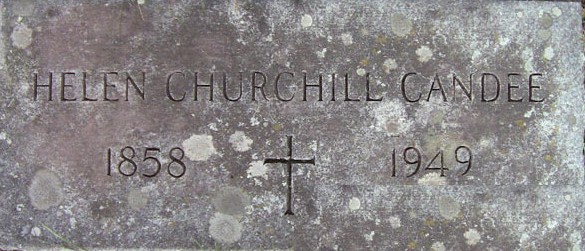
HCC Grave Stone

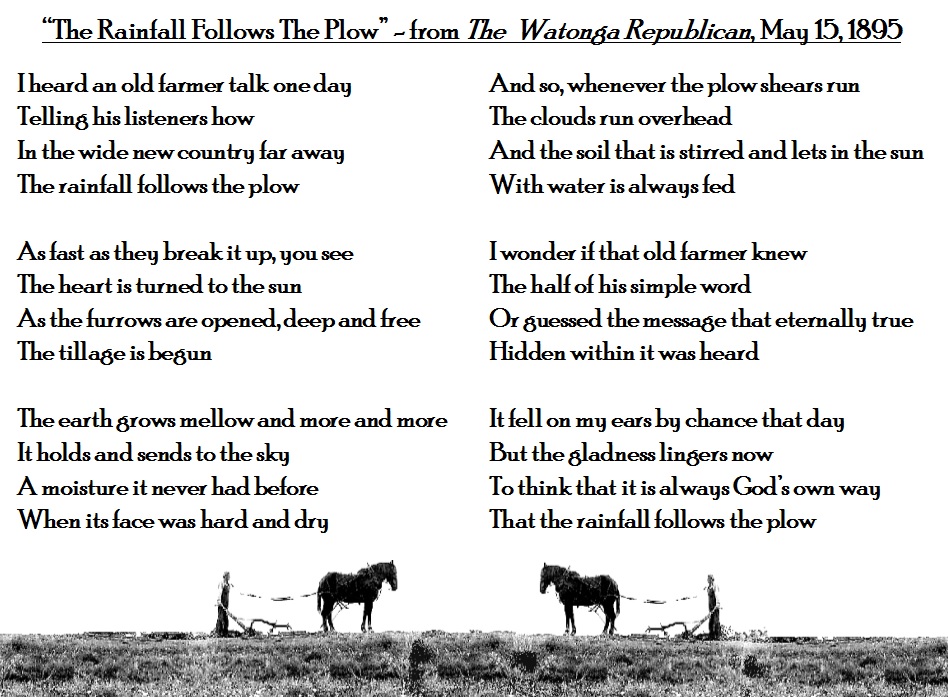
The Rainfall Follows The Plow

Rainfall Follows The Plow

I don’t know if this is a particularly good poem, but it’s certainly an educational one – if not in the way its author intended. 

The idea that otherwise cruel nature would have little choice but to respond favorably to man’s determined labor was neither original nor entirely faith-based. Nineteenth century American climatologists had been propagating such a theory for several decades. 

In other news, there were climatologists in the 19th century. Who knew?

The most famous expression came from Charles Wilber, a land speculator and writer who enthusiastically promoted the American West as the final frontier, the promised land, the cure for what ails you, and generally the bestest bestiest thing you could imagine ever – even if, upon first glance, parts of it seemed pretty darn barren: 

Suppose (an army of frontier farmers) 50 miles, in width… could acting in concert, turn over the prairie sod, and after deep plowing and receiving the rain and moisture, present a new surface of green growing crops instead of dry, hard baked earth covered with sparse buffalo grass. No one can question or doubt the inevitable effect of this cooling condensing surface upon the moisture in the atmosphere… A reduction of temperature must at once occur, accompanied by the usual phenomena of showers. The chief agency in this transformation is agriculture. To be more concise. Rain follows the plow.

Like many of his generation, Wilber wanted to have some scriptural support to go with his… temporal explainifying. Like many of our generation, he somehow managed to convince himself the primary purpose of God’s divinely revealed Word was to provide a disorganized and woefully incomplete science and/or history reference volume. Should there be pages left over to tease out the relationship of fallen man to his omnipotent Creator, well… bonus.

And every plant of the field before it was in the earth, and every herb of the field before it grew: for the Lord God had not caused it to rain upon the earth, and there was not a man to till the ground. But there went up a mist from the earth, and watered the whole face of the ground. (Genesis 2:5-6, KJV)

Change that third “and” to “because” and we’ve got ourselves plowing advice – only two chapters in, no less! So never mind the weather, or the soil, or history, or science – if you keep plowing, nature itself will bend to your Puritan work ethic. If it eventually rains, it proves we’re right. If it doesn’t, you simply haven’t been at it faithfully enough. Keep plowing. 

Some of this ideology was pushed by railroad executives or other boosters encouraging settlement on the Great Plains as a means to greater personal profits or political power for themselves. Many homesteaders embraced the idea rather easily, though, because it fit with their understanding of how the universe worked – or at least the American section of it. If you work hard, and make good choices, things have to work out for you eventually. They just do

Horatio Alger wrote roughly 132 billion books with this same American Dream anchoring every plot, although his were usually set in cities. A young man is impoverished, probably orphaned, and otherwise despised, but he works hard, lives clean, and one day something big happens – usually in the form of a wealthy benefactor impressed by his grit and character. The hero lives prosperously ever after. 

Any number of American folktales echo the same idea – the third little pig who built his house out of bricks instead of having any recreation or relationships; Cinderella, who did all the work around the house without complaining (thankfully she was pretty, so the right man would eventually rescue her); the tortoise who won the race by going slow and steady, while that stupid hare thought there was a level of success which might allow one to take a breather or even sleep a bit – NOT IN AMERICA, RABBIT. 

Democracy itself is founded on the idea that we get what we deserve. So is capitalism. Both assume engaged, informed individuals, each seeking their own enlightened, long-term self-interest, thus producing the best possible political and economic results, which in turn makes for a peaceful and mutually beneficial society. If you make good choices, good things happen. Make bad choices, and… 

Reality was far less merciful for any number of plucky, hard-working homesteaders on the Plains. Sometimes all that hard work eventually paid off, but other times it just didn’t rain. Or if it did, the crops just didn’t grow in that particular soil. Or if they did, they weren’t transportable to market in a timely and cost-effective manner. Or if they were, the markets were flooded with similar goods and you couldn’t turn a profit on your years of labor. Or if you did, your wife or kids caught a weird disease and died anyway. 

On the whole it was better to work hard and make good choices, but to quote another bit of the Old Testament out of context: 

I returned, and saw under the sun, that the race is not to the swift, nor the battle to the strong, neither yet bread to the wise, nor yet riches to men of understanding, nor yet favour to men of skill; but time and chance happeneth to them all. For man also knoweth not his time: as the fishes that are taken in an evil net, and as the birds that are caught in the snare; so are the sons of men snared in an evil time, when it falleth suddenly upon them. (Ecclesiastes 9:11-12)

Jesus’ disciples would have understood the homesteaders’ convictions, though. When confronted with a man who’d been blind since birth, they sought spiritual understanding of what we’d today generally think of as a medical condition:

And his disciples asked him, saying, Master, who did sin, this man, or his parents, that he was born blind? Jesus answered, Neither hath this man sinned, nor his parents: but that the works of God should be made manifest in him. (John 9:2-3)

We can argue the “works of God” part some other time. For our purposes the important thing is that it was neither the result of the man’s prenatal sins nor his parents’. Sometimes, as Ecclesiastes insists, stuff just happens. There may be scientific reasons, given enough time, skill, and information – but in practical, simplified terms, there are no guarantees. Cause and Effect are wily little pranksters, and not always very consistent ones. 

Even Jesus had mixed responses when it came to worldly success, or the benefits of planning. He seems to be a fan of taking personal responsibility for your words and choices, but still gently mocks any effort on the part of His disciples to put together plans or be prepared in practical ways. It’s like He wasn’t even trying to give us clear cut rules about credit card usage or the capital gains tax. 

The idea that nature exists solely as another tool or challenge for us to beat into submission runs deep in the American psyche. It’s kissing cousins with ‘Manifest Destiny’ and certainly an essential conceit if we’re to continue making the amazing technological progress of which we’re so proud. And if nature, why not the universe? Why not all of reality?

The flip side of such a paradigm, though, is that we – the human individual – are by implication responsible for every outcome. If we prosper, our hard work was the cause. If crops refuse to grow, it was an error in our calculations, our work ethic, or our personal worthiness. Part of us desperately insists that every good thing, every bad thing – not to mention the bewildering myriad in between – must be forever bound to the calculations of tiny individual mortals. 

Apparent confirmations are endless. Hard work does matter. Good choices matter even more

But plowing doesn’t ensure rain any more than laziness guarantees drought. Immunizations don’t cause autism and clean living doesn’t guarantee wealth and long life. Your parents didn’t get divorced when you were eight because you wet the bed and your kid didn’t die in that car because you failed as a parent. The examples of earthly horrors raining down on the innocent are too extensive to seriously claim otherwise; even most believers, if asked nicely and thinking clearly, will confess that to some extent, ‘time and chance happeneth’ to us all. 

And yet it’s so easy upon observing corruption that leads to poverty, illness, or other maelstroms, to extrapolate that all suffering must result from similar wrong-doing. Eventually we skip a few steps and simply despise the downtrodden. They must be asking for it, after all – you know how they are. 

All homesteaders could do was play the odds based on what they knew. Circumstances improved for most (not all) when farmers worked collectively to hone techniques and share hard-won insights, not when they just plowed harder. Wilber never got his 50-miles of farmers, but something comparable was happening by the 1920s. It didn’t force the skies to open; it only meant there was nothing to hold the soil together when nature refused to rain for the better part of a decade. 

Anyone still persuaded that the majority of human activity for good, ill, or other is the result of informed, calculated decision-making clearly hasn’t paid attention to social media, politics, or the bewildering popularity of ‘Iron Fist.’ We’re not rational creatures, and we don’t live in a mathematical equation. 

Do what you can do, but cut yourself some slack when it doesn’t work out. And consider taking some water to your neighbor – whether you think they deserve it or not.

Water Lad

Facts-Only History

Just The Facts

Good morning, class. Today begins the roughly three days we have allotted by our state-mandated curriculum to cover the causes, major events, and impact of the American Civil War. 

Unlike past units in which I’ve sometimes been guilty of inflicting my personal opinions and interpretations on your instead of just teaching you history, I’ll be making every effort to present the facts and only the facts. Evaluation, analysis, synthesis, or conclusions are entirely up to you. We’ve practiced these skills through structured activities, and you already, no doubt, supplement my unwittingly biased and inadequate methods via long, meaningful discussions with your parents and/or clergy, as well as extensive research of your own. Hopefully that will mitigate some of the ongoing damage I’ve done as a bumbling, leftist, possibly atheistic public school educator out to destroy American values.  

It’s not my job to teach you what to think, after all – just to present everything that’s ever happened anywhere in or to our great nation in more or less chronological order without prioritization or unnecessary commentary. 

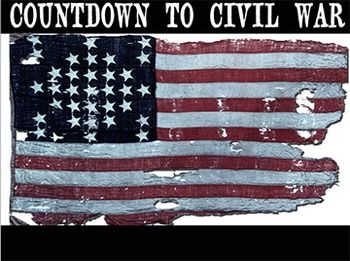
Countdown to Civil War

The 1850s: Countdown to Civil War

In 1850, the U.S. census showed a population of 23,191,876. 

In 1840 – 17,063,353. 

In 1830 – 12,866,020. 

In 1820 – 9,638,453. 

In 1810 – 7,239,881. 

Rather than me inflict my personal interpretations on which elements of this growth were significant, I refer you to the U.S. Census Bureau for more details and to several biased-but-comprehensive overviews of U.S. History which you may read in order to make up your own mind. 

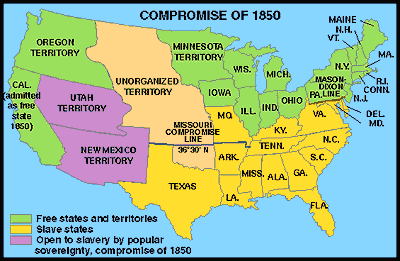
Compromise of 1850On January 29, 1850, Henry Clay proposed the Compromise of 1850 to Congress. It was a collection of five bills he said would help prevent further conflict between the North and the South. Texas gave up its claims to New Mexico and other areas north of the Missouri Compromise line and the U.S. took over their remaining debts. California was admitted to the Union as a free state. Utah and New Mexico would enter the U.S. under the principal of ‘popular sovereignty’ – meaning the people in each would vote for whether or not to have slavery. The slave trade, but not slavery itself, was banned in the District of Columbia. A much tougher Fugitive Slave Act was enacted. 
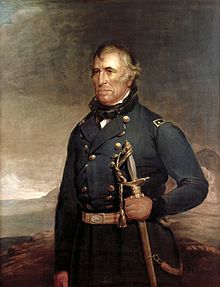
The North is generally perceived to have responded badly to the Fugitive Slave Act, which the South generally favored. I’ll refrain from elaborating further for fear I’d be injecting my own interpretations and biases into the matter. It’s not my job to tell you what to think, just to teach you history!

President Z. TaylorPresident Zachary Taylor died unexpectedly in July of 1850 of what seemed to be a stomach-related illness. Some suggested he may have been assassinated by pro-slavery southerners, and various theories have persisted into modern times. In 1991, Taylor’s body was exhumed and tests were done in an effort to determine whether or not he had, in fact, been poisoned. The science found no evidence of malicious behavior, but some question the results even today. 
In an effort to avoid telling you what to believe, I’ll avoid further commentary, possibly having already said too much in favor of something as unsettled as medical science and wishing to give fair and equal treatment to every possible interpretation or theory related to this issue. You are encouraged to devote months of your life to researching the chemistry involved, the nature of the various organizations who’ve published opinions, and the history of Presidential assassination on your own in order to develop your own enlightened viewpoints free from my corrupting influence.  

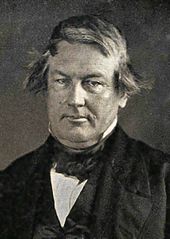
President M. FillmoreOn July 10, 1850, Millard Fillmore was sworn into office as the 13th President of the United States. Neither expansionists nor slave-holders were generally happy with his publicly stated policies regarding slavery, although it would be wrong of me to try to speak for them or evaluate their reasoning. 
On September 9, 1850, the Compromise of 1850 is passed – see previous elaboration, in which I’ve tried to be fair to all sides. I hope, by mentioning it again here I’m not unjustly suggesting it was more or less important than any other event, or that certain parts of it were good or bad or had any particular impact. Those sorts of discussions are best left to the family hearth.  

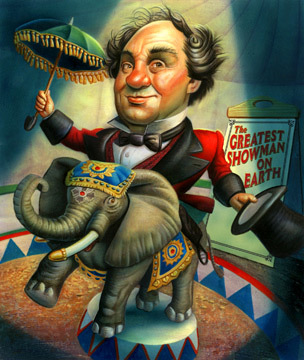
P.T. BarnumOn September 11, P.T. Barnum introduced Jenny Lind to American audiences. Often called the “Swedish Nightingale,” Lind was a soprano who performed in Sweden and across Europe before her wildly popular concert tour of America. She donated many of her earnings to charities, especially the endowment of free schools in Sweden. Some people think that sort of philanthropy is noble; others find it less so. Best we not consider such issues here. Or the role of the arts in influencing culture or character.
Too subjective. 

While it is possible that Miss Lind’s singing success was unrelated to the outbreak of the Civil War nearly a decade later, it’s not my place to decide what events are or are not important; I’m paid to merely present the facts

Then again, we’d better pick up the pace… 

In May of 1851, the U.S. participated in the opening ceremony of the first World’s Fair in Hyde Park, London. 

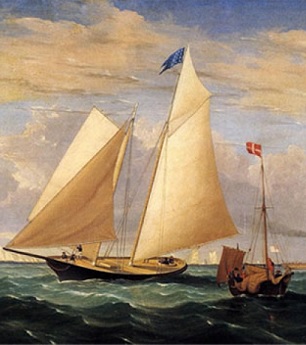
America's Cup YachtOn August 22, 1851, a yacht named “America” won the first America’s Cup yach race, as things named “America” always should. This may have had an impact on different segments of the nation, or it may not have.
It would require an extensive study of available primary sources presenting various points of view in order to give a balanced interpretation regarding such an impact, or lack thereof. By my estimates that would require at least two weeks of class time, which the state-mandated curriculum does not allow. I will therefore abstain from projecting potentially slanted summaries of the nation’s reaction or speculating as to the impact or lack thereof this event may have had on the subsequent outbreak of war. 

I fear we’re running short on time, so I’m going to condense a bit and hope you’re still getting enough to understand what caused the American Civil War. 

November 1851 – Herman Melville’s Moby Dick is published in the United States, along with Nathanial Hawthorne’s House of Seven Gables. The painting “Washington Crossing the Delaware” is completed by German-American artist Emmanuel Leutze. These books and this painting are generally well-known, but every real American is entitled to their own opinion of their quality, their enjoyability, and what – if anything – each of them means or how they may or may not relate to the schisms leading to war. 

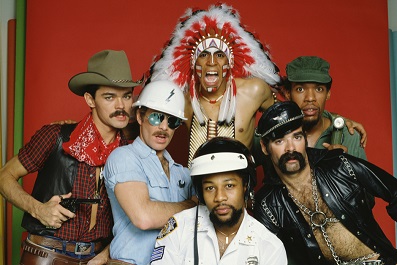
Village PeopleDecember 1851 – The first Y.M.C.A. opens in Boston, Massachusetts. This arguably reflected changing values and social strategies in northern cities – if we were going to talk about values, I mean. Which we won’t. Because… school. So, um… the Village People recorded “Y.M.C.A.” in 1978 and it became a huge disco hit. If you’ve ever been to a live sporting event, you’ve heard this song and watched people do weird things with their arms which they seem to think are related to the song. 
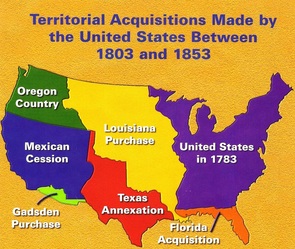
March 1852 – Harriet Beecher Stowe’s best-known book, Uncle Tom’s Cabin, is published. Stowe stated that she wrote this work of anti-slavery in response to the Fugitive Slave Act. It sold 300,000 copies in its first years of publication and is generally reputed to have had a huge impact in both North and South. 

Many people think this book played a major role in the outbreak of war several years later. There’s also a story about Lincoln meeting Stowe and some things he may or may not have said. You should research all available information regarding this book and its impact in order to decide for yourself what role it may or may not have played and whether or not it’s a “good” book. Or ask your clergyman. Or clergyperson. Not that I’m suggesting there’s a god. Or that there’s not. I mean–

*sigh* 

June 1852 – Henry Clay died. This was probably important in how Congress managed their affairs, but I don’t want to say for sure. 

October 1852 – Daniel Webster died. This was also probably important, but again… trying to be neutral here. 

November 1852 – Franklin Pierce, a Democrat, was elected President. Many things happened during his administration which could be interpreted a variety of ways…

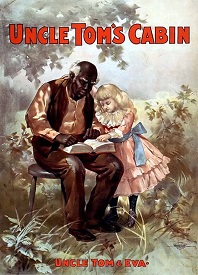
Gadsden Purchase1853 – America and Mexico signed the Gadsden Treaty. Vice President William King died. Arctic explorer Elisha Kane ventures farther north than any man has before.
1854 – Franklin Pierce was re-elected. The Kansas-Nebraska Act was passed and great conflict occurs, probably as a result, for reasons related to politics and slavery, but as a public school educator I don’t like to get involved in politics or controversial social issues, so… ask your parents, I guess. 

1855 – William Lloyd Garrison published “Disunion!” in The Liberator and Walt Whitman published Leaves of Grass. There are people who find both of these things signficant in different ways, so you might look into that. It’s complicated. 

1856 – Henry Bessemer invented a process for mass production of steel. John Brown led raids against pro-slavery families in Kansas and five men were beheaded. He became a controversial figure about whom I have absolutely no insight or opinion because – controversy! (I could point you to some articles but we’re really running out of time here, so…) 

1856 – James Buchanan was elected President. 

1857 – The Supreme Court issued their decision in Dred – 

Crap. We’ve got five minutes and we haven’t talked about Harper’s Ferry or the Election of 1860 or Abraham Lincoln. Then again, if we talk more about Lincoln than we have Pierce or Buchanan, that’s suggesting he was more important than they were, which is a political judgment as well as a value judgment. It favors one party’s ideology over the other, and…

Uncle Tom's Cabin

I must apologize, class. Instead of just teaching you the facts, I seem to still be picking and choosing which parts of history to cover. I’ve injected way too many of my own ideas about which things matter and what they mean. I just couldn’t help myself when Uncle Tom’s Cabin came up; it was just so important—

Er… in my opinion. For reasons I should keep to myself, because others disagree. 

Dammit. 

I’ll try to do better tomorrow when we cover the Civil War in a day. I won’t leave anything out or inject my own biases about which battles, people, or ideas were right or wrong or which mattered more than others, or whether ending slavery was a good idea or the war was unpleasant. I’ll just teach you some history. That is, after all, my job – right?

RELATED POST: Fact-Free History

RELATED POST: “Here’s Your Mule,” Part One – North vs. South

RELATED POST: Secession & Superiority (A Little Knowledge Is A Dangerous Thing, Part One)