
Another Year Over (A New One Just Begun)

New Years LeftoversI’ll be honest with you. I’ve always liked New Year’s more than Christmas.

I know. I’m sorry, but it’s true.

Christmas is fine. Here’s to redemption, and kindness, and gifts that say, “I’ve tried to pay attention.” I like seasonal movies and music – the same 74 songs have been playing endlessly from my red flash drive since Thanksgiving, only a few of which are humorous and none of which involve singing animals or grandma’s demise. And I cry at the same parts of the same films annually – Bill Murray’s redemption in Scrooged, Michael’s efforts to stir up Christmas Spirit (so Santa’s sleigh can fly) in Elf, even Charlie Brown and that same, sad little tree every year since before I was born.

Charlie Brown XmasI don’t really do “wacky dysfunctional family” movies whether they’re Christmas-themed or not, so that’s eliminated most of the seasonal fare from the past decade or so. I won’t even talk about Bad Santa or anything crass and offensive but with Noels and Tannenbaums slapped on for cheap laughs. I do generally enjoy obscure claymation, but I’ve dialed back that genre since experiencing Nestor, the Long-Eared Christmas Donkey about five years ago. It was just so… sincere. And disturbing. And wrong wrong wrong, only with an actual Nativity anchoring the plot.

There’s just not enough nog in the fridge to risk something like that again.

So I’m not anti-Christmas. I am, however, a much bigger fan of new beginnings. Fresh starts. Rebooting to factory settings. The season may begin with Thanksgiving, but it doesn’t end until New Year’s Day. It’s practically a package deal, and rightfully so. Whatever else the Baby Jesus was about, His story is certainly about being made new, yes? About the possibility of having your failures and screw-ups washed away – at least metaphorically – and starting over. Being born… again.

Which is, you know… amazing.

But it’s New Year’s that makes it tangible and contains a less lofty, more literal rebirth. It’s not really about staying up until midnight, although I usually do, even now. I personally have zero interest in big parties or raucous countdowns, and while I’ve been known to have a drink or two, most of the time it takes about 2/3 of a single Redd’s Blueberry Ale before I’m asleep on the couch with my neck in some horrible position and fruitcake crumbs spilling down my Star Trek PJs.

He's Dead, JimAnd I don’t really make big resolutions – at least not any more than throughout the rest of the year. People talk about keeping that Christmas feeling all year long, but the holiday I’m most likely to emulate endlessly comes a week later.

The number of things I vow I’ll never do again times the number of healthy habits I swear I’ll get serious about next week minus the total occurrences of complete and utter failure equals the square root of why do I even bother – plus or minus self-loathing and hope.

But that’s the thing about reboots and new beginnings. It doesn’t really matter how much you’ve failed before. How often you’ve fallen short. How regularly you wish you’d just… ARRRGHHH! GET IT RIGHT, YOU $#%^*!

Because tomorrow you get up and try again. Because it’s a new morning. It’s a new week. It’s a new semester, a new season, a new job, a new place, a new chance, a new identity, a new direction.

It’s a new year. Like, literally.

New CanvasI know it’s not miraculous – that’s the one from the week before. I know that a clean slate, like fresh snow, is in many ways just another canvas on which you’ll no doubt spill your badly-mixed watercolors, probably sooner rather than later. And it will smudge right away and smell funny and tear on the one side you thought was actually going rather well, because…

Because that’s just how real life is.

But for a moment, it’s new. For a moment, there’s hope. Enough of those, strung together… well, that’s kinda like ongoing possibility, isn’t it? And it’s not like you can keep doing everything wrong the same way forever – if nothing else, the sheer volume of monkeys and typewriters should produce moments of merit if you simply give it enough time.

And sometimes you get it right. Sometimes you do good. Sometimes you don’t suck. Sometimes… you’re a slightly better version of you.

When that happens, make a note. Mark it down. Build internal monuments, not to worship, but to remember.

That it went well. That it helped, and you mattered, and things were a smidgen better when you tried. That the risk paid off and the hurt lessened and she felt hope and he felt stronger and maybe…

Mr Miyagi ChopsticksMaybe that can happen again. 

Mark it down, dammit – CLING TO IT LIKE LIFE. You’ll need it for reference, and sooner than you think.

Because you’ll probably mess something up again, or at least not catch something you should have caught. You’ll try to fix something and make it worse, or act like a jerk when you fully meant to keep it together. Maybe you’re not as creative as you wish or as smart as you like to think, or maybe you’re simply alarmingly average in the grand scheme of things.

Maybe you’re a screw-up and terrified of how much worse it could be if people really knew. Maybe you feel fat, or maybe you throw up to numb the chaos, or you wish you’d stayed in school or found a better job. Maybe you’ve hurt people and they’ve hurt you and you’re not even sure which parts are your fault anymore.

Maybe you’ll have high hopes for the new year but still find yourself tired and angry and wrestling with despair because what the hell is even happening anymore and why do more people not see it and how can we possibly respond when we’re just so inadequate and small and flawed and…

stupid

dirty

emotional

tired

numb

poor

tired

meek

scared

tired

worried

broken

tired

angry

tired

inadequate

tired

tired

seriously so very tired?

Guardians of the Galaxy LineupBut it’s a new year in a few weeks. And a new week even before that, and again after. It’s a new day tomorrow, and the next day, and the next.

And you’re surrounded by other inadequate, frustrated, flawed, wonderful folks who will probably make you crazy as often as they make you feel better. Help them. Encourage them. Push them. And they’ll do the same for you.

Don’t lie to them, or to yourself. You can’t fight darkness with lies (duh). But help them see what they’re doing right, and to notice when they do good. Sometimes they don’t suck. Sometimes… they’re that better version of themselves they always kinda hoped they might be.

When that happens, make a note. Share it when it feels right. Build some monuments, not to worship, but to remember. Be a Reminder, a Did-You-Noticer, and a Hip-Hip-Hoorayer for those struggling around you. And when you do fall short, or go so so totally wrong, know that morning is coming. A new week is near. Just keep restarting, dammit.

It’s a new year, kids. You can help. You can matter. Things can be a smidgen better because we kept trying, and because you helped someone else keep trying as well.

We just need enough monkeys. Bring your typewriters.

Enough Monkeys

RELATED POST: Happy New Mirrors!

RELATED POST: Seven Reasons You Probably Don’t Suck (For Teachers)

RELATED POST: Making Good Choices (A Post For My Students)

My Karma Ran Over My Dogma (A Confessional)

Teacher TiredI always swore I’d never be one of those teachers. You know the type – frustrated and hostile, blaming their kids, and longing for the “good ol’ days.” To be honest, I’ve often kinda looked down on that flavor of educator – wondering why they’re still in the classroom, and hoping they find somewhere else to work out their issues. Besides, they give the rest of us – with our superior ideals and natural love of children – a bad name. It’s shameful!

But I hereby confess to you, my eleven faithful followers, that I am paying for that vanity. Dearly. Pride had a few laughs, and now… well, it’s been a long fall.

I rarely said it out loud, of course. I reject teacher-shaming in general, whatever its source. But I thought it. I felt a tiny bit superior. I may have rolled my eyes on occasion. I know I sighed a few times.

And I’m sorry.

It’s not like I’m blindly idealistic. We have to be realistic about the children in front of us. I’ve never bought into the suggestion that they’re “natural learners,” hungry for knowledge and ready to tackle any challenge if only we’d get out of the way and let them project-base, flip, and collaborate towards all those future jobs that supposedly don’t exist yet.

Nonsense.

I love my kids, but they’re almost… people – and people tend to do what’s easy and feels good unless we fight it. Constantly. Without external limits or learned self-control, we are shallow, savage creatures. To paraphrase the prophet Jeremiah, “the heart is deceitful above all things, and desperately wicked: who can know it?”

None of which actually bothers me most of the time. They’re kids. They’re not supposed to be ready to run everything. That’s why we make them come to school.

What is currently harshing my shiny is their stubborn conflation of two very different reactions towards academic expectations in this class – this optional class, this college-level coursework class, up for which they chose to sign.

What many of them are experiencing – what they’re feeling – is something along the lines of “I really don’t want to do this” or “this is hard and I’m not used to that… I do not like this feeling!”

But they don’t know that’s what they’re feeling, or at least they don’t want to admit it. Instead, they’ve substituted some interesting variations. “I can’t do this” is by far the most popular, followed closely by “I don’t like this and it is therefore invalid,” or my personal favorite, “this is stupid and horrible and wrong on every level; I must direct all of my energies towards denial and/or escape!”

You see the difficulty.

They’re not stupid. If they were, I’d be nicer to them. And while I’m far from the perfect teacher, neither am I  insane or pedagogically naïve. I have some idea what I’m doing, even when I’m not clear exactly what they think is happening, or why.

So my lofty words and nurturing convictions have run up against the cruel karma of vanity and presumption. Well, that and their emotions. And backgrounds. And the twisted culture surrounding them.

They may intend, for example, to finally read the assigned material tonight. They’ll stall a bit, but eventually open the text, skimming a line or two before their internal dialogue takes over:

“The 15th century was defined by revolutions – the scientific revolution, the Renaissance, European adaptation of—”
“This doesn’t make any sense.”
“This is too much work.”
“Why do we even have to know this?”
*sigh*

“As western Europe expanded their role as the center of world commerce—”
“I hate this book.”
“Mr. Blue is insane if he thinks this somehow teaches me anything.”

“Maybe I’m just stupid. Except Monica doesn’t get it either, so that proves this is all just POINTLESS! Why doesn’t my counselor let me OUT of this CLASS?! I’M DOING EVERYTHING I CAN!?”
“My phone is buzzing. I’ll just check it real quick…”
{73 minutes later, the phone is put down because the battery is low.}
“That’s it – no more. I just spent an hour and a half on this and hardly remember ANY of it! I quit!”

I’m not even mocking them. (Well, maybe a little.) The experience is real, even if the reality is absurd. And that “can’t-shouldn’t-won’t” mentality tries to take over in class as well:

“You expect us to read all of this stuff ourselves? How can we know what’s important unless you give us some sort of guide?”

(I give them a guide.)

“I spent the whole time trying to do the stupid guide instead of actually learning!”

(I make the guides optional.)

“I hate this textbook. It’s so confusing.”

(They have a point on that one. I compile articles from a variety of sources, formatting and copying them as more engaging alternatives.)

“We’re just supposed to… read these? That doesn’t make any sense. Why are we reading in a history class?”

(Not sure how to respond to that one without sounding outright spiteful.)

“I’m not going to remember any of this by just reading it. We need to DO something with it.”

(We learn annotation, practice level questions, and apply other tried’n’true reading strategies. They turn in half-ass efforts and thus receive half-ass scores.)

“Why did I get a bad grade? I can read and understood this stuff without all that marking on it and everything!”

(I begin drinking more in the evening.)

“You should lecture more. I like your lectures.”

(Huh. That’s practically a positive. Alrighty, then – I put together some brief, interactive lectures… heavy on visuals and connections. Embed some media. A few small group moments. Takes me forever.)

“What are we—” {they see the screen}

“Oh.” {as if it’s toenail-swallowing day} “Lecture.”

(I wonder if they can sense my growing resentment. Probably not – that would require their attention. OK… there are some engaging, briskly-paced videos over this unit they can watch at home. I make a playlist and eliminate other homework.)

“No one watches those, you know. Aren’t you supposed to be the teacher?”

*sigh*

(More drinking. Well… they want to talk all the time. Let’s do something collaborative.)

{They choose their groups} “So then I was like, ‘I’m not sending you anything, loser!” *laughter and cackling and limited productivity*

{I choose the groups} “Why did you stick me with these people? I’d rather work alone.”

(OK. Partners are optional. And we’ll try something creative. Artsy-fartsy, even.)

“We have to COLOR?! How is that related to HISTORY?! Can I just write a paper or something?”

(OK, write a paper.)

“I hate writing. Everyone else got to color! How is that fair?!”

You get the idea.

There’s nothing wrong with a little variety. We’re always talking about that teacher “toolbox” and all those supposed “learning styles.” And generally, once you’ve won most of them over, they’ll try pretty much anything you ask because they trust you, or like you, or have otherwise decided to play school with you.

But if you haven’t… if they won’t…

It’s just…

DAMMIT.

Seriously. Just $&%#@*! and a baby goat.

You could go sell boats with your brother-in-law. He’s a windbag and a tool, but his house is twice the size of yours and he took his family to Hamilton last month; all you’ve got is the soundtrack you copied (is that even legal?) from the CD in your school library.

It’s just maddening sometimes.

Look, you feel what you feel. Own it, baby. If you’re hurt, you’re hurt. If you’re resentful, confess that resentment. And my darlings, if you feel stupid and beaten, just throw those arms open and soak in it for a moment. All those hours, all that potential, all of your genuine love for those freakin’ little ingrates – and they just… it doesn’t…

Hmph.

But you can’t stay there. Don’t become that caricature you’ve been trying to avoid since you were young and idealistic. Own that tenebrosity, and feel those uglies, but don’t marinate too long or you’ll lose your texture and the rice will burn.

Because the underlying reality remains. They’re teenagers, you’re the adult, and you’ve taken on a professional responsibility to learn them up good and hard whether they want it or not. The rest of the world thinks this is just a matter of “making them,” but you know better – no one can make anyone do anything.

If that weren’t obvious before this year, it certainly is now.

You’ll figure something out, or you won’t. They’ll get it, or they won’t. But you’ll keep trying, because you love them, and because you believe what you’re trying to teach them matters. Period. You’ll keep going because you decided long ago that this is what you do. Sometimes it’s glorious, and sometimes you lie in bed at night praying for snow. LOTS of snow. Or cholera. Maybe nuclear holocaust. You’d push the big red button yourself if it meant you didn’t have to see third hour again this week.

So what if it seems increasingly unlikely that Denzel Washington or Nathan Fillion will be playing me in one of those martyr-teacher movies – at least not one based on this year? I still sometimes manage DC’s Legends of Tomorrow territory – well-intentioned clusterfoolery that works itself out over time. And that’s OK. Progress is sporadic and incremental.

But I will not be so quick to judge those teachers next time, or to inwardly smirk at the superiority of my ideals and natural rapport over theirs. That was wrong even before the universe struck back.

Now that it has…

Well, dammit.

RELATED POST: Teachers Are Delusional

RELATED POST: Tips For Parents (To Defeat Your Child’s Teacher)

RELATED POST: My 300 Epiphany

We Think You Already Know This (A Letter from Kublai Khan)

You Oughta Know

One of the minor downsides to teaching ancient history for nearly half the year is that there simply aren’t the multitude of cool documents – letters, speeches, diaries, newspaper articles, and the like – which make U.S. or European History so naturally freakin’ awesome.

Sure, there are primary sources – statues, ceramics, broken bits of weaponry and whatnot. There are even textual remains – stuff carved into stone, bits of preserved parchments, maybe a book or two. These things are essential to the study of history and interesting enough in their own ancienty ways. I’m not trying to downplay the glories of Sanskrit or the impact of ancient law codes, or to question the value of innumerable two-line poems about dew on the grass sleeping in winter.

But in terms of modern engagement? They’re, well… challenging.

A woman’s duties are to cook the five grains, heat the wine, look after her parents-in-law, make clothes, and that is all! … She must follow the “three submissions.” When she is young, she must submit to her parents. After her marriage, she must submit to her husband. When she is widowed, she must submit to her son.

–Biography of Mengzi, mother of Confucian philosopher Mencius, fourth century B.C.E.)

Important, sure – but not particularly gripping. Here’s another essential excerpt:

And if you, my vassal, disobey or break this treaty… may the god Adad, the canal inspector of heaven and earth, put an end to all vegetation in your land. May his waters avoid your meadows and hit your land instead with a severe destructive downpour. May locusts devour your crops. May there be no sound of grinding stone or bread oven in your houses. May the wild animals eat your bread, and may your spirit have no one to take care of it and pour offerings of wine for it.

—Excerpt from a treaty between an Assyrian king and a subject city-state, circa 670 B.C.E.

LocustsThings are getting serious when you start wishing locusts on people. No one should wish for locusts. Wild animals eating your bread, sure – but locusts? That’s just harsh.

Not all extant texts are so serious. Some are real knee-slappers:

Apply yourself to being a scribe… you will be advanced by your superiors. You will be sent on a mission… love writing, shun dancing, then you become a worthy official… By day write with your fingers; recite by night. Befriend the scroll, the palette. It pleases more than wine… If you have any sense, be a scribe… and be spared from soldiering!

—Excerpt of a letter from a government official in Ancient Egypt to his son

HA! Those nutty river valley bureaucrats! (Dear god, get me to the Renaissance…)

But there was one moment of nerdy history-joy several weeks back when I came across a brief missive written by Kublai Khan to neighboring Japan in the year 1266. It begins like this:

Cherished by the Mandate of Heaven, the Great Mongol emperor sends this letter to the king of Japan. The sovereigns of small countries, sharing borders with each other, have for a long time been concerned to communicate with each other and become friendly.

Aw, that’s nice! He wants to be a good neighbor! Those cuddly Mongols. Can I borrow a cup of bloodshed?

The “Mandate of Heaven” to which he refers was a historiographic tool of Chinese scholars going waayyy back ago. It framed the rise and fall of various Chinese dynasties in terms of divine sanction. Royal lasciviousness brought about the collapse of the Zhou after long, corrupt centuries? That’s what happens when you lose the Mandate of Heaven. Liu Bang defeated Xiang Yu and re-united China under the Han? Well, he obviously had the Mandate of Heaven.

Kublai Khan

Kublai Khan, then, was rather bold in claiming the Mandate himself, given that he wasn’t exactly a proper emperor – not being Chinese and all. Still, he’d inaugurated his own dynasty (the Yuan) and the Mongols had been pretty much running the largest empire the world had ever known for over a half-century at that point, so, you know… they were doing something right.

Especially since my ancestor governed at heaven’s command, innumerable countries from afar disputed our power and slighted our virtue.

This made me laugh, probably because I’m reading way too much modern political overtone into it. “We’re God’s party here, trying to drain the Yellow Swamp, and all the foreign press can do is spread #FakeNews about us! SAD!”

Goryeo rendered thanks for my ceasefire and for restoring their land and people when I ascended the throne.

I prodded my poor students as to who “Goryeo” might be. Even with a map on the screen, it was a while before anyone guessed it might have something to do with Korea. And it does.

As in, it’s Korea.

They “rendered thanks for my ceasefire” and were super-appreciative that I let them keep working for me after I took over. They love me in Goryeo!

I’ll bet they did, Kubles. Subjugation and terror tend to bring that out in people.

Then again, it’s often tricky to gage tone with historical documents. While some things are universal across humanity, language and culture change dramatically over time – often in ways difficult to discern without a becoming a specialist of some sort.

Still, whatever else the Mongols were, they weren’t known for rhetorical nuance; I don’t think I’m overly projecting when I infer a very familiar tone in lines like this:

Our relation is feudatory like a father and son. We think you already know this.

Renaissance Dancers“Feudatory” is a funny word. It probably works better in the original tongue. The root, of course, is “feudal” – as in “feudalism.” It conjures up images of western European lords and serfs, trying to avoid the Plague while men in tights play recorders and bald clergymen harrumph about, gardening and copying books by hand.

But feudalism existed in a variety of forms, anywhere society was structured around relationships between landholders and those doing the actual producing. It sounds too close to slavery for most modern sensibilities, but it provided social stability and a physical security for common laborers which arguably fit the time and circumstances.

Still, Kublai is probably overselling the “father-son” thing a bit. Like the serfs, Korea had little choice in the arrangement, although in return for their loyalty they received the Mongols’ protection, which was no small thing.

Any doubt as to tone or intent begins to vanish with that next bit: “We think you already know this.”

Terse, isn’t it? Somehow things are feeling much less neighborly than they did only moments ago.

Goryeo is my eastern tributary. Japan was allied with Goryeo and sometimes with China since the founding of your country; however, Japan has never dispatched ambassadors since my ascending the throne. We are afraid that the Kingdom is yet to know this.

You never write, you never call, and you completely ignored our friend request on Facebook. I know you got our message – I can see the little checkmark and the time you read it. Do you know how that makes us feel?

Hence we dispatched a mission with our letter particularly expressing our wishes. Enter into friendly relations with each other from now on. We think all countries belong to one family. How are we in the right, unless we comprehend this?

Again with the super-friendlies. You know that line about walking softly but carrying a big stick? Kublai had Teddy Roosevelt beat by about six centuries.

“This is… a really nice place you got here, Benny. Isn’t it a nice place, Nicky?”

“It’s a great place, boss.”

“A man could really do well for himself in a place like this, Benny. He could provide for his family, couldn’t he, Nicky?”

“Ain’t nothin’ more important than family, Boss.”

“That’s so true. People what you gotta love, and protect… it can be such a dangerous world. It’s a shame, really – the things that can happen.”

“It’s a tragedy, Boss. I weep when I think of it.”

“A man’s gotta know who his friends are, Benny. He gots ta’ know who he can count on to help him prevent… accidents. Misfortunes. Ain’t that right, Nicky?”

*CRASH*

“Ah, now… Nicky just broke your kusanagi! Nicky, what have I told you about other folks’ holy relics?”

“That I gotta be more careful, Boss.”

“That you gotta be more careful. That coulda been his daughter. Right, Benny?”

Fake GangstersI mean, I can’t prove the Mongols talked and swaggered like bad movie mobsters in early 20th century Chicago, but you can’t prove they didn’t – and in today’s world, that makes my interpretation way truer than yours.
Finally, just to make sure the message isn’t received by some particularly dense diplomat and its intent even slightly misunderstood…

Nobody would wish to resort to arms.

That certainly would be a shame. The Mongols hated violence, you know.

But what a wonderful way to wrap up such a loaded dispatch. He doesn’t even have to cackle and rub his hands together maniacally – it’s all in the tone. 

The letter didn’t work. Kublai Khan tried a few more times, then resorted to military force. Two full-scale invasions were repulsed, both times in part due to monsoons, or “divine winds” working in favor of the Japanese. Their word for this is “kamikaze,” which I’m told will come up again later.

Hey, I don’t read ahead. I like to be surprised. 

It was a defining limit on Mongolian expansion, and a glorious moment in the early history of Japan. In both cases, the events of the 13th century shaped subsequent developments forever thereafter.

Which is, after all, a large part of why we study these things.

Most importantly, though, the exchange produced this letter, which we now read, analyze, and discuss in class. It’s distant enough to be history but approachable enough to be engaging. With a little effort, we can use it to anchor all sorts of changes and continuities and comparisons and connections. Thank you, Kubles – I LOVE this stuff!

But… I think you already know this.

RELATED POST: Thoughts on Primary Sources

RELATED POST: Humble Magniloquence (Purdy Words in Primary Sources)

RELATED POST: Mary Boykin Chesnut’s Diary (Part One)

The Sticker Revolution

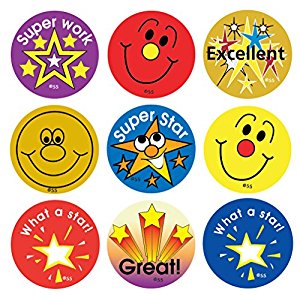
StickersSeveral years ago, I had a sub who went a bit above and beyond. She not only took up whatever assignment I’d left for that day – she organized the papers and completion-graded them. In other words, she noted who’d finished and seemed to have taken the work seriously. She didn’t give them a number or a letter grade, of course – that would have been bold. But she did give each paper meeting her requirements a sticker.

I chuckled when I saw the papers the next day. Clearly this was someone more comfortable with elementary, maybe middle school. Nothing wrong with any of that, of course, but these were high school students. Pre-AP Freshmen. They were practically people. They weren’t going to be motivated by…

Holy Moses in a leaky basket, how they lost their minds when they saw the stickers. There was squealing from many of the girls, and almost genuine protest from some of the boys whose papers lacked the adhesive trolls or monkeys or whatever they were. I couldn’t believe it.

“Mr. Cereal! How come you never give us stickers? Don’t you love us? Do you not care if we do well?!?”

OK, they were partly kidding, but not entirely. Not even mostly. Many of them responded more powerfully than I could have ever imagined to the freakin’ stickers. Still… surely it was a fluke, right? A one-time thing? Kids are weird – you never know what’s gonna trigger them one day and mean nothing the next. I dismissed it as quickly as I had pet rocks and disco back in the day.

StickersA week or two later I was at one of those Everything’s A Dollar So Stop Asking places with my wife, looking for who-knows-what, and I noticed several packages of the most obnoxious rainbow and puppy stickers. I grabbed them. Then some generic superheroes – not Marvel, not even DC, but some cheap knock-off assortment of colorful caped stereotypes. I spent less than ten dollars total, purely on a whim – what they heck, right?
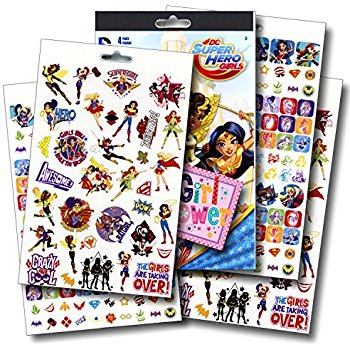
The next reading quiz, students who scored a natural 100% (getting all the multiple choice questions right, not factoring in bonus points available from the more-involved short answer questions) received a sticker on their quiz next to the grade.

They loved it. It was almost embarrassing how quickly it escalated.

Students previously satisfied with 88% actually put in extra time to get stickers on their quizzes. A few kids who weren’t going to be getting 100% on their best day received them periodically for the largest jump in scores between quizzes or other nonsense. In short, it became a thing. I did it for years just because I found it amusing. Sometimes it seemed to actually change behavior, but over time it was mostly just stupid fun. The stickers weren’t driving the curriculum or anything – I wasn’t gamifying my flipped project-based #edtech lesson. They were a fluke that found traction. 

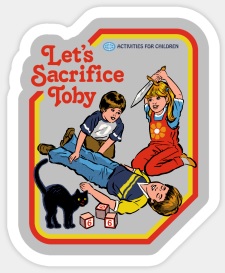
StickersI may have gotten a bit too excited and purchased way too many random, quirky packs of adhesive approval throughout the years. There were a few times I almost gave assignments just to use my cool new stickers! (Almost, I said. Stop judging me!)
Why am I telling you this?

We can professionally develop ourselves silly and memorize every Marzano text available-at-this-sponsored-link-please-buy-everything-I-get-a-percentage, and still sometimes it’s gonna be the weirdest, most random things that work – or at least work with some kids, in some situations, for some teachers, some of the time. When I’ve shared this with other educators, no one is surprised. Kids are weird like that, but of course teachers aren’t the most normal people in the world, either.

I suspect it was a type of unexpected approval, or a relationship-builder, maybe. I don’t really know for sure. And honestly, I didn’t entirely care – it was just something that worked for me, so I share it. Other teachers share what they do, also, and together we figure out what works most of the time. Some of us also lead workshops sharing ideas and strategies, much based on research and sound pedagogy, and some just based on experience and time. We can explain why some of it works, while some things just… do.

And then one day it didn’t.

I was bouncing through an introductory discussion with a new group of kids and someone shared a particularly pithy comment (I have no recollection what). I reacted with great approval and announced that THAT deserves a STICKER! as I marched back to my desk where I’d tucked them away for just such a joyous…

Nothing.

There was nothing.

StickersI mean, I gave her the sticker. She said thanks, and looked a little confused. We kept going, and eventually I reacted to another thoughtful response with a second sticker. Then a third. Because when something’s not working, you have to do it more, faster, and with greater emphasis.
Still… nothing.

They were polite enough. The discussion went fine. The stickers just made no sense to them. Maybe it was my timing, or the context, or just a different group in a different state coming from different backgrounds. No biggie – we’ve found other ways to connect and learn and for me to push them to give a little more. I don’t need to understand what changed, precisely – although in hindsight I do wonder if I went a bit Bill Murray throwing snowballs in Groundhog Day and killed it. If I’m being honest, it had stopped working in conferences a couple of years earlier, but I’d kept doing it out of sheer momentum (and teachers tend to be overly polite about such things).

So, mild embarrassment I hadn’t caught on a bit more quickly, but no real harm and no lasting foul.

It never occurred to me to write a book about it, do a video series, start upping my lecture fee, or smother social media in derisive comments about teachers who don’t use stickers. I suppose I could have at least hit up Pearson or TEDx, but like I said, I’m just… slow that way. Plus, while the most casual perusal of my Twitter feed will easily dismiss any suspicions I might be carefully building a brand over here, I do have some shame. I may not get edu-famous (and yeah, I want to – who doesn’t?), it’s more important I be able to sleep at night.

Still, I could have shared it more vocally, I guess. There’s nothing more rewarding when you’re a relatively new teacher than stumbling across something that works – a lesson, a classroom management technique, even a book of stickers. And you should rejoice in those moments; they’re largely why we signed up. And I’m always happy to share. I have entire sections on each of my websites hoping there are folks who find them useful from time to time.

StickersAnd one day they won’t work, or at least they won’t work the same way. That doesn’t mean I’ve failed, or that you’re doing it wrong. It just means that things change. The kids are different. You’re different. The context is ever-evolving and the exact dynamics maddeningly elusive. So we’ll find something else. You’ll try it another way. I’ll screw up a few times, feel like an idiot, then stumble into pedagogical brilliance once again.

Keep sharing those ideas. Keep going to those trainings – if you wish, I mean. Take in all useful ideas and figure out how to make them your own.

But don’t be afraid to follow your gut and do the illogical or unexpected thing, as long as it’s not unfair or in some way detrimental to your overall goals. And don’t be too proud to borrow from that irritating lady down the hall, or that coach who you won’t admit you feel smugly superior to in the classroom, or even from that weird sub who organized all of the papers and wrote completion grades on them.
It’s a tough enough gig even when it all works – no need to invent it all yourself or go it completely alone. Try stuff. Who knows what might happen?

And if you take a few risks and they turn out particularly well, I’ll even give you a sticker.

I have plenty left, believe me.

RELATED POST: Why Kids Learn (a.k.a ‘The Seven Reasons Every Teacher Must Know WHY Kids Learn!’)

RELATED POST: My Teaching Philosophy

RELATED POST: Hetalia: Axis Powers (Toast With A Big Boot!)

All Or Nothing

Not Black Or WhiteIt’s funny how badly we want things to be all one way or all the other. For such maddeningly complicated creatures, we seem wired to crave the binary.

Coffee is good for you, or it’s bad for you. You love her, or you don’t. I’m overweight because of genetics, or because I eat too much and don’t exercise enough. I’m an extrovert or an introvert. A patriot or a traitor. I can be trusted, or I can’t.

My success is my responsibility, entirely in my hands, or it’s the statistical result of a rigged system. I’m latently racist, or lavishly progressive. He’s handsome, he’s creepy; she’s hot, she’s not. I’m a good teacher, or a bad one. A success, or a failure. I’m full of wisdom, or I’m full of—

Well, you get the idea. (Or you don’t.)

I see it in my students all the—

Actually, correct that. I often, but not always, see elements of this in my students. Mixed with other factors, of course. Because nothing in real life is that absolute, whether we like it that way or not.

Not My FaultWe’ve all had those kids who seem to believe in the core of their being that nothing is, was, or could ever be their responsibility to tiniest degree. They usually have parents who feel the same way, and who let us know regularly all the things we’re doing to thwart their lil’ Boo-Boo’s success. 

He’s just acting out because he’s bored, you know. Because he’s SO SMART. He was tested as gifted when he was four. He needs someone with the proper training to meet his special-gifted-smartness needs. 

I couldn’t do the assignment because I wasn’t here. You didn’t tell me. I didn’t understand. I had band. I had tryouts. I had to work. I don’t have internet. Our printer’s broken – I keep telling my dad we need a new one or I’ll flunk school, but that’s not my fault. 

That’s binary. It’s declared victimization to the nth degree. The only thing surviving the constant barrage of injustice they so nobly endure is their outrage. 

Stressed Student

But honestly, I have far more little darlings on the other side. They don’t merely own their role in the whole learning-and-grades thing – they resist with holy fervor the suggestion that other factors might even play their own parts. And it’s far more prevalent when they’re struggling than when they’re succeeding.

They apologize for being tired – it’s just that sleep is a character flaw. Even protein is for students who don’t care about that biology test tomorrow. They didn’t ask for help earlier because they should have understood, if only they’d tried harder. They didn’t email because they didn’t want to bother me. They’ve never had trouble like this before – they used to be smart.

Last year. 

Feeling Stupid

Their grit is admirable, but lacks a certain… practicality essential to long-term survival. Their solutions tend to involve brute force – texting the essay a sentence at a time. Having a friend take pictures of every page in the chapter and snapchatting it to them. Moving into foster care in hopes of being accepted by a family with reliable internet. Redoing assignments in hopes of raising all those 88% and 93% grades to something respectable. 

Far too often they end up thinking maybe they should drop this class. 

OK – a few are just whiney. They’ve had it a bit too easy and now school’s getting hard and they’re crumbling. Suck it up, Boo-Boo! Put on your AP panties and get to learnin’!

But many are simply broken. Shattered. Not always from abuse at home or tragedies outside of school, although there’s more of that than any of us care to confront. Mostly, though, it’s just the full weight of “can’t” swinging on a long chain of “all-my-fault” BAM! right through their innermost sense of self. 

SnowflakeIt’s binary. Raised to take personal responsibility, they fear the least acknowledgment of factors outside their control – lest they find themselves “making excuses.” In not wanting to flake out, they take denial to the weirdest places – stuffing the resulting misery down into their little psyches for safe-hiding.

What they all need, of course, is balance. They’re rarely without the slightest trace of blame, but neither are they omnipotent beings who’ve simply chosen the path of ignorance and sloth. We’d like to help them learn to better manage their time, stay somewhat organized, and be a bit more practical when it comes to finding solutions. 

And lest you think I’m coddling snowflakes here, kids feeling stressed out don’t process information or perform complex tasks very effectively. In other words, if we can’t help them find some balance – to become a little less binary – they won’t learn much. 

Plus, they’re one thin veneer of civilization away from going all Lord of the Flies on you if you’re not careful… 

My school is on trimesters, and this is the end of the first tri. I thought it might be nice to do a little review game, kinda dial back the intensity for a few days as they prepare for exams, but still reinforce some content. It was typical classroom stuff – I ask, they answer, teams get points, etc. I’ve done it for years with great success. If anything, I was worried it might be a bit funzy for an AP class. You know, too silly.

Then, I inadvertently released the Kraken. 

The KrakenI wasn’t being fair. Their team gets easy questions, while ours always gets the hard ones. Why are we doing this anyway? It doesn’t help. How are we supposed to remember all of this?! Can I just go work in the hall?! WHO CAME UP WITH THIS LIFE DESPAIR ANGER DARKFARGLE ACCUSING DEATHCRY! 

It wasn’t everyone, and it didn’t spiral completely out of control. But boy, the angst did fly, in a variety of forms – complaints, frustration, helplessness, and some unexpectedly childish slapstick. I was… surprised. And mildly annoyed. What the everloving…?

Here’s the dirtiest of secrets about educators – it’s not how lazy we are, or that we really just want summers off. It’s not our incompetence or our hidden socio-political agendas or our secret need to have teenagers for friends. 

It’s that any time we catch ourselves losing our patience with kids – tempers rising, clarity of thought fading, word choice becoming less and less ideal for the classroom – we’re immediately struck by an accompanying conviction that we’ve failed. We’ve blown it in Classroom Management 101. We’re annoyed with them, but from the deepest recesses of our internal pomp’n’circumstance comes the ululation that we’re supposed to be the teacher. It’s on us

We misjudged the lesson. We screwed up the organization. We choked on difficult content. We let a 13-year old push our buttons. We got careless, or overly ambitious, or maybe we just suck at this but it’s too late for dental school. 

It’s all my fault. I should have planned better. I should never have let them get so comfortable, or ridden them so hard, or changed direction, or kept things the same for so long. If only I’d spent more time… were more talented… just thought to…

You see the twisted little irony in play? 

Angry Teacher

Most of us suspect deep down that every conceivable shortcoming of every child boils down to our failure to work the right miracles for those most resistant to our care. We rarely think of it in those precise terms – that would be insane, after all – but it runs through everything else we feel, think, say, or do. 

Except when we don’t. 

Because maybe it’s not us at all. Maybe it’s those darned kids. I’m busting my butt here, day in and day out, and they belittle my best efforts like that? I can’t help that they just won’t do the work. Horse-to-water, amiright?

The Psychological Bowl

I can’t control how badly they’re being raised. This is my classroom and I’ll run it how I think best. If they don’t like it, they can call up their representatives and ask for one of those vouchers they’re so hot’n’bothered over. It wasn’t like this back in my day. Someone really ought to do something about kids like this. 

Binary. Just like our kids. We probably fight it a little harder; hopefully we’re at least aware of it a little more. Still, the gutters here at the Psychological Bowl are mighty generous while the actual lanes seem far too uneven and narrow. 

Are there things you could be doing better? Probably. Is it worth examining your approach to classroom management? To lesson planning? To interactions with students? Absolutely. But is it all you?

Don’t be inane. Of course not. 

But neither is it all them, and even if it were, it wouldn’t matter. We signed up to change the world one starry-eyed delusion at a time, and that means we do it whether it’s possible or not. Reality may be an inconvenience, but it will NOT be a permanent barrier.

All the more reason to stay aware of the lanes between the absolutes, even if we’re rarely quite sure exactly how much is us, or them, or the weather, or circumstances, or pedagogy, or…

*sigh*

They’re such maddeningly complicated creatures. Then again, so are we.

RELATED POST: Why Don’t You Just MAKE Them?

RELATED POST: Seven Reasons You Probably Don’t Suck (For Teachers)

RELATED POST: Teach Like You