
“While You Wait” (A Play from The Smart Set, June 1900)

“While You Wait” (By Charles Newton Hood) – The Smart Set (June 1900)

The Smart Set (Cover)SCENE—The cozy breakfast-room in the home of MR. and MRS. RICHARD JAMES VAN CLEEF. Young MR. VAN CLEEF strolls in and is considerably surprised to discover that his charming wife has preceded him, and, what is more, is placidly awaiting his arrival before ordering her own matutinal repast; such a thing being so unusual that MR. VAN CLEEF could scarcely tell the date of its last occurrence; and, furthermore, MRS. VAN CLEEF appears to be mildly interested in his arrival.

MR. VAN CLEEF (in a rather perfunctory way, as he drops into his chair and selects his favorite morning newspaper from the pile by the side of his place)—This is an unexpected pleasure.

Pretty little MRS. VAN CLEEF only smiles in response and rings for breakfast. After the meal is well under way, and MR. VAN CLEEF is beginning to enjoy his coffee—experiencing the odd sensation of having MRS. VAN CLEEF pour it, instead of James, and smiling to discover that she really has forgotten how many lumps of sugar he prefers and how little cream-he is surprised, in the midst of a financial article he is reading in a paper propped up against the fruit dish, to discover that MRS. VAN CLEEF is not partaking of food, but is regarding him with a troubled look. MR. VAN CLEEF glances up inquiringly.

MRS. VAN CLEEF—Dick, we’ve done our parts remarkably well, haven’t we?

MR. VAN CLEEF—I don’t exactly understand.

MRS. VAN CLEEF—Why, I mean, since we talked it all over three years ago, and decided that we had both made the same mistake—that we were never intended for each other, after all, but that, being married, we’d got to make the best of it. We’ve acted our parts admirably to the world, so that it is doubtful if anyone really suspects that we are not still enjoying an indefinitely extended honeymoon. We have done some remarkably clever acting, for amateurs, and it seems to me that we deserve all of the “good notices” we get in the society columns.

MR. VAN CLEEF does not respond in words, but he looks troubled.

MRS. VAN CLEEF (as if in answer to a protest)—No, Dick, I’m not going to go over the whole story again. Don’t think it! We married because I was old Emprett’s only daughter—tolerably good-looking they used to say—and you were Mr. Richard James Van Cleef, son of the same, and descendant of a long line of Van Cleefs running back a good many generation without ever getting out of alignment; the best catch of the Summer of ’92. The walks and talks, and dances and swims, and books and looks, and moons and spoons, and boating and tennis and all that sort of thing we enjoyed together at Oderkonsett that Summer we thought had developed a sincere and undying affection, and we were really and truly surprised when we discovered, after something over a year of constant companionship, how much we bored each other. I think we were wise, as things looked to us then, to come to the decision we did: to make the best of it; but just tolerably good friends in private, but to keep up the romance so far as other people were concerned. As I say, we’ve done it very credibly. You’ve been very nice to me, and helped me nobly each time we have had to entertain together, and I’ve tried to be everything that could be expected of me except a loving and devoted companion. I’ve never flirted, to speak of, and they do say, Dick, that you have settled down wonderfully since you were married. It has all be done beautifully.

MR. VAN CLEEF (with a puzzled expression)—Well?

MRS. VAN CLEEF—Be patient. We decided, on coming to our senses, that we didn’t really love each other at all. You don’t love me now, do you?

MR. VAN CLEEF—Dear! Dear! What is the use of all this? What is the—

MRS. VAN CLEEF—One moment, please. I’ve really got quite deep reasons for it all. (To servant) No, James, we don’t need anything. I shall ring if we do. You see, Dick, I’ve got my plans all laid along a certain line, and I must follow that line or I may get mixed up. You must be very accommodating and answer every question. Now, you don’t really love me at all, do you?

MR. VAN CLEEF—Why, of course, I—

MRS. VAN CLEEF—Now, be honest, speak right out—square-toed, plain, commonsense, hygienic, French-toed without a patent-leather tip, I might say. You know you don’t love me, and why not say so?

MR. VAN CLEEF—Well, then, I don’t.

MRS. VAN CLEEF—That’s right. Not the least little bit in the world?

MR. VAN CLEEF—Why, I suppose—

MRS. VAN CLEEF—Come, come, be honest.

MR. VAN CLEEF (actually grinning a little at the peculiar cross-examination)—Well, then, not the least little bit in the world.

MRS. VAN CLEEF (clapping her hands together ecstatically in front of her face and laughing in a way young MR. VAN CLEEF used to think very charming indeed)—Neither do I you, not the least little bit in the world—not the very least. You’re an awfully nice fellow, and I like you about as well as I do anybody, but I don’t Love you, with a large L, and you don’t Love me, with a large L, and there you are. I wanted to get it all thoroughly understood before I divulged my great plan. Don’t you think that, after all, we’re sort of foolish?

MR. VAN CLEEF—Why, I don’t know; under the circumstances—

MRS. VAN CLEEF—Yes, yes. That’s all right; but we’re young and—nice—and all that, and, someway, do you know, it seems to me that we ought to be privileged to fall in love if we wanted to and—

MR. VAN CLEEF (thinking he sees a light)—Oh, that’s—

MRS. VAN CLEEF (hastily)—Now you’re wrong. You’re wrong. I haven’t fallen in love with anybody, and I don’t suppose that you have, but even if we wanted to, either one of us, we mustn’t, and it doesn’t seem as if we’re being fair to ourselves.

MR. VAN CLEEF—Well?

MRS. VAN CLEEF—Well, I have been looking into the matter a little and I think it could all be arranged very nicely and easily, and everything would be lovely. The circular says—

MR. VAN CLEEF—The circular?

MRS. VAN CLEEF—Oh, yes, I forgot to tell you. I wrote to some lawyers in Dakota and Oklahoma, who call themselves “Divorce Specialists,” and advertise “Divorces While You Wait;” and, really, the way they put it, all you have to do to get a divorce is just to go out there and spend a few months enjoying the lovely climate and all that, and come back divorced. I think—

MR. VAN CLEEF (excitedly)—Do you mean to say, Mrs. Van Cleef, that you have been writing to those sharks on the subject of divorce?

MRS. VAN CLEEF (placidly)—Why, certainly; but, of course, not in my own name, my dear. Annette attended to that, and I had the letters come to Mrs. J. J. Jones in care of a private post-office on the other side of the city. Annette got the letters for me, but she doesn’t know anything at all about what was in them. I was very particular about that.

MR. VAN CLEEF (with a resigned gasp)—Well, I should hope so. Go on.

MRS. VAN CLEEF—Now, in this divorce business, there seems to be a great rivalry between South Dakota and Oklahoma, but the Oklahoma firm’s circular is a good deal the more enticing. Listen. It says (she reads from a circular which she takes from her pocket): “Our newer States, in compiling their laws, have seen fit to show more liberality in the matter of obtaining divorces than may be found among the older states, whose laws on this subject were enacted at a time when ideas were less in accord with the advanced liberal thought of the present.

“As the Mohammedan devotee confidingly turns his eyes toward the tomb of his beloved leader, so has Dakota been regarded as the Mecca of hope to weary companions in matrimony.”

Isn’t that nice? We’ll be the weary companions.

“But,” it says, “Dakota can no longer claim this undivided homage. In the still newer but none the less advanced Commonwealth of Oklahoma she has met a rival, and a fair comparison must show largely to the advantage of the sometime State, and, while the divorce laws are almost identical, the many physical advantages of Oklahoma place her in the lead at once.

“Contemplate, in comparison to the storm-swept plains of Dakota, the picturesqueness of Oklahoma’s ever varying scenery, her fertile fields and blooming prairies, fringed with beautiful groves and ribbed with many a rippling brook. Here nestles the newborn child of the Republic in all her virgin beauty, and here, almost in the centre of the Union, you may enjoy the luxuries of civilization and the rugged beauties of nature while shuffling off the unworthy partner. Here the pleasure seeker and naturalist, while waiting his or her divorce, may revel amid the delights of mountain scenery and explore the caves and cañons so lately the haunts of outlaws. Here the lover of the chase may vent his ardor in pursuit of deer, bear, antelope and mountain lion, while grouse, quail, ducks and geese are plentiful and the streams abound in fish peculiar to Western and Southern waters. The hotels are,” etc., etc.

Isn’t that nice? It says we have to live there only ninety days before we can get a divorce and be as free as the glorious air of Oklahoma. All we have to swear to is that we are uncongenial and incompatible, and you swear that you are a poor, neglected husband, and I’ll swear that I am a poor, neglected wife, and we’ll go out there for a little vacation, and you can hunt and explore and neglect me and be uncongenial and incompatible, and I’ll climb mountains and fish and be incompatible and uncongenial and neglect you, and we’ll have just a lovely time, and there won’t be any scandal, and when we come back we’ll just be good friends and make a joke of it, and you can go your way and I’ll go mine, and—What do you think of it?

MR. VAN CLEEF (looking rather grave)—Why, I have never given the subject thought. It is easily enough arranged, evidently, and if you particularly desire it—

MRS. VAN CLEEF—Now, now; don’t throw it all on me, please, Dick, just because I happened to think the plan all out. Say “we.” 

MR. VAN CLEEF—Well, “we,” then. As I say, I haven’t had a chance to think it over, but I suppose, considering the way our lives have been lived for the past few years, it would be the wisest thing to do.

MRS. VAN CLEEF—Why, certainly; and I’ve never seen all that Western country at all, and it would be just a lovely trip and outing for us. A sort of farewell tour, you know. When shall we start?

MR. VAN CLEEF (entering more into the spirit of the thing)—Why, if we’re going, we might as well start to-morrow as any time. I don’t suppose they have special excursion rates at regular intervals for parties seeking divorce, have they?

MRS. VAN CLEEF—I don’t suppose so, but it would be an idea for the railroads, wouldn’t it? Sell a round trip ticket for a fare and a third, including a coupon good for one absolute divorce.

MR. VAN CLEEF—Yes, and there could be personally conducted, special car lots of divorce-hunting couples, and we could flirt desperately on the way out and maybe come back married to somebody else.

MRS. VAN CLEEF (gravely)—I don’t believe we’d want to associate much with other people who were looking for divorces, because they might not be as—nice as we are, with their “grounds” taken from the Ten Commandments.

MR. VAN CLEEF—M-m-m. It won’t be necessary to make any special preparations for the trip, will it?

MRS. VAN CLEEF—Oh, no, indeed. I don’t suppose we’ll be going out much, and we’ll be roughing it, near to nature’s heart, while we’re waiting. I don’t suppose there’s any special divorce costume necessary.

MR. VAN CLEEF—There really ought to be. Why shouldn’t divorces eventually become a regular social function, the same as swell weddings, to “accord with the advanced liberal thought of the present”?

MRS. VAN CLEEF—Yes, indeed. The society columns ought to write them up, the same as they do weddings. Wouldn’t this sound pleasant? (She snatches up a paper and, holding it upside down, pretends to read.)

“A CHARMING DIVORCE

“Mr. and Mrs. Richard James Van Cleef were divorced yesterday morning in the presence of a small company of invited guests, the occasion being one of the most delightful absolute divorce ceremonies seen in Oklahoma this season. Justice Van Brun officiated in his usual impressive manner, his remarks and advice at the close being most felicitous. The couple were divorced standing before a magnificent floral design representing ‘Liberty.’ Mrs. Van Cleef wore a simple yet wonderfully becoming traveling gown of changeable green, and Mr. Van Cleef was attired in the conventional costume for morning divorces. The fair divorcée entered leaning upon the arm of her venerable attorney, but Mr. Van Cleef was entirely unattended. After receiving the congratulations of their many friends,” etc.

Wouldn’t that be nice? But I presume that we can get all we’ll want to take in one trunk.

MR. VAN CLEEF—One trunk? Well, I guess not. We’d fight over who should have it coming back.

MRS. VAN CLEEF—Why, that’s so. I never thought of that. We’ll take two small trunks, then.

MR. VAN CLEEF—As long as we are going right through Chicago, we might stop over there—

MRS. VAN CLEEF—Not to get—it—the papers, you don’t mean?

MR. VAN CLEEF—Oh, no; but we haven’t been there since the Fair. Our honeymoon was bright and new then.

MRS. VAN CLEEF (pensively)—Oh, wasn’t it pretty?

MR. VAN CLEEF—What, the moon?

MRS. VAN CLEEF—No, no. The Fair—the grounds, the buildings, and the water. They say nearly every vestige of it is gone now.

MR. VAN CLEEF—Like our honeymoon.

MRS. VAN CLEEF—Seems a pity, doesn’t it? Do you remember how we floated around the lagoon in the gondola that night of the illumination? Wasn’t it just too enchanting?

MR. VAN CLEEF—It was, it was. And we thought we were happy.

MRS. VAN CLEEF—Why, we were happy!

MR. VAN CLEEF—Were we? It’s so long ago. We’ll go and see the place, anyway.

MRS. VAN CLEEF—I suppose we ought to divide the furnishings and other things we own in common before we go, oughtn’t we?

MR. VAN CLEEF—I suppose it would be less embarrassing. Let me see, what do we own in common?

MRS. VAN CLEEF—Why, there’s the big leather chair—

MR. VAN CLEEF—Oh, yes; the chair. May I have that?

MRS. VAN CLEEF—Oh, no, Dick. I couldn’t spare that. Don’t you remember, we bought it together and ordered it made especially wide and easy, so that we could both sit in it together before the fire in the library? Don’t you remember?

MR. VAN CLEEF—Oh, yes, I remember. I thought I’d sort of like it as a memento.

MRS. VAN CLEEF—Would you? Well, of course you shall have it, but ‘twill break my heart to part with it. And of course you will take your books and I shall take mine. That’s easy.

MR. VAN CLEEF—And the pictures?

MRS. VAN CLEEF—Oh, dear me, dear me! We bought almost every one of them together. You choose one first.

MR. VAN CLEEF—I’ll take that marine, “Break, Break, Break.” That ought to be appropriate, under the circumstances.

MRS. VAN CLEEF (with a little gasp)—Why, Dick, that was the very first one we bought. Don’t you remember, we bought it, because I liked it, of the artist himself, and you sulked because I raved over the artist’s hair and eyes, and—

MR. VAN CLEEF—Yes, the confounded little whipper-snapper. I never could abide that sort of men.

MRS. VAN CLEEF—Neither can I, but they’re pretty to rave about. We almost quarreled. Do you remember?

MR. VAN CLEEF—Yes. That was the first time.

MRS. VAN CLEEF—And I cried and cried, and you didn’t know what to do, and walked the floor, and by-and-by—

MR. VAN CLEEF—I went and tore your hands away from your eyes—

MRS. VAN CLEEF—And made me let you kiss the tears away.

MR. VAN CLEEF—U-m-m. Now you choose one.

MRS. VAN CLEEF—I’ll take—let me see—“The Elopement.”

MR. VAN CLEEF—But that’s yours, anyway.

MRS. VAN CLEEF—Why, so it is! You gave it to me on our first anniversary. How pleased I was! We were awfully happy, weren’t we?

MR. VAN CLEEF—We thought we were.

MRS. VAN CLEEF—Why, we were. We ought to be happy now.

MR. VAN CLEEF—We will be, as soon as the knot is untied.

MRS. VAN CLEEF—I wonder if we will?

MR. VAN CLEEF—Why, of course!

MRS. VAN CLEEF—Doesn’t it seem strange?

MR. VAN CLEEF—It do so—it do so.

MRS. VAN CLEEF—What made us get tired of each other, I wonder?

MR. VAN CLEEF—Well, it was like this: The first time I came home drunk from the club you—

MRS. VAN CLEEF—Why, Dick Van Cleef, you never came home drunk to me in your life!

MR. VAN CLEEF—Didn’t I? Well, I have been neglectful, haven’t I? I give it up.

MRS. VAN CLEEF—We just got tired of each other, that’s all. Never mind the dividing. Let’s just plan our trip.

MR. VAN CLEEF—Shall we stop at Niagara Falls?

MRS. VAN CLEEF—Oh, let’s! And go to every last place we went to when we stopped there on our wedding trip—Goat Island, and the Three Sisters, and the Whirlpool Rapids, and under the Falls, and the Cave of the Winds, and everywhere.

MR. VAN CLEEF—And we certainly ought to go to Luna Island.

MRS. VAN CLEEF—Do you remember the guide telling us about the French couple who couldn’t speak English, and of how he came back from Third Sister Island alone and said that his wife and fallen in, and then afterward confessed that he wanted to get rid of her and had dared her to kneel down and drink out of the rapids, and then, when she tried to do it, he pushed her in?

MR. VAN CLEEF—Yes, I remember. Too bad he didn’t know about Oklahoma!

MRS. VAN CLEEF—Aren’t you a horrid thing!

MR. VAN CLEEF—I am, indeed. And shall we take the Great Lakes trip to Chicago again, too?

MRS. VAN CLEEF—Oh, yes, let’s. We did enjoy that so, didn’t we? I do love the water so! The moonlight evenings on deck and—

MR. VAN CLEEF—You probably won’t sit on the deck and go to sleep with your head on my shoulder, as you did on one of the said moonlight nights, will you?

MRS. VAN CLEEF (pensively)—You wouldn’t want me to.

MR. VAN CLEEF—We used to sit there on deck in the evenings for hours without speaking a word. We could do that all right now.

MRS. VAN CLEEF—Why, we were just too happy to speak; and besides, we didn’t need to. When you squeezed my hand and I squeezed your hand back again, it meant everything that we could possibly say.

MR. VAN CLEEF—And now, when we sit up there, I can box your ears and you can slap my face, and that will express everything, just the same, without a word being spoken.

MRS. VAN CLEEF—Oh, Dick, don’t! Our dear, dead love ought to be sacred, and we did know, because, don’t you remember, we tried it once, and when I squeezed your hand you told me exactly what I was thinking, and when you squeezed my hand back again, I told you. It was a kind of telepathy.

MR. VAN CLEEF—I wonder if it would work now?

MRS. VAN CLEEF—Perhaps.

MR. VAN CLEEF (going around behind his wife’s chair and taking one of her hands in his)—Now.

MRS. VAN CLEEF (gently, almost timidly, pressing her husband’s hand)—Now, what am I thinking?

MR. VAN CLEEF (promptly)—You are thinking what a pair of fools we’ve been to make ourselves believe that we didn’t love each other, when we really did, down in our hearts, all of the time, only we were too proud to admit it.

MRS. VAN CLEEF (with a little gasp)—Why, that’s exactly right! Oh, Dick, do you? Do you?

MR. VAN CLEEF (dropping on one knee beside his wife’s chair and choking a little)—Yes, darling.

MRS. VAN CLEEF—And shall we begin all over again and not want any divorce at all—while we wait?

MR. VAN CLEEF (with his arm around his wife’s waist)—Yes, dearest. But why not take the trip, just the same?

MRS. VAN CLEEF—Oh, yes; let’s take one every year at just this time—

MR. VAN CLEEF—And call them our regular annual farewell tours. We’ll start to-morrow.

MRS. VAN CLEEF—With one trunk.
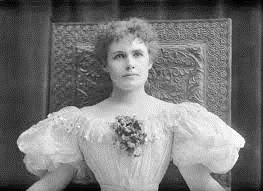
Helen Churchill Candee on Women in Oklahoma Territory

HCC BWHelen Churchill Candee arrived in Gurthrie, O.T., in the mid-1890s, primarily because of the territory’s widely-advertised lax divorce laws and her desire to escape an abusive marriage. She’d come from a respectable New England upbringing and a life of some affluence, including travel, books, art, and an impressive formal education. While not necessarily an oddity in Oklahoma society, she was certainly not your average boomer. 
Her writings on Oklahoma and its people are some of the most insightful and sympathetic of her generation. Six articles and a novel, with overlapping themes and anecdotes, between 1896 and 1901. In them she covers a variety of topics comfortably, from agricultural logistics to social dynamics to government policy and how it impacts very real people—people she observed, interacted with, and developed affections for on a daily basis.  

One of the most intriguing threads in this early writing is her approach towards women in Oklahoma Territory. Candee was already something of a feminist, although the term itself would have been unfamiliar to most and these leanings were not as pronounced as they’d become a few decades later. Her first book, How Women My Earn A Living, was first published in 1900, and took a socially-appropriate-but-imminently-practical approach towards ladies who found themselves in need of substantive employment. In retrospect, it’s considered something of a minor landmark in feminist literature. 

Candee’s treatment of female society in the territories which is particularly fascinating. She writes with gentle candor, taking the reader into her confidence without ever quite becoming gossipy, only periodically stepping into other narrative “voices” in order to better explore her subject. Surely such forthrightness suggests we might catch occasional glimpses of the woman behind the words? 

First Impressions “In Oklahoma”

Her first piece on life in O.T., “In Oklahoma,” was for The Illustrated American, a periodical for whom she’d written regularly for several years. It was published on April 4, 1896, not long after she’d moved to the area. It’s one of the edgiest of her writings on the Territory and offers her earliest commentary on Indians, government policy, violence over disputed claims, and other themes to which she’d later return. It lacks the warmer perspective she’d have a few years later, when her affections for the Territory seem to color her portrayals of even the most unpleasant realities. 

It’s also the first time she writes specifically about women in O.T.:

Among the home-seekers there were women—not helpless, discouraged women, inefficient and parasitical, but belonging to the large class who prefer work to dependence and who looked upon “proving up a claim” as a business measure, perhaps not expecting to spend all their lives in exile, but willing to conform to the time of residence stipulated by the Government, that they might sell the claim later with its improvements and realize a fair sum. 

So there’s a sentence. 

Candee’s contrast of O.T. home-seekers with “helpless, discouraged women, inefficient and parasitical” certainly cuts more sharply than her later works. At the risk of reading too much into one colorful phrase, perhaps this reflects a bit of her own “strength via defiance” – her own refusal to be a “helpless, discouraged woman”?

Candee was caring for two children in a frontier town. Divorce carried substantial social stigma, whatever her former society or current surroundings. There’s nothing to indicate she was in financial difficulty, but neither could she possibly have maintained in Guthrie the sort of comfort and security which had defined her world for nearly forty years. It must have taken some grit and grind in practice, however much grace and style were manifested in the presentation.

A little defensiveness or hostility is not inconceivable. It happens. 

Or maybe that’s too much of a leap – inferring more than the text justifies. That also happens. 

Holding Claims and Digging Out

But unless a woman is as brave as a lion and as self-sufficient as Webster’s Unabridged, it is a weary banishment. Houses are not huddled together in the territory; they are far apart, one every mile perhaps, and the majority occupied by negroes or the usual class of workers that open up the frontier, so there is no society for the woman “holding down” a claim, unless she is interested in humanity of the lowest sort. 

A phrase like “brave as a lion and as self-sufficient as Webster’s Unabridged” is too golden to pass into obscurity. If only we could run about quoting it to people while shaking them by the collar enthusiastically, without getting arrested…

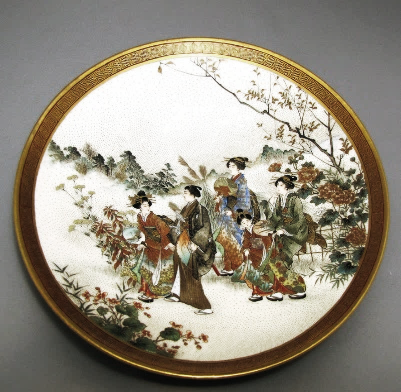
Her claim is probably from twelve to forty miles from the nearest railroad town; the other settlements scarcely count. And yet, inside her cabin you perhaps may see late magazines, a few books, an old Satsuma plate, some Oriental stuffs, to remind her of the world beyond the blackjacks and the rolling prairie. 

More magazines than books, and a single “Satsuma plate” along with other “Oriental stuffs.” Can you feel it?

SatsumaSatsuma was a type of Japanese dinnerware which could be a sign of substantial sophistication, but which was mass- produced by American factories during this time in imitation thereof. Taken together, this scattered collection acknowledges civilization, and reaches for it despite surroundings. What would prove a rather pathetic effort in other settings seems a noble declaration of values on the frontier. 
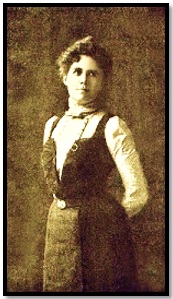
Candee is perfectly comfortable with the independent female accomplishing things formerly associated with men. She’d almost have to be, since she was doing it herself, and she’d certainly have encountered others in such unorthodox surroundings. And yet…

Her house began as a “dug-out”… It is getting uncomfortably near to nature’s heart to live in a square hole dug in the ground…

The dug-out is cool in summer and warm in winter, and the tireless hurricane that incessantly sweeps the territory is powerless to blow it over; but the soul of the woman longs for something more, and when the claim has yielded a profit she invests the money in a suitable house…

The “tireless hurricane that incessantly sweeps the territory”? Yeah, there’s still some edge working its way to the surface here. We’re not letting her write the state musical.

Candee’s independent woman embraces the practicalities of a dug-out, but her “soul… longs for something more” – in this case, the comforts of proper domesticity. If only we could get her, Betty Friedan, and Michelle Obama in a room together for a few hours and just… listen. 

*giddy*

Changing Perspectives and Falling Plums

“Divorcons,” a piece published a week later in the periodical, is atypical. Candee writes in the fictionalized role of an “investigator” coming to Oklahoma City to “familiarize myself with the Government employés and their methods.” It ends with an editorial call for longer residency requirements before divorce can be secured, a topic possibly of some discomfort to Candee—perhaps explaining the detachment with which she writes in this unusual case.

The characters in this short piece are caricatures, alternately shadowy and one-dimensional. The “girls of easy assurance and ready tongue who bandied slang with… negroes,” the “mulatto chambermaid,” and the giggling arm-candy of businessmen in town only long enough to divorce their unseen wives before heading for Europe with their latest conquests, are hardly meant to be flattering, but neither are they presented as typical. They’re set pieces in an odd little moral noir. 

Stark contrast is provided two years later when Candee wrote rather extensively of “Social Conditions In Our Newest Territory” for The Forum in June, 1898. This time it’s women in town who strive to balance gritty practicality with traditional womanhood and some appearance of high society. 

The President appoints all important officers, beginning with the Governor and extending to the judiciary, the marshalship, and minor positions. The men who occupy these offices have the privilege of making subordinate appointments in connection with their work. Each change of Administration disrupts the entire Territory; and business is temporarily paralyzed. Candidates and their aids flock to Washington, and wait on the pleasure of the President…

Local vernacular describes this condition as “waiting for plums to fall.” Except in the judicial positions, the candidates are professional or commercial men who expect to supplement their ordinary business with the duties and emoluments of Government service. Sometimes the Government at Washington delays settling the affairs of our youngest Territory; but this would never be done were it known how agonizing is the suspense in awaiting the falling of the plums. 

Andrew Jackson would have been horrified, yet no doubt strangely aroused. 

It comes hardest on the women, who in public maintain a dignified composure, but in private abandon stoicism and weep hysterically over the delay or the denouement. 

Candee has some—but not much—sympathy for the traditionally supportive wife, flinging feelings everywhere while the men do manly things like grovel for patronage. One wonders how much her own background – the longsuffering spouse of a successful businessman, now divorced on the last frontier and proudly pushing forward on brains and style – shapes such portrayals.

Redefining Class 

Later in the piece, Candee addresses the affectations of high society:

One of the most striking things in Territory society is the existence of class distinctions – more especially among the women. In business, in politics, in all the affairs of life except amusement, people are equal; but inside the parlors of the frame houses distinctions are arbitrarily made according to local standards. Occupation has little to do with it; for an auctioneer’s wife may be received, while a lawyer’s wife will be debarred.

In other words, the standards have adapted to the circumstances. Traditional social distinctions would leave most Oklahomans out of elite loops altogether, so the unwritten rules have been re-unwritten.

Young men in this country pursue any occupation by which they can life; and few of the young women lead lives of simple domesticity. All young people are at work, some of them in the humblest positions; but these things have nothing to do with the social position. 

Most women in the Territory were employed in one way or another. That alone would disqualify them from high society elsewhere, but this wasn’t elsewhere. And there were few circumstances in which men of independent wealth would find themselves in Oklahoma Territory in the late 19th century.  

In some places money secures the latter; but, as a rule, it is created by one of two causes,—personal magnetism, and that ultra-snobbishness which is found in its highest development in America. 

So… personality and attitude? Two sides of the same shiny, annoying coin.   

The extremest of conventionality marks the women, who know nothing of the delightful freedom of the women of larger cities. They live entirely within the limits of their little town; paying visits to one another. When they take their walks abroad, or drive in their buggies or surreys, it is to trot up and down the gridiron of unshaded streets; disregarding the soul-satisfying wonders of the wide prairies beyond. They become absolutely self-centered, and their views, circumscribed; but this works to the advantage of local development. 

Written by a man, this would sound severe and condescending. Written by Candee, who may have partaken in some of these exact rituals, it merely seems honest – if a bit blunt. The women become sympathetic characters rather than either role-models or villains. And, as became typical of much of Candee’s writing about the Territory, they’re not entirely to blame, even for their snobbery or ignorance. They are products of their circumstances, pursuing intangible desires while accommodating very tangible limitations. 

As to this “advantage of local development”…

If their eyes were always on the unattainable, whether apparel or the cultivation of the mind, there would be discontent and a tendency to scorn the simple pleasures which alone are possible. The truly feminine desire to follow the mode is evinced by the tendency to adopt new forms of expression and hospitality. Society events are reported in the local papers in the same descriptive terms as those which tell of metropolitan entertainments; and thus the people pleasantly delude themselves. 

They’ve never been to Daniel Boulud’s, so they maintain a perfectly enjoyable uppity-ness over their reserved seats at Applebee’s. Accurate, perhaps – but harsh!

Moving On

“Oklahoma Claims,” published in Lippincott’s Monthly Magazine, October 1898, utilizes three presumably fictional characters. The narrator, a variation of Helen, acts as the bemused-but-curious traveling companion for Ollin, a well-intentioned but slightly corrupted homesteader who proudly plays the government system in his favor. They are accompanied by Leora, Ollin’s “buxom niece,” who is comically large and somewhat simple, but still wily and shameless in gaming the system herself.  

“Oklahoma” (The Atlantic Monthly, September 1900) and “A Chance In Oklahoma” (Harper’s Weekly, February 23, 1901) are arguably the strongest of the six pieces, but neither speaks of women other than in passing. Whether this is an intentional shift or the discussion simply falls outside the primary focus of each piece, they add little to this particular equation. 

We’re left to Candee’s other works to better understand her and her approach towards the complex sex. As to women in early Oklahoma, we’ll simply have to seek further information in far less-entertaining accounts.

Helen Churchill Candee – An Introduction

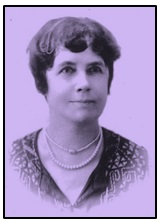
Helen Churchill CandeeHelen Churchill Candee was born in 1858 as Helen Churchill (her mother’s maiden name) Hungerford of New York. Her father was a successful merchant, and Helen grew up in relative comfort both there and in Connecticut where the family moved shortly thereafter. More important than the physical provisions prosperity allowed, she was exposed to ideas and stories, music and art, history and culture, in ways unlikely to have been possible had she lived a generation before, or anywhere else. 
Helen started her formal education in one of America’s first kindergartens, then attended several girls’ boarding schools of the sort only available to a certain quality of family – and even then mostly only those in New England. Before she was a teenager she spoke and wrote multiple languages, was schooled in grace and etiquette, and probably knew more history and literature than a majority of adult men in the nation at the time. She was particularly inspired, according to one diary entry, by an event at which Charles Dickens read aloud from one of his works.

How many of you have heard Dickens live? My point exactly.

She was born into the right sort of family in the right part of the country at a pretty good time to become what she became. While her life was not without suffering or tragedy, neither did she rise from rags and neglect to riches and fame. Upbringing mattered, as did education and opportunity.

None of which detracts from her choices, hard work, or natural abilities, of course. Sometimes you gotta shake what your mama gave you if you really want it to rain.

Er… as it were.

Helen fell in love with successful businessman Edward Candee of Connecticut; they married in 1880 shortly after she turned 22. For 15 years, Edward was able to continue and expand the lifestyle to which Helen had grown accustomed. They traveled and they entertained – and not in that desperate, Gatsby-sort-of-way we read about a generation later. The Candees didn’t use their money to imitate or buy culture; they used their resources to live and support culture. They were all the best things about having money.

But there was one little problem. Henry turned out to be short-tempered and perhaps a bit abusive. Details are thin, and even court records potentially suspect (testimony having been given in order to secure a divorce and all), but apparently he drank excessively and often exploded at Helen and the kids, Edith and Harold. Eventually, Helen decided to leave.

The thing was, in addition to the substantial social stigma of divorce in the 19th century, it was difficult to do, legally and logistically. Helen hired a private detective to follow Henry on his various business trips, and while recorded accusations lean a bit euphemistic, she went to court in New York convinced she had sufficient proof of his unfaithfulness and/or abusiveness to secure her freedom.

The court did not agree. And now it was in the papers – public records being public and all.

Here’s where specifics of time and place insert themselves into the equation yet again. Divorce was inherently difficult across most of the civilized northeast, but there were places further west quite proud of their liberal un-marrying laws. The Dakotas had become the traditional vacation spot for those wishing to reboot their personal narratives with minimal time and effort – residency there could be established in a mere six months, and the courts were reputedly generous when it came to breaking sacred bonds. Lawyers and boosters in other western states advertised the comfort and convenience of their hotels, their climate, their recreation… and for several decades, capitalism’s wonders were fully unleashed in service of mommy not loving daddy anymore.

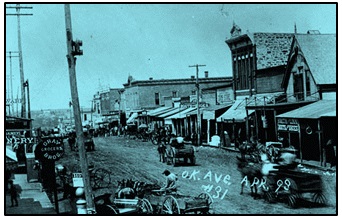
Guthrie, O.T.Oklahoma Territory had them all beat, however. Ninety days – that’s how long you needed to establish residency. Three short months and you were eligible to file. If your soon-to-be ex didn’t show, the court appointed someone to speak on his or her behalf, whether they knew their “client” or not. Generally, things were wrapped up in time to grab some lunch before getting back to watching lazy hawks circle in the sky and whatnot.
Boasting of being a divorce mill in order to build your population wasn’t necessarily anything to be proud of, but then neither was getting a divorce. Helen secured transportation for herself, Edith, and Harold, and off they went to the most hoppingest, happeningest, big-little metropolis of the entire Territory…

Guthrie.

It’s here that Act One of her public story really begins. Helen wasn’t going to play the wounded woman or become someone’s mercy case. She had a family to support, and looking around, she had a pretty good idea where to begin.

She was going to tell the world about Oklahoma. For money. Turns out she was quite good at it.

Candee had a gift for observing people and a writing about them in amusing, poignant, and illuminating ways. She’d already established herself as a mildly successful writer for various periodicals back east – mostly women’s magazines, writing about upscale etiquette, effective management of one’s household, and other traditionally “female” topics, with a smattering of general human interest type pieces.

She’d also just published her first book – How Women May Earn A Living (1900). This practical but pithy guide for women finding themselves in need of a respectable-but-profitable gig is now considered a landmark in women’s literature. Its combination of factual detail and a sort of “tough love,” softened by that graceful, dignified upbringing referenced earlier, makes it quite readable even today.

Helen Churchill CandeeBetween 1896 and 1901, Candee wrote six pieces for five different periodicals about Oklahoma Territory and life therein. They’re strong enough to consider individually, but what they demonstrate consistently is her knack for capturing things like crop production reports and detached observations on cultural evolution while always circling back to the human experience that makes all the rest of it matter.
Candee also published her only novel, An Oklahoma Romance, during her time in Guthrie. It’s surprisingly readable over a century later – the first novel set in Oklahoma and a grand bit of historical fiction at that. Those in the know suspected many of the characters and events were based on the very real people around Helen in her Oklahoma years, making it even more intriguing for contemporaries. 

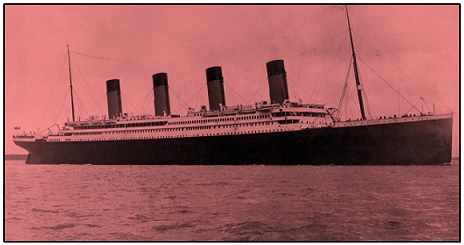
Candee would eventually move to Washington, D.C., and her writing would go very different directions. She published six more books, all non-fiction, on topics like historical tapestries or the ancient wonders of Cambodia. Digging through her biography becomes almost surreal as one discovers her helping to remodel the White House, riding a white horse at the head of a women’s rights march in D.C., nursing Ernest Hemingway back to health as part of the Italian Red Cross, and – most famously – surviving the sinking of the Titanic.

Give them a pen and a paycheck, and they think they’re real people, boys. They get themselves going and before you know it, you’ve lost all control.

Helen Churchill Candee passed just short of her 91st birthday in 1949. She’d begun an autobiography which was never finished and never published, but which efforts are currently being made to resurrect. In her time on earth she periodically broke the surface of historical waters in ways both glorious and sublime, while never actually doing anything a reasonably educated and focused person shouldn’t have been able to do. While I missed her by a generation, I am in some ways in love with the idea of her, and I’m OK with that.

Books by HCC:   

How Women My Earn A Living (1900)

An Oklahoma Romance (1901)

Decorative Styles and Periods In The Home (1906)

The Tapestry Book (1912)

Jacobean Furniture (1916)

Angkor the Magnificent (1924) – Note: The 2008 republication of this contains the most complete and engaging biography of HCC available to date, written by Randy Bryan Bigham.

New Journeys In Old Asia (1927)

Weaves and Draperies: Classic and Modern (1930)

HCC Articles About Oklahoma:

“In Oklahoma” (The Illustrated American, April 4, 1896)

“Divorcons” (The Illustrated American, April 11, 1896)

“Social Conditions In Our Newest Territory” (The Forum, June 1898)

“Oklahoma Claims” (Lippincott’s Monthly Magazine, October 1898)

“Oklahoma” (The Atlantic Monthly, September 1900)

“A Chance In Oklahoma” (Harper’s Weekly, February 23, 1901)

While her other publications are too numerous to list here, it would be remiss not to mention what may have been her most widely-read and oft-remembered piece, written shortly after she survived the sinking of the Titanic:

“Sealed Orders” (Collier’s Weekly, May 4, 1912)

The Titanic

The Olmecs (from “Have To” History)

Stuff You Don’t Really Want To Know (But For Some Reason Have To) About the Olmecs

Three Big Things:

Olmec Head1.The Olmec are generally considered the foundational civilization of Mesoamerica – the region now hosting southern Mexico and Central America. They were the cultural forefathers of later, more familiar peoples like the Mayans and Aztecs.

2. The Olmec seem to have built the first pyramids in the Americas, played the first organized ballgames, and been the first to process and enjoy… chocolate. 

3. The Olmec left behind some heads. Big stone heads. Really, really big stone heads.

The Basics

The Olmec dominated Mesoamerica from around 1200 BCE to 400 BCE, an era that experts on such things call the “Formative Period” of Central America. Subsequent civilizations would manifest Olmec elements for many centuries – their crafts, their games, their gods – making it particularly maddening how little is actually known about them with any certainty. It was long thought they’d somehow managed such longevity and influence without a written language, although more recent discoveries of decorative inscriptions suggest that – in keeping with traditional definitions of “civilization” – they did, in fact, write stuff down.

Now if only someone could figure out how to read it.

Further complicating matters is the absence of human remains. The rainforest decomposes and absorbs the dead rather efficiently, so while archeologists have uncovered some interesting accessories and other goodies, it’s difficult to speculate with any accuracy as to what the Olmec ate, how they died, what diseases they most often endured, etc.

What CAN be said with some certainty is that the Olmec were an important trading partner with surrounding peoples as far north as Mexico City and as far south as Nicaragua. Traditional scholarship says they were the leading civilization of their millennium, the “mother culture” of Central America. More recently, however, a number of rebellious young academic-types (probably brought up on too many History Channel docu-dramas) insist this to be a distortion based on too many inferences from too little evidence.

While the Olmec were certainly important, they argue, they were more of a “sister culture” – interacting with equally significant, if less-researched, contemporaries. This “mother-sister” debate is heady stuff among ancient historians and their ilk – right up there with “Who did Cain marry?” and “Did Han really shoot first?” It can get rowdy in those academic journals and conferences of theirs.

The Olmec, like other ancient civilizations, flourished thanks to geographical good fortune – fertile soil and ample water. Crops like corn, beans, and various nuts were nutritious and plentiful, and fishing in the Gulf of Mexico would have supplemented them nicely. Agriculture allows surplus, and surplus allows specialization, urbanization, and centralization of power into a government able to compel labor and coordinate large-scale projects – infrastructure, public services, even monumental architecture of various sorts.

Or, say… giant stone heads. You don’t get big ol’ heads like that without strong central government. You just don’t.

Pyramids, Sports, and Chocolate

The name “Olmec” isn’t what this elusive society probably called themselves; it was bestowed by the Aztecs centuries later, and literally means “rubber people.” As potentially entertaining as such a moniker could be, it’s most likely a reference to the Olmec’s legendary skill at extracting latex from native trees and brewing it into various sorts of rubber. One product was the hard, heavy ball they used to play a game whose name we also don’t know, but which seems to have been a combination of soccer and quidditch, minus the fake injuries or flying brooms. It’s also the oldest known example of organized sports in all of world history–so there’s that.

Olmec MapAnother first was the Olmec love of chocolate. They drank this delicacy as far back as 1900 BCE, before they were even a presence on the world stage. Cacao beans require extensive processing before consumption, and taste very little like what the average westerner thinks of as “chocolate” today. After being ground into powder, they were mixed with a variety of things, from flowers or honey to maize or chili peppers. Ideally, the result was then stirred into hot water and whipped into a froth before joyfully imbibing.

These magic beans became valuable trade items, and those prosperous enough to afford such luxuries had special cups from which to partake and presumably their own little procedures as to how to best enjoy the experience. Then as now, there’s nothing so tasty or fun that the privileged can’t turn it into an elitist ritual. (See “golf,” “caviar,” and “table manners.”) There’s even evidence of “counterfeit” cacao beans, which seem to have been hollowed out and filled with sand. Imagine having THAT kind of time on your hands.

Speaking of conspicuous consumption, the Olmec also developed (independently of their counterparts across the ocean) a more traditional expression of personal or political power – pyramids. Archeological evidence suggests that the Olmec were the first civilization in the western hemisphere to bury their dead in or under such structures. The practice seems to have evolved out of the humbler and more universal practice of enshrining the deceased under their own homes, with survivors moving somewhere less… cadaverous. Over time, those so able built bigger and bigger tributes to themselves, and eventually something akin to the Egyptian pyramids – although smaller and most likely stepped rather than smooth – became a thing among the Kochs and Kanyes of the day.

Those Big Stone Heads

The first of the famous Olmec heads was discovered in 1862 by a farmworker in Veracruz while plowing. Since then, sixteen others have been uncovered. They run from three to nine feet high and weigh tens of thousands of pounds. Each is carved from a single boulder of basalt, a volcanic rock which must have been brought from many miles away over difficult terrain – again a function of hegemonic leadership.

Each head is uniquely detailed, and they were probably brightly painted; such intense labor and attention strongly suggesting that specific rulers were being memorialized. Most wear leather headgear of the sort used in the ballgames described above, although whether this reflects a Putin-ish obsession with token manliness or the hats doubled as military gear is uncertain. Their facial features are similar to those of locals living in the region today.

These aren’t the only artistic works left behind by the Olmec; they did smaller carvings in jade and other materials, and even left us a few cave-paintings. Their art displays a serious reverence for jaguars and an appreciation of snakes and birds-of-prey. “Were-jaguars” combined human and feline features, while a recurring baby-human-jungle-cat combo looks particularly ominous.

The Olmec worshipped at least a dozen different gods, each with their own distinctive features and functions. As with many early civilizations, crops and fertility were a recurring theme. Research on the Olmec continues, and while there are plenty of theories, there is as of yet no persuasive narrative tying together the abundance of known miscellany. One can only wonder if the Olmecs had any idea they were leaving behind such an intriguing mess of mysteries. Or, if they did, whether the idea that we’d care about them so much, thousands of years later, would this have given them, um… big heads.

The Great Depression (from “Have To” History)

Stuff You Don’t Really Want To Know (But For Some Reason Have To) About the Great Depression

Three Big Things:

Dust Bowl Mother1. The Stock Market “Crash” (October 29th, 1929) marked the beginning of the biggest, longest, worstest, economic and emotional depression in all of U.S. History. It impacted most of the rest of the world as well.

2. President Franklin D. Roosevelt (FDR) pushed an unprecedented series of government programs and other laws collectively called the “New Deal” by way of trying to fix things. Historians and economists argue about how much good they did. Many elements of “big government” today began as part of this “New Deal.”

3. The Dust Bowl – Depression was felt even more deeply across the Midwest due to a decade of drought which made it almost impossible to grow anything. The apocalyptic dust storms of the 1930s led to the term “Dust Bowl,” now used to more generally refer to the overall misery and suffering of farmers and their ilk.

Causes of the Great Depression and the Dust Bowl

1. Unrestrained faith and investment in the stock market / “buying on margin.” The 1920s are remembered as the “Roaring Twenties” for a reason. Life was good and getting better, it seemed like everyone had a job, technology was providing untold convenience and possibilities, and the economy was going only one direction – UP. This led to inflated (and unsustainable) stock prices, and people “playing the market” who had no business doing so. Banks loaned money too easily, and it was not unusual for average families to go into debt in order to buy stock with the assumption they’d pay off the loan with their profits.

2. Overproduction. Manufacturing was still a major industry in the U.S., and productivity was up. Credit was easy to obtain, and people bought consumer goods at unprecedented rates. Eventually this had to slow; each household needed only so many washing machines or radios, and businesses found themselves grossly overstocked. That meant prices dropped, but also that workers had to be cut, wages fell, and people could no longer buy as much, which meant even less demand, and there you go.

3. Unequal distribution of wealth. The gap between rich and “regular” had grown dramatically. While there’s nothing wrong with being wealthy, the man with ten times as much as his neighbor doesn’t necessary spend ten times as much. The man who makes a thousand times what you do may take more vacations and buy nicer things, but probably not a thousand-fold so. Since there are only so many mansions, paintings, and yachts one can use, much of that wealth grows stagnant. Like water, money does best when it keeps circulating – flowing, rising, raining, repeat. When things get too out of balance between the top and bottom, it barely even trickles down.

1920s Farmers4. Crop prices plummeted. Before it quit raining, farmers were producing a wider variety of crops more efficiently than ever before. That worked out well during WWI because soldiers gotta eat, and the U.S was on a team with lots of nations, all of whom had soldiers to feed as well. When the war ended, however, prices dropped dramatically. Being hard-working, rugged individual-types, most farmers doubled down and worked harder, planted more land, or borrowed money to acquire even more machinery, fertilizer, etc. It worked – they grew even more food – and thanks to basic supply and demand, made even less money as a result.

5. Over-Farming / Drought. The “Dust Bowl” was brought about by a combination of man’s short-sightedness and nature’s cruelty. Farming practices of the 1910s and 20s stripped away anything which might otherwise hold the soil together – grass, bushes, trees, weeds, etc. Every arable inch was planted with cash crops. Then it quit raining, almost entirely, for close to ten years. Soil without moisture is dirt and the Midwest is where “the wind comes sweeping down the plains.” Miles of unprotected soil plus fierce blowy-blowy meant raging, destructive, dark-sky dirt storms like nothing people had ever seen. It was terrifying. And it hurt.

Black Tuesday NewspaperThe Trigger – “Black Tuesday”

On October 29, 1929, the bottom fell out of the stock market. There’d been signs – the previous Thursday had almost been the day, but a handful of big money types shored up confidence by buying shares in major industries at well-above market value. It didn’t hold. “Black Tuesday” set off a domino effect of selling, panic, business failures, bank runs, and even a few suicides.

President Herbert Hoover

Hoover is generally portrayed as a hardliner, unsympathetic to the plight of those impacted by the Depression. This isn’t entirely fair, but he was hesitant to push the Legislature to do too much for fear of unintentionally making things worse – both short and long-term. The makeshift homeless camps which sprang up in big cities became known as “Hoovervilles,” which didn’t help his reputation.

The New Deal

Franklin D. Roosevelt was elected President in 1932 promising a new approach – he’d try stuff. Lots of stuff. If something worked, he’d keep doing it. If it didn’t, he’d try something different. The “New Deal” was a series of legislative efforts pushed by the President to stabilize the economy, get people back to work, and to offer help for those in the most immediate danger – often denoted as “The 3 R’s: Relief, Recovery, and Reform.”

Historians argue about the extent to which the “New Deal” actually fixed anything, but many of its programs are still around – Social Security and “Minimum Wage” laws, for example. Also going full speed almost a century later are the FDIC (if your bank folds, your deposits are insured), the Federal Housing Administration (regulates construction standards and financial stuff associated with home-buying), the TVA (dams, electricity, flood-control, and such), and the SEC (which theoretically protects investors from fraudulent stock market practices and monitors corporate takeovers and such so that inherited wealth and people with jobs like “fiscal management security options specialists” can’t just do whatever they want – because wouldn’t that be a shame?)

FDR Wheelchair, Dog, GirlFDR’s regular “Fireside Chats” – Radio time spent speaking directly to the American people – offered a sense of unity and hope which forever changed expectations of a President in times of need. First Lady Eleanor Roosevelt also published a regular column in which she responded to letters from those seeking assurance or aid.

On December 7, 1941, the Japanese bombed Pearl Harbor. The next day, American entered World War II. That meant soldiers, and uniforms, and guns, and food, and airplanes, and fuel, and drivers, and medics, and equipment, and transportation, and training, and… the Depression was over. The U.S. was at war. FDR would go on to be the only American President to win FOUR terms, although he died before serving out the last.

You Wanna Sound REALLY Smart? {Extra Stuff}

If you’re wanting to throw in some extra detail, consider looking into the following: the “Bonus March,” The Grapes of Wrath, the WPA (Works Progress Administration), FDR’s “Court-Packing Scheme,” or major criticisms of the New Deal. Any of these topics can fill volumes – and have, in fact.

That’s not even getting into FDR having polio, Eleanor Roosevelt as a transformational First Lady, or the gross racial disparities in how New Deal relief was applied. Pick a direction and have fun with it – it’s the Depression.